• KGS/USD = 0.01144 0%
  • KZT/USD = 0.00193 -0%
  • TJS/USD = 0.10811 -0.28%
  • UZS/USD = 0.00008 0%
  • TMT/USD = 0.28490 0%
  • KGS/USD = 0.01144 0%
  • KZT/USD = 0.00193 -0%
  • TJS/USD = 0.10811 -0.28%
  • UZS/USD = 0.00008 0%
  • TMT/USD = 0.28490 0%
  • KGS/USD = 0.01144 0%
  • KZT/USD = 0.00193 -0%
  • TJS/USD = 0.10811 -0.28%
  • UZS/USD = 0.00008 0%
  • TMT/USD = 0.28490 0%
  • KGS/USD = 0.01144 0%
  • KZT/USD = 0.00193 -0%
  • TJS/USD = 0.10811 -0.28%
  • UZS/USD = 0.00008 0%
  • TMT/USD = 0.28490 0%
  • KGS/USD = 0.01144 0%
  • KZT/USD = 0.00193 -0%
  • TJS/USD = 0.10811 -0.28%
  • UZS/USD = 0.00008 0%
  • TMT/USD = 0.28490 0%
  • KGS/USD = 0.01144 0%
  • KZT/USD = 0.00193 -0%
  • TJS/USD = 0.10811 -0.28%
  • UZS/USD = 0.00008 0%
  • TMT/USD = 0.28490 0%
  • KGS/USD = 0.01144 0%
  • KZT/USD = 0.00193 -0%
  • TJS/USD = 0.10811 -0.28%
  • UZS/USD = 0.00008 0%
  • TMT/USD = 0.28490 0%
  • KGS/USD = 0.01144 0%
  • KZT/USD = 0.00193 -0%
  • TJS/USD = 0.10811 -0.28%
  • UZS/USD = 0.00008 0%
  • TMT/USD = 0.28490 0%
10 December 2025

Kyrgyzstan Pushes to Lift U.S. Sanctions on Keremet Bank

The National Bank of Kyrgyzstan is negotiating with the U.S. Treasury Department to lift sanctions imposed on Keremet Bank, according to National Bank Chairman Melis Turgunbaev.

The U.S. authorities sanctioned Keremet Bank over alleged ties to Promsvyazbank, a Russian financial institution under sanctions​. In response, the National Bank of Kyrgyzstan has formally petitioned for the sanctions to be lifted.

Efforts to Lift Sanctions

“We have submitted a formal request, provided the necessary information, and are actively engaging with U.S. officials. Typically, cases like this are reviewed within 30 to 45 days. Sanctions on Keremet Bank are set to take effect on March 1, and we are doing everything possible to reverse this decision before then,” Turgunbaev stated.

According to him, this window allows the bank to manage its international assets and keep clients informed.

Keremet Bank’s Response

Keremet Bank has welcomed the government’s efforts to challenge the sanctions.

“The bank operates in full compliance with national and international laws, adhering to principles of transparency and responsibility. We have submitted an appeal to OFAC (the U.S. Office of Foreign Assets Control) disputing the allegations against us,” the bank told The Times of Central Asia.

Growing Time Pressure and UK Sanctions

Despite optimism from Kyrgyz authorities, time is running short for a resolution. Keremet Bank has warned its clients that Visa payment cards issued by the bank will stop working on February 28​.

In a further setback, the United Kingdom has also imposed sanctions on Keremet Bank, designating it as a foreign financial institution supporting Russia.

Previously, the National Bank of Kyrgyzstan instructed commercial banks to tighten control over financial transactions in response to increased enforcement by OFAC.

Kyrgyzstan Develops New Ala-Too Sheep Breed

Kyrgyzstan has officially approved a patent for the new Ala-Too sheep breed, a meat-producing variety developed through selective breeding​.

The Ala-Too breed is now formally recognized as an independent breeding achievement, paving the way for patenting and potential commercialization​.

A New High-Value Sheep Breed

The Ala-Too sheep was developed by crossing local Kyrgyz sheep with Tajikistan’s Hissar sheep, a well-known meat breed.

“The Ala-Too sheep is a new meat-producing breed. A single breeding sheep costs between $5,000 and $10,000, with some specimens fetching up to $30,000,” said Professor Abdugani Abdurasulov of Osh University.

Developing artificial breeds is a key priority in scientific research, university officials noted. Earlier, the blood and wool samples of the new breed were sent to Tarim University in China for DNA testing.

A History of Sheep Breeding Innovation

This is not the first time Kyrgyzstan has successfully developed a new sheep breed. Five years ago, the Arashan breed was registered by the Ministry of Agriculture. It was created by crossing Hissar sheep from Tajikistan with local coarse-wool sheep. Today, Arashan sheep are exported to Uzbekistan and Kazakhstan, with individual large specimens selling for as much as $60,000 at exhibitions.

Kazakhstan Finalizes Sites for Second and Third Nuclear Power Plants

Kazakhstan’s Energy Ministry has identified the regions of Balkhash, Kurchatov, and Mangistau as potential sites for the country’s second and third nuclear power plants, Energy Minister Almasadam Satkaliyev has announced. The first plant is set to be built in Almaty region.

New Construction Sites

Initially, Kazakhstan planned to build a single nuclear power plant by 2035 to address potential energy shortages. However, President Kassym-Jomart Tokayev later instructed the government to explore the construction of at least two additional plants.

Following an Energy Ministry board meeting on Wednesday, Satkaliyev told reporters that three locations are under consideration for the second and third nuclear plants:

  • Balkhash – a city in southeastern Kazakhstan.
  • Kurchatov – a city in the Abai region that previously served the Semipalatinsk nuclear test site during the Soviet era.
  • Aktau – the regional center of Mangistau, where an experimental nuclear reactor operated during the Soviet era.

“We plan to build at least three nuclear power plants in Kazakhstan in the medium term. The government has identified promising sites for the second and third plants based on regional development needs, electricity demand, and diversification of the national power grid. The Balkhash site is highly promising, with the capacity for up to four 1,200 MW units. Kurchatov is suitable for two 1,200 MW units. The Mangistau site also offers significant advantages, including the potential for a medium-capacity plant,” Satkaliyev stated.

Timeline and Contractors for the First Plant

The government has approved the Zhambyl district of Almaty region, near the village of Ulken, as the site for the first nuclear power plant. However, the final decision will depend on engineering surveys in the region.

Four companies are in contention to construct Kazakhstan’s first nuclear plant:

  • Rosatom (Russia)
  • KHNP (South Korea)
  • CNNC (China)
  • EDF (France)

“In the first half of 2025, we plan to announce the configuration for the first nuclear power plant,” Satkaliyev said.

The Energy Ministry has sent a list of 207 questions covering 19 key aspects of construction and operation to all four bidders. Responses were received last week and are now under review by an interdepartmental commission.

“It is too early to determine a frontrunner. The final decision on the contractor will be made after a thorough review, possibly even earlier than expected,” Satkaliyev noted.

A referendum held on October 6, 2024, showed that 71.12% of voters approved the construction of a nuclear power plant in Almaty region.

Turkey Proposes Turkmenistan Join the Parliamentary Assembly of Turkic-Speaking Countries

Turkey has proposed that Turkmenistan join the Parliamentary Assembly of Turkic-Speaking Countries (TURKPA). The initiative was put forward by Turkish Parliament Speaker Numan Kurtulmuş during a meeting with a Turkmen parliamentary delegation in Ankara.

During the talks, both sides discussed inter-parliamentary cooperation and ways to strengthen bilateral ties. One of the key topics was Turkmenistan’s initiative to declare 2025 the International Year of Peace and Trust, which was previously approved by the United Nations General Assembly. The Turkmen delegation expressed gratitude to Turkey for its support of this initiative.

Following the discussions, the delegations held a press conference, where they emphasized the importance of their accumulated experience in cooperation and the potential for deepening diplomatic relations.

As part of their visit, the Turkmen delegation toured several historical sites in Ankara. The cultural program included visits to Turkey’s first parliament building and museum, the Ankara Fortress, and the Hamamönü district. They also participated in a flower-laying ceremony at Anıtkabir, the mausoleum of Mustafa Kemal Atatürk, the first President of Turkey.

TURKPA is a parliamentary organization that aims to strengthen inter-parliamentary ties among Turkic-speaking states. Its objectives include harmonizing political positions, facilitating the exchange of information and experience, and implementing joint projects in politics, economics, and culture.

Turkmenistan has so far remained outside of TURKPA, but its potential membership could further strengthen cooperation among Turkic-speaking nations.

Eagles, Heritage, and History: A Glimpse into Kazakhstan’s Ancient Art of Falconry

Inspired by TCA’s coverage of the 2024 World Nomad Games and the incredible showcase of falconry events, I reflected on a visit to the Sunkar Entertainment Complex near Almaty, Kazakhstan. Established during the Soviet era, the complex was originally designed as a mountain retreat for workers, featuring saunas, horseback riding, skiing, and other snow sports.

However, its defining feature today is the bird sanctuary founded in the 1990s to conserve the region’s dwindling population of birds of prey. The sanctuary serves as both a conservation effort and an entertainment venue, highlighting the delicate balance between preserving natural heritage and creating an engaging visitor experience.

A practice the beginnings of which are shrouded in mystery, many experts trace the origins of falconry back to the steppes of Mongolia, dating between 4000 and 6000 BCE. Bronze Age cave paintings suggest falconry was already established, and a third millennium BCE pottery shard from Tell Chuera, modern-day Syria, depicts a bird of prey. The oldest visuals of falcons, however, are etched into rocks from the Altai Mountains, spanning Central and East Asia, circa 1000 BCE.

Finding information on falconry in Europe and the Middle East is easy, but uncovering its ties to Kazakhstan’s nomadic traditions proves more challenging. A podcast featuring two generations of a Kazakh family from the Altai Mountains sheds light through oral traditions. This narrative highlights falconry as more than a sport – it’s a historical bond between humans and birds of prey, offering profound insights into nomadic heritage.

Hunting with birds at the World Nomad Games, Astana, 2024; image: TCA, Stephen M. Bland

The Golden Eagle, often called the “Empress of the Sky,” holds a divine status in falconry. Renowned for its ability to stare directly at the sun without harm, it’s a symbol of freedom and pride for the Kazakh people. The Kazakh language boasts a staggering vocabulary for falconry, exceeding 1,500 unique terms. Its importance is also immortalized on Kazakhstan’s national flag, echoing the legacy of Genghis Khan, whose banner also featured an eagle at its center. This speaks to his passion for falconry, a tradition vividly documented by Marco Polo, who described eagle hunting with Khan’s grandson as early as the 1100s.

The bond between humans and birds was so blurred that in ancient times, a nursing mother could share her milk with golden eagle chicks, even when her own child faced food scarcity.

The Siberian golden eagle, or burgut, is among the largest of its kind. The formidable females, favored for hunting, boast wingspans of two meters and talons stretching up to six centimeters. Weighing over six kilograms, these birds demand not just expertise but also exceptional strength and courage from their handlers.

Female eagles are traditionally captured before they learn to fly – old enough to survive outside the nest, but still nest-bound. They’re considered larger and more reliable hunters once tamed compared to their smaller, less-predictable male counterparts.

Breaking eagles is a foundational skill in falconry, requiring meticulous preparation and specific tools. The process starts with an eagle hood, crafted from cowhide, to blindfold the bird except during hunts and feeding, ensuring safety for people and livestock. Falconers also protect themselves with elbow-length leather gauntlets, safeguarding against scratches. Jesses, sturdy leather straps, are secured to the eagle’s legs and fastened to a Y-shaped birch racket, allowing the falconer to control the bird securely on their gloved fist. Whether on the ground or mounted on horseback, each step prioritizes control, precision, and safety.

Eagle training demands endurance, both from the bird and the trainer. Typically, it takes seven to ten days to tame an eagle’s wild spirit, though the most stubborn bird might stretch to two weeks. Any lapse in vigilance, such as allowing the bird to rest for more than ten minutes during critical training, can undo days of work. Through sleep deprivation and constant interaction, a bond of mutual recognition forms. Once this trust is established, the eagle ceases to challenge her trainer and submits to their authority.

Falconers have a saying: In summer, people provide for their eagles; in winter, the eagle provides for them. Summer brings plentiful pastures and herds, ensuring eagles are well-fed. But when the icy grip of winter descends, turning the land barren, the roles are reversed. Eagles hunt foxes, hares, wild cats, and even wolves, delivering both meat and fur. These vital supplies bolster stored resources, ensuring falconers and their families endure the harshest season unscathed.

The relationship between a falconer and their bird is unique — distinct from the bond most Westerners have with their pets. Falcons are not companions; they’re respected partners in a mutual agreement. Many traditional falconers honor this “contract” by keeping their birds for five to ten years before eventually releasing them and allowing them to reclaim the freedom to soar in the skies. With golden eagles living up to 30-40 years, ensuring they spend much of their lifespan in their natural habitat is seen as both just and essential.

Woman with bird of prey, World Nomad Games, Astana, 2024; image: TCA, Stephen M. Bland

Kazakh eagle hunting faced near extinction but has seen a stunning revival since 2000, thanks to Mongolia’s prestigious Golden Eagle Festival. This event not only celebrates the art of eagle falconry but has also cemented its survival and cultural significance within the Mongolian Kazakh community. While historically male-dominated, the sport saw a ground-breaking moment in 2014, when 13-year-old Aisholpan Nurgaiv became the first Mongolian woman to compete at the festival. Her story, a testament to resilience, is powerfully captured in the 2016 documentary The Eagle Huntress. Today, efforts focus not just on sport but also on the preservation of birds of prey, as championed by the International Association for Falconry.

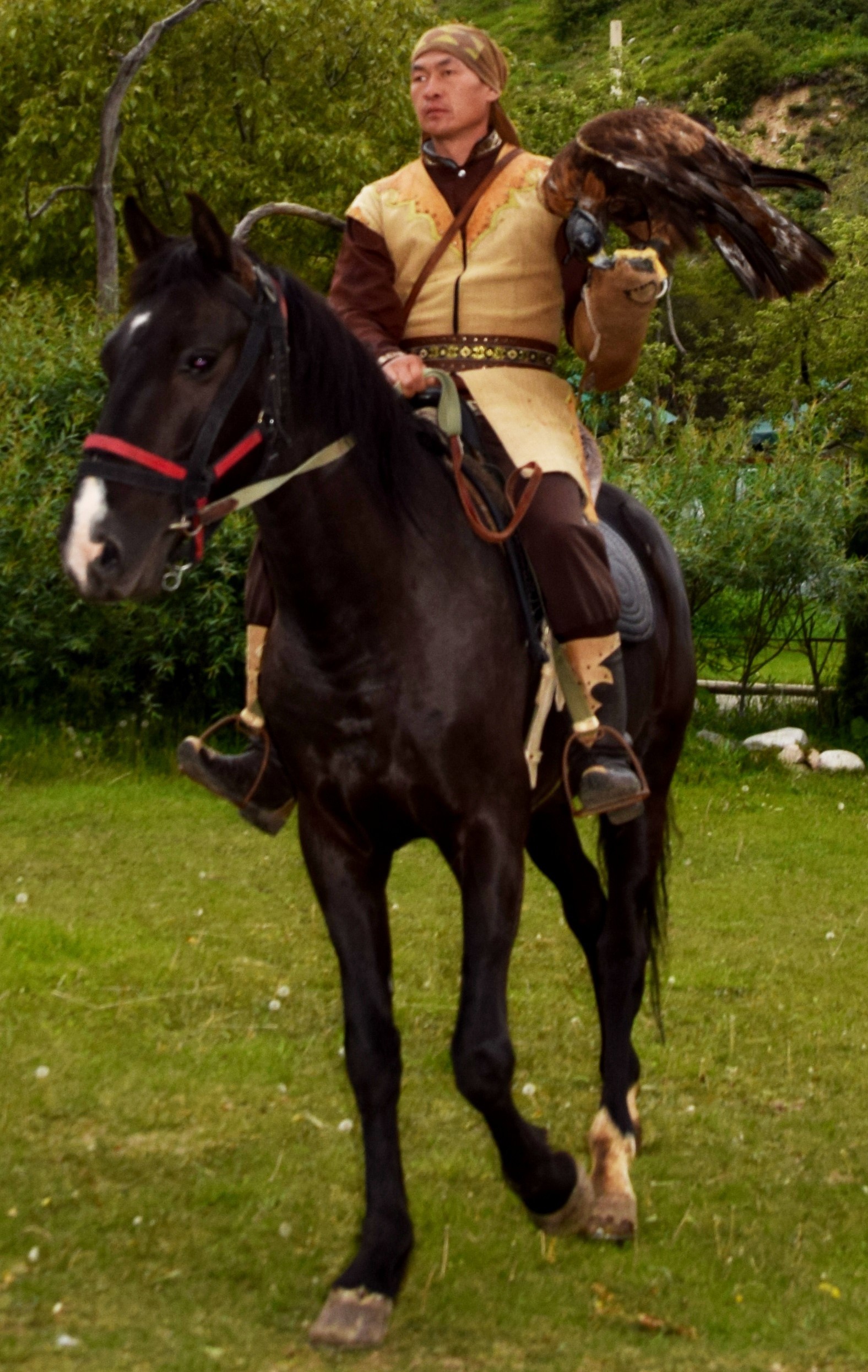
In my experience with these birds of prey, we were a group of international tourists captivated by a breathtaking showcase of avian mastery. Eagles, owls, and vultures demonstrated their remarkable skills under the guidance of an expert trainer. Adding to the spectacle, another trainer, fully adorned in traditional nomadic attire, paraded these majestic birds on his arm while riding horseback. The display showcased remarkable traditions and skill, captivating us as they swooped within inches of our heads.

Displaying a bird of prey on horseback, Sunkar Entertainment Complex, near Almaty; image: TCA, Ola Fiedorczuk

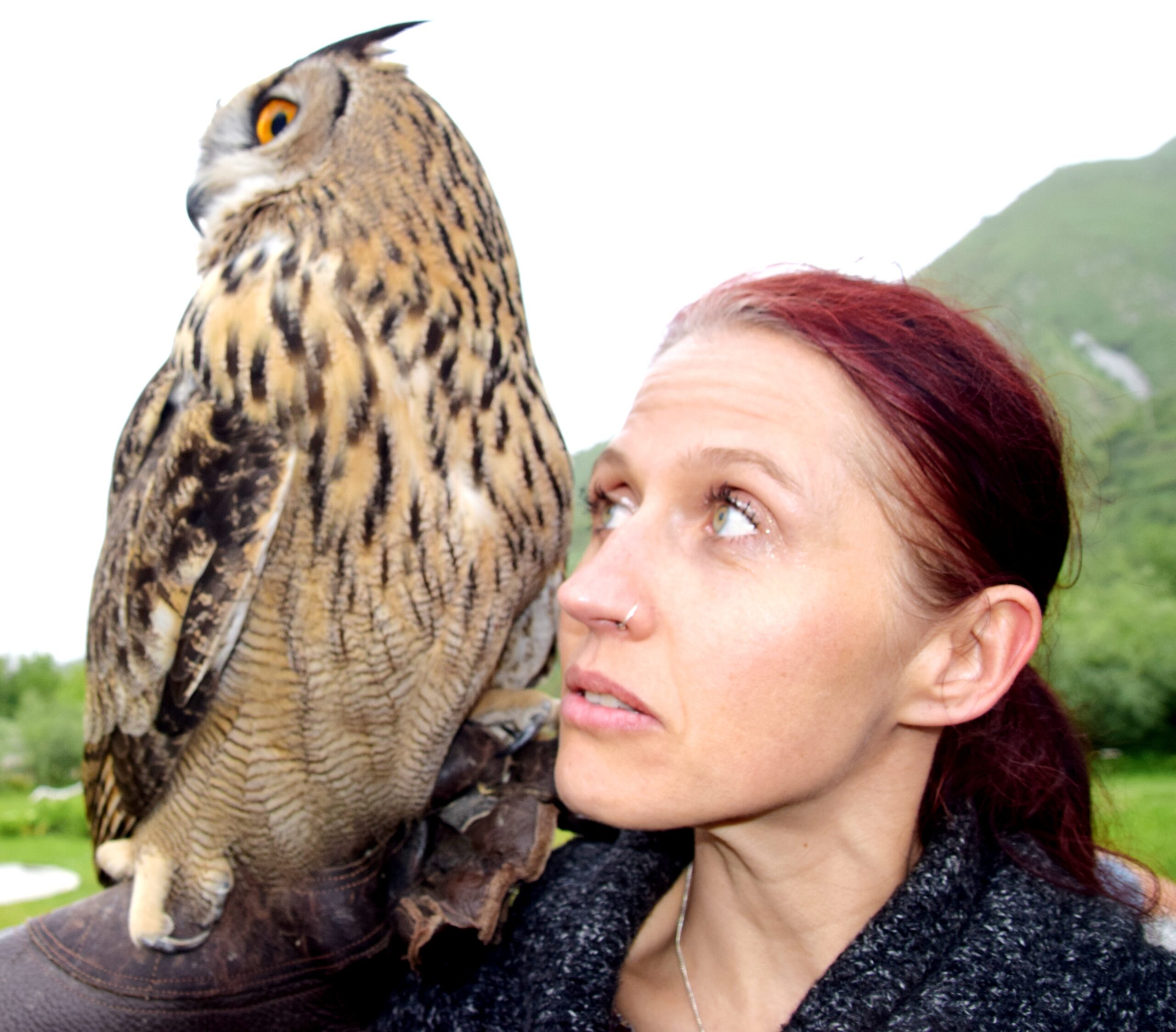
A guided presentation on birds of prey brought an unexpected twist. When asked if anyone in the group was vegetarian, I raised my hand. The guide explained that birds of prey are carnivorous, adding that they “can’t exactly feast on cucumbers.” Perhaps he was gauging how a Western audience would react to such dietary realities.

When he asked for a volunteer to feed the bird, there was silence, no takers. Then, he picked me. The task at hand was presenting this sharp-beaked creature with the leg of a baby chick. Distressing, yes, but my focus was on survival — specifically, keeping all my fingers. I tossed the offering to the bird at lightning speed and yanked my hand back, mission accomplished.

The author with an owl, Sunkar Entertainment Complex, near Almaty

When my duty was done, and I rejoined the fellow Americans in my group, their reactions floored me — disgust and horror all around, and these were meat-eaters. I couldn’t resist pointing out the irony – one even owned a cat – and feeding the bird, I explained, was no different than feeding your pet.

The falcon trainer’s attempt at humor then misfired badly. Pulling out a lifeless mouse to feed the bird — complete with cartoonish-looking X’s marking out its eyes — he made it bounce theatrically while referencing Mickey Mouse. Unimpressed, the crowd met his act with cold glares.

“Tough crowd,” his expression seemed to say.

Despite some inappropriate humor, it was a remarkable and unforgettable adventure. Should you find yourself near Almaty looking for something to do, discover living history with a must-see experience that combines stunning birds of prey with UNESCO intangible cultural heritage.

Kyrgyzstan’s Rebrand: New Country, or New Distractions?

On January 29, in what became a viral social media post, Seide Ibraimova and her mother drove to the site of VDNKh, the exhibition center built in the Kirghiz SSR to demonstrate the achievements of socialist science and culture. Her mother, wrapped in a white headscarf, reminisced happily about the times she’d spent there, surrounded by poplar trees in the shadow of the mountains. Seide’s father was one of the architectural team who built the main pavilion in 1974.

But as they arrived at the site, they found nothing but rubble. The government had bulldozed the pavilion to make way for a new congress hall.

“How could they?” said the old lady in a choked whisper. “Your father gave his heart and soul to this, for the people of the republic. The number of delegations who came here… how could they?”

In the post’s comments section, an intense debate began. Some lamented the loss of the exhibition center: “Without this historic architecture, Bishkek will be nothing more than a concrete jungle,” said one.

Another invoked Chingiz Aitmatov’s famous mankurt metaphor, describing those who had destroyed the site as having “no sense of memory or feelings, without attachment, who do not know who they are or where they come from.”

Others were less sentimental, pointing out that VDNKh had been left to rot for two decades, and that those venerating the Soviet relics were the real mankurts, “forgetting your language, preaching the history and ideology of the fascists who invaded and occupied our country.”

“You can forget the USSR,” said another. “We live in a sovereign state, the Kyrgyz Republic!”

These online spats come at a time when Kyrgyzstan is going through a form of national branding under the government of Sadyr Japarov. But is the country really shedding its Soviet skin, or are the changes mere window dressing?
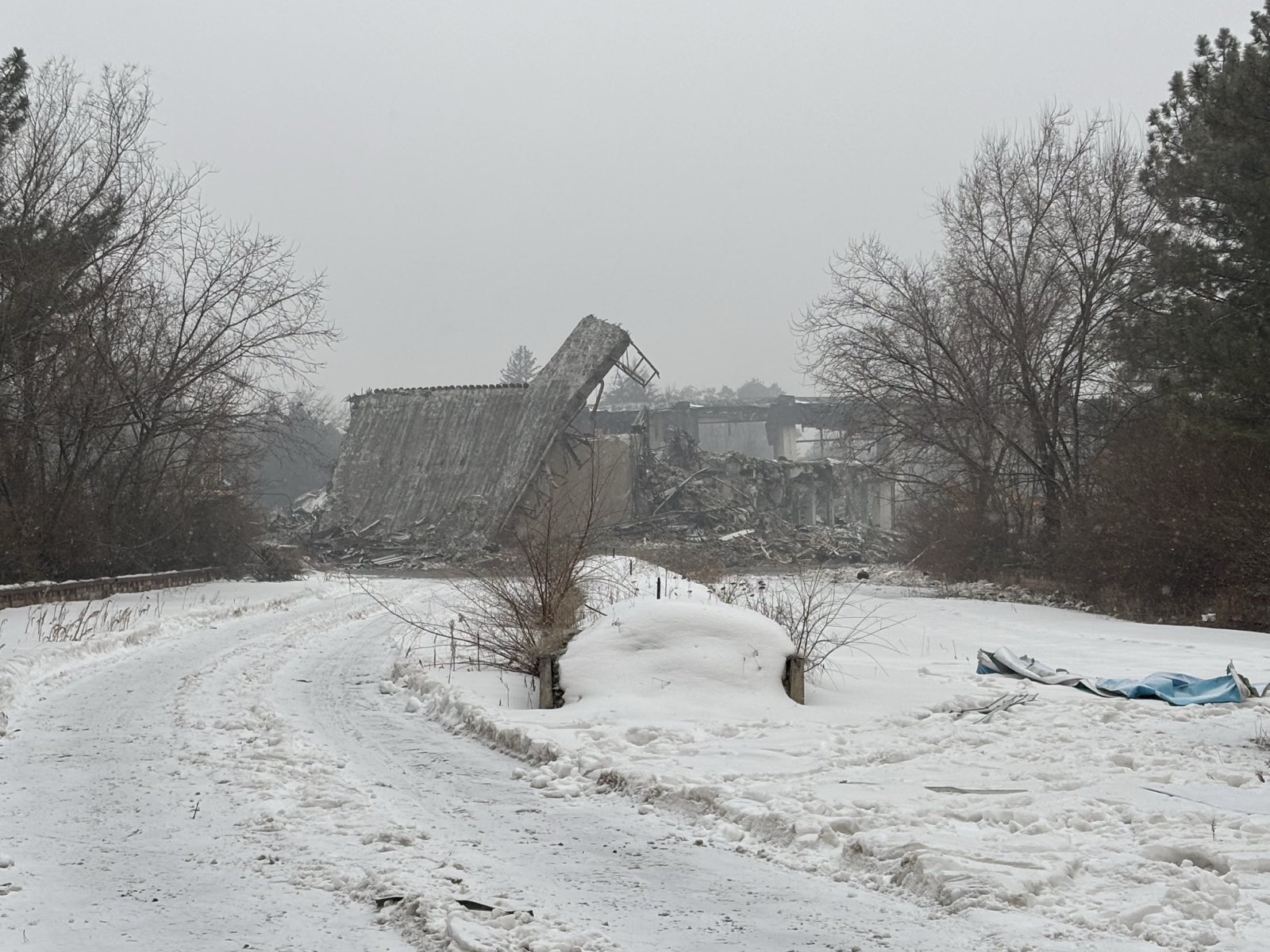
The ruins of the VDNKh pavilion, February 2025; image: Joe Luc Barnes

Around two hundred meters from the wreckage of the pavilion is Yntymak-Ordo, or the “new White House”. This is the newly-constructed official administrative building of Kyrgyzstan’s president – a squat structure with thick columns, topped by a glass dome and surrounded by iron bars and armed guards. Reminiscent of many of the other presidential palaces that have sprung up across Central Asia over the past thirty years, it is an assertion of power.

Further along Chinghiz Aitmatov Avenue (which was called Prospekt Mira until 2015) are scores of new high-rise residential buildings. Each month, new approvals are granted for more of these in the city center, contributing to a construction boom. Some see this as a deliberate attempt to erase the Soviet past from the city and replace it with their own idea of a modern Kyrgyz capital.

The aesthetic shift is not just architectural. The government recently launched a competition for a new Kyrgyz national anthem. Aspiring composers have been invited to submit their proposals, the commission recently confirming that 23 have been accepted so far, with the deadline extended to April 21. The current anthem, adopted in 1992, has been deemed too Soviet and not representative of the assertive and proud republic that Kyrgyzstan wishes to be.

This builds on a decision made two years ago to modify the country’s flag to remove insignia that bore a resemblance to a sunflower. According to Japarov, the Kyrgyz word for sunflower, kün karama, also means “dependent”, the implication being that if the flag looked dependent, what did that say about the country?

While both the flag and the anthem have been debated on for over a decade, Japarov’s government is the first follow through on it.

“Frankly speaking, since gaining independence, we have been heavily dependent on the outside world. Therefore, it may be time to reconsider the appearance of our flag,” Japarov said in 2023.

Non-dependence

The wish not to be seen as dependent is understandable. Kyrgyzstan did not endure a happy period in the immediate years after the breakup of the USSR. The economy contracted by 50% between 1991 and 1995, and for many, the only jobs available were those outside the country. Throughout the 2010s, between 25-30% of Kyrgyzstan’s GDP was derived from remittances sent by those working abroad.

At home, there was a perception that Kyrgyzstan was a playground for foreigners, hosting a U.S. Air Base, with a Canadian company owning the country’s largest gold mine, NGOs proliferating, and the country dependent on aid.

Infrastructure took on such a lamentable state that the country reverted to its historical north–south divide, with these splits often deciding elections and even revolutions.

Turning the tide

Under Japarov, the economy has been running hot. According to the World Bank, GDP per capita grew over 60% between 2020 and 2023, although this has been accompanied by double-digit inflation.

The government has also made steady progress connecting the mountainous country with the new north-south highway set to open this year. Tens of thousands of southern Kyrgyz have moved to the capital, meanwhile, improved flight connections mean there are now dozens of daily departures from Bishkek to Osh.

Another small step on the road to identity involved the final resolution of border issues in the south of the country. Having already demarcated its border with Uzbekistan in 2023, on February 21, Kyrgyzstan signed a deal to do likewise with Tajikistan. While the details of this agreement continue to be veiled from the public, the symbolism remains important. Unresolved border issues led to the idea of a vague country whose fuzzy outline gave outside powers a reason to intervene in its affairs. Now, for the first time, the country will have a clearly defined territory.
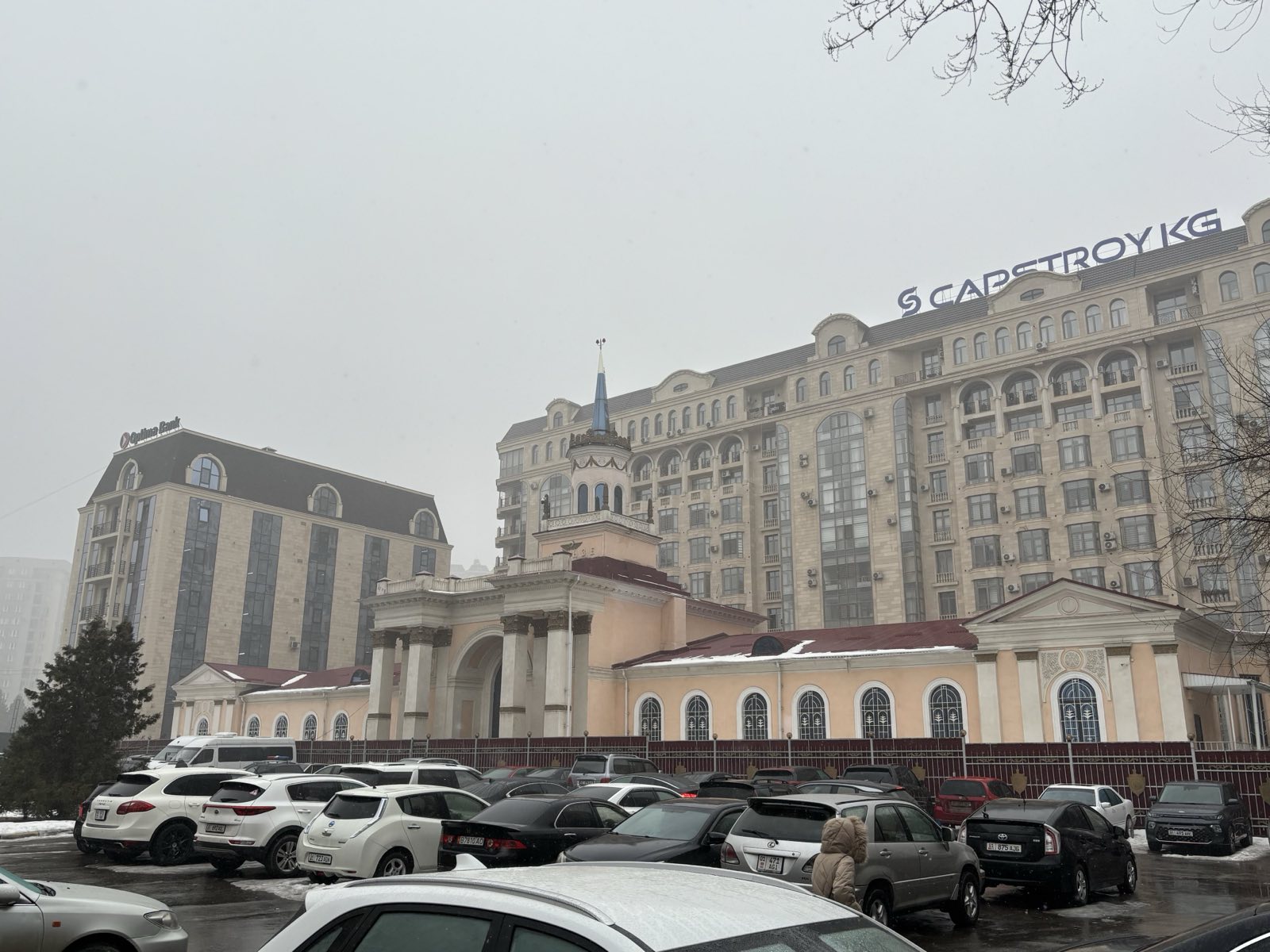
The terminal building at the old Frunze airport, a historical relic with newly build apartment buildings towering over it; image: Joe Luc Barnes

Kyrgyz or Kyrgyzstani?

The sense that Kyrgyzstan is a specific homeland for the Kyrgyz nation has also begun to crystallize. Upon independence, the country was multicultural – the final Soviet census in 1989 put the ethnic Kyrgyz population at 2.2 million, or 52% of the republic, with Russians comprising 21.5% and Uzbeks 13%. The Kyrgyz population was predominantly rural – there are some in Bishkek who still remember the late 1950s, when barely 10% of the inhabitants of Frunze (as it was then known) were Kyrgyz. By the 2021 census, 77% of the population was ethnically Kyrgyz.

In 2020, one of the first acts of Kamchybek Tashiyev, the powerful chief of the security services, the GKNB, was to restore the official designation of ethnicity on national ID cards. Tashiyev laid out the roots of his thinking long before he came to power, in an interview with Fergana News in September 2010, following ethnic riots in Osh that year.

“The titular nation should be titular. Other nationalities must respect our traditions, language, and history. Only then will people live in peace.”

For Tashiyev and his supporters, Kyrgyzstan’s nationhood is best preserved by ensuring that ethnic Kyrgyz hold the central role in state affairs.
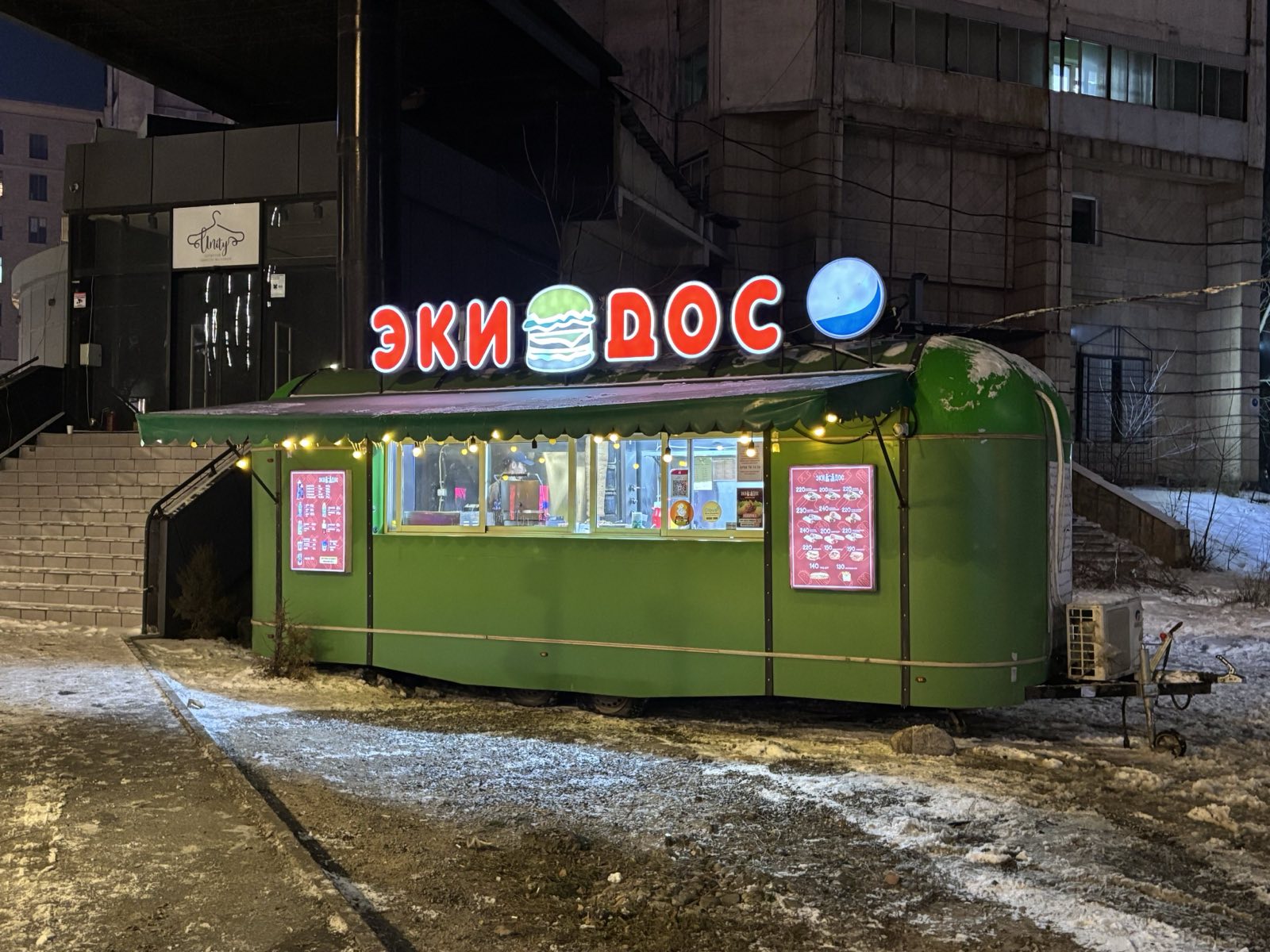
Eki Dos (two friends) is how Tashiyev and Japarov are often collectively referred to; image: Joe Luc Barnes

View on the street

If the idea is to impose national pride from above, it nevertheless needs buy-in from the population. This begs the question: What does it mean to be Kyrgyz? What are you proud of?

A straw poll of residents of Bishkek and other cities revealed a range of responses expressing pride in the “natural beauty of the country” and the “free spirit of the people and the historic nomad lifestyle.”

On the other hand, some opposition activists are proud to be Kyrgyz precisely because of the things that the current government seeks to stand against: “I am proud of the fact that my people didn’t allow authoritarian regimes to be established in March 24, 2005, April 7, 2010, and expressed outrage and protested against the outcome of corrupted elections in October 5, 2020,” says one opposition figure who declined to be named for this article. “However, these achievements now face challenges, and those who disagree with the current authorities and oppose [their] policies are suppressed and prosecuted.”

Others are cynical about the authorities’ intentions in stoking identity questions. “The new flag, it’s all about creating a debate,” said Aizula, who works importing goods from China. “The government doesn’t actually care what it looks like, it’s just to distract our attention from other things.”
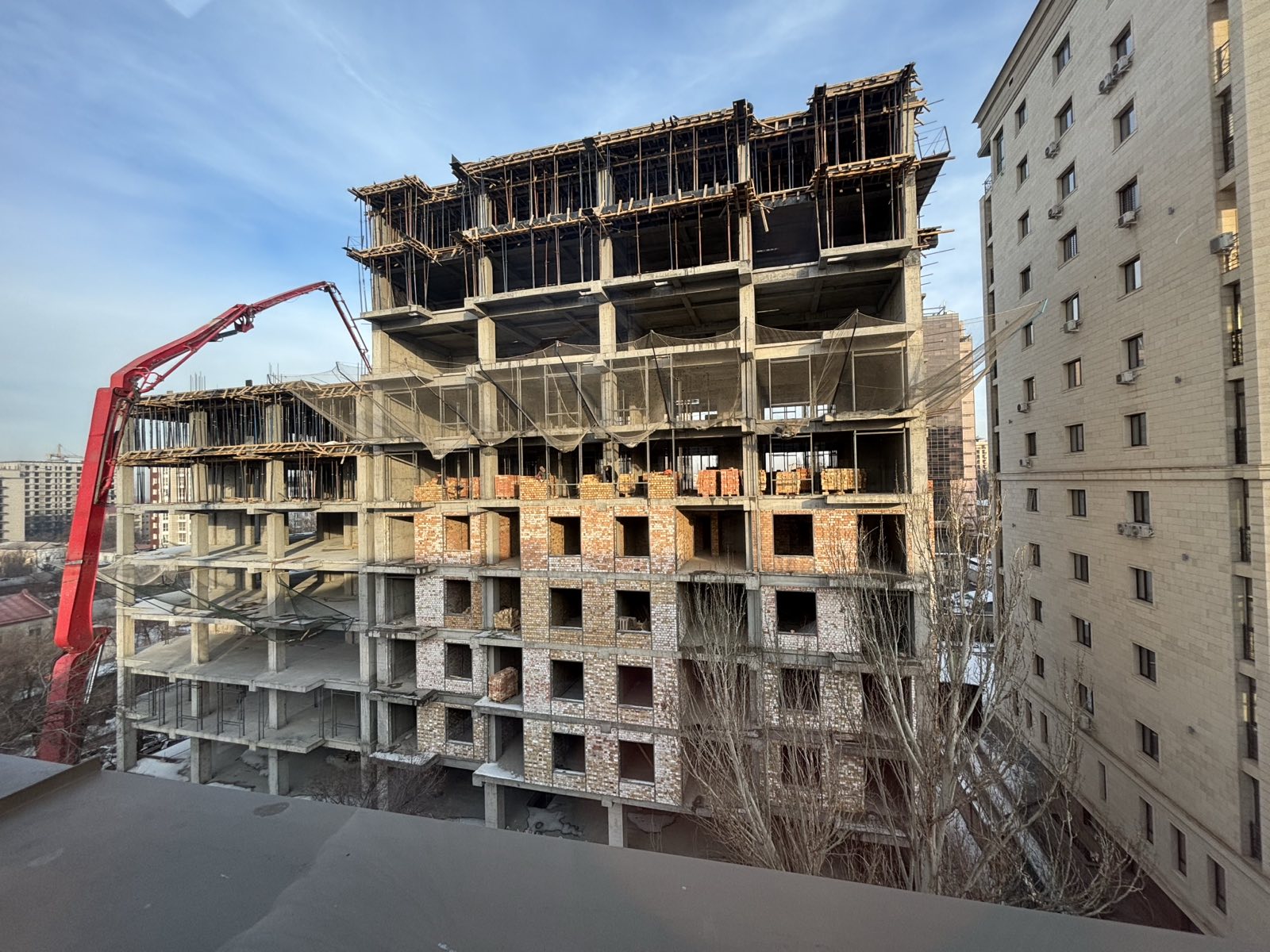
A building site on Moscow Street; image: Joe Luc Barnes

Ruslan, in his late fifties, works on a building site on Moscow Street, constructing a new twenty-storey tower.

“I don’t think there is any sort of coordinated grand plan,” he said when asked if these new towers were an attempt to build over the past. “I think it’s just people trying to make as much money as they can as quickly as they can. They’ll build wherever they can make profits.”