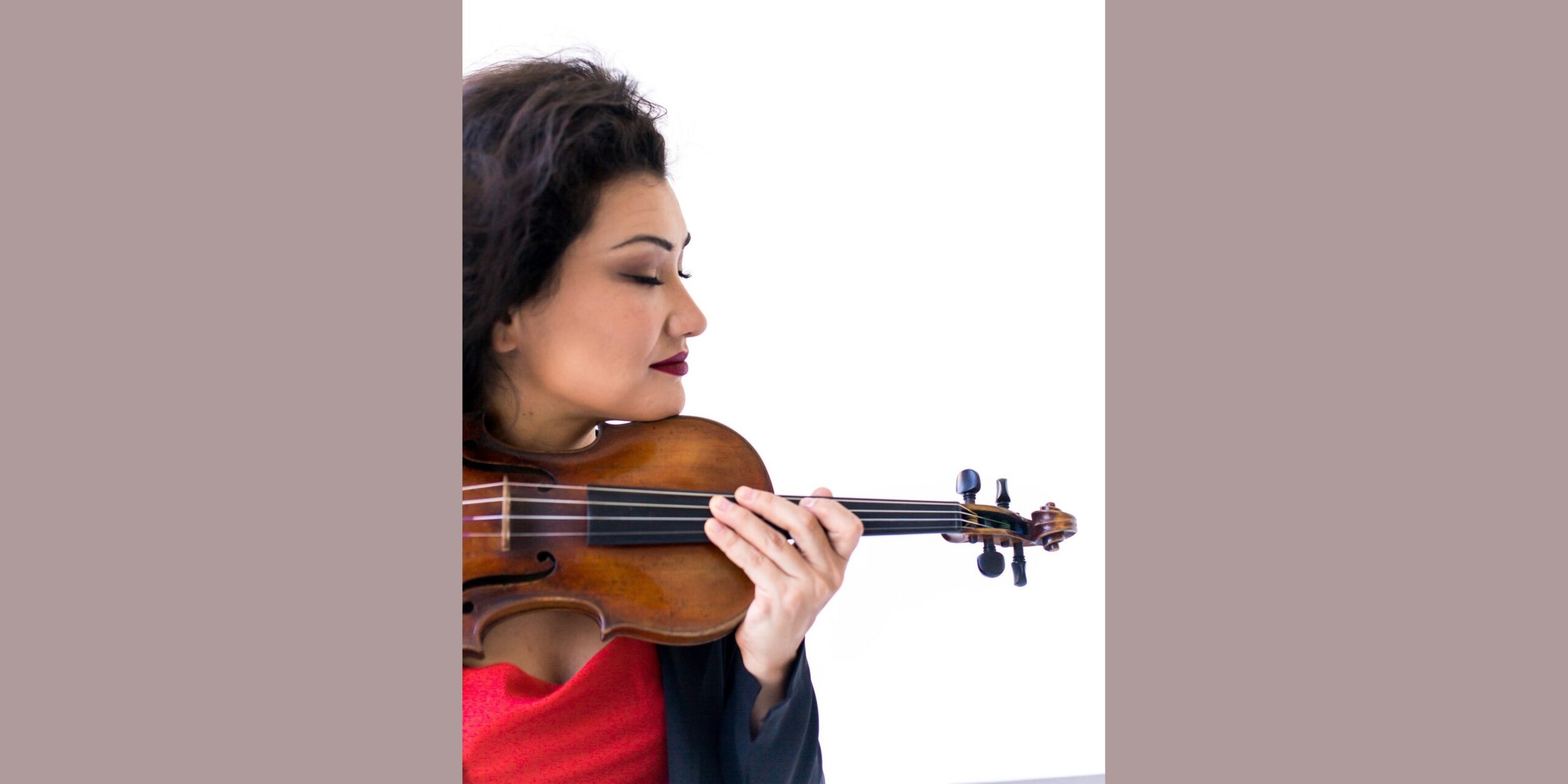
Dinara Bazarbayeva-Sakhaman, a soloist at the Zhambyl Kazakh State Philharmonic, spends much of her time moving between countries and concert halls, performing with international orchestras and collaborating with musicians from different traditions.
Behind these appearances lies not only a demanding touring schedule, but also rigorous discipline: long hours of rehearsal, complete dedication on stage, and a constant search for the right sound. Speaking to The Times of Central Asia, she reflects on the Kazakh violin school, the nature of talent, and the enduring pull of her instrument.
TCA: Dinara, your career has taken you to many countries. What has that experience been like?
Dinara: Not the entire world, of course, but I’ve visited many countries thanks to my profession. The only time I traveled without my violin was when I went to Thailand, and throughout the trip, I felt as if something was missing. It was unusual, waking up on the plane and thinking, “Where is my violin?”
TCA: Do you usually travel with an orchestra?
Dinara: It varies, but more often I travel alone. There are projects where orchestras are assembled from musicians from different countries. For example, the renowned violinist and now conductor Marat Bisengaliev does this in India. For the Symphony Orchestra of India, he invites musicians from around the world. I have been collaborating with this orchestra for quite some time; it is an excellent ensemble.
Working in such groups, sharing cultures, performing for diverse audiences, and collaborating with musicians from different parts of the world is one of the most fascinating aspects of our profession.
TCA: Are there any distinctive features of the Indian violin school?
Dinara: I performed in Mumbai, where there are several schools. One was founded by Marat Bisengaliev at the National Centre for the Performing Arts, and another by Mehli Mehta. In Bisengaliev’s school, classical violin is taught based on our educational system while incorporating elements of Indian tradition.
What surprised me most was the number of self-taught violinists.
TCA: And how do they play?
Dinara: Surprisingly well. Their path is very different, yet the results are impressive. In our system, if you don’t start learning the violin at the age of five or six, seven at the latest, it is believed that you will not catch up and will likely remain an amateur.
However, I know someone who began playing at 33 and now performs in a professional orchestra, knowing first violin parts almost by heart. He has a beautiful tone and excellent intonation. For me, this is a unique case.
TCA: At what age did you start playing?
Dinara: At five. That means I’ve spent 36 years with the violin and cannot remember life without it. I often joke that it is my lifelong implant—an inseparable part of me, with only its size changing as I grew.
TCA: How would you describe the Kazakh violin school?
Dinara: The foundation of our school lies in the Russian-Soviet tradition. During World War II, many teachers were evacuated to Kazakhstan and remained here, educating new generations of musicians.
Today, however, the boundaries between schools have blurred. Styles have merged, and it is no longer easy to determine where a musician studied based solely on their playing.
TCA: Can we speak of a “Kazakh violin school” as a recognizable brand?
Dinara: Absolutely. We have outstanding violinists from the older generation, such as Aiman Musakhodzhaeva, Marat Bisengaliev, and Gaukhar Murzabekova, who carry Kazakhstan’s flag on the international stage.
Among the younger musicians, Ruslan Talas became the first Kazakh finalist of the Queen Elisabeth Competition, and Sherniyaz Mussakhan works as a concertmaster in Switzerland. Within the professional community, Kazakhstan is well known for its strong musicians.
TCA: What do Kazakh classical musicians bring to international audiences? Is there a distinct identity in their playing?
Dinara: In academic music, we are still on the path toward forming a distinctive “Kazakh sound.” However, beyond classical music, we possess something truly unique: our traditional instruments.
The dombra, kobyz, and sybyzgy create a musical language unlike anything else in the world. For example, the ethno-ensemble Turan enjoys great popularity abroad, particularly in Turkey. In this sense, our main distinction lies in our living national musical tradition.
TCA: Do you have your own personal playing style?
Dinara: It’s difficult for me to judge, but I’m often told that I fully immerse myself in the process. Every detail matters to me, and I am very demanding of both myself and my musical partners.
There are pianists and ensembles with whom I’ve worked for many years and developed a deep artistic connection. At the same time, not everyone is ready for such emotional dedication, and I respect that.
TCA: How challenging is preparing for a concert?
Dinara: The concert itself is not the hardest part; the preparation is. To perform a 90-minute program, I rehearse for seven to eight hours a day. After a performance, I’m completely exhausted because I give everything I have.
TCA: In your experience, what matters more in the long run — talent or perseverance?
Dinara: Both. They’re simply different paths to the summit. Talent must be nurtured, while perseverance allows one to understand the process deeply and reproduce results consistently.
TCA: Which violinists do you consider truly great?
Dinara: Among the musicians whose recordings have been preserved with good sound quality, I especially admire Jascha Heifetz, David Oistrakh, Leonid Kogan, and Philippe Hirshhorn. They represent the tradition that inspires and guides me.
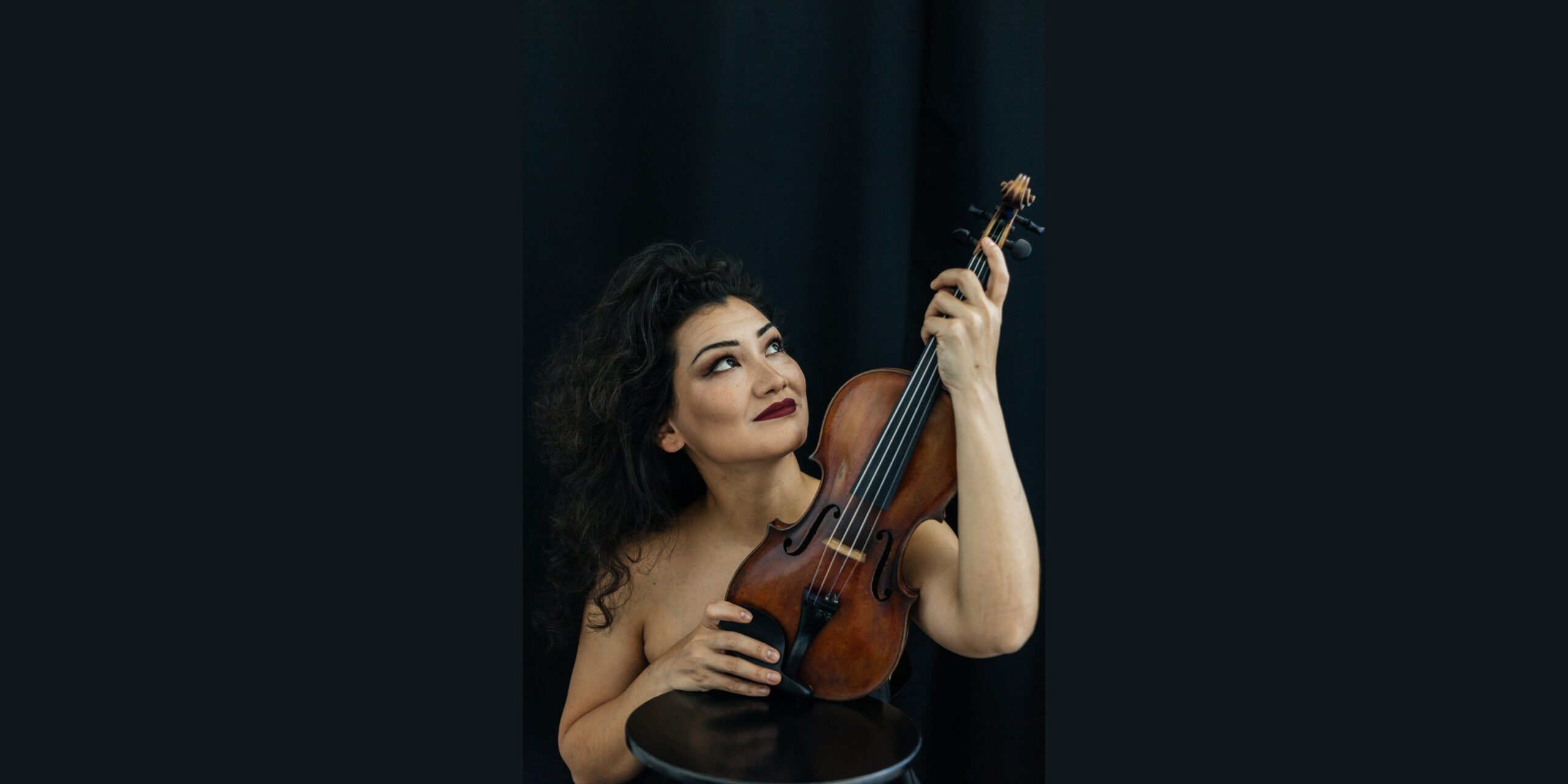
TCA: How much does the sound depend on the instrument itself?
Dinara: Very much so. I currently play a violin from the state collection, crafted by Nicola Amati, the teacher of Antonio Stradivari. Such an instrument becomes a true partner; it responds to your touch and allows you to produce sounds you could never have planned. It’s an extraordinary feeling.
TCA: Does the violin possess a kind of magic?
Dinara: Yes, absolutely. Sometimes during a concert, when you feel physically exhausted and doubt you can manage a difficult passage, everything suddenly works perfectly, as if the instrument itself supports you.
When instruments survive for 200-300 years, they begin to feel like something far greater than mere objects. There is an inexplicable magic in them.
TCA: How do you respond to claims that classical music is “no longer needed”?
Dinara: Calmly. I once had a conversation with a psychologist who asked, “Why do you need this? Who needs it?” I thought: you may not need it, but I do. I love it, and that is enough for me.
I don’t aim to convince everyone to love the violin or classical music.
TCA: You also organize candlelight concerts. Is this a successful combination of art and marketing?
Dinara: The idea emerged quite by chance. Over time, it evolved into a full-fledged and beautiful project. People want not only to listen to music but also to experience it through atmosphere. This combination of sound and visual ambiance proved very appealing.
TCA: Do you have any recent news for your fans?
Dinara: I’ve recorded half of my debut album. It includes violin works by Tomaso Vitali, Maurice Ravel, and variations on an original theme by Henryk Wieniawski. The project is still in progress, and I’m very curious to see how it will be received.