• KGS/USD = 0.01144 0%
  • KZT/USD = 0.00211 0%
  • TJS/USD = 0.10454 -0.1%
  • UZS/USD = 0.00008 0%
  • TMT/USD = 0.28571 0.28%
  • KGS/USD = 0.01144 0%
  • KZT/USD = 0.00211 0%
  • TJS/USD = 0.10454 -0.1%
  • UZS/USD = 0.00008 0%
  • TMT/USD = 0.28571 0.28%
  • KGS/USD = 0.01144 0%
  • KZT/USD = 0.00211 0%
  • TJS/USD = 0.10454 -0.1%
  • UZS/USD = 0.00008 0%
  • TMT/USD = 0.28571 0.28%
  • KGS/USD = 0.01144 0%
  • KZT/USD = 0.00211 0%
  • TJS/USD = 0.10454 -0.1%
  • UZS/USD = 0.00008 0%
  • TMT/USD = 0.28571 0.28%
  • KGS/USD = 0.01144 0%
  • KZT/USD = 0.00211 0%
  • TJS/USD = 0.10454 -0.1%
  • UZS/USD = 0.00008 0%
  • TMT/USD = 0.28571 0.28%
  • KGS/USD = 0.01144 0%
  • KZT/USD = 0.00211 0%
  • TJS/USD = 0.10454 -0.1%
  • UZS/USD = 0.00008 0%
  • TMT/USD = 0.28571 0.28%
  • KGS/USD = 0.01144 0%
  • KZT/USD = 0.00211 0%
  • TJS/USD = 0.10454 -0.1%
  • UZS/USD = 0.00008 0%
  • TMT/USD = 0.28571 0.28%
  • KGS/USD = 0.01144 0%
  • KZT/USD = 0.00211 0%
  • TJS/USD = 0.10454 -0.1%
  • UZS/USD = 0.00008 0%
  • TMT/USD = 0.28571 0.28%

CSTO to Begin Arms Supplies to the Tajik-Afghan Border in 2026

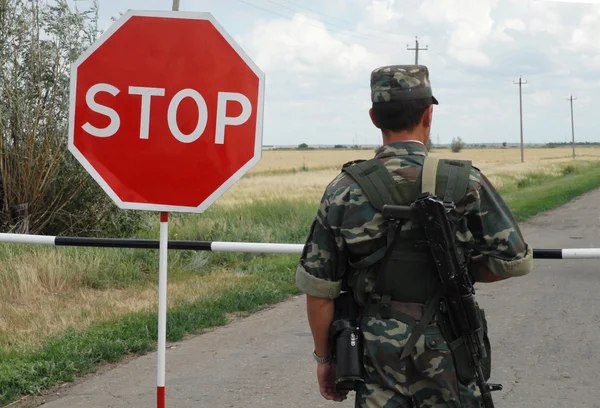
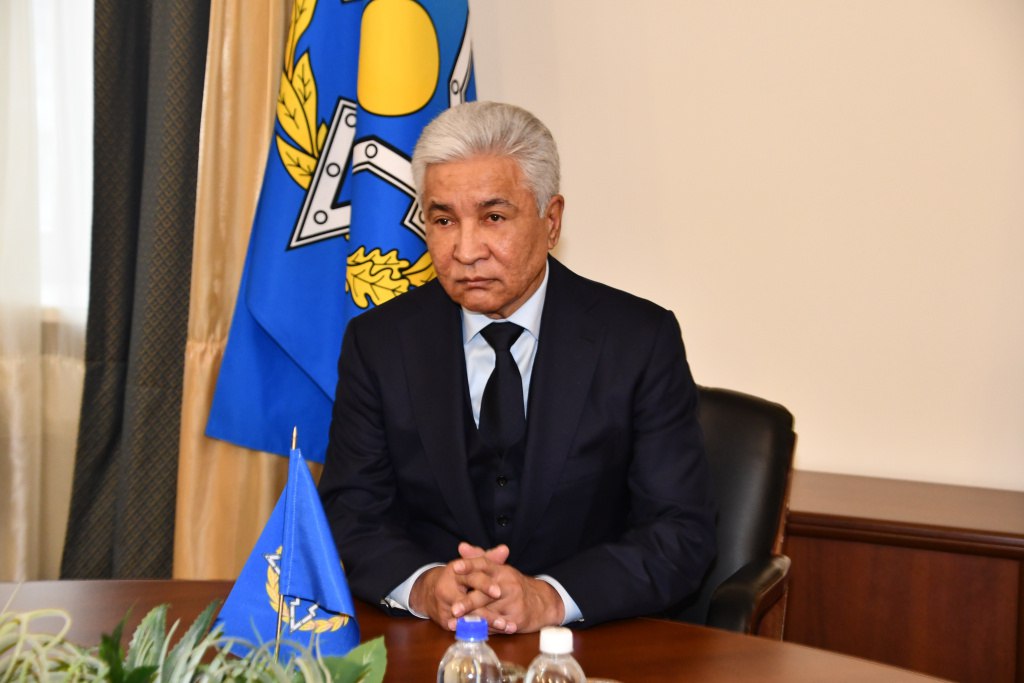
Beginning in 2026, the Collective Security Treaty Organization (CSTO) will start delivering weapons and military equipment to bolster the alliance’s southern borders, particularly to reinforce the Tajik-Afghan frontier. This development was announced on May 19 by CSTO Secretary General Imangali Tasmagambetov during a meeting of the CSTO Parliamentary Assembly in Bishkek.

Armed Response to Regional Threats

Tasmagambetov highlighted that the initiative stems from the Targeted Inter-State Program (TIP), approved in Astana in November 2024. This program reflects the CSTO’s collective resolve to address security vulnerabilities along its southern periphery.

“The task now is to implement it in full,” he stated. These security issues were previously discussed during an April 2025 meeting in Dushanbe with Tajikistan’s President Emomali Rahmon.

Despite regional stabilization efforts, Afghanistan continues to pose serious risks, including terrorism, arms trafficking, and the narcotics trade. Tasmagambetov emphasized, “The Taliban regime is proving to be a long-term political factor.” He noted that CSTO members, Belarus, Kazakhstan, Kyrgyzstan, and Russia, have intensified diplomatic engagement with Afghanistan to support regional stability.

The CSTO Secretariat will maintain vigilance and enhance coordination to counter emerging threats.

Signs of Regional Progress

In contrast to the ongoing security challenges, Tasmagambetov acknowledged promising developments in Central Asia. He pointed to the March 13 state border agreement between Kyrgyzstan and Tajikistan, as well as the March 31 tripoint agreement involving Kyrgyzstan, Tajikistan, and Uzbekistan. These steps are seen as crucial in easing regional tensions.

Tajik-Afghan Border a Strategic Focus Through 2029

The TIP for strengthening the Tajik-Afghan border is scheduled to be implemented in three stages and will run until 2029. Its goals include reinforcing southern Tajikistan’s military infrastructure and improving the region’s capacity to respond swiftly to cross-border threats.

The program outlines measures for allied coordination, arms deliveries, and enhancements to logistics, communications, and border infrastructure.
In the Ancient Uzbek City of Termez, Delegates Talk Ties Between Central and South Asia

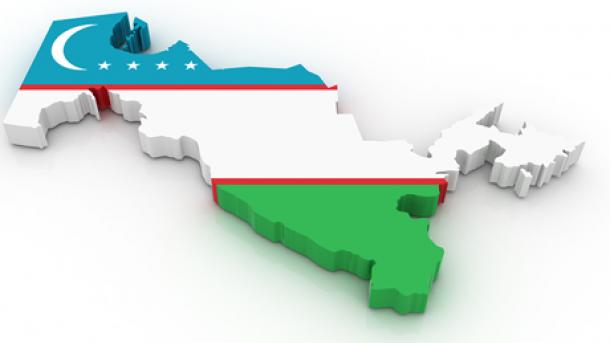
The Uzbek city of Termez, which lies on the border with Afghanistan and has hosted pilgrims, traders and soldiers over many centuries, is hosting a conference to promote contacts between Central and South Asia. 

Organized by the Uzbek government, the three-day meeting this week brings together about 200 people from fields including politics, business and research, some of whom have traveled from Europe, the Middle East and the Asia-Pacific region. The so-called Termez Dialogue on Connectivity, the first in the city, ends on Wednesday. 

The forum represents a belief that the countries of Central and South Asia can benefit from expanding trade and other contacts with each other, despite periodic security, logistical and other concerns, and even outright conflict such as the recent crisis between India and Pakistan. Militants killed more than two dozen tourists in Indian-controlled Kashmir on April 22, setting off fighting between the two nuclear-armed rivals in which dozens more people died. The adversaries reached a cease-fire on May 10. 

“In the conditions of global instability, a free and constructive dialogue based on respect and equal participation of all parties is more important than ever,” said Eldor Aripov, director of the Institute for Strategic and Interregional Studies, a state research group in Uzbekistan that helped to organize the conference.  

Aripov said mutual trade turnover between Central and South Asia was more than $5 billion last year, though he characterized the figures as modest because there is more that the regions can do on economic collaboration. He highlighted the importance of the speedy implementation of the Trans-Afghan Corridor construction project, which would provide easier access to Indian Ocean ports for regional countries and more closely connect South Asia to markets in Central Asia, Russia, China and Europe. 

The Trans-Afghan Corridor project, whose current estimated cost is nearly $5 billion, would constitute a core railway that runs from Termez through Kabul, Afghanistan and onward to Peshawar, Pakistan. Subsequent plans envision the railway as the basis for a broader transport network involving more countries. 

There are challenges to the project, including security concerns in Afghanistan and Pakistan as well as difficult, mountainous terrain in Afghanistan that would require considerable engineering expertise. While the railway is consistent with Central Asian goals of diversifying trade routes, potential alternatives to the project and geopolitical maneuvers by big powers could complicate prospects for success.

“The growing involvement of Central Asian countries in the trans-Afghan transportation sector presents a significant opportunity to fully realize the region’s transit potential, offering substantial economic and geopolitical advantages,” researcher Nargiza Umarova wrote in a March analysis for the Central Asia-Caucasus Institute & Silk Road Studies Program. 

“However, this increased engagement may also lead to competition among Central Asian states for new transport initiatives or prompt external rival forces to exploit these opportunities to advance their own interests,” Umarova said.

From Classic to Avant-Garde: How “Night at the Museum” in Almaty Bridged Eras

Last Sunday evening marked a notable event in Almaty’s cultural calendar. The A. Kasteyev State Museum of Art opened its doors after hours for the annual “Night at the Museum,” coinciding with International Museum Day on May 18. This day traditionally underscores the importance of museums as spaces of memory, dialogue, and inspiration.

This year’s theme, “Tradition and Modernity in a Changing World,” was embodied in a dynamic and multifaceted program that transformed the museum into a vibrant dialogue between different eras and cultural layers.

@TCA/Andrey Alimov

Visitors entering the museum in the evening found themselves immersed in an atmosphere where classical art harmoniously coexisted with contemporary interpretations. The space itself took on a new dimension, allowing the audience to engage with art beyond its typical daytime context.

The evening’s program catered to a wide audience. In addition to the museum’s permanent collection, which features masterpieces of Kazakh and global art, guests participated in a variety of special events. Themed tours exploring the interplay of tradition and modernity offered deeper insight into the works on display, revealing new dimensions in the creativity of both Kazakhstani and international artists.

@TCA/Andrey Alimov

Musical performances added to the ambiance, with live music enhancing the emotional experience and reinforcing the power of artistic expression. A standout feature of the night was a fashion show held in the museum’s central hall, where models showcased traditional Kazakh costumes with hand embroidery and gold accents, reimagined with a modern flair. These designs underscored how elements of cultural heritage continue to inspire and evolve in contemporary settings.

The Kasteyev Museum, Kazakhstan’s largest art institution and a key player in Central Asia’s cultural scene, was established in 1976 and named after Abylhan Kasteyev, a pioneering figure in Kazakh visual art. The museum’s collection exceeds 25,000 pieces, spanning ancient decorative and applied arts to works by 20th- and 21st-century masters. It features not only Kazakh artists, but also significant works from Russian, European, and Eastern traditions. Through exhibitions, educational initiatives, and cultural events, the museum plays a central role in preserving and promoting artistic heritage.

@TCA/Andrey Alimov

“Night at the Museum” has grown into more than just an event, it is a celebration of art that unites generations, perspectives, and creative approaches. For one night, visitors experienced a space where history meets the present, and art became more accessible, resonant, and profound.

It is noteworthy that similar events took place across Kazakhstan’s major cities. Official data indicates the country is home to around 300 museums, which collectively receive approximately 6.5 million visitors each year.

Global Report on Food Crises 2025: Tajikistan and Kyrgyzstan Identified as at Risk

For the first time, the 2025 Global Report on Food Crises, produced by the Food Security Information Network, has officially identified parts of Central Asia, particularly Tajikistan and Kyrgyzstan, as areas of concern for food security.

Central Asia in the Spotlight

The Food Security Information Network (FSIN) is a technical global platform for the exchange of expertise, knowledge and best practises on food security and nutrition analysis. Published on May 16, its food crises report for this year outlines a convergence of economic instability, persistently high food prices, and climate-related stressors that threaten to deepen food insecurity in the region.

“In Central Asia, especially in Tajikistan and Kyrgyzstan, the situation is worrying due to economic difficulties, high food prices, and vulnerability to climate shocks,” the report states.

The region’s inclusion in the list of at-risk areas marks a significant development, highlighting the urgency for both international attention and national-level action.

External Dependence and Structural Fragility

The report emphasizes the region’s heavy reliance on remittances and its ongoing struggle with inflation. Climate-related disruptions, such as droughts and temperature extremes, are already impacting agricultural yields, placing additional strain on the food system.

Tajikistan is particularly vulnerable due to a combination of weak infrastructure, a small domestic market, and high poverty levels. While it has not yet been categorized among the 59 countries facing acute food crises, its identification as a potential hotspot signals a growing risk.

This is not the first warning. In August 2024, the Eurasian Development Bank projected that Tajikistan’s food security could drop from 56.7% to 53% by 2035. The same forecast anticipated a 15% reduction in grain yields and a 9-11% decline in fruit and vegetable production, largely due to climate change. These projections align with observable trends: rising prices for basic goods, falling agricultural output, water shortages, and escalating logistical challenges driven by global conflicts.

Acknowledging the Crisis

President Emomali Rahmon addressed the issue directly during a May 17 seminar-meeting in the Danghara district, calling food security a national strategic priority. He warned that 2025 could be the hottest year on record and noted the compounding impact of global warming, inflation, and trade disruptions.

Among the remedies proposed were the more efficient use of land, adoption of energy-saving technologies and agricultural innovations, investment in scientific research, and expanded replanting initiatives. The president also highlighted systemic issues in the sector, including declining meat and egg production, non-operational irrigation systems, and inadequate planting of vegetables and potatoes.

The Road Ahead

Tajikistan’s inclusion in the Global Report on Food Crises 2025 underscores the need for swift, coordinated efforts to strengthen food system resilience. Key priorities include addressing structural deficiencies in agriculture, adapting to climate change, and fostering regional and international cooperation.

Kazakhstan Extends Border Crossing Closure with Uzbekistan Until September

The Tajyen-Daut Ata border checkpoint between Kazakhstan and Uzbekistan will remain closed to pedestrians, passenger vehicles, buses, and light cargo transport until September 1. The extension was agreed upon by both governments, according to Kazinform, citing Kazakhstan’s State Revenue Committee under the Ministry of Finance.

Officials explained that the continued closure is necessary to ensure traveler safety and facilitate the progress of major construction and renovation work at the site. Ongoing repairs include the installation of metal structures, engineering systems, and the comprehensive refurbishment of buildings.

In parallel, from May through August, Kazakhstan’s national road company, KazAvtoZhol, will construct a new road in the neutral zone separating the Tajyen (Kazakhstan) and Daut Ata (Uzbekistan) checkpoints. Uzbekistan is expected to carry out similar infrastructure upgrades on its side of the border.

The checkpoint was originally closed on February 1, to accommodate the reconstruction project. Kazakhstan subsequently proposed extending the closure for an additional four months, a request that was supported by Uzbek authorities.

Officials have advised citizens of both countries to factor in the closure when planning their travel and transport routes.

This development aligns with broader efforts by Kazakhstan and Uzbekistan to upgrade regional transport and trade infrastructure. As previously reported by The Times of Central Asia, both nations are investing in projects aimed at enhancing regional connectivity, including transit links to Pakistan. Kazakhstan is also positioning itself as a key player in the Middle Corridor, part of the larger Trans-Caspian International Transport Route connecting Central Asia with South Asia and Europe.

Maternal Mortality Continues to Decline in Kazakhstan

Kazakhstan has ranked among the top 10 countries globally in terms of reducing maternal mortality rates, according to the World Health Organization.

Over the past decade, Kazakhstan’s maternal mortality rate has dropped significantly, reaching 10.1 deaths per 100,000 live births in 2024. This progress comes despite a temporary spike in maternal deaths during the COVID-19 pandemic.

Three regions — Pavlodar (northeast), Mangistau (west), and North Kazakhstan — reported zero maternal deaths in 2024. Additionally, 99.9% of births across the country were attended by qualified medical personnel, reflecting widespread access to professional maternal healthcare.

Steady Progress with Regional Disparities

The Ministry of Health reported the following annual maternal mortality figures:

  • 2020: 200 cases
  • 2021: 70 cases
  • 2022: 45 cases
  • 2024: 37 cases

Despite the national downward trend, 10 regions have seen a slight rise in maternal deaths over the past six years. In 2024, 54% of maternal deaths occurred in urban areas, with 46% in rural settings. A troubling development is the rise in mortality among women with four or more children, which left 97 children orphaned last year.

Nonetheless, the current maternal mortality rate is the lowest recorded in Kazakhstan’s post-Soviet history. In 1992, the rate stood at 76.8 deaths per 100,000 live births.

Regional Leadership in Maternal Health

As previously reported by The Times of Central Asia, Kazakhstan is actively sharing its expertise in maternal and child health with neighboring countries, contributing to broader regional health development efforts.