• KGS/USD = 0.01144 0%
  • KZT/USD = 0.00195 -0%
  • TJS/USD = 0.10861 0.18%
  • UZS/USD = 0.00008 0%
  • TMT/USD = 0.28571 0%
  • KGS/USD = 0.01144 0%
  • KZT/USD = 0.00195 -0%
  • TJS/USD = 0.10861 0.18%
  • UZS/USD = 0.00008 0%
  • TMT/USD = 0.28571 0%
  • KGS/USD = 0.01144 0%
  • KZT/USD = 0.00195 -0%
  • TJS/USD = 0.10861 0.18%
  • UZS/USD = 0.00008 0%
  • TMT/USD = 0.28571 0%
  • KGS/USD = 0.01144 0%
  • KZT/USD = 0.00195 -0%
  • TJS/USD = 0.10861 0.18%
  • UZS/USD = 0.00008 0%
  • TMT/USD = 0.28571 0%
  • KGS/USD = 0.01144 0%
  • KZT/USD = 0.00195 -0%
  • TJS/USD = 0.10861 0.18%
  • UZS/USD = 0.00008 0%
  • TMT/USD = 0.28571 0%
  • KGS/USD = 0.01144 0%
  • KZT/USD = 0.00195 -0%
  • TJS/USD = 0.10861 0.18%
  • UZS/USD = 0.00008 0%
  • TMT/USD = 0.28571 0%
  • KGS/USD = 0.01144 0%
  • KZT/USD = 0.00195 -0%
  • TJS/USD = 0.10861 0.18%
  • UZS/USD = 0.00008 0%
  • TMT/USD = 0.28571 0%
  • KGS/USD = 0.01144 0%
  • KZT/USD = 0.00195 -0%
  • TJS/USD = 0.10861 0.18%
  • UZS/USD = 0.00008 0%
  • TMT/USD = 0.28571 0%
18 December 2025

Kyrgyz Deputy Maripov Proposes Moving Capital Away From Bishkek

Jogorku Kenesh (Parliament) deputy Bakytbek Maripov has proposed moving Kyrgyzstan’s capital away from Bishkek, presenting the idea during a parliamentary session on January 22.

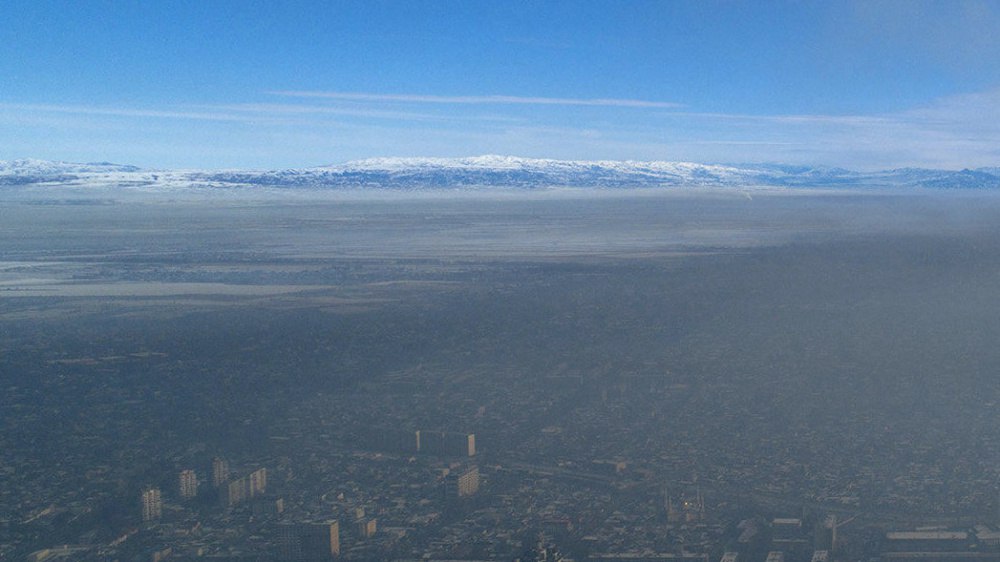
Maripov argued that even radical measures to improve Bishkek’s infrastructure – such as reforming the city’s management system or developing transportation networks – would be insufficient to solve its persistent issues with smog and traffic congestion.

The deputy suggested that relocating the capital could offer an effective long-term solution, particularly when viewed in the context of large-scale investment opportunities. He cited a comparison of major infrastructure costs: for instance, the construction of the planned city of Asman on the coast of Issyk-Kul is already drawing $10 billion in investments. Meanwhile, relocating Bishkek’s railroad infrastructure would cost $550 million, and building a ring road around the city would require approximately $1 billion.

“If the capital were moved, the problems of traffic congestion and air pollution could be avoided,” Maripov emphasized.

Although the proposal to move the capital remains at an early stage, it has sparked significant debate among lawmakers and the public.

Bishkek’s Challenges: Traffic and Smog

Bishkek is grappling with severe traffic congestion and air pollution, which are fueling calls for drastic action. According to data from the 2GIS navigation service, residents spent 777 hours stuck in traffic during July, August, and September of 2024. In October, congestion levels in the city reached nine out of 10 points. The primary factors contributing to traffic jams include a surge in the number of vehicles, insufficient road capacity, and inefficient traffic light management.

The city’s air pollution problem is equally pressing. In November 2024, Bishkek ranked among the top 10 most polluted cities in the world. Key sources of pollution include emissions from motor vehicles, the use of low-quality fuels for heating private homes, and unfavorable meteorological conditions that trap pollutants.

Government Efforts and Public Concerns

Authorities have introduced several initiatives to address Bishkek’s environmental and transportation challenges. In January 2025, the Jogorku Kenesh discussed measures aimed at reducing smog and alleviating traffic congestion in both Bishkek and Osh. However, despite ongoing efforts, the situation remains critical, underscoring the need for a comprehensive and systemic approach to improving urban infrastructure and environmental conditions.

While the idea of relocating Kyrgyzstan’s capital is far from finalized, it has already opened up discussions about long-term solutions to Bishkek’s chronic problems. For now, the debate continues as the city’s residents and lawmakers consider the potential benefits and challenges of such a monumental shift.


Kazakhstan’s Digital Exports Expand

Kazakhstan exported $471 million worth of IT services to 95 countries during the first nine months of last year, according to Zhaslan Madiyev, Minister of Digital Development, Innovation and Aerospace Industry (MDDIAI).

The primary driver of export revenue in Kazakhstan’s IT services market is Astana Hub, the largest international technology park for IT startups in Central Asia, located in the country’s capital. Astana Hub is home to over 1,500 companies, including 400 international firms. In 2024, its total revenue reached 620 billion KZT ($1.1 billion), with export revenue amounting to 227 billion KZT ($428 million) across 92 countries. Additionally, the products of JSC “National Information Technologies” (NIT JSC), the operator of Kazakhstan’s “e-government” infrastructure, have also entered global markets.

According to Madiyev, NIT JSC’s main exported products include Smart Data Ukimet, Smart Bridge, and Gov.kz:

  • Smart Data Ukimet: An information-analytical platform designed for the secure collection, storage, and analysis of data from government information systems.
  • Smart Bridge: A platform that simplifies integration processes between government agencies and private businesses through a “service showcase” model.
  • Gov.kz: A unified platform for the online resources of government agencies.

The export of Kazakhstan’s digital public services (GovTech) reached $2.7 million, with these solutions currently supplied to Tajikistan, Togo, and Sierra Leone.

In addition to GovTech, Kazakhstan’s IT exports also include software, computer games, fintech solutions, and marketplaces. Among the largest exporters are five software developers, three computer game companies, one fintech firm, and one marketplace. “Most of the major exporters are foreign companies that have relocated to Kazakhstan, creating new jobs in major cities and regions, as well as contributing to export revenue,” said Madiyev.

Kazakhstan has made significant strides in developing its IT infrastructure. The country now boasts 20 regional IT hubs that work closely with Astana Hub, fostering innovation across the nation. Furthermore, Kazakhstan is establishing an international network of IT hubs by opening IT offices in the United States, Saudi Arabia, Singapore, and the United Kingdom.

“Kazakhstani startups now have foreign infrastructure to attract investment and expand their export markets,” said Madiyev.

The minister also announced the launch of a fund of venture capital funds under the jurisdiction of the International Financial Center Astana (MFCA), based at Astana Hub. This fund, with an expected capital of $1 billion, will finance IT startups in Kazakhstan.

As previously reported by The Times of Central Asia, Kazakhstan is home to 12 regional IT hubs that are actively contributing to the country’s growing digital economy.

Kyrgyzstan’s Keremet Bank Restricts Use of Visa Cards Following U.S. Sanctions

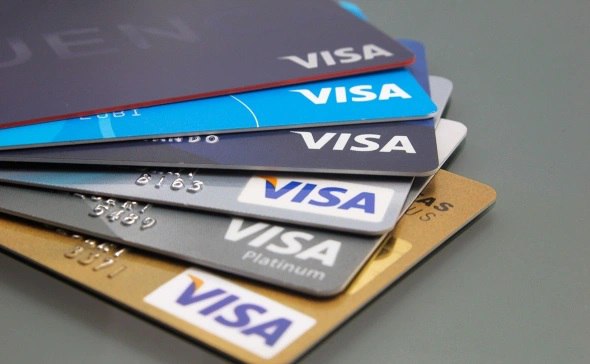
Keremet Bank, a commercial bank in Kyrgyzstan recently subjected to U.S. sanctions, has announced new restrictions on the use of its Visa cards. The announcement was issued through the bank’s press service.

As per the official statement, Visa cards issued by Keremet Bank can now only be used at the bank’s ATMs, POS terminals, and other payment devices. To provide customers with an alternative, the bank is offering free issuance of cards under the national payment system, Elkart. The process for obtaining an Elkart card will take up to five working days in Bishkek and up to ten days in other regions.

The bank reassured its clients that their funds remain secure. Customers can withdraw money at the nearest branch by presenting a valid passport or transferring funds through the mobile application to Elkart cards or settlement accounts.

The U.S. Treasury Department imposed sanctions on Keremet Bank, citing alleged ties to Russian authorities and collaboration with Promsvyazbank, a Russian financial institution that has been under U.S. restrictions since 2022.

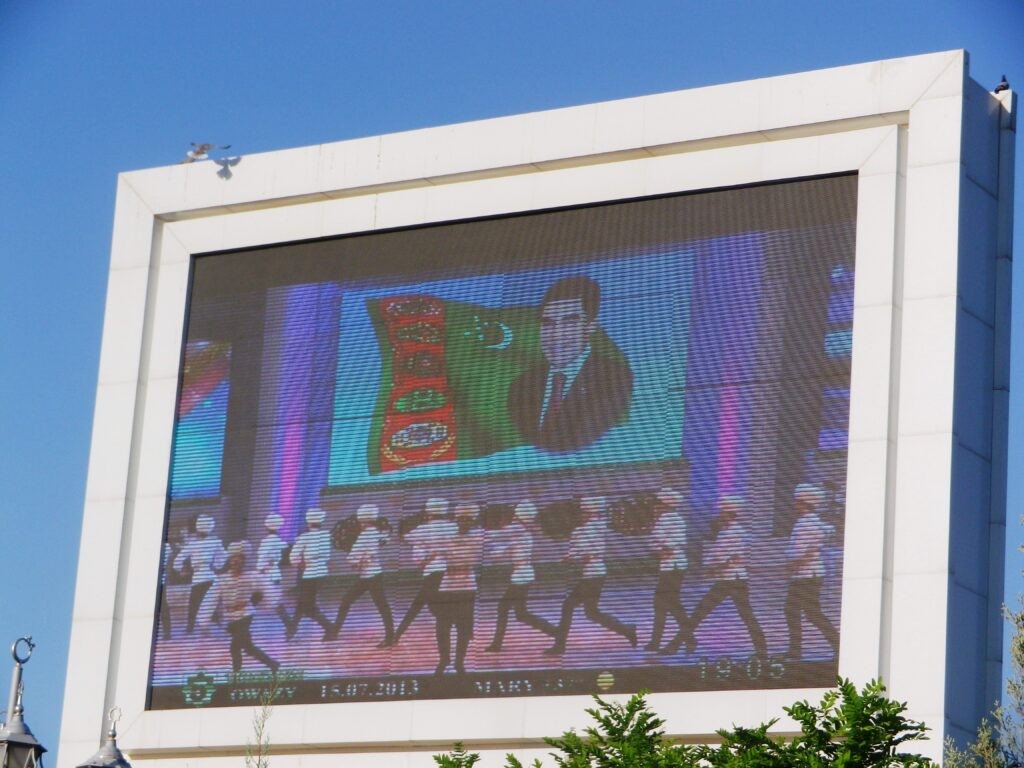
Russian Foreign Ministry Responds to Turkmen Displeasure Over ‘Second Turkmenbashi’ Article

The Russian Foreign Ministry has issued a statement following a controversial article in Nezavisimaya Gazeta that drew criticism from the Turkmen leadership.

On January 12, the newspaper published an article titled “Neutrality Turned Out to Be an Excuse for Strengthening the Personality Cult of the ‘Second Turkmenbashi.'” The piece compared former president Gurbanguly Berdimuhamedov to his predecessor, Saparmurat Niyazov, who was the subject of a personality cult during his rule over Turkmenistan from 1985 to his death in 2006. Niyazov often called himself “Turkmenbashi” (father of the Turkmen).

The Nezavisimaya Gazeta article quoted Arkady Dubnov, an expert on post-Soviet affairs, in relation to a meeting of the Organizing Committee for the 30th anniversary of Turkmenistan’s neutrality. During the event, Turkmen Foreign Minister Rashid Meredov reportedly referred to Berdimuhamedov as the “father of the nation.”

Dubnov, a critic of authoritarian regimes, remarked that the event symbolized “the birth of another father of the nation on the ruins of the USSR.”

The article was subsequently removed from Nezavisimaya Gazeta’s website, but not before it provoked discontent in Ashgabat. In response, the Russian Foreign Ministry issued a clarification. In a statement on its official website, the ministry emphasized that “The assessments given in the article have nothing in common with the official position of Russia and do not reflect the high status of ties between our friendly countries.”

This incident highlights a pattern in which the Russian Foreign Ministry has distanced itself from media outlets over publications that anger foreign governments. Similar cases have occurred in the past, underscoring the delicate balancing act Moscow maintains with its partners in post-Soviet space.

Uzbekistan’s Foreign Trade Turnover Grows by 3.8% in 2024

Uzbekistan’s foreign trade turnover (FTT) reached $65.9 billion in 2024, reflecting an increase of $2.4 billion, or 3.8%, compared to the previous year, according to the Statistics Agency under the President of the Republic of Uzbekistan.

Exports totaled $26.95 billion, an 8.4% increase year-on-year, while imports amounted to $38.99 billion, representing a modest rise of 0.8%.

China and Russia remain Uzbekistan’s top trading partners, with Kazakhstan emerging as a key partner in third place. Uzbekistan conducts trade with 198 countries, with China accounting for 18.9% of its FTT, followed by Russia (17.6%), Kazakhstan (6.5%), Turkey (4.5%), and South Korea (3.0%).

Trade with state members of the Eurasian Economic Union (EAEU) reached $17.5 billion in 2024. Of this, $5.83 billion came from exports, while imports amounted to $11.66 billion.

In 2024, natural gas trade played a significant role in Uzbekistan’s foreign trade activities. The country exported $628 million worth of gas but imported $1.68 billion worth, more than 2.5 times the value of its exports. Gas imports rose sharply, increasing 2.4 times compared to 2023. Purchases of natural gas from Turkmenistan and Russia surged from $694.9 million in 2023 to $1.68 billion in 2024.

Mirziyoyev Invites Trump to Visit Uzbekistan

Uzbekistan’s President Shavkat Mirziyoyev has extended his congratulations to Donald Trump on his inauguration as the 47th President of the United States by inviting him to visit Uzbekistan. Mirziyoyev’s press secretary, Sherzod Asadov, made the announcement.

Republican candidate Donald Trump won the November 2024 U.S. presidential election and was sworn into office on January 20, 2025.

In his congratulatory letter, Mirziyoyev expressed confidence that the United States, under Trump’s leadership, would continue to enhance its global influence and prestige. He commended the country’s economic strength and vital role in international affairs.

The letter also highlighted Uzbekistan’s appreciation for the United States’ consistent support of its independence, sovereignty, and territorial integrity. Mirziyoyev voiced optimism for a new era of strategic partnership between the two nations during Trump’s presidency. He stressed the importance of deepening bilateral ties and expanding collaboration through bilateral and multilateral platforms.

President Mirziyoyev also invited Trump to visit Uzbekistan, a gesture aimed at strengthening the relationship between the two countries.

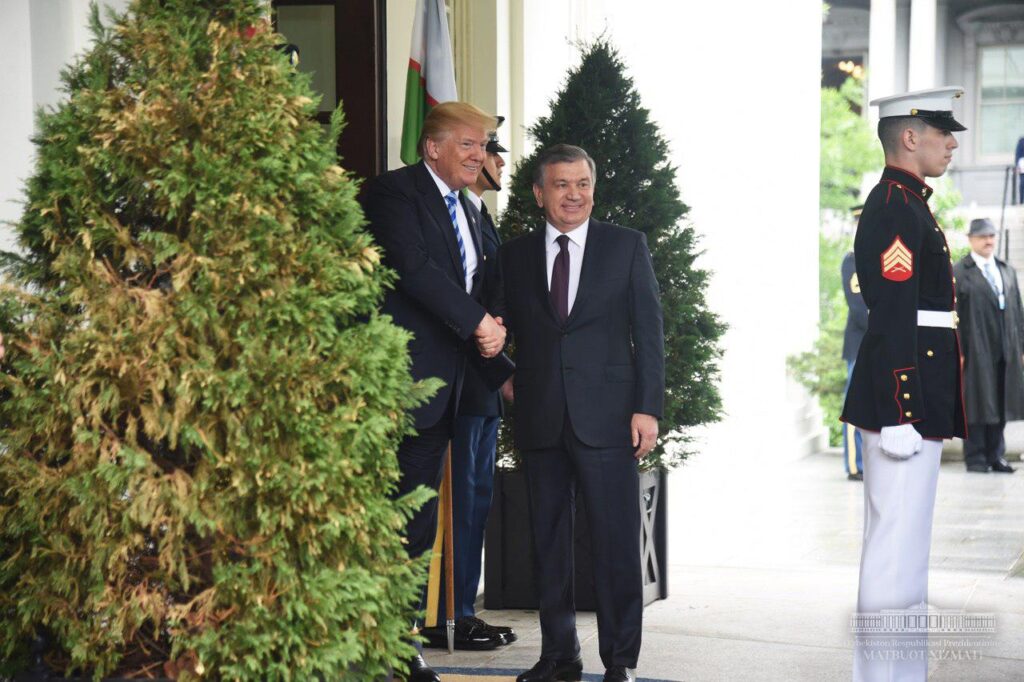
Mirziyoyev visited the United States in 2018 during Trump’s previous term as president. When the two leaders met at the White House, Trump remarked on Uzbekistan’s growing influence: “The authority of Uzbekistan is growing. It’s an honor for us to meet with you in the White House.”

In addition to Uzbekistan, other Central Asian leaders congratulated Trump on his inauguration. Kazakhstan’s President Kassym-Jomart Tokayev sent a telegram expressing confidence in the continued development of mutually beneficial cooperation between Kazakhstan and the United States, particularly concerning energy, nuclear non-proliferation, and international security.