• KGS/USD = 0.01144 0%
  • KZT/USD = 0.00194 -0%
  • TJS/USD = 0.10883 0%
  • UZS/USD = 0.00008 0%
  • TMT/USD = 0.28571 0%
  • KGS/USD = 0.01144 0%
  • KZT/USD = 0.00194 -0%
  • TJS/USD = 0.10883 0%
  • UZS/USD = 0.00008 0%
  • TMT/USD = 0.28571 0%
  • KGS/USD = 0.01144 0%
  • KZT/USD = 0.00194 -0%
  • TJS/USD = 0.10883 0%
  • UZS/USD = 0.00008 0%
  • TMT/USD = 0.28571 0%
  • KGS/USD = 0.01144 0%
  • KZT/USD = 0.00194 -0%
  • TJS/USD = 0.10883 0%
  • UZS/USD = 0.00008 0%
  • TMT/USD = 0.28571 0%
  • KGS/USD = 0.01144 0%
  • KZT/USD = 0.00194 -0%
  • TJS/USD = 0.10883 0%
  • UZS/USD = 0.00008 0%
  • TMT/USD = 0.28571 0%
  • KGS/USD = 0.01144 0%
  • KZT/USD = 0.00194 -0%
  • TJS/USD = 0.10883 0%
  • UZS/USD = 0.00008 0%
  • TMT/USD = 0.28571 0%
  • KGS/USD = 0.01144 0%
  • KZT/USD = 0.00194 -0%
  • TJS/USD = 0.10883 0%
  • UZS/USD = 0.00008 0%
  • TMT/USD = 0.28571 0%
  • KGS/USD = 0.01144 0%
  • KZT/USD = 0.00194 -0%
  • TJS/USD = 0.10883 0%
  • UZS/USD = 0.00008 0%
  • TMT/USD = 0.28571 0%
16 December 2025

Kazakhstan’s Construction Sector Pushes for Easier Access to Migrant Labor

The Chairman of the Union of Builders of Kazakhstan (UBK), Talgat Yergaliyev, has called for simplifying the hiring process for foreign labor in Kazakhstan’s construction industry, citing a severe workforce shortage.

“Today, our young people prefer office jobs, and no one wants to work in production. Year after year, the number of workers in the labor market is shrinking, and even government agencies are facing staffing shortages. In the construction industry, this problem is even more pronounced,” Yergaliyev said during a joint press conference with the National Chamber of Entrepreneurs of Kazakhstan, Atameken. “That’s why we propose following Russia’s example by attracting foreign labor to the construction sector.”

However, Yergaliyev noted that Kazakhstan lacks mechanisms to support the large-scale hiring of migrant workers. By comparison, Russian construction companies pay 80,000 rubles ($790) annually for a patent to hire foreign workers, while a similar permit in Kazakhstan costs construction firms nearly double—700,000 KZT ($1,300) or more.

Yergaliyev also acknowledged that low wages are a significant factor deterring Kazakhs from working in construction. “To retain Kazakhstani workers on construction sites today, they must be paid between $800 and $2,000. Otherwise, they will move to other sectors where the work is less demanding,” he explained.

The labor shortage in Kazakhstan’s construction industry is reaching critical levels. According to The Times of Central Asia, there are currently about 111,000 unfilled vacancies in the sector, and authorities project that this deficit could double by 2030​. Despite this growing need, Kazakhstan’s Ministry of Labor and Social Protection reduced the foreign labor quota in November, potentially exacerbating the issue.

Yergaliyev’s proposal underscores the urgent need to address the labor shortfall while balancing fair wages for local workers with the costs of hiring migrant labor.

Belgian Rapper Performs Song Inspired by Turkmen Poet Makhtumkuli Fraghi

Belgian rap artist Tony has unveiled a new musical composition inspired by the poem Love Your People by the Turkmen poet Makhtumkuli Fraghi. The pop-rap song, performed in English, emphasizes themes of love and respect for one’s people, the protection of honor and dignity, and the preservation of traditions and moral values.

The project was supported by the Embassy of Turkmenistan in Belgium, marking a continuation of Tony’s collaboration with the Turkmen diplomatic mission. Previously the artist released the track Turkmenistan Dreams, which celebrated the richness and beauty of Turkmen culture. The song’s video, filmed at the Embassy of Turkmenistan in Brussels, received a warm reception. The lyrics for Turkmenistan Dreams were penned by diplomat Maral Rakhimova and highlighted the enduring spiritual legacy of Makhtumkuli Fraghi for the Turkmen people.

Uzbek Suspect Charged in Moscow Assassination; Putin and Mirziyoyev Talk

Russian President Vladimir Putin and President Shavkat Mirziyoyev of Uzbekistan spoke by telephone about joint security efforts, while an Uzbek man who had allegedly acted on behalf of Ukraine was charged in Moscow with the assassination of a top Russian military officer.

Uzbekistan’s embassy in Russia said on Wednesday that it was in contact with Russian law enforcement and was “clarifying the information” about the suspect.

“The importance of continuing close and effective cooperation between the special services of the two countries in order to strengthen the fight against security threats and dangers was noted,” Mirziyoyev’s office said in a statement about the call on Thursday.

A Kremlin statement also noted the agreement to continue security collaboration, adding that Mirziyoyev expressed condolences over the assassination of Lt. Gen. Igor Kirillov, head of the Russian military’s Chemical, Radiation and Biological Defence Troops, and his aide Ilya Polikarpov.

“The Uzbekistani side emphatically condemns this vile terrorist act,” the Kremlin said.

Kirillov was killed by a bomb that was planted on an electric scooter outside a residential building in Moscow on Tuesday, according to Russian authorities. On Thursday, a Moscow court charged Uzbek suspect Akhmadzhon Kurbonov with the killing and ruled that he will be held in custody until at least Feb. 17, the state-run Tass news agency reported.

A video released by Russian officials shows the purported confession of the suspect, who was allegedly promised $100,000 by Ukraine and residence in a European Union country as a reward. The conditions surrounding the alleged confession are unclear.

Several Western media outlets have quoted unidentified Ukrainian security sources as saying Ukraine was responsible for killing Kirillov.

Ukraine had blamed Kirillov for the alleged use of banned chemical weapons in Ukraine. Russia denies the use of such weapons.

Tax Troubles Trigger Shake-Up: Kyrgyzstan Names New Prime Minister

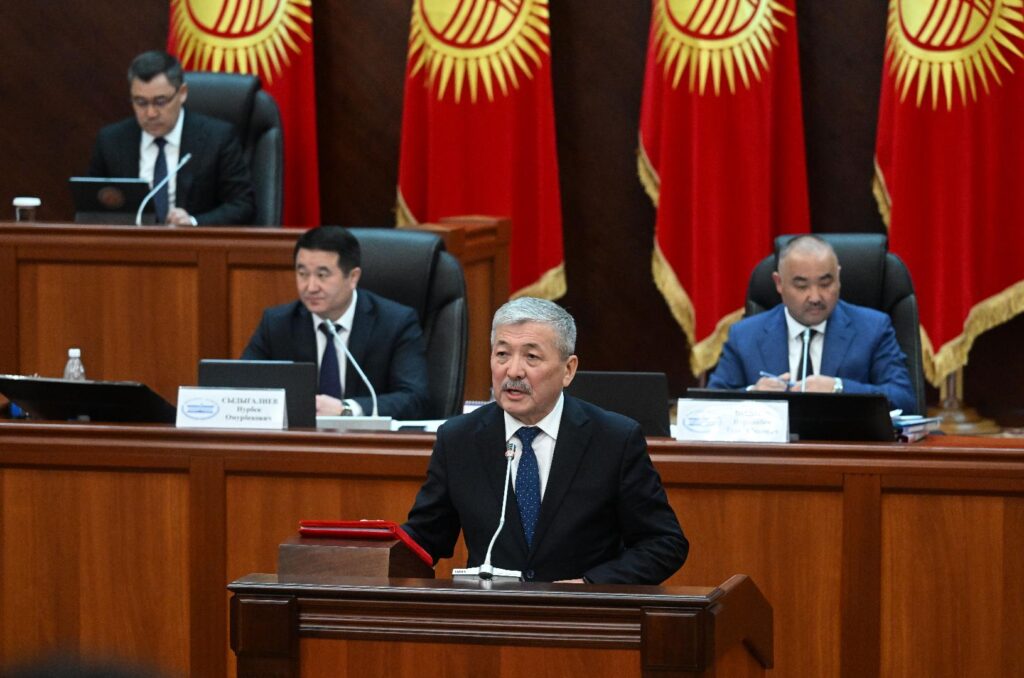
In Kyrgyzstan, Adylbek Kasymaliev, the head of the Cabinet of Ministers, has replaced Akylbek Japarov and became the new Prime Minister of the country. The departure of the previous head came as a surprise to most citizens. However, the president of the Kyrgyz Republic explained that the dismissal was due to unfavorable developments in the sphere of taxes.

New Prime Minister Adylbek Kasymaliev was born on December 1, 1960, in the village of Dolon, in the Tyup district of the Issyk-Kul region. Over his long career, he has held the positions of Minister of Finance of Kyrgyzstan, Chairman of the State Tax Service, and Deputy Head of the Presidential Administration.

According to the Kyrgyz president, Kasymaliev’s predecessor, Akylbek Japarov, who served for more than three years in the government, made a number of mistakes in the area of taxes.

“His departure from office, I think, should not be politicized,” stated President Sadyr Japarov. “Unfavorable events in the tax sphere, which provides the funds for the budget, have impacted this decision. There have also been machinations with excise duties. This sphere was under Akylbek Usenbekovich’s personal control, and he could have taken earlier measures to stop illegal activity. Because of illegal manifestations in this area, as well as an investigation into the leadership of the tax service, there is a need to eliminate a conflict of interests. Thus, I decided to remove him from his post,” the president told Parliament.

Earlier, the State Tax Service of Kyrgyzstan underwent massive inspections, resulting in a number of high-ranking officials losing their posts, including the head of the State Tax Service and some of his deputies.

Kyrgyz analyst Nasirdin Shamshiev told Times of Central Asia that the departure was unexpected, as Akylbek Japarov had established himself as a strong and progressive economist. “Akylbek Japarov has done a lot to increase tax collections and bring business out of the shadows. Today’s appointments in the government speak of the previous course of the Cabinet of Ministers,” Shamshiev said.

In addition, Bakyt Sydykov has been officially appointed as Kyrgyzstan’s new Minister of Economy. Previously, Sydykov worked on attracting investments and coordinating donor aid to the country.

 “Sydykov’s appointment was likely a preliminary measure,” Shamshiev also told TCA. “He has performed well in his previous posts, but we have yet to assess his work, because the Ministry of Economy is not only about investment, it has to deal with a very wide range of issues. These include taxes, as well as standardization and customs policy. There are also many unresolved problems related to the Eurasian Economic Union. There is still a lot of work to be done on all of this.”

Personnel rotations in the government of Kyrgyzstan are associated with a revitalization of the system of government management, Edil Baisalov, deputy chairman of the Cabinet of Ministers, wrote on his Facebook page. According to Baisalov, the president’s decision is dictated by the desire to give new momentum to the country’s growth. Baisalov also noted that Akylbek Japarov “continues to be the closest associate of the head of state.”

Some experts believe that Akylbek Japarov, known for his ambition, was temporarily removed from power to let the tax service scandal unfold without directly implicating him. They predict that once the controversy has passed, the former prime minister will likely reenter mainstream politics.

Uzbekistan Proposes 5-Day Paid Paternity Leave

Uzbekistan is taking steps to introduce new labor standards that support fathers and advance gender equality. A draft law submitted to parliament proposes granting men five days of paid leave within a month after the birth of their child.

Deputy Nodir Tilavoldiyev stated that the proposal aligns with the country’s ongoing gender reforms. Currently, Uzbekistan’s labor laws do not include provisions for paternity leave, leaving many men to balance work and family responsibilities or rely on unpaid leave during this period.

The draft law also seeks to enhance workplace protections by addressing discrimination, harassment, and violence. Employers would be empowered to transfer or dismiss employees found guilty of violence or abuse against colleagues.

Additionally, the legislation focuses on supporting victims of domestic violence. It proposes including them in the list of socially vulnerable groups eligible for state-guaranteed employment assistance. These measures aim to foster a safer and more inclusive working environment for all.

In neighboring Kazakhstan, fathers can already request unpaid leave upon the birth of a child, with some financial support provided through social payments.

Afghanistan Extends Electricity Import Agreement with Uzbekistan Until 2025

Afghanistan’s state-owned power company, Da Afghanistan Breshna Sherkat (DABS), has extended its electricity import agreement with Uzbekistan through the end of 2025. The agreement was signed in Uzbekistan by Abdul Bari Umar, the Taliban’s acting head of DABS, and representatives from the National Electricity Company of Uzbekistan.

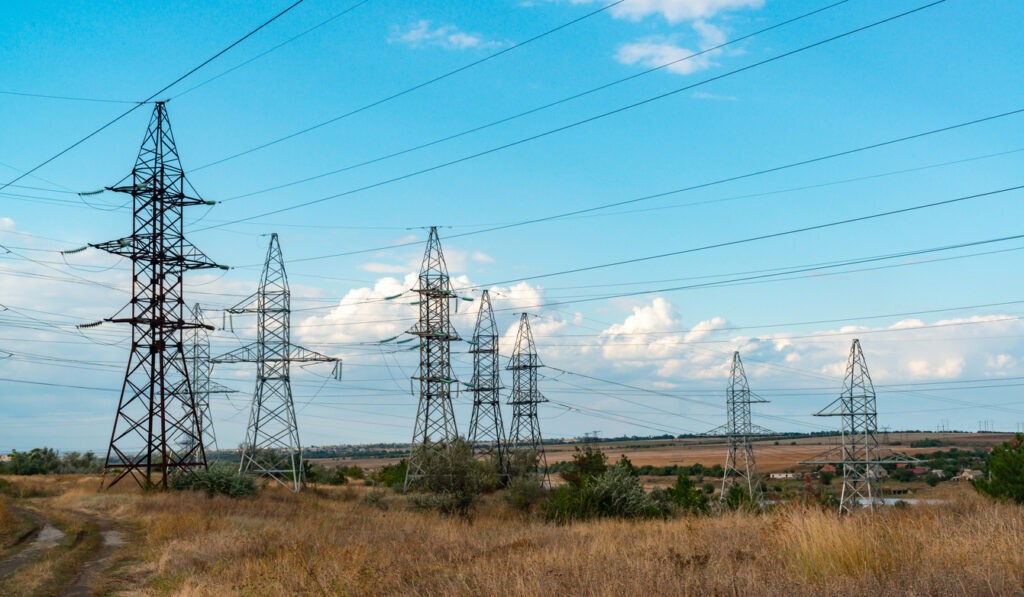
This extension is vital for Afghanistan, where unreliable electricity continues to affect millions of people. According to the Ministry of Energy and Water under Taliban control, the country requires 1,500 megawatts of electricity. Of this, approximately 720 megawatts are imported, while the remainder is generated domestically.

Afghanistan remains heavily reliant on neighboring countries for power due to its limited domestic production capacity. Residents of Kabul and other regions frequently endure prolonged outages, fueling public frustration over the lack of a consistent power supply.

In recent months, DABS reported disruptions in electricity imports from Uzbekistan and Turkmenistan, leaving many areas without power. The outages were attributed to technical issues on the Uzbek side and storm-related problems in Turkmenistan. Both issues have since been resolved, and electricity transmission to Afghanistan has been restored.

The extended agreement with Uzbekistan represents a critical step in addressing Afghanistan’s energy needs, though long-term solutions to bolster domestic electricity production remain essential.