• KGS/USD = 0.01144 0%
  • KZT/USD = 0.00211 0%
  • TJS/USD = 0.10460 0%
  • UZS/USD = 0.00008 0%
  • TMT/USD = 0.28571 0.28%
  • KGS/USD = 0.01144 0%
  • KZT/USD = 0.00211 0%
  • TJS/USD = 0.10460 0%
  • UZS/USD = 0.00008 0%
  • TMT/USD = 0.28571 0.28%
  • KGS/USD = 0.01144 0%
  • KZT/USD = 0.00211 0%
  • TJS/USD = 0.10460 0%
  • UZS/USD = 0.00008 0%
  • TMT/USD = 0.28571 0.28%
  • KGS/USD = 0.01144 0%
  • KZT/USD = 0.00211 0%
  • TJS/USD = 0.10460 0%
  • UZS/USD = 0.00008 0%
  • TMT/USD = 0.28571 0.28%
  • KGS/USD = 0.01144 0%
  • KZT/USD = 0.00211 0%
  • TJS/USD = 0.10460 0%
  • UZS/USD = 0.00008 0%
  • TMT/USD = 0.28571 0.28%
  • KGS/USD = 0.01144 0%
  • KZT/USD = 0.00211 0%
  • TJS/USD = 0.10460 0%
  • UZS/USD = 0.00008 0%
  • TMT/USD = 0.28571 0.28%
  • KGS/USD = 0.01144 0%
  • KZT/USD = 0.00211 0%
  • TJS/USD = 0.10460 0%
  • UZS/USD = 0.00008 0%
  • TMT/USD = 0.28571 0.28%
  • KGS/USD = 0.01144 0%
  • KZT/USD = 0.00211 0%
  • TJS/USD = 0.10460 0%
  • UZS/USD = 0.00008 0%
  • TMT/USD = 0.28571 0.28%

Kazakhstan to Enhance Middle Corridor Rail Connectivity with World Bank Support

The Board of Executive Directors of the World Bank has approved an $846 million guarantee from the International Bank for Reconstruction and Development (IBRD) to mobilize $1.41 billion in long-term private financing for a major railway project along Kazakhstan’s section of the Trans-Caspian International Transport Route (TITR), also known as the Middle Corridor.

The project is further backed by a $564 million co-guarantee from the Asian Infrastructure Investment Bank (AIIB).

The initiative is designed to improve the efficiency and resilience of Kazakhstan’s rail network while strengthening the financial sustainability and commercial viability of Kazakhstan Temir Zholy (KTZ), the national railway operator.

A central component of the project is the construction of a new 322.3-kilometer greenfield railway line between Mointy and Kyzylzhar. The link is expected to eliminate a significant detour, shorten the route by 149 kilometers, reduce congestion on heavily used sections, and enable double-stack container operations.

The new line will be equipped with modern signaling and telecommunications systems and designed to allow for future expansion and electrification.

According to project documentation, the upgrade is expected to contribute to tripling freight volumes and halving end-to-end transit times along the Middle Corridor by 2030. By shifting cargo from road to rail, it is also projected to reduce transport-related emissions, supporting Kazakhstan’s climate commitments and broader sustainable development objectives.

Official data indicate that freight volumes transported through Kazakhstan along the TITR increased by 36% in 2025.

In addition to infrastructure investment, the project includes technical assistance and institutional strengthening for KTZ. This includes support for tariff reform, exploration of alternative financing mechanisms, improvements in financial and environmental management, and preparation for a potential future initial public offering (IPO).

“Beyond enabling critical infrastructure investments, this project supports important reforms that will strengthen Kazakhstan Temir Zholy’s financial sustainability and long-term competitiveness,” said Andrei Mikhnev, World Bank Country Manager for Kazakhstan and Turkmenistan.

By combining phased infrastructure investments, institutional reforms, and private capital mobilization, the initiative aims to develop a modern rail system capable of delivering long-term economic and environmental benefits for Kazakhstan and the wider Eurasian region.

What Is Happening to Tajikistan’s Main Nature Reserve?

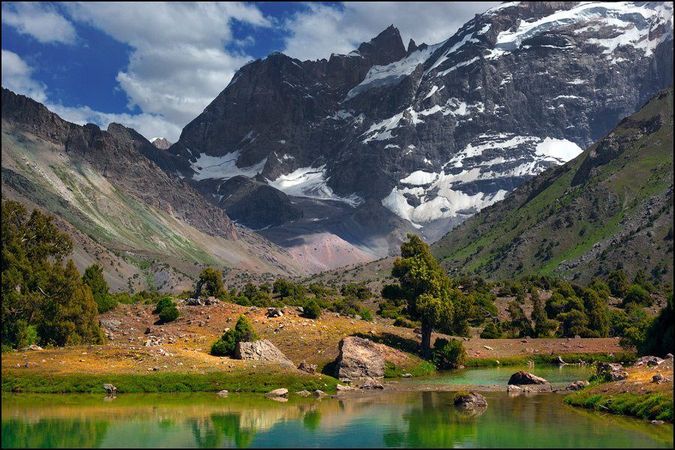
International experts have warned of a potential water crisis in the Tigrovaya Balka nature reserve, while Tajik authorities maintain that the situation remains stable and that systematic measures are underway to preserve the ecosystem.

At the center of the debate are the water regime of the Vakhsh River, the condition of the tugai forests, and growing anthropogenic pressure.

In November 2025, the International Union for Conservation of Nature (IUCN) published an assessment describing the state of the reserve, a UNESCO World Heritage Site, as “alarming.”

Experts link the primary risks to changes in the river’s hydrological regime. Regulation of the Vakhsh River through reservoirs and the redistribution of water for agricultural use have significantly reduced natural seasonal flooding, which historically sustained the tugai forests.

According to the IUCN, the ecosystem has become increasingly dependent on surface and drainage groundwater, volumes of which may be insufficient to maintain ecological balance.  The report also notes that approximately one-third of the Vakhsh River’s flow is diverted for irrigation, while part of the remaining water contains wastewater with elevated concentrations of chemical substances.

Authorities Assert the Situation Is Stable

Tajikistan’s Environmental Protection Committee disputes the severity of the assessment.

According to data from the country’s Hydrometeorological Agency, the average annual flow of the Vakhsh River in 2025 reached 468 cubic meters per second, equivalent to 89% of the long-term average. Officials state that such fluctuations fall within acceptable limits.

Water quality monitoring, conducted across 47 chemical indicators, reportedly showed only slight exceedances in sulphates and nitrites. Authorities report no recorded cases of water shortages, mass fish die-offs, or the complete drying of lakes within the reserve.

Committee representatives argue that the international evaluation relies heavily on data from 2017-2019 and does not sufficiently account for more recent developments.

Infrastructure and Anthropogenic Pressure

Scientists also point to historical infrastructure problems as a contributing factor.

Particular concern surrounds a 13-kilometer bypass canal along the northern border of the reserve, which was reportedly not cleaned for nearly three decades following the dissolution of the Soviet Union. As a result, silt accumulation led to rising water levels in certain lakes, flooding tugai forests and rendering parts of the territory unsuitable for species such as the Bukhara deer and pheasants. Some areas reportedly became marshy and overgrown with reeds.

Additional pressure stems from the expansion of settlements along the reserve’s northern boundary. Monitoring data indicate household waste contamination along 13.2 kilometers of shoreline.

Ecological Significance

The Tigrovaya Balka Reserve was established on November 4, 1938, becoming Tajikistan’s first state nature reserve. It covers 49,700 hectares, including 21,400 hectares of wetlands and more than 24,000 hectares of tugai forest.

The reserve is home to more than 30 rare animal species, including the Bukhara deer, gazelle, striped hyena, Central Asian monitor lizard, and Amu Darya shovelnose sturgeon. Over 50 bird species winter in the reserve annually.

In 2023, the site was inscribed on the UNESCO World Heritage List as part of the “Tugai Forests of Tigrovaya Balka” property.

Uzbekistan and Afghanistan Aim to Boost Trade to $5 Billion

Uzbekistan and Afghanistan plan to accelerate the introduction of a preferential trade regime and significantly expand bilateral trade, Deputy Prime Minister Jamshid Khodjaev said.

In a post on his LinkedIn page, Khodjaev wrote that on February 24 he held a video conference with Afghanistan’s Minister of Industry and Trade, Nuriddin Azizi. “We discussed practical steps to expand trade and economic cooperation and preparations for an upcoming visit of the Afghan delegation to Uzbekistan,” he said.

Khodjaev noted that Uzbekistan values its “friendly and constructive relations” with Afghanistan. According to him, over the past five years bilateral trade has grown 2.5 times, from $653 million in 2021 to $1.7 billion in 2025. “Our shared goal is to increase this figure to $5 billion,” he wrote.

The discussions also addressed the development of interregional ties and the infrastructure needed to promote goods, including showrooms and warehouse facilities. The two sides considered industrial cooperation in agricultural processing, construction materials, and textiles, as well as joint initiatives in food security.

“We agreed to accelerate the entry into force of the Preferential Trade Agreement and to advance projects in investment and industrial cooperation,” Khodjaev stated. He added that, after Ramadan, work would continue in a practical format, including a business forum in Kabul and the preparation of a roadmap outlining priority areas.

Earlier data indicate that in 2024 bilateral trade reached approximately $1.1 billion, with more than $1 billion accounting for Uzbek exports to Afghanistan.

Uzbek Janitor Who Saved Child in St. Petersburg Receives Awards and Ticket Home

Khayrullo Ibadullayev, an Uzbek migrant worker who saved a child from falling out of a seventh-floor window in St. Petersburg, has received official recognition in both Russia and Uzbekistan, as well as a return air ticket to his home country.

According to the press service of Uzbekistan’s Migration Agency under the Cabinet of Ministers, the agency presented Ibadullayev with a plane ticket to Uzbekistan and thanked him for his bravery. Officials stated that his actions had strengthened the image and reputation of Uzbek citizens working abroad.

Ibadullayev was also awarded the Jasorat medal by President Shavkat Mirziyoyev, a state decoration given for acts of courage. His wife, Gullola Safarova, expressed gratitude to the Uzbek authorities.

“First of all, I want to thank our President for awarding my husband the Jasorat medal and honoring him so highly,” she said. Safarova recalled that when her husband called and told the family he was holding a child in his arms, they were initially alarmed. “When he said he had caught a child who fell from above, the first thing we asked about was the child’s health. We were happy and told him he did the right thing,” she said.

She added that her husband had previously demonstrated similar compassion. In 2025, he reportedly donated blood during a child’s surgery, contributing to saving the patient’s life.

Russian state news agency TASS reported that St. Petersburg Governor Alexander Beglov presented Ibadullayev with the “For Valor in Rescue” distinction during a ceremony at the Smolny government complex. According to the city administration’s press service, Beglov said: “You did not think about yourself. You were injured but saved the life of a seven-year-old child. Our entire city thanks you.”

Ibadullayev, who has been working in St. Petersburg since December 2025 for a cleaning company, also received a commemorative watch from the governor.

The child survived the fall and was hospitalized. Officials have described his condition as stable.

Chinese Firm to Modernize Historic Hydropower Plant Near Bishkek

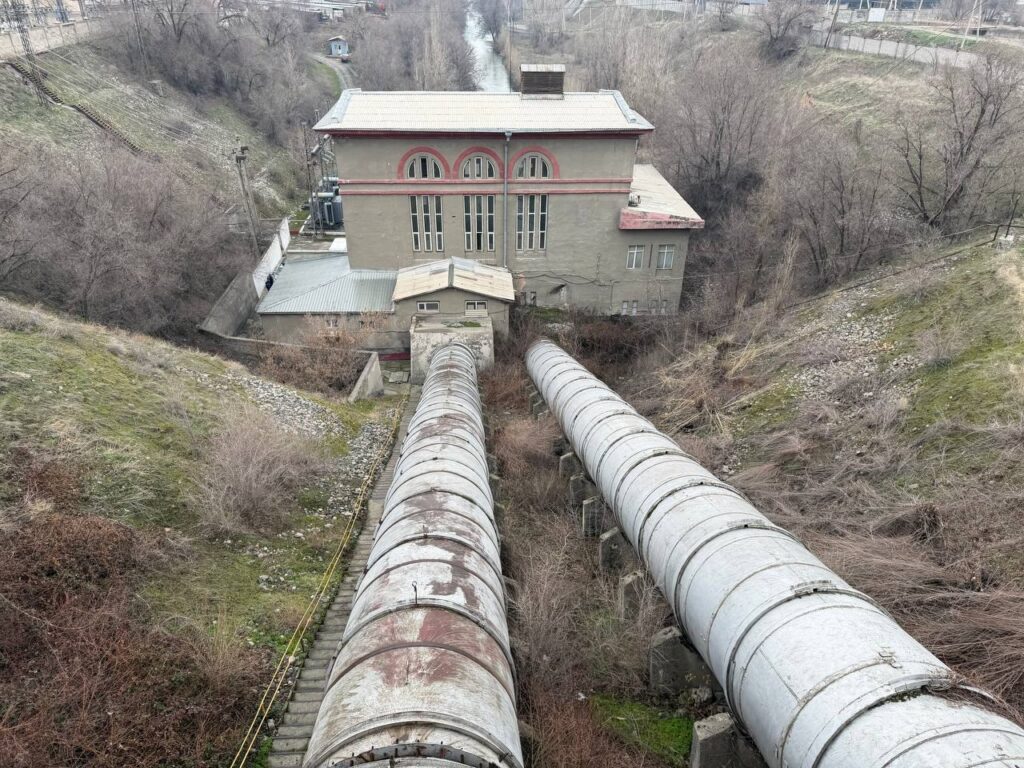
Kyrgyzstan’s state-owned Chakan HPP OJSC has signed a contract with China National Heavy Machinery Corporation (CHMC), which will serve as the general contractor for the modernization of the Lebedinovskaya hydroelectric power plant (HPP) on the outskirts of Bishkek.

The project forms part of the Ministry of Energy’s broader program to upgrade and rehabilitate hydropower facilities in an effort to reduce the country’s chronic electricity shortages and strengthen energy security.

The Lebedinovskaya HPP is the main station of the Alamedin HPP cascade, which comprises eight small hydropower plants located on the Western Big Chui Canal in the Chui region.

According to the Ministry of Energy, the modernization will involve replacing key equipment, increasing generating capacity, and extending the plant’s operational lifespan.

The project involves increasing the plant’s installed capacity from 7.6 megawatts (MW) to 10 MW and raising annual electricity generation from 37.2 million kilowatt-hours (kWh) to 53.5 million kWh.

CHMC has already begun preparing the design and cost-estimate documentation.

Lebedinovskaya HPP is one of the oldest operating hydropower plants in northern Kyrgyzstan. Construction began in May 1942, during World War II. Much of the main construction work was carried out during a harsh winter, when more than 7,000 women and children reportedly excavated frozen soil by hand, transported it across the ice, and stood in icy water to pump out up to 200 cubic meters of groundwater daily to protect the plant’s foundation. Construction was completed in one year and two weeks.

In 1943, the city of Frunze, now Bishkek, began receiving electricity from the plant. The additional power enabled factories evacuated from western parts of the Soviet Union during the war to resume operations at their new location.

The Number of Small Hydropower Plants in Kyrgyzstan Has Doubled in Five Years

Over the past five years, the number of small hydropower plants (HPPs) in Kyrgyzstan has more than doubled. The expansion of small-scale hydropower has become a key priority of state energy policy aimed at reducing electricity shortages and strengthening national energy security.

During this period, 27 small HPPs were commissioned across the country. As a result, 43 such plants are currently in operation. According to government plans, by the end of 2030, an additional 44 small hydropower facilities are expected to come online, effectively doubling the sector’s current capacity once again.

The Ministry of Energy reports that in 2026 alone, 17 new small HPPs are scheduled for construction across all regions of the country, with a combined installed capacity of 1,113.4 megawatts (MW).

Earlier, speaking before the country’s parliament, the Jogorku Kenesh, Prime Minister Adylbek Kasymaliev stated that 19 additional small HPPs with a total capacity of 203.8 MW are planned for commissioning in 2027.

“The electricity shortage is a temporary phenomenon. We are moving toward reducing the gap between electricity consumption and production,” he said.

The projected capacity figures suggest a sharp increase in generation potential. However, the announced 1,113.4 MW capacity for 17 small HPPs in 2026 appears unusually high for facilities categorized as “small” and may require clarification, as small hydropower plants typically operate at significantly lower individual capacities.

According to the Water Resources Service, Kyrgyzstan’s total hydropower potential is estimated at 174 billion kilowatt-hours (kWh), with an overall capacity of 19.8 million kilowatts (19.8 gigawatts).

This indicates that a substantial share of the country’s river-based energy potential remains undeveloped, creating room for further expansion of small-scale hydropower infrastructure.

Given Kyrgyzstan’s mountainous terrain and extensive river network, hydropower remains the backbone of its electricity generation system. The government views small HPPs as a faster and less capital-intensive complement to large hydropower stations, particularly in remote regions.