• KGS/USD = 0.01144 0%
  • KZT/USD = 0.00214 0%
  • TJS/USD = 0.10508 0.48%
  • UZS/USD = 0.00008 0%
  • TMT/USD = 0.28571 0%
  • KGS/USD = 0.01144 0%
  • KZT/USD = 0.00214 0%
  • TJS/USD = 0.10508 0.48%
  • UZS/USD = 0.00008 0%
  • TMT/USD = 0.28571 0%
  • KGS/USD = 0.01144 0%
  • KZT/USD = 0.00214 0%
  • TJS/USD = 0.10508 0.48%
  • UZS/USD = 0.00008 0%
  • TMT/USD = 0.28571 0%
  • KGS/USD = 0.01144 0%
  • KZT/USD = 0.00214 0%
  • TJS/USD = 0.10508 0.48%
  • UZS/USD = 0.00008 0%
  • TMT/USD = 0.28571 0%
  • KGS/USD = 0.01144 0%
  • KZT/USD = 0.00214 0%
  • TJS/USD = 0.10508 0.48%
  • UZS/USD = 0.00008 0%
  • TMT/USD = 0.28571 0%
  • KGS/USD = 0.01144 0%
  • KZT/USD = 0.00214 0%
  • TJS/USD = 0.10508 0.48%
  • UZS/USD = 0.00008 0%
  • TMT/USD = 0.28571 0%
  • KGS/USD = 0.01144 0%
  • KZT/USD = 0.00214 0%
  • TJS/USD = 0.10508 0.48%
  • UZS/USD = 0.00008 0%
  • TMT/USD = 0.28571 0%
  • KGS/USD = 0.01144 0%
  • KZT/USD = 0.00214 0%
  • TJS/USD = 0.10508 0.48%
  • UZS/USD = 0.00008 0%
  • TMT/USD = 0.28571 0%

Kyrgyzstan Launches New IT Hub in Bishkek

On April 10, the Technopark IT hub officially opened in Bishkek, marking a significant milestone in the development of Kyrgyzstan’s fast-growing tech sector.

Spanning 14,000 square meters and designed to accommodate 1,500 jobs, the new hub was built with private investments totaling 2 billion KGS (more than $22 million). The facility serves as a center for digital innovation, entrepreneurship, and creative collaboration, featuring office spaces, co-working areas, conference rooms, and a professional podcast recording studio.

Current residents of the IT hub include some of Kyrgyzstan’s largest online services for trade, employment, real estate, and cryptocurrency exchange platforms.

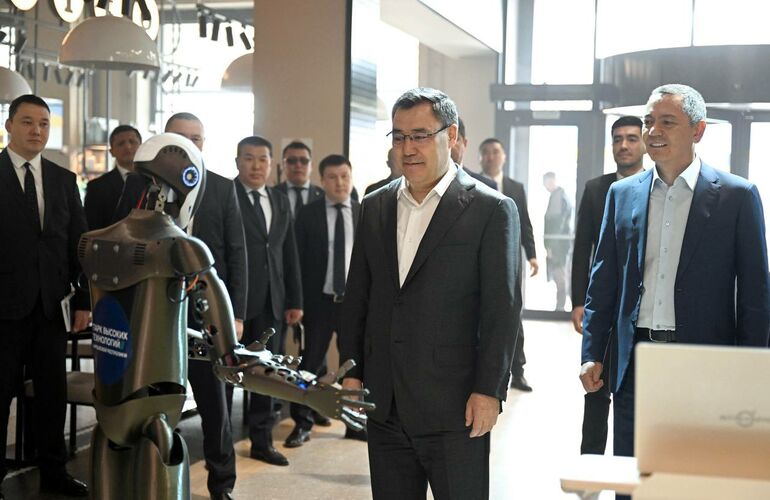
The opening ceremony was attended by President Sadyr Japarov, who was welcomed by BilimBot, a Kyrgyz-speaking robot developed by local programmers.

In his remarks, Japarov highlighted the central role of digitalization and technology in modern economic development.

“Today, the world is undergoing rapid changes. The development of countries no longer depends only on natural resources. In the past, the global economy was dominated by countries rich in minerals or with access to the sea. Now, these factors are no longer decisive. We live in the digital age. The ability to use knowledge and technology as resources that can compete with natural ones has come to the fore,” he said.

The president also discussed legislative reforms aimed at fostering Kyrgyzstan’s IT landscape. In 2023, Japarov signed amendments to the Law on the High Technology Park of the Kyrgyz Republic, which extended its preferential tax regime indefinitely, a move designed to attract both local and international tech companies.

Established in 2011, the High Technology Park (HTP) was created to stimulate IT business development by offering substantial tax relief to companies exporting digital goods and services. Previously, tax exemptions were set for a 15-year term expiring in 2026. Under the new legislation, these tax benefits are now permanent.

Resident companies of the HTP enjoy exemptions from sales tax, profit tax, and value-added tax (VAT). Employees benefit from a reduced income tax rate of 5%, and the social insurance tax is fixed at 12% of the average monthly wage.

The IT sector is now one of Kyrgyzstan’s most dynamic industries. In 2021, the government created the Ministry of Digital Development to lead efforts in e-government services and to expand digital access across the country.
Kazakhstan Advances Water Sector Reform at High-Level Coordination Meeting

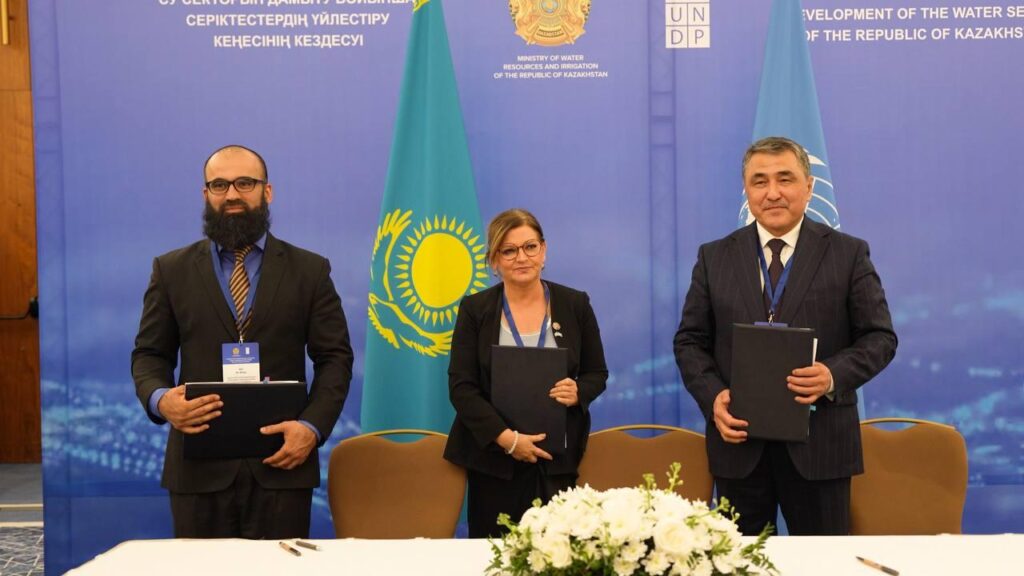
On April 10, the Coordination Council of Partners for the Development of the Water Sector of Kazakhstan held its second official meeting in Astana, co-chaired by Nurzhan Nurzhigitov, Kazakhstan’s Minister of Water Resources and Irrigation, and Katarzyna Wawiernia, United Nations Development Programme (UNDP) Resident Representative in Kazakhstan.

The Council, which first convened on September 30, 2024, comprises the Ministry of Water Resources and Irrigation, the UNDP, and more than 30 international partners, including financial institutions and global development organizations.

At the meeting, participants reviewed the Council’s work over the past six months and discussed strategic priorities for sustainable water management. A key topic was the 2024-2030 Partnership Water Initiative, adopted in September 2024, which outlines long-term goals for resilience and innovation in the sector.

Nurzhigitov discussed the Council’s role in forging productive cross-sector partnerships.

“In just six months, we’ve reached concrete agreements and launched new projects with partner countries, development institutions, financial organizations, and major companies. The Ministry has signed three agreements and sixteen memorandums with international partners from the Netherlands, France, Germany, Spain, the USA, Israel, China, the Islamic Development Bank, the Eurasian Development Bank, the International Bank for Reconstruction and Development, and UNDP,” he said.

New Agreements Signed at the Meeting

Five new cooperation agreements were concluded during the session:

  • The Ministry signed a communiqué with Spain’s Xcalibur Smart Mapping to carry out underground water resource mapping in western Kazakhstan
  • A Statement of Intent was signed with the Islamic Development Bank and UNDP to bolster the technical capacity of Kazakhstan’s water sector, with a focus on digitalization, flood forecasting, climate resilience, and policy development
  • An agreement between the Ministry’s Information and Analytical Center for Water Resources and the Eurasian Development Bank established a grant to develop a National Water Resources Information System by 2026. The project aims to increase transparency, efficiency, and equity in water distribution
  • Kazvodkhoz, the Ministry’s national enterprise, signed a communiqué with PowerChina International to expand cooperation, including training seminars in China for Kazakhstani specialists (the first group of 30 participants is already attending a two-week program)
  • Kazvodkhoz also signed a memorandum of cooperation with Primus Capital Almaty LLP, aimed at developing small hydropower plants at national water facilities

A Long-Term Challenge

Kazakhstan has long faced serious water-related challenges from the shrinking Aral Sea, driven by reduced transboundary river flows, to destructive spring floods and chronic irrigation shortages in the southern regions. These challenges highlight the urgency of coordinated, international engagement and innovation in water governance.

TikToker Arrested for Insulting Uzbek Citizens Online

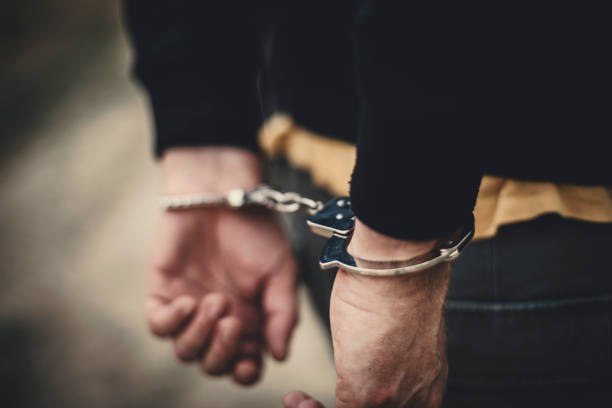
Valeriy Yugay, a TikToker from Uzbekistan’s Tashkent region known online as Abdullah, has been arrested after making a series of offensive videos targeting Uzbek citizens while abroad.

According to Bobur Tulaganov, spokesperson for the Tashkent Regional Department of Internal Affairs, Yugay recorded and published the videos during his stay in South Korea in October and November 2024. In the videos, he allegedly insulted Uzbeks, made statements that could incite ethnic hatred, and expressed disrespect for national values and religious beliefs.

Yugay was returned to Uzbekistan on March 25, arriving on a flight from Abu Dhabi to Samarkand, where he was immediately detained by law enforcement authorities.

A criminal case has been opened against him under Uzbekistan’s Criminal Code, and a court has ordered his pre-trial detention while the investigation proceeds.

The 26-year-old reportedly made several inflammatory statements, including denying the legitimacy of the Uzbek state, expressing regret about being born there, and vowing never to return. In one particularly controversial video, he insulted Uzbek women and claimed he would harm his own mother in exchange for social media likes and followers.

The Internal Affairs Department stated that his remarks sparked widespread public outrage across Uzbekistan.

Following his arrest, Yugay admitted guilt and issued a public apology.

“I, Valeriy Yugay, insulted our people on social media. I did it for attention and recognition. But now I realize my mistake and deeply regret it. I sincerely apologize to everyone,” he said.

Trial Begins in Almaty for Man Who Took Airport Employee Hostage

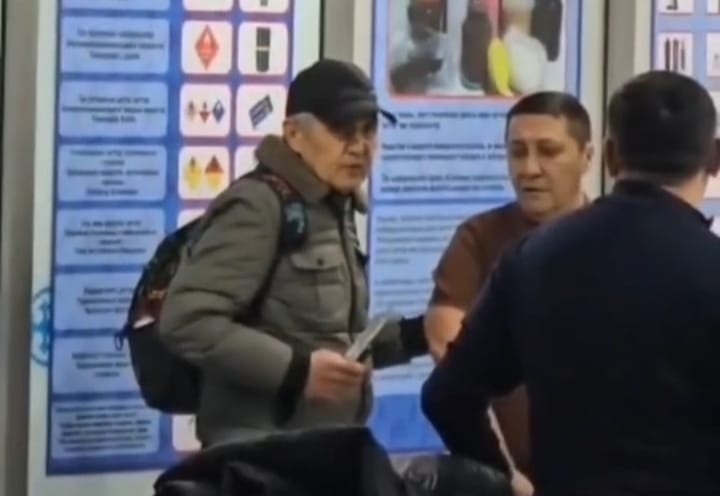
A trial has opened in Almaty for Mashrapbek Baratov, a 67-year-old man accused of taking a female airport employee hostage and threatening to detonate a bomb inside the terminal.

The incident occurred on March 7 at Almaty International Airport, where Baratov, armed with a kitchen knife, seized Botagoz Mukhtarova, a 23-year-old security screening officer. He claimed to be carrying explosives and demanded access through the security area without the proper documents.

The situation was quickly defused thanks to the actions of Musa Abdraim, a bystander who had come to the airport to see off an acquaintance. Abdraim, 52, reportedly offered himself in place of the hostage and managed to disarm the attacker at a critical moment. The standoff lasted approximately seven minutes.

Abdraim, a former martial artist, was later honored by President Kassym-Jomart Tokayev with the “Yerligi Ushin” (For Bravery) medal for his selflessness and courage.

During court proceedings, further details emerged about Baratov’s background. He has been charged under Part 3, Article 293 of the Criminal Code (“Hooliganism with the use of weapons”), Paragraph 4, Part 2, Article 261 (“Hostage-taking”), and Article 273 (“Knowingly false report of an act of terrorism”).

According to prosecutors, Baratov, facing financial distress, spontaneously decided to fly to another city but lacked identification and a boarding pass. When Mukhtarova stopped him during screening, he claimed there was a bomb in his backpack, showed her an old button phone, and held a knife to her neck.

Testifying in court, Mukhtarova recounted the traumatic experience through tears: “He was alone. I asked for his ID and boarding pass. He said he would blow up the airport in three minutes and showed me a button phone. He grabbed me, I fell. He pulled a knife out of my pocket. I panicked and screamed. He said if anyone came close, he’d detonate the bomb.”

Baratov also presented his version in court, claiming he had arrived at the airport by mistake while riding a bus and impulsively decided to fly to Astana in search of work. He admitted to grabbing Mukhtarova and feigning possession of a bomb out of fear of being shot by police. He pleaded guilty to all charges.

He also stated that he suffered a concussion while serving in Afghanistan in 1981, and that each spring he experiences bouts of aggression, allegedly due to long-term brain injuries. Reports indicate that in November 2024, Baratov attacked a woman on a bus for speaking loudly on the phone.

The incident has raised public concern over airport security protocols. Questions persist over how Baratov managed to bring a knife into the terminal. According to Deputy Interior Minister Sanzhar Adilov, responsibility for airport security was transferred from the transport police to aviation security services in 2009. He has since pledged to revisit the legislative amendments from that period.

“There were changes in 2009. Previously, the transport police managed security. Later, this responsibility shifted to the aviation security service,” Adilov said. “We will review the legislative amendments passed then. After investigation and verification, we will submit a report under Article 200 of the Criminal Procedure Code to address circumstances that contributed to the offense.”

Reportedly, since 2010-2011, entry-point screening at most airports in Kazakhstan is not performed except during emergencies. Standard inspections occur only after passengers check in.

Kyrgyz Authorities Arrest Critic of Kyrgyzstan-Tajikistan Border Agreement

Kyrgyzstan and Tajikistan earned international praise last month when they signed a border agreement ending years of tension that had sometimes spilled into deadly violence. A recent arrest in Kyrgyzstan suggests that authorities are sensitive to any criticism of a deal that was widely hailed as a big step for closer ties among Central Asian countries. 

Kanyshai Mamyrkulova, who has been described by Kyrgyz media sources as a journalist and an activist, was arrested on March 20, a week after President Sadyr Japarov of Kyrgyzstan and Emomali Rahmon, Tajikistan’s leader, signed the peace agreement following painstaking negotiations over the delineation of the nearly 1,000-kilometer border between the two countries.

This week, a court upheld an earlier ruling that Mamyrkulova be held in pre-trial detention until May 19, in one of the latest cases in Kyrgyzstan that pits advocates of free speech against a government that increasingly views unfettered opinions and alleged disinformation as a threat to national stability. While critics warn that Kyrgyzstan is clamping down on free expression, the environment there is relatively looser than in Tajikistan, where the state exercises tighter controls over the media.

Mamyrkulova appears to have fallen foul of the authorities for critical posts on social media rather than any journalistic reports. 

She spread “false information regarding the Kyrgyzstan–Tajikistan border issue” on Facebook, the Bishkek city police department said last month.

“The individual made calls aimed at destabilizing the socio-political situation in the Kyrgyz Republic by inciting mass disorder and promoting interethnic hatred between citizens of Kyrgyzstan and neighboring countries,” the department said. It added that Mamyrkulova had “previously been held accountable for similar actions — spreading misinformation and escalating tensions during past incidents involving border issues between the Kyrgyz and Uzbek republics.” 

A review of some of Mamyrkulova’s Facebook posts reveals a stream of comments and barbs about alleged corruption, official wrongdoing, and prosecutions, often delivered with cheeky humor. Some are indirect or use metaphors to make a point. Several that refer to the border agreement suggest the Kyrgyz government was not transparent enough with its citizens and imply that Tajikistan got the better of the deal.  

In a letter released last week, Mamyrkulova said she hadn’t done anything wrong. 

“I did not kill anyone, did not steal from the state, and did not take bribes. I’ve only posted about legal, political, economic, and social issues affecting the public. Regarding the criminal charges brought against me under Article 278 (part 3) and Article 330 (part 1) of the Criminal Code of the Kyrgyz Republic — I have never committed, nor will I ever commit such crimes,” she said in the statement, which was posted on the Facebook account of supporter Amanbol Babakulov.  

“They spun a criminal case from thin air simply because I wrote what the public was thinking, in a way that struck a nerve. I know this well myself — as do the lawyers, the attorneys, and those who work closely with the justice system,” she said. 

The Media Action Platform of Kyrgyzstan, which represents journalists, called for Mamyrkulova to be freed, saying that “it is obvious that there are no calls for violence, riots or international division” in the social media posts that were flagged by authorities and that equating an opinion with a crime violates the Constitution. 

Separately, on Wednesday, Japarov pardoned 41 people who had been convicted of crimes, according to the Kloop news organization. Those who were pardoned include activist Zarina Torokulova and reporter Azamat Ishenbekov, both of whom got into trouble for social media posts and were sentenced to five years in prison after being convicted of calling for riots. They were detained in September 2023 and January 2024, respectively. 

Kyrgyz Security Agency Condemns Osh Mayor’s City Toll Plan

Kyrgyzstan’s State Committee for National Security (SCNS) has sharply criticized a controversial proposal by the mayor of Osh, the country’s second-largest city, to introduce an entry fee for vehicles arriving from other regions.

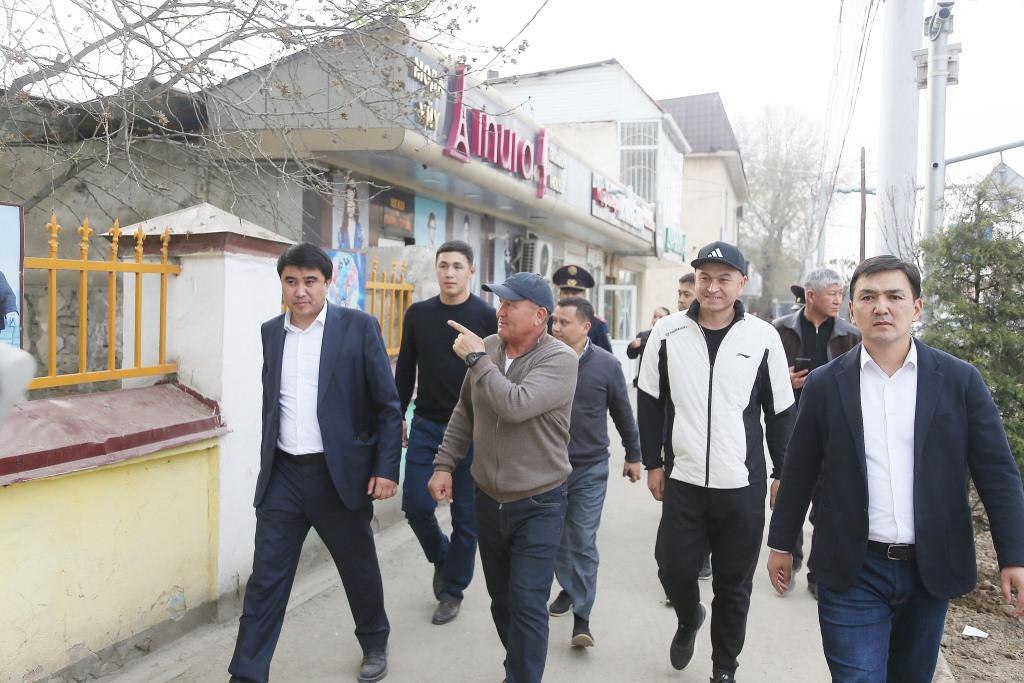
Mayor Jenishbek Toktorbayev raised the idea earlier this week during a municipal meeting focused on identifying new sources of revenue for the city budget. Arguing that Osh cannot rely indefinitely on central government support from Bishkek, Toktorbayev floated the possibility of charging motorists for access to the city.

According to the mayor, Osh is home to over 500,000 residents, with the population exceeding 800,000 when accounting for daily inflows from neighboring areas. “About 56,000 vehicles enter Osh each day, leading to traffic jams, accidents, and air pollution,” he said.

Toktorbayev proposed charging 50–100 KGS (approximately $0.60-$1.15) per car and 100-150 KGS per truck, estimating that such fees could generate around 2 million KGS daily. This could add up to an additional 3 billion KGS (roughly $34.5 million) in annual revenue for the city budget.

However, the SCNS issued a strong rebuke, calling the idea unacceptable. In a statement cited by local media, the agency warned that the financial burden would disproportionately affect ordinary citizens, particularly low-income families. It added that higher delivery costs would likely be passed on to consumers, driving up prices for goods and services.

The Committee urged all mayors and local officials to refrain from proposing such “crazy ideas” and instead focus on addressing the real challenges facing their constituents​.

Following public backlash and the SCNS statement, the Osh municipal government’s Facebook page, which previously contained details about the mayor’s proposal, has become inaccessible.

The notion of charging vehicle entry fees is not new in Kyrgyzstan. Last year, a similar proposal was floated for Bishkek as a potential solution to the capital’s worsening traffic congestion. However, President Sadyr Japarov rejected the idea, instead ordering the expansion of road infrastructure and the construction of new parking facilities.

The Times of Central Asia has previously reported on Mayor Toktorbayev’s active economic agenda. Notably, his urban development plans have sparked public opposition, including from the head of the Russian Orthodox Church in Kyrgyzstan, who urged city authorities not to demolish a historic cemetery to make way for a new road​.