• KGS/USD = 0.01144 0%
  • KZT/USD = 0.00192 -0%
  • TJS/USD = 0.10876 0.55%
  • UZS/USD = 0.00008 0%
  • TMT/USD = 0.28490 0%
  • KGS/USD = 0.01144 0%
  • KZT/USD = 0.00192 -0%
  • TJS/USD = 0.10876 0.55%
  • UZS/USD = 0.00008 0%
  • TMT/USD = 0.28490 0%
  • KGS/USD = 0.01144 0%
  • KZT/USD = 0.00192 -0%
  • TJS/USD = 0.10876 0.55%
  • UZS/USD = 0.00008 0%
  • TMT/USD = 0.28490 0%
  • KGS/USD = 0.01144 0%
  • KZT/USD = 0.00192 -0%
  • TJS/USD = 0.10876 0.55%
  • UZS/USD = 0.00008 0%
  • TMT/USD = 0.28490 0%
  • KGS/USD = 0.01144 0%
  • KZT/USD = 0.00192 -0%
  • TJS/USD = 0.10876 0.55%
  • UZS/USD = 0.00008 0%
  • TMT/USD = 0.28490 0%
  • KGS/USD = 0.01144 0%
  • KZT/USD = 0.00192 -0%
  • TJS/USD = 0.10876 0.55%
  • UZS/USD = 0.00008 0%
  • TMT/USD = 0.28490 0%
  • KGS/USD = 0.01144 0%
  • KZT/USD = 0.00192 -0%
  • TJS/USD = 0.10876 0.55%
  • UZS/USD = 0.00008 0%
  • TMT/USD = 0.28490 0%
  • KGS/USD = 0.01144 0%
  • KZT/USD = 0.00192 -0%
  • TJS/USD = 0.10876 0.55%
  • UZS/USD = 0.00008 0%
  • TMT/USD = 0.28490 0%
11 December 2025

Kazakhstan Presents “Growth Case” to Global Investors in London

Kazakhstan is deepening its engagement with UK capital markets. At the Kazakhstan Capital Markets Day 2025 conference in London, Deputy Minister of National Economy Asan Darbayev outlined the country’s economic growth strategy and measures to enhance its investment climate.

Speaking during the panel session “Sustainable Economic Growth and Financial Sector Development,” Darbayev highlighted that Kazakhstan’s real GDP grew by 6.3% in the first nine months of 2025, one of the strongest performances in recent years. The government’s medium-term target is to reach a GDP of $450 billion by 2029.

Infrastructure development remains central to Kazakhstan’s strategy to position itself as a key transit and investment hub in Eurasia. Currently, five international rail corridors and eight road corridors are operational, including the strategically vital Middle Corridor. This infrastructure forms the backbone of Kazakhstan’s growing export and import routes and supports the localization of industrial production.

Darbayev reaffirmed Kazakhstan’s standing as a reliable and creditworthy partner. The country maintains investment-grade ratings from S&P, Fitch, and Moody’s. Notably, S&P upgraded its outlook to “Positive,” while Moody’s raised Kazakhstan’s rating to Baa1 last year.

To attract long-term investment, Kazakhstan offers a range of incentives, including investment contracts, tax and customs preferences, and legislative stability guarantees for up to 25 years.

Investor engagement is facilitated through a digital investment platform operating on a “single window” principle, supported by the Investment Attraction Council. The council is tasked with removing administrative barriers and accelerating project approvals.

A major draw for international capital is the Astana International Financial Centre (AIFC), which operates under English common law. The AIFC hosts more than 3,500 companies from over 80 countries, with cumulative investments exceeding $14 billion. The center’s emphasis on transparency and legal protections has made it a trusted destination for global investors.

Kazakhstan continues to attract investment in oil and gas, engineering, transportation, and the food and beverage sectors. Major partners include Chevron, ExxonMobil, Shell, GE Transportation, Hyundai, KIA, Coca-Cola, Danone, Carlsberg, and Lactalis, reflecting interest in high value-added projects and technology localization.

During the forum, Darbayev also held meetings with executives from Mitsubishi UFJ Financial Group (MUFG) and Morgan Stanley Investment Management (MSIM), further promoting Kazakhstan’s economic agenda to global financial leaders.

Turkmen Border Guards Delay Medical Aid for Seriously Injured Man at Shavat Checkpoint

At the border between Turkmenistan and Uzbekistan, a seriously injured man was forced to wait for hours at the Shavat checkpoint after Turkmen border guards refused to allow immediate medical evacuation while verifying his documents.

The incident involved a married couple from Kunya-Urgench, Turkmenistan, who were en route to visit relatives in Uzbekistan’s Andijan region when they were involved in a car accident on October 13. The man, who was sitting in the front seat, sustained multiple injuries, including broken ribs, a fractured shoulder and foot, and numerous bruises and lacerations. His wife, who was in the back seat, suffered only minor bruises.

Following the accident, both were taken to the Khorezm Regional Hospital in Urgench, Uzbekistan, where the man underwent treatment for nine days. His injuries required extensive casting.

On October 22, an Uzbek medical commission declared him fit for transport and approved his transfer to Turkmenistan for further treatment.

An ambulance transported the patient to the Shavat checkpoint, accompanied by a doctor and his wife. At approximately 11:00 a.m., Turkmen border guards carried the man, still on a stretcher, across the border, assuring the family that an ambulance had already been dispatched from Dashoguz.

However, no medical team arrived for another five hours. The man remained on a stretcher on the ground beside the border post until 4:00 p.m., while his wife repeatedly pleaded with officers to call the ambulance again.

Although the border guards assisted the man twice when he needed to relieve himself, they did not provide medical assistance. It later emerged that officials were conducting background checks, verifying the authenticity of the couple’s visas, and contacting Ashgabat as well as the Uzbek embassy to confirm the couple’s stated purpose of visiting relatives rather than engaging in commercial activity.

When the ambulance eventually arrived, yet another obstacle emerged: Dashoguz Regional Hospital refused to admit the patient, citing concerns over the validity of the diagnosis and the origin of the medical documentation.

Only after the intervention of higher authorities was the man finally admitted for treatment.

Alatau to Become First City in Kazakhstan with Air Taxi System

Alatau, a newly established city in southern Kazakhstan near the country’s largest metropolis, Almaty, is set to become the first in the nation to launch an air taxi system.

Kazakhstan’s Ministry of Artificial Intelligence and Digital Development recently signed a memorandum of understanding with U.S. based Joby Aero, Inc. for the purchase of electric vertical take-off and landing (eVTOL) aircraft valued at approximately $300 million. The aircraft will form the basis of a new urban air mobility system.

The agreement also includes Alatau Advance Air Group Ltd., a local operator and integrator of air mobility technologies, and Vyacheslav Kim, chairman of the board of directors at Kaspi.kz and a key investor in the Alatau City development project.

Plans for the construction of Alatau City were unveiled in late 2024, when four villages near Almaty were merged to create a new urban agglomeration. The city aims to attract $7.2 billion in investment and grow to a population of 2 million. It will also be part of a special economic zone that includes more than 170 planned projects worth a combined $24.4 billion. Authorities hope to position Alatau as a leading destination for investors.

Joby Aero, Inc., a global leader in eVTOL aviation and the developer of certified electric air taxis, will supply aircraft capable of vertical take-off and landing. These aircraft will anchor Kazakhstan’s first urban air mobility initiative. The agreement also includes the creation of a testing site in southern Kazakhstan for certification and demonstration flights, along with plans to integrate air taxis into the transport systems of both Alatau and Almaty.

Joby’s electric aircraft can travel up to 160 kilometers on a single charge and reach speeds of up to 322 km/h. The distance between Almaty and Alatau is approximately 34 kilometers.

“Kazakhstan is taking a step into the future of innovative transport. The purchase of electric eVTOL aircraft marks an important milestone in developing smart cities and integrating cutting-edge technologies,” said Zhaslan Madiyev, Minister of Artificial Intelligence and Digital Development. “This move will shape Alatau as a city built on the technologies of tomorrow.”

As previously reported by The Times of Central Asia, Kazakh authorities plan to launch commercial air taxi operations as early as next year.

Tokayev Secures $17B in U.S. Deals, Trump Hints at Kazakhstan Visit

The summit between the leaders of the United States and the five countries of Central Asia was the primary focus of Kazakh President Kassym-Jomart Tokayev’s visit to Washington. But even before the summit began, the Kazakh delegation secured a series of high-level meetings with U.S. political leaders and business executives, culminating in the signing of 29 bilateral agreements, valued at approximately $17 billion.

Tokayev’s program in Washington began with meetings with Secretary of State Marco Rubio, Secretary of Commerce Howard Lutnick, and U.S. Special Representative for South and Central Asia Sergio Gor.

Kazakhstan, Tokayev noted, maintains active political ties with the United States at multiple levels, and remains committed to a constructive dialogue to deepen its multifaceted cooperation with Washington.

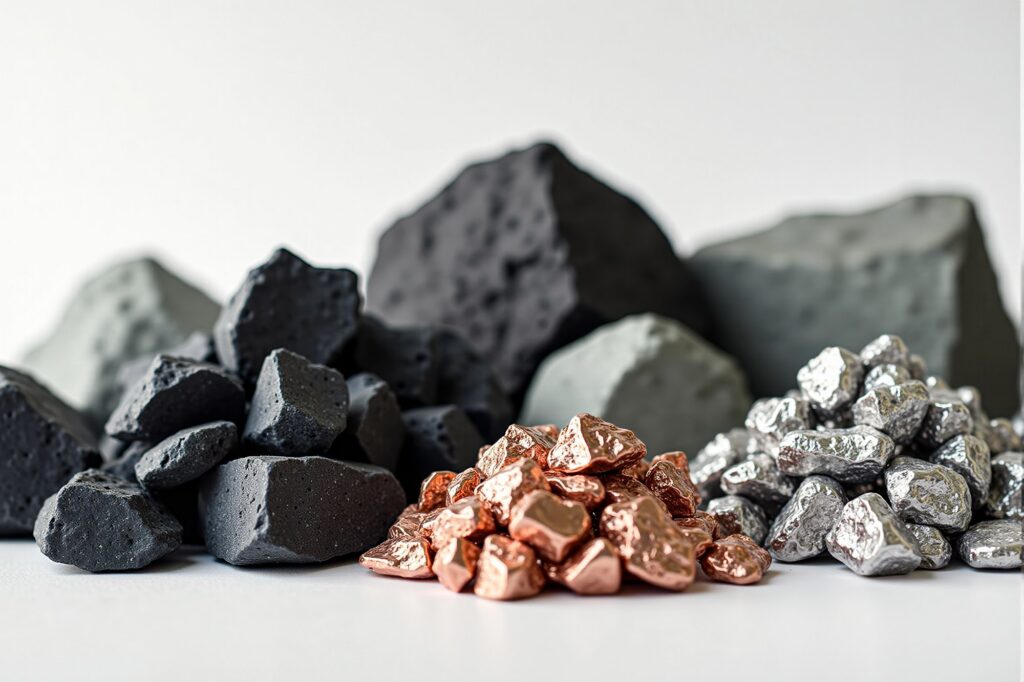
During the meeting, Kazakhstan and the United States signed a memorandum of understanding on cooperation in the field of critical minerals. The document was signed by Kazakhstan’s Minister of Industry and Construction, Yersayin Nagaspayev, and U.S. Secretary of Commerce Howard Lutnick.

The agreement took immediate shape: Tau-Ken Samruk, a subsidiary of the sovereign wealth fund Samruk-Kazyna, and U.S. based Cove Capital agreed to jointly develop tungsten deposits in Kazakhstan’s Karaganda region. The investment is expected to total around $1.1 billion. Preparatory work on a final feasibility study for one of the projects is already underway.

Kazakhstan’s tungsten reserves, estimated at 410,000 tons, are among the largest in the world.

Tokayev later met with U.S. Representatives Jimmy Panetta, Carol Miller, Bill Huizenga, and Sydney Kamlager-Dove. Tokayev highlighted the role of the U.S. – Kazakhstan Friendship Group, chaired by Panetta, in deepening political dialogue, boosting economic ties, and strengthening bilateral relations.

During the meeting, it was noted that the U.S. is one of Kazakhstan’s largest economic partners, accounting for $100 billion in cumulative investment, roughly 80% of all investment in Central Asia.

Tokayev invited U.S. lawmakers to visit Kazakhstan to foster further cooperation. A similar invitation was extended to Senator Steve Daines, whom Tokayev described as “a true friend of Kazakhstan.” The senator is set to receive the Order of Dostyk (Friendship), First Class, for his contributions to bilateral relations.

The Kazakh president also met with Chevron Chair and CEO Michael Wirth and Chaboy Leiko, President for the CIS and Central Asia at John Deere.

Tokayev praised Chevron’s long-standing role in Kazakhstan’s oil and gas sector, including its projects at the Tengiz and Karachaganak fields. He confirmed Kazakhstan’s commitment to ongoing cooperation.

John Deere was also lauded for its decision to localize production of agricultural machinery through a partnership with AgromashHolding KZ. Since production began in May, over 290 units have been assembled, with another 100 expected by year’s end.

John Deere has signed a $2.5 billion strategic partnership agreement with Kazakhstan to produce at least 3,000 agricultural machines over five years. The agreement includes plans to establish at least three service centers and develop a workforce training system.

Separately, Kazakhstan’s national carrier, Air Astana, signed a contract with Boeing for the purchase of up to 15 Boeing 787-9 Dreamliner aircraft. According to Kazakhstan’s Civil Aviation Committee, the order includes five confirmed aircraft, five options, and five purchase rights, making it the largest order in the airline’s history. The order complements a prior agreement for three Dreamliners scheduled for delivery in 2026-2027, bringing the total to 18 aircraft with a combined catalog value of $7 billion.

During his visit, Tokayev also gave interviews to prominent U.S. outlets, including The Washington Post and The New York Times. Topics included U.S.- Kazakh relations, President Donald Trump’s policy agenda, global geopolitics, and the situation in Ukraine.

@Aqorda

Ahead of the Central Asia-U.S. summit, Tokayev held a one-on-one meeting with Trump. He expressed Kazakhstan’s support for the Trump Route for International Peace and Prosperity (TRIPP) initiative, which Tokayev said could bolster global development.

Trump reaffirmed U.S. support for a broad, strategic partnership with Kazakhstan. The presidents also discussed key international issues, followed by a joint phone call with Israeli Prime Minister Benjamin Netanyahu from the Oval Office.

During the call, Kazakhstan announced its intent to join the Abraham Accords. Trump praised the decision, calling it a significant step forward.

“This is an important step in building bridges across the globe,” Trump said. “More countries are embracing the path of peace and prosperity through my Abraham Accords.”

At the Central Asia-U.S. Summit, Tokayev thanked Trump for hosting the historic event at the White House and said the C5+1 summit signals a new era of U.S.-Central Asia cooperation. He highlighted that the potential for economic collaboration between the U.S. and Kazakhstan in sectors such as energy, critical minerals, industry, transport, finance, artificial intelligence, and education exceeds half a trillion dollars.

Tokayev called on U.S. companies to seize the “unique opportunities” emerging in Kazakhstan and assured investors of his personal support.

During the summit, journalists asked Trump whether he would become the first U.S. president to visit Kazakhstan.

“I don’t rule out that possibility,” Trump responded. “You never know what will happen in a year. Your country has tremendous natural resources, and you have an outstanding president.”

From Washington to Samarkand: Mirziyoyev Proposes Hosting Next C5+1 Summit

Uzbekistan’s President Shavkat Mirziyoyev has been participating in the U.S.-Central Asia Summit in Washington, D.C., this week.

Mirziyoyev was received at Andrews Air Force Base by U.S. Deputy Secretary of State Christopher Landau, American-Uzbek Chamber of Commerce Chairperson Carolyn Lamm, and other officials. The visit included high-level bilateral meetings and participation in the C5+1 summit alongside Central Asian leaders.

On November 5, Mirziyoyev met with U.S. Representatives Bill Huizenga, Carol Miller, and Sydney Kamlager-Dove. The two sides discussed strengthening the strategic partnership and expanding interparliamentary cooperation. The Uzbek delegation highlighted the active role of the Congressional Caucus on Uzbekistan, which organizes annual “Uzbekistan Days” in the U.S. House of Representatives.

That same day, the Mirziyoyev also met Senator Steve Daines, co-chair of the Central Asia Caucus in the U.S. Senate. According to the Uzbek presidential press service, both sides noted the “unprecedented level” of bilateral cooperation, including a surge in trade and joint projects involving American companies. They emphasized the importance of congressional support in implementing recently signed agreements, many of which have reached record volumes. The two sides also agreed to organize a business delegation from Montana to Uzbekistan.

@president.uz

On November 6, Mirziyoyev held a series of business-focused meetings. He met with John Jovanovic, head of the U.S. Export-Import Bank (Eximbank), to discuss financing major projects in energy, critical minerals, transport, agriculture, IT, and other sectors. Special attention was given to Eximbank’s potential role in modernizing Uzbekistan’s aircraft fleet and supplying Boeing aircraft. Both parties agreed to develop a long-term cooperation plan.

Later that day, Mirziyoyev met with Ben Black, CEO of the U.S. International Development Finance Corporation (DFC), which mobilizes private capital for global development initiatives. According to the Uzbek side, discussions focused on energy, critical minerals, finance, transport, agriculture, and IT. The two sides agreed to accelerate the creation of a joint investment platform to support priority projects and small businesses. Uzbekistan also proposed opening a DFC regional office in Tashkent.

Mirziyoyev also held talks with Shilpan Amin, global executive director of General Motors International. The discussion centered on long-term cooperation in the automotive sector. Over the past five years, GM has produced 1.6 million vehicles in Uzbekistan, which has become Chevrolet’s second-largest market after the United States and now leads sales in Central Asia and the CIS.

Mirziyoyev then met with U.S. Secretary of Commerce Howard Lutnick. They discussed trade, investment, and joint economic projects. According to the Uzbek presidential press service, bilateral trade turnover has quadrupled in recent years, nearing $1 billion. Over 300 American companies are now operating in Uzbekistan. The sides noted expanding cooperation in agriculture, including contracts for soybean and cotton supplies and the introduction of U.S. drip irrigation technologies.

At the conclusion of his business program, Mirziyoyev met with representatives of leading American companies, investment funds, and financial institutions. He emphasized that trade turnover with the United States had increased fourfold in eight years and outlined priority cooperation areas, including energy, critical minerals, transport infrastructure, and digital technologies.

Uzbekistan aims to develop a next-generation energy system with 18-20 gigawatts of renewable capacity by 2030, with over half of electricity generated from solar and wind. The country also plans joint initiatives with the U.S. to extract and process uranium, copper, tungsten, molybdenum, and graphite. More than $12 billion will be invested in transport infrastructure by 2030, including the modernization of roads, railways, terminals, and airports. Partnerships with U.S. technology companies such as Google, Meta, and NVIDIA are growing, with plans for digital payment systems, a Digital Academy, and startup hubs.

@president.uz

Following a roundtable discussion, multiple agreements were signed in the presence of Mirziyoyev and Secretary Lutnick. According to the Uzbek side, these included deals on rare earth minerals, water-saving technologies, artificial intelligence, aircraft supply, and agricultural products. Notable signatories included the Ministry of Geology and Denali Exploration Group, the Fund for Reconstruction and Development and Re Element Technologies, Flowserve, Valmont Industries, Palo Alto Networks, Boeing, Louis Dreyfus Company, and Cargill.

Later on November 6, Mirziyoyev met with Trump at the White House. The leaders discussed enhancing the strategic partnership, expanding political dialogue, and deepening cooperation in trade, investment, and culture. They also reviewed the implementation of agreements reached during their September meeting in New York and exchanged views on global and regional developments, including within the C5+1 framework.

Mirziyoyev congratulated Trump on what he described as significant domestic and foreign policy achievements. Trump welcomed the outcomes of Mirziyoyev’s meetings with U.S. officials and business leaders.

Shortly after, Trump posted on Truth Social, announcing an “incredible Trade and Economic Deal” between the two countries. He stated that Uzbekistan will invest and purchase nearly $35 billion in key U.S. sectors over the next three years, with total expected commitments surpassing $100 billion over the next decade. Highlighted sectors include critical minerals, aviation, automotive parts, infrastructure, agriculture, energy, chemicals, and information technology. Trump thanked Mirziyoyev and said the United States looks forward to a “long and productive relationship.”

Also on November 6, Mirziyoyev participated in the C5+1 summit at the White House, alongside the presidents of Kazakhstan, Kyrgyzstan, Tajikistan, and Turkmenistan. Chaired by Trump, the summit focused on regional cooperation. Mirziyoyev proposed creating a permanent C5+1 Secretariat on a rotational basis, a ministerial coordinating council on investment and trade, a Central Asian Investment Partnership Fund, and a special committee on critical minerals. He also called for joint programs in agricultural technology, enhanced cooperation on regional transport corridors connecting Central Asia with the South Caucasus and Europe and organizing a cultural heritage exhibition in the United States. Uzbekistan offered to host the next C5+1 summit in Samarkand.

Separately, Komil Allamjonov, adviser to the head of the Presidential Administration, proposed that the U.S. government introduce 10-year visas for Uzbek citizens. Writing on the platform X, he announced that Uzbekistan would lift visa requirements for U.S. citizens beginning in 2026. Deputy Secretary Landau welcomed the move as “wonderful news” that would open new opportunities for American travelers. Allamjonov added that both Landau and U.S. Special Representative for South and Central Asia Sergio Gor had raised this issue during recent meetings, and that extending B1/B2 visas for Uzbeks from one year to ten years would mark a major step in strengthening bilateral ties.

Kazakhstan to Join Abraham Accords

Washington D.C. – The Government of Kazakhstan announced its intention to join the Abraham Accords on Thursday, ahead of a scheduled meeting between President Kassym-Jomart Tokayev and U.S. President Donald Trump in Washington.

The move was confirmed by President Trump in a post on Truth Social, where he described Kazakhstan’s decision as “a major step forward in building bridges across the world.” He added that a formal signing ceremony would be held soon to make the accession official.

In doing so, Kazakhstan will join the United Arab Emirates, Bahrain, Morocco, Sudan, Israel, and the United States within the framework of the Abraham Accords. Its inclusion represents a significant diplomatic milestone, making it the first Central Asian nation — and the only non–Middle Eastern or North African member apart from the United States — to take part in the initiative. The expansion extends the Accords’ reach into Central Asia, highlighting their growing relevance beyond their original geographic and political context.

Kazakhstan’s accession represents a powerful statement from a Muslim-majority nation in favor of peaceful normalization with Israel. By joining, Astana reinforces the framework’s legitimacy across the Islamic world and demonstrates that constructive engagement with Israel can coexist with respect for Islamic values and regional cooperation.

As the first Central Asian signatory, Kazakhstan sets a precedent for its neighbors and broader Muslim communities, illustrating that pragmatic diplomacy and peace-building can transcend historical divisions. The move also strengthens U.S.-led efforts to expand the Accords’ vision of dialogue, stability, and coexistence beyond the Middle East — signaling a new chapter in regional diplomacy.

The Tokayev administration’s decision carries political risks. The move may draw criticism from some pro-Palestinian factions and Iran-aligned groups that view normalization with Israel skeptically. To manage this, Astana will need careful messaging, emphasizing that engagement with Israel complements its continued support for Palestinian statehood and regional peace. Ultimately, the government’s calculation is that the benefits — including closer alignment with the United States and enhanced international influence — outweigh the potential political costs.

Alignment with Washington

Joining the Abraham Accords underscores President Tokayev’s continued alignment with President Trump’s foreign policy priorities. By joining a U.S.-led initiative promoting normalization with Israel, he reinforces support for the White House’s approach to Middle East diplomacy.

The move builds on Tokayev’s earlier stance: on September 30, 2025, he publicly endorsed former U.S. President Donald Trump’s 20-point Gaza peace plan, calling it a “unique opportunity and a crucial step toward lasting peace in the Middle East.”

As a Muslim-majority nation pursuing a balanced foreign policy, Kazakhstan’s support highlights its strategic effort to deepen ties with Washington and Israel while maintaining credibility across the Arab and Islamic world. The decision reflects Tokayev’s broader vision of positioning Kazakhstan as a diplomatic bridge between East and West.

Expanding Regional Appeal and Continuity in Israel Ties

Kazakhstan’s decision to join the Abraham Accords represents both a continuation of its long-standing relationship with Israel and a forward-looking step to broaden the framework’s regional reach. Since establishing diplomatic ties in 1992, Kazakhstan has maintained consistent cooperation with Israel in technology, agriculture, and security — while preserving positive relations with the wider Muslim world.

Joining the Accords formalizes and expands this partnership within a multilateral framework that aligns with Kazakhstan’s tradition of balance, dialogue, and interfaith understanding.

At the same time, Kazakhstan’s participation may encourage other Central Asian states to consider joining the Accords in the future. As the region’s only middle power, its example carries considerable influence — demonstrating that pragmatic diplomacy and religious coexistence can advance national interests without compromising cultural identity.

This inclusion could also reignite debate in Washington over the relevance of the Jackson–Vanik Amendment as it applies to Kazakhstan and its neighbors. Enacted in 1974 to pressure the Soviet Union to allow Jewish emigration to Israel, the amendment technically remains in force despite Kazakhstan’s long record of openness and religious tolerance. By joining a framework centered on peace and normalization with Israel, Kazakhstan affirms the very principles that Jackson–Vanik sought to advance. This alignment strengthens the case for formally lifting its application, symbolizing both the maturation of U.S.–Central Asia relations and the region’s deeper integration into the global community of cooperation and coexistence.

The move also reinforces Kazakhstan’s self-image as a neutral, peace-promoting state — consistent with its tradition of hosting interfaith and global peace dialogues, including the Congress of Leaders of World and Traditional Religions. This continuity underscores Kazakhstan’s long-standing “multi-vector” foreign policy, which seeks constructive relations with diverse partners. By positioning itself as a bridge between the Muslim world and the West, Kazakhstan enhances its global visibility and soft power, strengthening its role as a moderate and constructive actor in international diplomacy.

Conclusion

Kazakhstan’s decision to join the Abraham Accords marks an important step in its foreign policy and the broader push for peace in the Middle East. As the first Central Asian nation to join, Kazakhstan shows that cooperation and dialogue with Israel can go hand in hand with support for regional stability and respect for Islamic values.

The move strengthens ties with the United States, builds on its long-standing relationship with Israel, and reflects President Tokayev’s effort to position Kazakhstan as a neutral, bridge-building country that values diplomacy, peace, and practical engagement with the wider world.