• KGS/USD = 0.01144 0%
  • KZT/USD = 0.00211 0%
  • TJS/USD = 0.10460 0%
  • UZS/USD = 0.00008 0%
  • TMT/USD = 0.28571 0.28%
  • KGS/USD = 0.01144 0%
  • KZT/USD = 0.00211 0%
  • TJS/USD = 0.10460 0%
  • UZS/USD = 0.00008 0%
  • TMT/USD = 0.28571 0.28%
  • KGS/USD = 0.01144 0%
  • KZT/USD = 0.00211 0%
  • TJS/USD = 0.10460 0%
  • UZS/USD = 0.00008 0%
  • TMT/USD = 0.28571 0.28%
  • KGS/USD = 0.01144 0%
  • KZT/USD = 0.00211 0%
  • TJS/USD = 0.10460 0%
  • UZS/USD = 0.00008 0%
  • TMT/USD = 0.28571 0.28%
  • KGS/USD = 0.01144 0%
  • KZT/USD = 0.00211 0%
  • TJS/USD = 0.10460 0%
  • UZS/USD = 0.00008 0%
  • TMT/USD = 0.28571 0.28%
  • KGS/USD = 0.01144 0%
  • KZT/USD = 0.00211 0%
  • TJS/USD = 0.10460 0%
  • UZS/USD = 0.00008 0%
  • TMT/USD = 0.28571 0.28%
  • KGS/USD = 0.01144 0%
  • KZT/USD = 0.00211 0%
  • TJS/USD = 0.10460 0%
  • UZS/USD = 0.00008 0%
  • TMT/USD = 0.28571 0.28%
  • KGS/USD = 0.01144 0%
  • KZT/USD = 0.00211 0%
  • TJS/USD = 0.10460 0%
  • UZS/USD = 0.00008 0%
  • TMT/USD = 0.28571 0.28%

Kazakhstan to Digitalize Seaports to Boost Trans-Caspian Transport Route

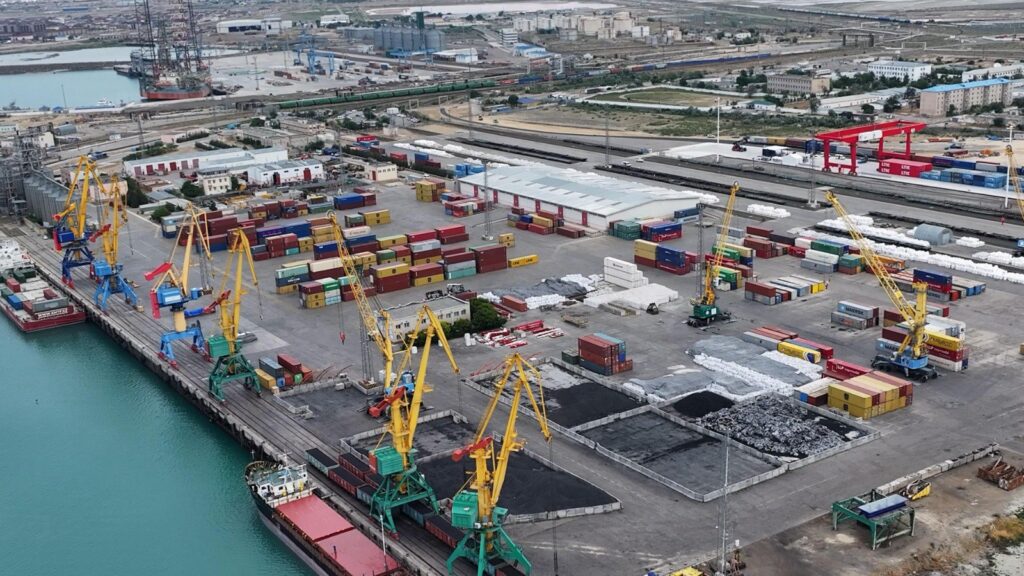
Kazakhstan is advancing the digital transformation of its maritime infrastructure as part of broader efforts to strengthen the Trans-Caspian International Transport Route (TITR), also known as the Middle Corridor.

The Ministry of Transport is developing an electronic Maritime Single Window system designed to replace paper-based documentation with digital data exchange for vessel entry and exit procedures at the country’s seaports. The initiative is included in the Roadmap for the Digitalization of Kazakhstan’s Transport Industry for 2025-2027.

According to the ministry, the project is being implemented with support from the German Society for International Cooperation (GIZ). An international tender has already been held to select experts responsible for preparing the system’s technical specifications.

In February, working meetings were held with stakeholders in Aktau and Kuryk, Kazakhstan’s two largest ports on the Caspian Sea. Discussions focused on port digitalization, simplifying administrative procedures, and reducing vessel processing times through the introduction of the Maritime Single Window.

The project is viewed as a key component in the further development of the TITR, which connects China with Europe via Central Asia and the South Caucasus. By streamlining port operations and reducing bureaucratic delays, Kazakhstan aims to enhance the route’s competitiveness and reliability.

Kazakhstan’s maritime transport sector has recorded steady growth in recent years. In 2025, maritime cargo volumes reached 8 million tons, a 7% increase compared to 2024. Container traffic through Kazakh seaports rose by 29% to 90,637 TEUs, while cargo volumes transported along the TITR increased by 36%.

Infrastructure development has accompanied this growth. In 2025, construction of a container hub at the port of Aktau was completed, a dry cargo vessel was launched on the Kuryk-Baku route, and two new ferries were acquired. Overall transit cargo traffic through Kazakhstan reached 36.9 million tons in 2025, up 6.6% year on year, driven by the integrated development of road, rail, air, and maritime transport.

Under the country’s comprehensive maritime infrastructure development plan for 2024-2028, Kazakhstan intends to establish a major transport and logistics cluster based on the ports of Aktau and Kuryk. The plan includes the expansion of container handling capacity, development of cargo terminals and international shipping logistics, and a reduction in administrative barriers. By 2028, total cargo throughput at the ports is expected to increase by 50%, while container handling volumes are projected to triple.

To ensure year-round navigation and maintain competitiveness amid changing environmental and logistical conditions in the Caspian region, Kazakhstan has also prioritized dredging works, including the deepening of the ports of Aktau and Kuryk.

Uzbekistan Pledges Support for Gaza Reconstruction

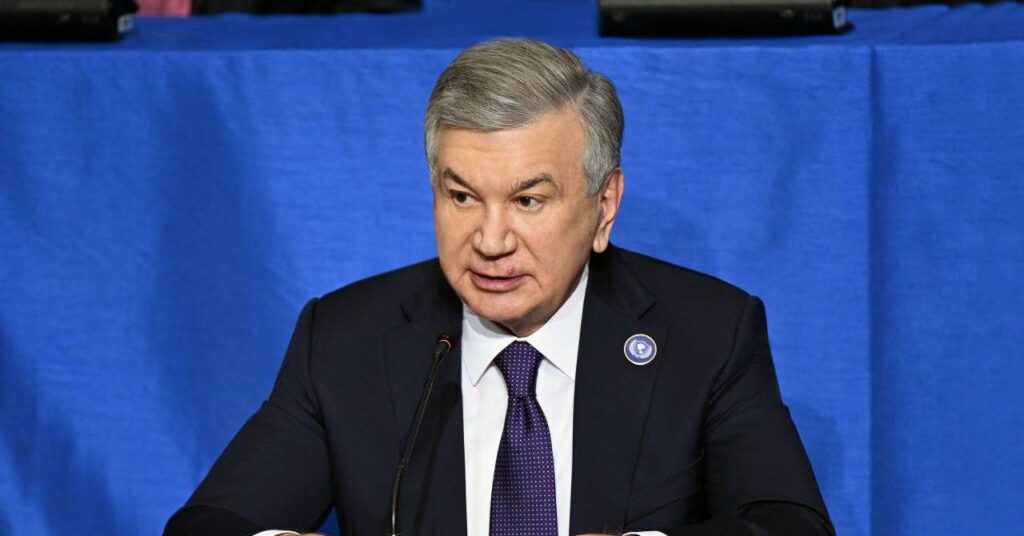
United States President Donald Trump introduced Uzbekistan’s President Shavkat Mirziyoyev as “a friend” during the inaugural meeting of the Board of Peace in Washington, setting a cordial tone for a summit focused on post-conflict recovery in Gaza.

In brief remarks while welcoming Mirziyoyev, Trump said Uzbekistan was “doing great” and had “no problems.”

The summit, held on February 19 at the United States Institute of Peace, brought together heads of delegations from Azerbaijan, Kazakhstan, Bahrain, Indonesia, Argentina, Paraguay, Romania, Egypt, Qatar, Pakistan, Hungary, Albania, Armenia, Vietnam, Cambodia, the United Arab Emirates, Turkey, Kuwait, Saudi Arabia, Israel, and Morocco, among others. Discussions focused on reconstruction and humanitarian assistance for the Gaza Strip, as well as broader efforts to promote stability in the Middle East.

In his address, Mirziyoyev thanked Trump for convening the inaugural meeting of the Board, describing the summit as the result of his “political will and pragmatism.”

Uzbekistan supported the initiative to establish the Board of Peace and declared its readiness to participate in its practical implementation. “I am confident that the Board’s work will create favorable conditions for the economic and social restoration of Gaza,” Mirziyoyev said.

He stressed that any mechanism for external governance in Gaza must be based on the support of its population. Coordinated efforts by all stakeholders, he added, would help ensure that the post-conflict process remains sustainable and that reconstruction advances efficiently.

Mirziyoyev also announced that Uzbekistan is prepared to contribute to the construction of residential buildings, kindergartens, schools, and hospitals in Gaza. He described the meeting as a symbol of international solidarity and urged participants to seize what he called a historic opportunity to help build a renewed Gaza with a functioning economy and improved living conditions.

87 Industrial Enterprises Closed in Tajikistan in 2025

In 2025, 87 industrial enterprises ceased operations in Tajikistan, according to Minister of Industry and New Technologies Sherali Kabir, who outlined the reasons for the closures and presented key industry indicators at a press conference.

Kabir described the suspension of activity at certain production facilities as “one of the ongoing issues.” The ministry is working with each enterprise individually, noting that “every job is important for the state management system.” Nevertheless, some companies were shut down, including at the initiative of the ministry.

Among the main reasons cited were zero production indicators and changes in organizational and legal status. The minister also pointed to discrepancies between statistical and tax reporting.

“This enterprise is registered as three enterprises in tax accounting and as one enterprise in statistics. This should not be the case,” Kabir said.

He paid particular attention to cotton-processing enterprises. According to the minister, a number of small factories relied on outdated technologies and “had a negative impact” on the sector.

“The fiber length at foreign enterprises processing our cotton is different. However, about 120 cotton ginning enterprises located in the Khatlon region, unfortunately, had a negative impact,” Kabir said.

The ministry, together with other agencies, established a special commission and proposed that these enterprises cease operations.

At the same time, the total production capacity of Tajikistan’s cotton ginning enterprises is estimated at 2.4 million tons, while actual processing volumes amount to around 500,000 tons. According to the minister, most enterprises have not properly established efficient operations.

As an alternative, authorities are considering the creation of technology parks on the sites of former enterprises. The proposal is currently under government review. Kabir stressed that closures or changes in legal status should not be viewed exclusively in negative terms.

As of January 1, 2026, Tajikistan had 3,972 registered industrial enterprises employing 92,927 people.

The Board of Peace and Central Asia: Asserting Agency in a Fragmented Order

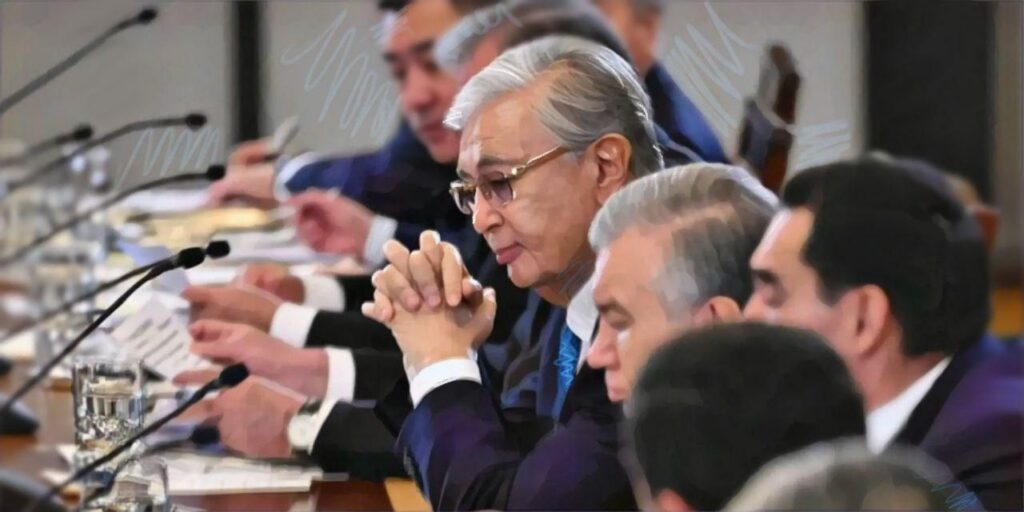
President Kassym-Jomart Tokayev’s speech at the inaugural meeting of U.S. President Donald Trump’s Board of Peace in Washington on February 19 was not only a foreign policy event, but one with significant domestic resonance. The initiatives announced include Kazakhstan’s participation in the reconstruction of Gaza, financial commitments, and readiness to send peacekeepers. Against the backdrop of economic challenges and ongoing constitutional reforms, however, a substantial segment of Kazakh society is questioning whether such an active foreign policy posture is justified at this time.

The Board of Peace, the charter for which was ratified in Davos in January 2026 on the sidelines of the World Economic Forum, is positioned as an alternative to traditional multilateral institutions. According to Trump, the new body should not merely discuss conflicts, but will also “almost be looking over the United Nations and making sure it runs properly.”

Symbolically, the Board’s launch comes amid U.S. reductions and withholding of UN-related funding and withdrawals from multiple international bodies, alongside a partial U.S. payment toward UN arrears and the parallel creation of alternative financial and security mechanisms.

According to the U.S. Mission to Kazakhstan, at the first meeting of the Board of Peace, nine members pledged a combined $7 billion aid package for the Gaza Strip. Kazakhstan, Uzbekistan, Azerbaijan, the UAE, Morocco, Bahrain, Qatar, Saudi Arabia, and Kuwait indicated their willingness to contribute. Additionally, Trump pledged $10B in U.S. funding, framing peace and reconstruction as a strategic priority.

However, experts note that these sums fall far short of projected needs. According to joint UN-EU-World Bank estimates, the full reconstruction of Gaza could require up to $70 billion. In addition, the implementation of projects is complicated by the issue of disarming Hamas, which is designated as a terrorist organization in the U.S. and the European Union. At present, there is no indication that any Western or regional government intends to revise that designation.

A notable feature of the Washington summit was the synchronized participation and subsequent public statements of key member states of the Organization of Turkic States (OTS). Kazakhstan, Uzbekistan, Azerbaijan, and Turkey effectively acted as what appeared to be an aligned geopolitical grouping, albeit without a formal declaration of joint action.

What Is Kazakhstan Seeking?

For Astana, participation in the Board of Peace appears to represent a renewed step in its multi-vector foreign policy doctrine. Tokayev directly stated Kazakhstan’s readiness to send medical units and observers to international stabilization forces and to allocate more than 500 educational grants for Palestinian students.

In effect, Kazakhstan is reinforcing its image as a “Middle Power” prepared not only for diplomatic mediation but also for tangible contributions to international security efforts. This course aligns with the country’s existing participation in UN missions. Currently, 139 Kazakh military personnel are serving in the Golan Heights under the UN Disengagement Observer Force mandate.

Nevertheless, the intensification of foreign policy engagement is raising domestic questions. Concerns voiced on social media and among experts include whether the international agenda risks diverting attention from internal economic pressures, including stagnant incomes, strain within the banking sector, and constitutional reform.

Separately, speculation has circulated regarding Tokayev’s potential future candidacy for the post of UN Secretary-General. While unconfirmed, some observers interpret Kazakhstan’s visible engagement in peace initiatives as consistent with broader ambitions within multilateral diplomacy.

Kazakhstan’s involvement in the Board of Peace may be understood as a long-term investment aimed at securing foreign policy dividends, including enhanced international standing, access to new economic and institutional projects, and strengthened ties with the U.S. and key actors in the Middle East.

The central question remains whether Astana can maintain equilibrium between global ambitions and domestic stability.

Uzbekistan: A Focus on “Soft Recovery”

President Shavkat Mirziyoyev has defined a niche for Tashkent centered on civil infrastructure and social development. Uzbekistan has expressed its readiness to participate in the construction of housing, schools, kindergartens, and hospitals, while emphasizing that any external governance arrangements in Gaza must rest on the support of the local population.

This approach is consistent with Uzbekistan’s recent foreign policy model: minimizing military exposure, prioritizing economic and humanitarian engagement, and strengthening its image as a responsible regional actor without direct involvement in coercive scenarios.

That positioning also reflects Tashkent’s broader engagement with Washington. In recent months, Uzbekistan has intensified negotiations with U.S. institutions, including the Export-Import Bank and the U.S. International Development Finance Corporation, seeking expanded financing for infrastructure, energy modernization, and industrial projects. Discussions around a bilateral Investment Platform and the reactivation of the U.S.–Uzbekistan Business Council signal a strategy focused on capital inflows and development partnerships rather than security alignment. Within that framework, participation in Gaza’s reconstruction through civil infrastructure fits comfortably into Uzbekistan’s existing diplomatic trajectory.

Azerbaijan: Political Support Without Financial Commitment

Baku has adopted a calibrated position. While Azerbaijan joined President Trump’s Board of Peace as a founding member and participated in the Washington summit, it has clarified that it does not envisage contributing to the reported $7 billion Gaza reconstruction pledge announced at the inaugural meeting.

Hikmet Hajiyev, Assistant to President Ilham Aliyev on foreign policy matters, stated that Azerbaijan supports the broader goals of stabilization and reconstruction but is not planning to allocate funds under the collective financial package referenced at the summit.

In effect, Baku has drawn a clear distinction between participation in the collective aid package and any potential project-based engagement, leaving room for future involvement without committing to the announced funding framework.

Turkey’s Expansive Role

In recent months, Turkey has emerged as one of the most active and systematic actors on the Palestinian issue. Foreign Minister Hakan Fidan has declared Ankara’s readiness to operate across multiple tracks: humanitarian assistance, restoration of administrative institutions, participation in international stabilization forces, and the training of local police units.

A decisive factor remains the political will of President Recep Tayyip Erdogan to deploy Turkish troops to Gaza should an international consensus materialize. Currently, Turkey has signaled its readiness to contribute troops within an international stabilization framework (subject to an agreed mandate). In effect, Turkey is positioning itself as a central pillar of the initiative, capable of integrating military, administrative, and humanitarian components.

The scale of Turkey’s humanitarian logistics plans is considerable, including proposals to dispatch an initial 20,000 containers of aid and mobilize numerous state and non-governmental entities.

Although the Organization of Turkic States does not formally appear as a unified actor in summit documents, OTS member states constitute the most visible bloc of non-Western participants. In this light, the engagement of Kazakhstan, Uzbekistan, Azerbaijan, and Turkey in the Board of Peace appears less as a series of isolated decisions and more as part of an emerging Turkic diplomatic architecture, flexible, informal, and oriented toward pragmatic outcomes.

Central Asia Records Over 6% Growth as Trade with Russia Expands

Central Asian economies concluded 2025 with growth exceeding 6%, significantly outpacing major developed markets such as the United States and the Eurozone, where expansion stood at approximately 1.6% and 1.1%, respectively, according to Turkish newspaper Yeni Şafak. The figure aligns with the World Bank who puts regional expansion at 6.2% and the Eurasian who Development Bank (EDB) estimates growth at 6.6%.

Economists attribute the region’s performance to strong domestic demand, active state investment programs, infrastructure development, and rising exports of raw materials and industrial goods. Kazakhstan and Uzbekistan accounted for the largest contributions to overall growth, supported by large-scale public investment initiatives and expanding foreign trade.

By contrast, the U.S. and European economies experienced slower growth amid high interest rates, inflationary pressures, and weaker consumer demand.

Uzbek economist Mirkomil Kholboyev, writing on his Telegram channel, said the trend reflects deeper structural factors. “In general, the average real growth in Central Asia has almost always been higher than in the United States or Europe, with the exception of 2021,” he wrote. “Beyond short-term effects, lower-income countries like ours tend to grow faster than high-income economies.

In wealthier countries, the return on additional capital has declined, while in our region capital remains scarce, allowing investments to generate higher returns. Demographic growth is also higher here, and the steady expansion of the labor force serves as an additional driver of economic growth.”

Trade data indicate that Central Asia’s economic ties with Russia have strengthened in recent years. In 2021, the region accounted for 3.2% of Russia’s imports. By the first 10 months of 2025, that share had risen to 4.6%. Over the same period, Central Asia’s share of Russian exports increased from 5.6% to 7%.

Overall, during the first 10 months of 2025, Central Asia ranked as Russia’s third-largest import partner and fourth-largest export destination. Before the war in Ukraine, the region ranked seventh among Russia’s import partners and fourth in exports.

Although Russia’s economy remains significantly larger, reaching approximately $2.1 trillion in 2024 and exceeding the combined size of Central Asian economies by about 4.4 times, the increase in trade shares over the past four years is notable. Kholboyev also noted that part of the rise in imports is attributable to re-export activity.

Foreign Internet Platforms Paid Nearly $18 million in Taxes in Kazakhstan in January

Foreign digital platforms transferred nearly $18 million to Kazakhstan’s state budget in digital services tax, commonly known as the “Google tax”, in January 2026, according to the press service of the State Revenue Committee under the Ministry of Finance.

Kazakhstan has applied the digital services tax since 2022. Over this period, 120 foreign companies have registered as taxpayers in the country, including 22 in 2025. Total revenue from the Google tax since its introduction has reached approximately $277.5 million. Of that amount, $117.5 million was collected in 2025, and more than $17.75 million in January 2026 alone.

Under the Tax Code, second-tier banks and payment organizations are required to provide tax authorities with information on foreign companies that have undergone conditional registration. This data is used to assess the completeness and timeliness of VAT payments in e-commerce and the provision of digital services to individuals in Kazakhstan.

Based on comparisons of bank data, payment system information, and actual VAT payments, tax authorities conduct desk audits. If arrears or underpayments are identified, notifications outlining the discrepancies are issued.

Additional enforcement measures came into force on January 1, 2026. Under Article 89 of the Tax Code, state authorities are now authorized to block the internet resources of foreign marketplaces that fail to comply with desk audit notifications or evade VAT registration requirements.

The State Revenue Committee emphasized that these measures are intended to ensure a level playing field for domestic and foreign market participants, improve tax compliance in the digital sector, and reduce the shadow economy without conducting on-site tax inspections.

As previously reported by The Times of Central Asia, international companies including Google, Apple, Netflix, and Amazon have already registered in Kazakhstan under the Google tax regime. In May 2025, the U.S. company OpenAI also completed tax registration in the country.