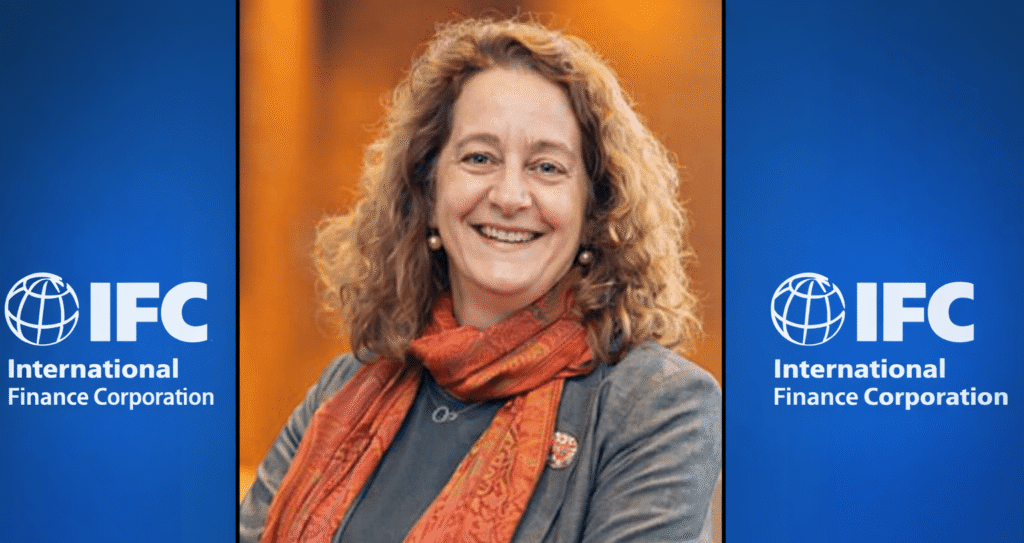
Kazakhstan is positioning itself as a more attractive destination for private investment, as authorities push to expand infrastructure, improve access to capital, and strengthen its role along key Eurasian trade routes. In an interview with The Times of Central Asia, Lisa Kaestner, the new Regional Director for Türkiye, Kazakhstan, and Uzbekistan at the International Finance Corporation (IFC), outlines how the World Bank Group’s private sector arm plans to support that shift, from backing transport corridors to mobilizing capital for businesses and infrastructure projects.
TCA: Since taking up your new role, how has your career path and leadership experience shaped your approach to this position?
Kaestner: I joined IFC as Resident Representative in Georgia in 1999, and that early experience shaped how I approach working directly with local partners and stakeholders. Since then, I’ve held several leadership roles across IFC and the World Bank, primarily in Eastern Europe and Central Asia, while also expanding into Africa, where I led advisory services to governments across Eastern and Southern Africa — working across sectors like agribusiness, tourism, housing, technologies and financial services to support private sector-led growth.
More recently, I served as Country Manager for Ukraine and earlier also Moldova, where I led IFC’s strategic work on expanding support for businesses and financial institutions and helping lay the groundwork for private sector participation in Ukraine’s reconstruction. In March 2026, I stepped into my current role as Director overseeing IFC’s activities in Türkiye, Kazakhstan, and Uzbekistan, focused on mobilizing private investment and advancing reforms in close partnership with governments and the private sector.
TCA: How do you assess the investment attractiveness of Kazakhstan at present?
Kaestner: Kazakhstan presents a compelling investment story. The country benefits from a strategic geographic position at the heart of Eurasia, significant natural resources, and a government that has demonstrated a genuine commitment to reform and private sector development.
From our point of view, several factors stand out as particularly encouraging. Kazakhstan has made meaningful progress in strengthening financial sector regulation and advancing infrastructure development. At the same time, we recognize that challenges remain. One key factor is the dominant role of the state in the economy, which represents roughly 40% of GDP, especially in major sectors like natural resources, electricity, telecommunications, and infrastructure. In this regard, we support the government’s efforts to increase private sector participation through privatization, IPOs, and public-private partnerships (PPPs).
Additionally, maintaining steady progress on governance, transparency, and the rule of law remains crucial for sustaining investor confidence in the long term. Diversifying the economy away from commodity dependence — while significant strides have been made — remains a priority, as does deepening domestic capital markets to reduce reliance on external financing. Broader reforms are needed to achieve stable economic growth and improve the business climate, which will allow Kazakhstan to reach the level of developed countries. Significant efforts to develop the Trans-Caspian Transport Corridor (TCTC)—also known as the Middle Corridor, which is becoming increasingly important as an alternative trade route between Asia and Europe are opening new opportunities for Kazakhstan as a transport and logistics hub.
IFC remains committed to supporting Kazakhstan’s ambitions to attract more private investment. IFC supports this objective through its own financing, the mobilization of financing by others, advisory services, and continued policy and reforms dialogue with the government and private sector.
TCA: Which areas of IFC’s work in Kazakhstan do you consider to be priorities for the coming years?
Kaestner: IFC’s upcoming 2030 Strategy enhances the World Bank Group’s focus on creating more and better jobs by scaling private capital mobilization, developing new approaches to expand equity investments, and increasing support for micro, small and medium enterprises (MSMEs). In Kazakhstan, IFC is working together with stakeholders to enhance the country’s regional trade, connectivity, and green transition by mobilizing capital to support new and existing infrastructure, especially along the Middle Corridor, railroads, including Almaty Bypass, and airports. In addition, there is a focus on mobilizing capital through the financial sector, with a focus on women and MSME financing, especially in rural areas and real-sector companies, especially those linked to agribusiness, being prioritized. This is especially important as SMEs account for 39% of the country’s GDP and employ over 44% of the economically active population. On the advisory side, IFC is leveraging its experience in structuring PPP projects to bring more private participation to Kazakhstan’s economy, particularly in key sectors like transport and energy.
TCA: Could you tell us about the projects that IFC is financing in Kazakhstan’s financial sector? What has been achieved as a result of their implementation, and are there plans for new projects?
Kaestner: Before diving in, let me share a few numbers that speak to where Kazakhstan stands on financial inclusion — and why this work matters.
Kazakhstan leads Central Asia in financial inclusion — it leads the region in account ownership, with 86% of adult women and 89% of men now holding bank accounts, according to the Global Findex 2024. But we know that account ownership is just the starting point. Real financial inclusion means people and businesses can actually access and use financial services to grow — and that is where IFC’s work in the financial sector comes in.
IFC provides financing to leading financial institutions in Kazakhstan, which then channel these funds into MSME lending — reaching entrepreneurs in rural and remote areas, and women-owned businesses that have historically had limited access to credit. For example, over the past five years, IFC has provided approximately $95 million to KazMicroFinance (KMF), Shinhan Finance, Arnur Credit, and Asian Credit Fund. Beyond financing, we offer a wide range of advisory services, helping financial institutions develop growth strategies, strengthen corporate governance, modernize risk management systems, and design new financial products that better serve underserved segments.
One example to highlight is our support for KMF’s transformation from a microfinance organization into a universal bank with a strong digital focus. This shift has significantly expanded KMF’s ability to serve MSMEs and contribute to job creation and broader economic growth. Looking ahead, we see tremendous untapped potential — for example, only around 30% of women in Kazakhstan are using credit or mobile money services, compared to 36% of men. Closing that gap remains a key priority, and we plan to continue deepening our partnerships with financial institutions to drive more inclusive and sustainable growth across the country.
TCA: Could you tell us about the projects that IFC is financing in infrastructure and sustainable development in Kazakhstan?
Kaestner: One of our most recent projects is a financing package for Kazakhstan’s state-owned railway operator, Joint Stock National Company Kazakhstan Temir Zholy (KTZ). IFC, together with other lenders, has provided $300 million equivalent in Swiss-franc-denominated financing to support the construction of the 130-kilometer electrified Almaty Railway Bypass. The bypass is expected to reduce congestion around Almaty by more than 40%, cut delivery times by up to 24 hours, and improve freight flows along the TCTC/Middle Corridor.
Another major project is our $222 million financing for the expansion of Almaty Airport, which marked a significant milestone in attracting private investment to Kazakhstan’s infrastructure sector. The upgraded airport is already delivering tangible results, including increased passenger and cargo throughput, greater operational efficiency, and stronger transport connectivity for Kazakhstan and the broader Central Asian region. What makes these projects particularly notable is their focus on modernizing critical transport infrastructure — distinct from the natural resource-driven investments that have historically dominated the region.
A further standout example is the BAKAD project — the Big Almaty Ring Road — the largest and most complex PPP in Kazakhstan to date, which drew significant international interest from companies across Spain, France, Italy, Hungary, Turkey, China, and South Korea. As lead advisor, IFC structured the PPP deal, supported a transparent international tender, and negotiated with the winning bidder — a Turkish-South Korean consortium — through to the signing of the agreement with the Government of Kazakhstan. This project is a strong demonstration of what rigorous preparation, effective public-private collaboration, and adherence to international best practices can achieve.
TCA: Does IFC plan to participate in financing any cross-border or regionally significant projects?
Kaestner: This is an area where we see great opportunities. Kazakhstan sits at the crossroads of Eurasia’s commodity flows, linking three major international rail corridors between East Asia, Central Asia, and Europe. As global supply chains diversify and shippers seek more resilient alternatives, the country’s geography and infrastructure have taken on renewed strategic importance — and the TCTC/Middle Corridor is at the heart of that shift.
This is where development finance institutions like IFC have a structural role to play. The TCTC runs through emerging markets with constrained fiscal space, limited domestic capital markets, and higher borrowing costs — conditions that make it difficult to finance large infrastructure projects through traditional means. IFC and other DFIs can bridge that gap by providing long-term financing, political risk insurance, guarantees, and co-financing alongside private investors. Crucially, this helps crowd in private capital and reduces the risk premiums that would otherwise deter investment.
On the ground, IFC is already engaged. As mentioned, our recent financing package for the Almaty Railway Bypass is a direct contribution to improving freight flows along the TCTC. Looking ahead, we see significant potential in airport modernization, urban infrastructure, and broader transport network development — and we are actively working with the Government of Kazakhstan, including through PPP structures, to unlock private investment in these areas. and we remain ready to support further cross-border and regionally significant projects as opportunities develop.
TCA: Is it possible that IFC will provide financing for the construction of large renewable energy projects in Kazakhstan?
Kaestner: Energy is one of the priority areas for us in Kazakhstan, and one where we see opportunity — particularly as the country navigates its transition toward a cleaner, more sustainable energy mix. As part of its commitment to achieving its Nationally Determined Contributions (NDCs) targets, Kazakhstan has ambitious targets in this space, and we believe the private sector has a critical role to play in helping achieve them. Investing in the country’s energy infrastructure also creates jobs by employing people during project construction and operation, and boosting related industries as networks expand. On the renewable energy side, IFC globally is focused on supporting the development of solar and wind projects, both by providing direct financing to developers and by helping create the policy and regulatory conditions that make private investment viable. A predictable and transparent framework for renewable energy procurement — including competitive auctions and bankable power purchase agreements — is essential to attracting the scale of investment Kazakhstan needs, and this is an area where we continue to engage closely with the government.
More broadly, the World Bank Group is supporting Kazakhstan’s energy sector through a combination of investment, advisory services, and policy dialogue — helping modernize the grid, improve energy efficiency, and reduce reliance on carbon-intensive generation over time. We recognize that the transition will take time and must be managed carefully to ensure energy security and affordability, but the direction is clear, and we are committed to supporting Kazakhstan on that path.