• KGS/USD = 0.01144 0%
  • KZT/USD = 0.00213 0%
  • TJS/USD = 0.10714 0.09%
  • UZS/USD = 0.00008 0%
  • TMT/USD = 0.28571 0%
  • KGS/USD = 0.01144 0%
  • KZT/USD = 0.00213 0%
  • TJS/USD = 0.10714 0.09%
  • UZS/USD = 0.00008 0%
  • TMT/USD = 0.28571 0%
  • KGS/USD = 0.01144 0%
  • KZT/USD = 0.00213 0%
  • TJS/USD = 0.10714 0.09%
  • UZS/USD = 0.00008 0%
  • TMT/USD = 0.28571 0%
  • KGS/USD = 0.01144 0%
  • KZT/USD = 0.00213 0%
  • TJS/USD = 0.10714 0.09%
  • UZS/USD = 0.00008 0%
  • TMT/USD = 0.28571 0%
  • KGS/USD = 0.01144 0%
  • KZT/USD = 0.00213 0%
  • TJS/USD = 0.10714 0.09%
  • UZS/USD = 0.00008 0%
  • TMT/USD = 0.28571 0%
  • KGS/USD = 0.01144 0%
  • KZT/USD = 0.00213 0%
  • TJS/USD = 0.10714 0.09%
  • UZS/USD = 0.00008 0%
  • TMT/USD = 0.28571 0%
  • KGS/USD = 0.01144 0%
  • KZT/USD = 0.00213 0%
  • TJS/USD = 0.10714 0.09%
  • UZS/USD = 0.00008 0%
  • TMT/USD = 0.28571 0%
  • KGS/USD = 0.01144 0%
  • KZT/USD = 0.00213 0%
  • TJS/USD = 0.10714 0.09%
  • UZS/USD = 0.00008 0%
  • TMT/USD = 0.28571 0%

Uzbekistan Introduces Anti-Corruption Reviews for $50 Million Investment Projects

Uzbekistan has introduced mandatory anti-corruption reviews for major investment projects worth at least $50 million, as the government intensifies efforts to strengthen oversight of public spending and large-scale development initiatives.

The new procedure was approved through an official instruction registered by the Ministry of Justice on May 8, according to the ministry’s Legal Information channel.

Under the new rules, large investment projects involving at least $50 million in financing will be subject to anti-corruption examinations and assessments of their impact on market competition before they can move forward. The regulation applies to projects aimed at creating, expanding, or modernizing socially and economically significant infrastructure, services, and facilities.

The reviews will be conducted by internal anti-corruption control units within state bodies and organizations.

Officials said projects identified as carrying a high risk of corruption could receive a negative assessment regarding their feasibility and implementation. Authorities also stressed that projects will not be approved until all shortcomings identified during the examination process are fully addressed.

The Times of Central Asia previously reported that Uzbekistan had opened criminal proceedings against senior officials in the Ministry of Internal Affairs following investigations into large-scale financial violations.

At a government meeting on January 27, President Shavkat Mirziyoyev said investigators had uncovered 53 trillion Uzbekistani som (UZS), approximately $4.38 billion, in financial irregularities and misused funds nationwide. According to the president’s press secretary, 4.2 trillion som ($347.3 million) of the total was directly linked to corruption schemes. 

Authorities reported that 1.3 trillion som ($107.5 million) had already been recovered, while 55 individuals were arrested across the country in connection with corruption-related cases.

Kazakhstan Sets Irrigation Limits for Southern Regions and Reduces Water-Intensive Crops

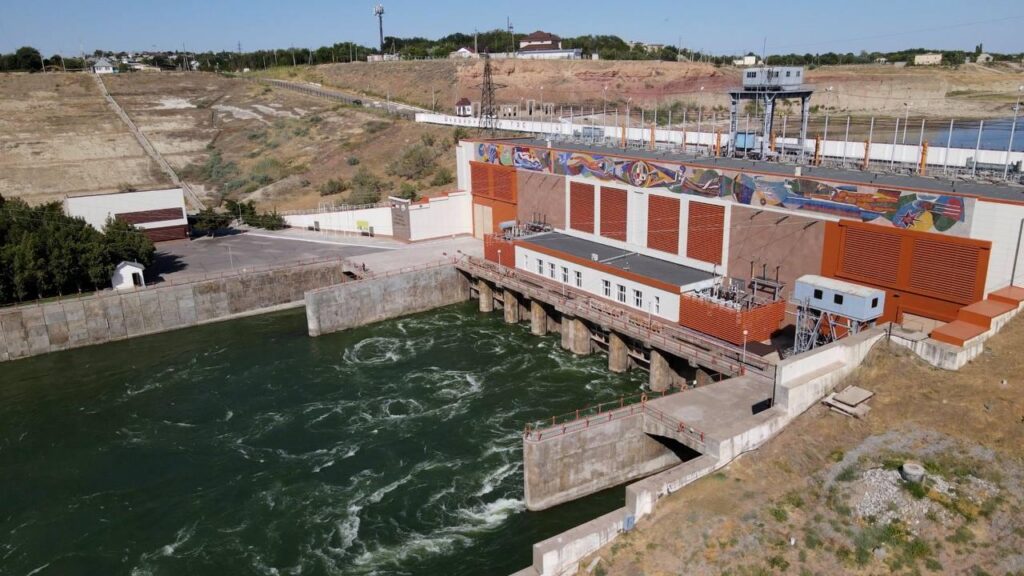
Kazakhstan has introduced limits on irrigation water use in its southern regions and is reducing the cultivation of water-intensive crops as authorities seek to prevent shortages during the 2026 growing season.

At a government meeting on May 12, Minister of Water Resources and Irrigation Nurzhan Nurzhigitov said reservoirs in the country’s southern regions had accumulated 26.2 billion cubic meters of water, 500 million cubic meters more than during the same period last year.

Agriculture in Kazakhstan’s arid southern regions depends heavily on water collected during the spring snowmelt period, as well as water flowing from upstream Kyrgyzstan.

To avoid irrigation shortages, the government established water-consumption limits for the main agricultural regions. The Turkestan region received a limit of 3.8 billion cubic meters, followed by the Kyzylorda region with 3.2 billion cubic meters, the Almaty region with 2.1 billion cubic meters, the Zhetisu region with 1.8 billion cubic meters, and the Zhambyl region with 900 million cubic meters.

Authorities said all preparatory work for the irrigation season has been completed. This included mechanized cleaning of 1,840 kilometers of irrigation canals, reconstruction of 680 kilometers of irrigation networks, and repairs to 375 hydraulic facilities.

To ensure stable water supplies through the canal system, 181 pumping units have been prepared, while an additional 92 pumps are expected to be purchased.

Since the beginning of the year, Kazakhstan has also shifted the process of concluding water-supply contracts with farmers to an electronic format. The new digital system covers the entire water-supply cycle, including applications, contract execution, monitoring of actual water consumption, and payment processing.

To date, more than 25,000 electronic contracts have been signed with farmers.

“To increase transparency and strengthen operational control over water-resource management, satellite monitoring based on Earth remote sensing is being introduced across all five southern regions of the country. Since the beginning of the year, satellite monitoring has identified 39 cases of water withdrawal without contracts in the Turkestan region, where farmers illegally used approximately 790,000 cubic meters of water,” Nurzhigitov said.

At the same government meeting, Deputy Agriculture Minister Azat Sultanov said Kazakhstan plans to sow crops on a total area of 23.8 million hectares this year, 180,000 hectares more than in 2025.

Priority is being given to more profitable crops. The area under oilseed cultivation will exceed 4 million hectares, while forage crops will cover 3.3 million hectares.

Kazakhstan is also continuing efforts to diversify agricultural production. The area planted with grain crops will be reduced by 127,000 hectares.

As part of water-saving measures, the government is cutting back on water-intensive crops such as rice and cotton. Rice cultivation areas have been reduced by 20,200 hectares.

At the same time, the area under drip-irrigated cotton has increased by 29,800 hectares, while cotton grown using traditional irrigation methods has been reduced by 12,000 hectares.

UNFPA to Open Regional Demographic Resilience Hub in Almaty

The United Nations Population Fund (UNFPA) will open a Central Asian hub on demographic resilience in Almaty, Kazakhstan’s Foreign Ministry said.

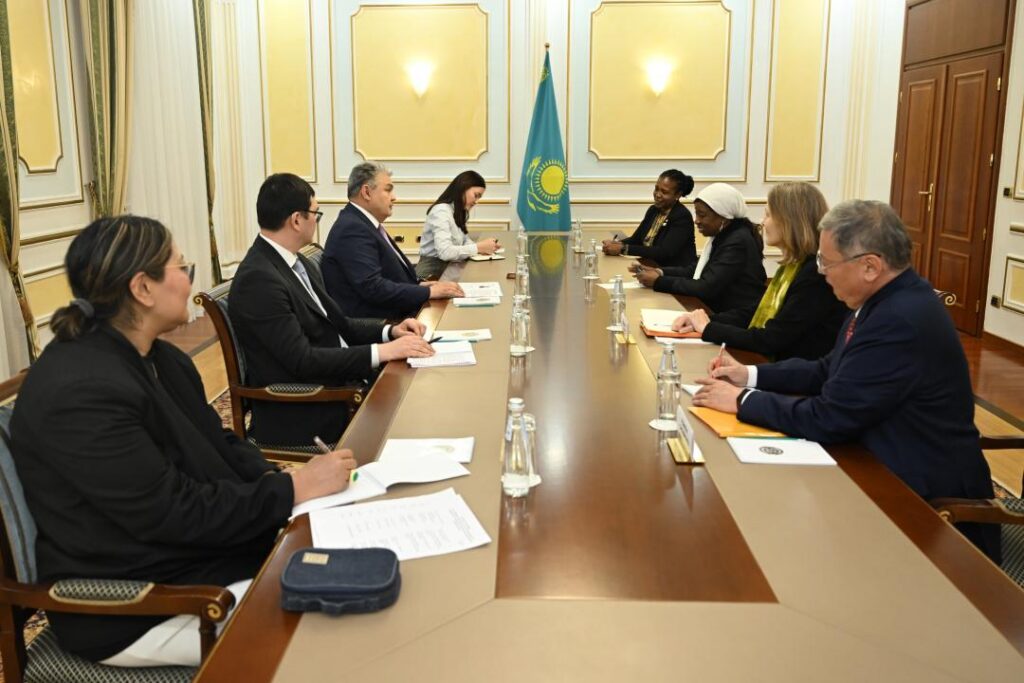
The decision was confirmed during a meeting between Kazakhstan’s Foreign Minister Yerzhan Kosherbayev and UN Under-Secretary-General and UNFPA Executive Director Diene Keita.

The new hub will function as a regional center for collecting, analyzing, and studying demographic trends across Central Asia.

UNFPA representatives said the decision to locate the hub in Almaty reflects the organization’s positive assessment of Kazakhstan’s reforms in gender equality, women’s rights protection, and social policy development.

Keita said Kazakhstan has made significant progress in healthcare, youth and family policy, and reducing maternal and infant mortality rates.

UNFPA is the UN agency specializing in reproductive health and demographic development. The organization supports countries in implementing programs related to healthcare, gender equality, and social resilience.

Kosherbayev said President Kassym-Jomart Tokayev places particular importance on cooperation with the UN and supports initiatives aimed at reforming international institutions.

“The minister positively assessed cooperation between the Kazakh government and UNFPA in improving maternal and infant mortality indicators, developing youth health centers, and conducting demographic research,” the Foreign Ministry said.

According to Kosherbayev, healthcare, youth policy, and gender equality should become key areas of regional cooperation with UNFPA.

He also proposed making greater use of the UN Regional Center for Sustainable Development Goals for Central Asia and Afghanistan in Almaty to expand the agency’s presence in the region.

Following the talks, the two sides agreed to continue cooperation on regional and global agenda issues.

During her visit, Keita also met with Prime Minister Olzhas Bektenov and reaffirmed UNFPA’s readiness to continue supporting Kazakhstan’s strategic initiatives.

As previously reported by The Times of Central Asia, Kazakhstan has made significant progress in reducing maternal and infant mortality, while Astana has also been actively sharing its experience in maternal and child healthcare with other countries in the region.

Kazakhstan Renews Debate Over Stray Animals After Parliament Approves Euthanasia Amendments

Kazakhstan has once again found itself at the center of a heated public debate over how the state should address the country’s growing stray animal problem. Recently approved parliamentary amendments allowing the euthanasia of dogs after a short holding period have triggered strong criticism from animal rights activists, volunteers, and private shelter owners, who argue that the new measures fail to address the root causes of the crisis and instead merely conceal its consequences temporarily.

For many involved in the debate, the issue goes beyond animal welfare and points to deeper problems in state governance. For years, responsibility for stray animals in Kazakhstan has effectively been left to private initiatives, including small shelters and volunteer networks that operate largely on personal funds and donations.

One such initiative is the Amigo shelter near Almaty, which currently houses around 200 dogs and 80 cats. The shelter did not begin as a business or long-term charitable project, but rather as a spontaneous effort to rescue several animals from capture facilities and the streets. Over time, the number of animals grew, and temporary assistance evolved into a permanent struggle for survival.

Image: TCA

“We never planned to create a shelter. It all started with a few rescued animals, and then it became impossible to stop because they were completely dependent on us,” Amigo representatives told The Times of Central Asia.

That dependency has become one of the defining features of Kazakhstan’s private shelter system. Unlike many Western countries, where large numbers of animals are adopted through well-developed adoption programs, animals in Kazakhstan often remain in shelters for years; sometimes for the rest of their lives. According to Amigo’s owners, society still approaches shelter animals with caution, while a culture of responsible adoption is only beginning to emerge.

The financial burden on such organizations is enormous. In addition to food and veterinary care, shelter owners must independently pay for land, kennel construction, transport, fuel, generators, heating, water supply, sterilization, vaccination, and staff salaries. In many cases, infrastructure must be built entirely from scratch.

Amigo’s own history reflects this instability. The shelter was initially located on a small property in Baiserke, but the growing number of animals and expanding residential development made continued operations impossible. The owners took out loans to purchase land near the village of Zhetygen, where they personally built enclosures and installed utilities. Later, after Zhetygen was incorporated into the new city of Alatau, they faced the threat of land seizure for state needs and were once again forced to search for a new location and finance another relocation through debt.

Image: TCA

According to shelter representatives, Kazakhstan still lacks a clear legal status for such facilities. Agricultural land is formally designated for livestock rather than cats and dogs, meaning that even privately purchased plots do not guarantee long-term security. For shelters, relocation means far more than changing addresses, it requires transporting hundreds of animals, rebuilding infrastructure, and effectively starting over.

Against this backdrop, discussions of mass euthanasia are especially painful for shelter owners. They argue that the stray animal problem does not emerge on its own. In their view, the main causes are the lack of widespread sterilization programs, weak oversight of pet owners, and near-total impunity for abandoning animals.

“If animals are simply destroyed without addressing the causes of their appearance, the streets will quickly fill with new ones,” Amigo representatives said. According to the shelter, many residents continue to breed animals irresponsibly before abandoning unwanted puppies and kittens, shifting the burden onto the streets, volunteers, and shelters.

Supporters of tougher measures, meanwhile, point to public safety concerns. In recent years, attacks by stray dogs have repeatedly sparked national debate in Kazakhstan, while authorities face growing pressure from residents demanding a reduction in the number of animals on the streets.

However, shelter owners argue that policies based solely on capture and euthanasia cannot deliver long-term results. As an alternative, they advocate year-round free sterilization programs, substantial fines for abandoning animals, and tighter regulation of breeding practices. In their view, only a combination of these measures can gradually reduce the stray population without perpetuating the cycle of new animals appearing on the streets.

Image: TCA

The precarious position of private shelters themselves remains another major issue. Most operate through the efforts of just a handful of people working without days off and often sacrificing their own finances, health, and personal lives. Amigo’s owners admit they do not see a sustainable future for a system built entirely on the commitment of individual citizens.

“People grow older, get tired, and burn out. If something happens to the owner of a shelter, it is often unclear what will happen to the animals afterward,” they said.

According to shelter representatives, the government should treat private organizations as part of the broader animal welfare system rather than as a complete substitute for state responsibility. Without official legal status, financial support, and a long-term state policy, many shelters could close within the coming years, they warn.

For volunteers themselves, meaningful change would require systemic measures: free sterilization programs, greater owner accountability, state support for shelters, and a shift in public attitudes toward animals. Until then, Amigo representatives believe Kazakhstan risks returning to the same debate again and again, responding to the consequences of the crisis while leaving its causes unresolved.

Kyrgyzstan’s Industrial Output Rises as Employment Falls

Industrial production in Kyrgyzstan has increased more than six times over the past 15 years, although the sector’s share of the national economy has declined and employment in industry has fallen sharply, according to data from the National Statistical Committee.

By the end of 2025, industry accounted for 17.7% of Kyrgyzstan’s GDP, compared to 20.7% in 2010.

At the same time, industrial output increased by more than 530% over the same period. In 2010, the value of industrial production was estimated at around $1.4 billion, while by 2025 output had reached approximately $9.1 billion.

The figures indicate significant industrial growth, although other sectors of the economy, particularly trade and services, have expanded even faster, analysts say.

The sector has also experienced a sharp decline in employment. Around 268,000 people worked in industry in 2010, but by 2025 that number had fallen to 144,000.

At the same time, the number of industrial enterprises increased from roughly 2,000 to 2,400, which statisticians say points to structural changes and rising productivity.

Manufacturing remains the backbone of Kyrgyzstan’s industrial sector, accounting for nearly 80% of all industrial enterprises.

The country’s main industrial segments include food processing, textile production, construction materials, and primary raw-material processing, including metallurgy.

High-tech industries such as machinery manufacturing, electronics, and advanced chemical processing remain underdeveloped. Energy accounts for around 10.2% of industrial production, while mining contributes 9.2%.

Economists note that much of Kyrgyzstan’s processing industry still produces goods with relatively low added value. The raw materials sector, particularly gold mining, continues to be one of the main drivers of industrial growth despite its comparatively modest share in the overall production structure.

At the same time, energy development remains one of the biggest constraints on further industrialization.

Despite active construction of solar and wind power plants, small hydropower stations, and implementation of the large Kambar-Ata-1 hydropower project, Kyrgyzstan continues to face electricity shortages during the winter season.

The energy deficit limits the launch of energy-intensive industries and continues to restrain investment inflows into the industrial sector.

Kazakhstan Faces Shortage of Doctors and IT Specialists

Kazakhstan continues to face labor shortages in healthcare, information technology, engineering, and the creative industries, according to the Ministry of Labor and Social Protection.

The ministry published a list of the country’s most in-demand professions based on data from state information systems and the Enbek.kz employment portal.

The most acute shortages remain in the medical sector. According to the ministry, there are only around 100 job seekers’ resumes for 469 vacancies for obstetricians and gynecologists. For pediatricians, 448 vacancies were recorded against 139 resumes, while anesthesiologists and intensive care specialists accounted for 300 vacancies and only 75 resumes.

“Shortages are also observed among oncologists, neonatologists, and endocrinologists,” the ministry said.

Demand also remains high for information technology specialists. More than 500 vacancies are currently open for software application developers, while around 355 vacancies are available for graphic designers.

According to the Unified System for Recording Labor Contracts, more than 45,000 employment contracts have been signed since the beginning of 2026 in the country’s most in-demand professions. The largest number of contracts, around 8,000, involved software developers. Obstetricians-gynecologists, pediatricians, and application programmers were also actively recruited.

The ministry acknowledged that Kazakhstan is partially addressing labor shortages by attracting foreign specialists.

“To attract valuable personnel, Kazakhstan operates a simplified employment procedure for foreign specialists,” the ministry said.

According to officials, the list of in-demand professions includes more than 50 occupations and allows highly qualified foreign workers to obtain permanent residence permits in Kazakhstan.

This year, 55 labor contracts have been signed with foreign specialists, primarily in the automation sector.

The ministry said that, overall, the domestic labor market covers demand for most key professions, although shortages in the healthcare sector remain persistent. The Times of Central Asia previously reported that Kazakhstan’s small and medium-sized businesses are also facing a severe labor shortage.