• KGS/USD = 0.01144 0%
  • KZT/USD = 0.00192 -0%
  • TJS/USD = 0.10849 0.37%
  • UZS/USD = 0.00008 0%
  • TMT/USD = 0.28571 0.28%
  • KGS/USD = 0.01144 0%
  • KZT/USD = 0.00192 -0%
  • TJS/USD = 0.10849 0.37%
  • UZS/USD = 0.00008 0%
  • TMT/USD = 0.28571 0.28%
  • KGS/USD = 0.01144 0%
  • KZT/USD = 0.00192 -0%
  • TJS/USD = 0.10849 0.37%
  • UZS/USD = 0.00008 0%
  • TMT/USD = 0.28571 0.28%
  • KGS/USD = 0.01144 0%
  • KZT/USD = 0.00192 -0%
  • TJS/USD = 0.10849 0.37%
  • UZS/USD = 0.00008 0%
  • TMT/USD = 0.28571 0.28%
  • KGS/USD = 0.01144 0%
  • KZT/USD = 0.00192 -0%
  • TJS/USD = 0.10849 0.37%
  • UZS/USD = 0.00008 0%
  • TMT/USD = 0.28571 0.28%
  • KGS/USD = 0.01144 0%
  • KZT/USD = 0.00192 -0%
  • TJS/USD = 0.10849 0.37%
  • UZS/USD = 0.00008 0%
  • TMT/USD = 0.28571 0.28%
  • KGS/USD = 0.01144 0%
  • KZT/USD = 0.00192 -0%
  • TJS/USD = 0.10849 0.37%
  • UZS/USD = 0.00008 0%
  • TMT/USD = 0.28571 0.28%
  • KGS/USD = 0.01144 0%
  • KZT/USD = 0.00192 -0%
  • TJS/USD = 0.10849 0.37%
  • UZS/USD = 0.00008 0%
  • TMT/USD = 0.28571 0.28%
11 December 2025

Energy Minister: Kazakhstan Needs Liquefied Gas For Petrochemical Industry

Kazakhstan’s Minister of Energy, Almasadam Satkaliyev, believes that liquefied petroleum gas (LPG) should primarily be used as a raw material for the country’s growing petrochemical industry, instead of its current widespread use as fuel for motor vehicles.

“Liquefied petroleum gas is not used as [motor] fuel anywhere in the world. Instead, it is used as an important raw material for producing products with high added value,” Satkaliyev said at a government meeting on July 16, chaired by Prime Minister Olzhas Bektenov.

Regarding data from the Ministry of Internal Affairs, Minister Satkaliyev said that in 2023, Kazakhstan had 582,000 motor vehicles running on LPG, an 18% increase compared to 2022 (491,000).

Cheaper than gasoline, LPG is Kazakhstan’s most popular and economical fuel for vehicle owners.

The minister said that due to low prices for LPG, the country’s motorists continue switching to this fuel type, thus increasing its consumption.

Earlier reports said that in 2023, LPG consumption in Kazakhstan increased by 400,000 tons, or 28%, compared to 2022. Last year, LPG consumption volumes amounted to 2.2 million tons compared to 1.8 million tons in 2022. According to analysts, in 2024, LPG consumption in Kazakhstan may increase by another 200 thousand tons and reach 2.4 million tons.

Satkaliyev continued by saying that the Energy Ministry had been allocating part of the LPG produced in Kazakhstan to industrial enterprises producing petrochemical products. Thus, there is a shortage of LPG, which stands at 20%—25%.

According to the minister, Kazakhstan produced 1.6 million tons of LPG in 2023, and the projection for 2024 is the same: 1.6 million tons.

The minister emphasized that three plants in Kazakhstan use LPG as a raw material for producing polypropylene and methyl tert-butyl ether. These projects have attracted $2.7 billion in investments and created 1.7 thousand jobs.

Plans are in place for a project to produce butadiene, which will use butane from the Tengiz field as a raw material. The project will cost $1.4 billion and create 750 permanent jobs and up to 7,500 jobs in related industries.

There are projects for the production of alkylate and polypropylene, which plan to invest $300 million and create 2 thousand jobs.

The energy minister emphasized that implementing these important investment projects requires 345 thousand tons of LPG per year and asked the prime minister to ensure that the government prioritizes the use of LPG for the needs of the petrochemical industry.

First Chinese Freight Train Leaves For Iran via Turkmenistan

The Iranian ambassador to China, Mohsen Bakhtiar, has announced the launch of a new freight route linking China and Iran.

According to Bakhtiar, a Chinese transit train has left Xi’an for Tehran. It will arrive in the Iranian capital about ten days after departing China. The train will enter Iran through the Inche-Burun checkpoint, after passing through Kazakhstan and Turkmenistan.

Bakhtiar commented that the launch of this route is part of the Iranian embassy’s efforts to strengthen the country’s transit potential by ensuring the transportation of Chinese goods to West Asia and Europe.

Production of Granulated Gold and Silver Launched in Uzbekistan

On July 16, Uzbekistan’s Almalyk Mining and Metallurgical Complex announced it would start producing gold and silver granules.
The Almalyk plant will also begin production of granulated copper and plans to produce granules from other non-ferrous metals.
The equipment for producing granulated gold, silver, and copper was purchased in Italy.

According to the Almalyk Complex’s press service, the new products will prove convenient for jewelers. In jewelry production, losses occur during the re-melting of ingots and other means of mechanically processing metals. Gold and silver granules will reduce the cost of jewelry products and improve their quality.

At a government meeting about Uzbekistan’s jewelry industry last month, President Shavkat Mirziyoyev said that just 6% of the gold mined in Uzbekistan is processed within the country, and exports of finished products from gold amount to only $78 million. The president emphasized the importance of creating jewelry zones equipped to attract entrepreneurs and reviewing raw materials that are supplied to the industry.

In January-March 2024, Uzbekistan exported gold worth $2.6 billion, with revenue from gold exports comprising 41.7% of the country’s total export revenue.

EDB Forecasts Slowdown in Kyrgyzstan’s Economic Growth

Analysts from the Eurasian Development Bank (EDB) have updated the bank’s economic forecast for Kyrgyzstan. Despite high performance in the first half of the year, the country’s GDP growth may slow in the second half of this year.

In the first six months of this year, the growth of the Kyrgyz economy remained at 8.1%. The majority of this growth was due to domestic trade and the construction sector (50%).

However, industrial production dynamics remained restrained (0.9%) against a background of declining production in extractive industries and zero growth in manufacturing output. At the same time, production in agriculture increased by 3.3%.

According to the EDB analysts, “Despite the strong performance during the first half of the year, we believe that GDP growth will slow down in the second half of 2024. The pace of consumer lending in the current year is lower than in the previous year.”

They also noted that real wages in the first quarter of 2024 grew by 5.3%, compared to 24% the previous year.

“These factors will restrain consumer activity, which will be reflected in a slowdown in GDP growth to 5.5% by the end of this year,” the EDB forecast reads.

Kazakhstan Reports Steady Economic Growth in First Half of 2024

On July 15, the Ministry of the National Economy of Kazakhstan announced the result of the country’s economic development for the first half of 2024. In the period January-June, the gross domestic product (GDP) increased by 3.3%, compared to 3.2% in the same period last year. The production of goods rose by 3.6%, and the services sector grew by 3.3%.

Compared to last year, the economic growth rate slowed in H1 of 2024. This was caused by the economic impact of extreme flooding during the spring, which had a limiting effect on the development of most sectors. The floods resulted in reductions in trade, transport and logistics in ten regions. Oil production also decreased by 1.6%.

In the first half of this year, industrial production was one of the main engines of economic growth, the volume of which increased by 2.8%. There was steady growth in multiple sectors of industrial production. Mechanical engineering grew by 9.4%, metallurgy by 8.3%, the chemicals industry by 5.3%, pharmaceuticals by 14.8%, and the furniture industry by 28.3%. The volume of construction work also increased by 8.6%. In January-June, 4.6 million square meters of housing in new apartment complexes were commissioned, 5.9% more than in the same period last year.

Agricultural production increased 3.4% in January-June, and transportation and warehousing services grew 7.3%.

Investments in non-resource sectors of the economy were also on the rise. Fixed capital investment increased in the manufacturing industry (by 9.4%), information and communications (2.4-fold), scientific and technical activities (58%), transport (33.7%), education (24.1%), financial operations (22.1%), and real estate transactions (4.5%).

In June, annual inflation fell to 8.4% compared to 9.5% in January.

In the period January-May, Kazakhstan’s foreign trade turnover amounted to $55.3 billion. Exports grew by 1.8% to $32.5 billion, including exports of processed goods, which increased by 0.8% to $10.5 billion. Imports amounted to $22.9 billion, down 7.2%, meaning the positive trade balance was $9.6 billion, an increase of $2.3 billion or 32.4% year-on-year.

Since the beginning of the year, Kazakhstan’s international reserves have also increased by $5.4 billion and exceeded $101.3 billion as of July 1. This includes the assets of the National Fund, which increased by $1.4 billion to a total of $61.4 billion. The gold and foreign currency reserves of the National Bank also increased by $4 billion to $39.9 billion.

Stay or Go? Uzbek Students Ponder Studies at Home, Abroad

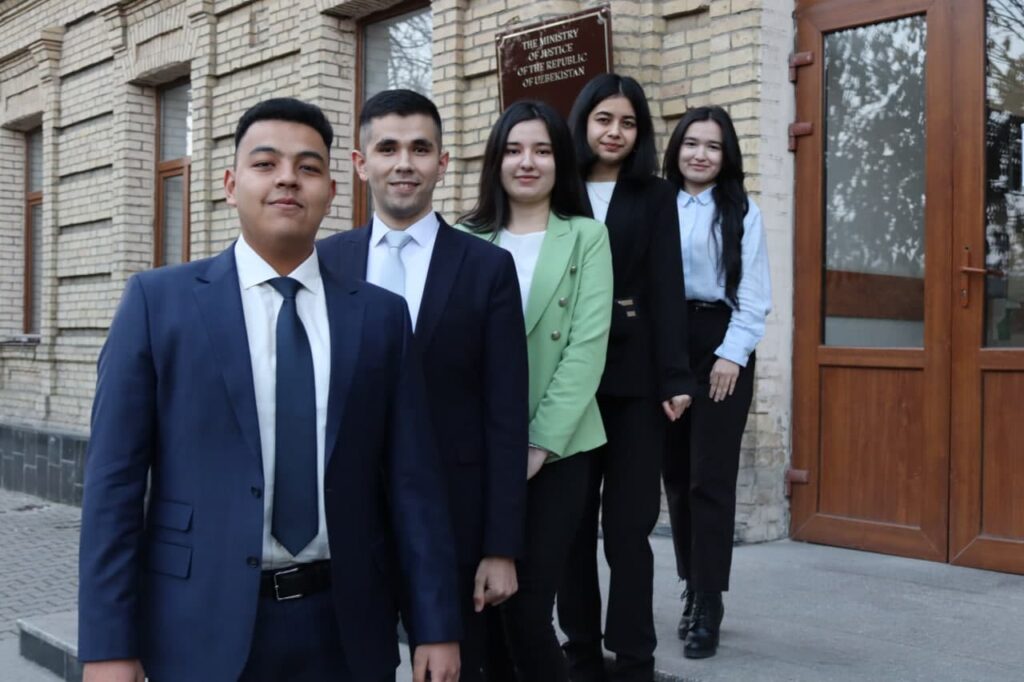
Like many Uzbek students, Nigina Poziljonova left Uzbekistan to study at a university abroad. She doesn’t regret her decision.

“Unlike the teachers I personally saw in Uzbekistan, professors are happy when students say, ‘I don’t understand, please explain again,’” said Poziljonova, who is studying for a bachelor’s degree in business economics with data science at the University of Cassino in Italy.

“If necessary, they are willing to spend two hours after class for that student. If I fail one exam, I can take it 5 times a year for 3 years for free,” said the Uzbek student, who nevertheless describes her Italian experience as “more challenging than I anticipated.”

The perceived shortcomings of higher education have long been a preoccupation in Uzbekistan, which has a large population of young people and is the most populous country – with about 35 million citizens – in Central Asia. Authorities are trying to fix the problem.

Last month, Minister of Higher Education Kongratbay Sharipov said 20 underperforming universities will be closed because only 5-10% of their graduates are employed. Uzbekistan has more than 200 universities – 114 are state-run, 65 are private and 30 are foreign university branches, according to 2023 data.

Uzbekistan had the fifth largest number of “tertiary” students (students who have completed secondary school) studying abroad – 109,945 – among countries around the world that were surveyed, according to UNESCO data in 2021. Around that time, more than 570,000 students were studying in higher education institutions in Uzbekistan.

As in many countries, a lot of Uzbek students believe a quality education lies abroad and their increasing command of English and openness to the world can bring that goal within reach. Additionally, Uzbekistan’s El-Yurt Umidi foundation, a state agency launched in 2018, covers tuition fees and living expenses of talented people who want to study abroad. The foundation signs a contract with scholarship holders that requires them to return to Uzbekistan and work for three years.

Many students study at universities in neighboring countries such as Kazakhstan, Kyrgyzstan, and Tajikistan, and then, after one or two years, transfer to universities in Uzbekistan. According to Kyrgyz data, some 38,857 Uzbek students studied in higher education institutions in Kyrgyzstan in 2022 and the figure reached 40,282 in 2023.

Uzbek President Shavkat Mirziyoyev chaired a meeting in May at which officials discussed the 306 majors available at the bachelor’s level in Uzbekistan, and the 625 specialties at the master’s level. They acknowledged that some don’t meet international standards and labor market requirements and explored ways to revise them. Opening new courses in areas of high demand was also discussed.

Another problem in Uzbek universities is an excessive focus on specializations. At one journalism university, specialists taught multiple sub-topics, including TV, international news, public relations, the internet, as well as military, travel, art, economic and sports journalism.

Progress has been made. More people have access to higher education. Starting this year, state grants are given for one year, and in the remaining years of study, the high grades of students throughout the year are taken into account when awarding further grants. The state is also promoting women’s education, helping to pay for master’s degree students and providing seven-year, interest-free loans for bachelor’s degree students.

In an interview, Mashhura Rakhmonova reflected on her experience as a university student in Uzbekistan. She attended the Journalism and Mass Communications University of Uzbekistan and recently completed a master’s degree in media law at Tashkent State University of Law, or TSUL.

“The university’s academic staff, including well-experienced teachers and professors, stand out for their teaching skills and professional experience,” Rakhmonova said of TSUL. “Honestly, punctuality has always been challenging for me, such as being on time for lessons, adhering to the dress code, and consistently attending classes. The dean of our department is very punctual and responsible in his position. He always keeps a close eye on everything in our department.”

She wrote in a Telegram message that the university evaluation system is transparent: “The credibility of TSUL’s exams, conducted in a large hall with disabled internet access, ensures a fair assessment of students’ knowledge. The case-study method employed in seminars, where students collaboratively resolve legal scenarios, further enhances the learning experience.”

However, Rakhmonova also pointed out drawbacks. Non-specialist applicants, like herself, face significant challenges when applying for specialized programs without prior foundational knowledge. Also, the short term of one year for the master’s program can be a significant challenge for both non-specialist students and teachers.

“It leaves little time for in-depth research and dissertation preparation,” she said. “In many foreign countries, a master’s degree takes two years, with at least one semester dedicated to writing and preparing the master’s dissertation. It would be beneficial to have an additional semester allocated for the master’s dissertation.”

Mohizarkhon Mamadaliyeva, a PhD student at Ferghana State University, also commented about higher education in Uzbekistan. Mohizarkhon says that a website has been created for doctoral students to help with administrative work. Also, the university supervises the cooperation of PhD students with professors and provides “motivation to participate in various scholarship programs and international conferences.”

She considers it a great opportunity to receive free education at the PhD level in Uzbekistan and to receive a monthly scholarship of 5,650,000 som (approximately $450). She also pointed out that they also have the requirement of a strict uniform, an issue which other students emphasized.

In another TCA story, Dilorom Mamadjanova talked about bureaucratic problems faced by PhD students.

Poziljonova, the student who went to study in Italy, said she found that exams there were strictly monitored in contrast to what she described as a relatively lax environment in Uzbekistan, where plagiarism is a big problem.

“That’s why I didn’t even know which subject I didn’t know well in Uzbekistan,” she said. “Currently studying in Italy, I can say 100% that I don’t know math, but I can learn.”