• KGS/USD = 0.01144 0%
  • KZT/USD = 0.00213 0%
  • TJS/USD = 0.10456 0.19%
  • UZS/USD = 0.00008 0%
  • TMT/USD = 0.28490 0%
  • KGS/USD = 0.01144 0%
  • KZT/USD = 0.00213 0%
  • TJS/USD = 0.10456 0.19%
  • UZS/USD = 0.00008 0%
  • TMT/USD = 0.28490 0%
  • KGS/USD = 0.01144 0%
  • KZT/USD = 0.00213 0%
  • TJS/USD = 0.10456 0.19%
  • UZS/USD = 0.00008 0%
  • TMT/USD = 0.28490 0%
  • KGS/USD = 0.01144 0%
  • KZT/USD = 0.00213 0%
  • TJS/USD = 0.10456 0.19%
  • UZS/USD = 0.00008 0%
  • TMT/USD = 0.28490 0%
  • KGS/USD = 0.01144 0%
  • KZT/USD = 0.00213 0%
  • TJS/USD = 0.10456 0.19%
  • UZS/USD = 0.00008 0%
  • TMT/USD = 0.28490 0%
  • KGS/USD = 0.01144 0%
  • KZT/USD = 0.00213 0%
  • TJS/USD = 0.10456 0.19%
  • UZS/USD = 0.00008 0%
  • TMT/USD = 0.28490 0%
  • KGS/USD = 0.01144 0%
  • KZT/USD = 0.00213 0%
  • TJS/USD = 0.10456 0.19%
  • UZS/USD = 0.00008 0%
  • TMT/USD = 0.28490 0%
  • KGS/USD = 0.01144 0%
  • KZT/USD = 0.00213 0%
  • TJS/USD = 0.10456 0.19%
  • UZS/USD = 0.00008 0%
  • TMT/USD = 0.28490 0%

Mirziyoyev Offers to Bring Wounded Palestinians to Uzbekistan for Treatment

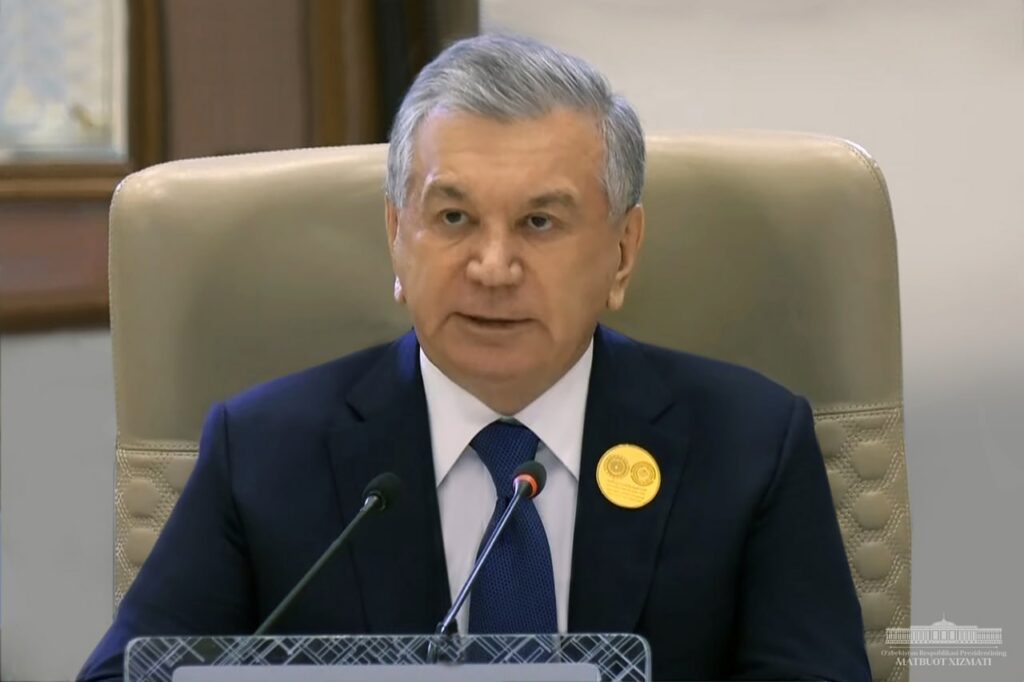
On November 11, Uzbekistan’s President Shavkat Mirziyoyev delivered a speech at the extraordinary Arab-Islamic Summit in Riyadh, Saudi Arabia, expressing concern over the spread of the Middle East conflict into Lebanon. He reiterated Uzbekistan’s support for initiatives to resolve the Palestinian-Israeli issue peacefully and diplomatically.

In his speech, Mirziyoyev said, “Uzbekistan fully supports all practical initiatives to address the Palestinian-Israeli problem through peace and diplomacy. We believe today’s Summit will demonstrate common political will and unity, develop effective global and regional mechanisms and specific solutions, and swiftly put them into practice.”

Mirziyoyev called for the United Nations and the Security Council to play an increased role in ending hostilities. He emphasized the need for safe humanitarian corridors and the immediate initiation of peace talks.

With the Palestinian national holiday on November 15 approaching, Mirziyoyev underscored the nation’s right to an independent state with East Jerusalem as its capital, based on the 1967 borders. He also supported the Global Alliance for Implementing the Two-State Solution initiated by Saudi Arabia.

Mirziyoyev called for expanding humanitarian aid to Palestine and Lebanon to prevent the escalation of the crisis and confirmed Uzbekistan’s readiness to treat wounded Palestinian children and women in its hospitals. He announced plans to discuss further assistance at the Gulf Arab States – Central Asia summit in Samarkand next year.

Finally, he stressed the importance of preserving the Al-Aqsa Mosque and other cultural monuments in Jerusalem, urging members of the Organization of Islamic Cooperation to prioritize protecting these historic sites.

Mirziyoyev concluded by urging an urgent and unified response to the crisis and highlighting Uzbekistan’s commitment to peace and humanitarian support in the region.

Harnessing AI for Inclusive Education: Transforming Learning Experiences in Kazakhstan

Artificial Intelligence continues to revolutionize every major industry, and its impact on education is especially transformative and promising. Many countries around the world face numerous problems in their education systems, and AI offers solutions to many of them. Kazakhstan is one of the nations that embrace the AI revolution by making efforts to integrate AI into its education system.


Current State of AI in Kazakhstan

In Kazakhstan, the government is investing heavily to integrate AI into its education system. It plans to spend 650 billion tenge on research initiatives including offering AI literacy courses in universities starting in 2024. This reflects a national strategy aimed at modernizing education and preparing a workforce skilled in AI technologies.

Kazakhstan’s universities are beginning to adopt AI technologies to stay current with technological advancements. Institutions like Al-Farabi Kazakh National University and L.N. Gumilyov Eurasian National University are introducing AI-focused programs that include training on intelligent tutoring systems. Korkyt Ata Kyzylorda State University has also initiated a School of Artificial Intelligence in collaboration with SeoulTech. This program aims to facilitate the exchange of knowledge among professors in artificial intelligence and VR/AR technologies. Such initiatives exemplify how targeted training can prepare students for future job markets while addressing regional skill gaps.

Additionally, interviews with educators involved in these programs reveal a growing enthusiasm for integrating technology into teaching practices. One educator noted how adaptive learning platforms have allowed her to tailor lessons more effectively to meet her students’ varying needs.


Accessibility and Inclusivity

AI technologies also play a crucial role in enhancing accessibility for students with disabilities. Tools like speech recognition software and language translation applications can significantly improve learning experiences for diverse learners. For instance, platforms like Duolingo employ AI-driven language translation tools to assist students who may struggle with language barriers. Moreover, applications such as Seeing AI and Voiceitt are revolutionizing education by providing real-time support for visually impaired and speech-impaired students, respectively. These technologies not only facilitate communication but also empower students to engage more fully in their educational experiences.

In alignment with these advancements, organizations such as UNICEF are leveraging AI to provide quality education in underserved regions. In Kazakhstan, efforts are underway to ensure that all students, regardless of their backgrounds or abilities, can benefit from these advancements. A recent initiative launched by UNICEF and the Nazarbayev University Research and Innovation System focuses on integrating artificial intelligence into secondary education, aiming to enhance the quality of learning for all students. This project emphasizes the importance of equipping teachers with the necessary skills and tools to effectively utilize AI technologies in their classrooms. By fostering an inclusive educational environment that incorporates adaptive learning technologies, these efforts seek to bridge gaps and ensure equitable access to quality education across the country, aligning with global trends in educational innovation.


Data-Driven Insights for Educators

AI analytics offer educators valuable insights into student progress and performance. By monitoring data trends, teachers can identify at-risk learners and facilitate timely interventions. For example, platforms like BrightBytes analyze educational data to provide insights that can improve teaching and learning outcomes.

Kazakhstan’s educational institutions are beginning to harness these data-driven insights as part of their modernization efforts. As universities adopt AI tools for administrative processes and student assessments, they are transforming traditional educational paradigms into data-informed practices.


Enhancing Teacher Training

As AI tools become more prevalent in classrooms, there is a growing need for professional development programs that equip educators with the skills necessary to integrate these technologies effectively. Initiatives aimed at training teachers can enhance their ability to facilitate personalized learning experiences.

Kazakhstan recognizes this need and is actively working on training programs for educators that focus on utilizing AI tools effectively within their teaching practices. For instance, the recent “AI People” course, launched by the Blockchain & AI Technology Center (BAITC) and Astana Hub, offers free training to individuals from all backgrounds on how to use artificial intelligence in everyday life. Additionally, the Institute of Smart Systems and Artificial Intelligence (ISSAI) provides immersive research programs that give students hands-on experience with AI and machine learning. By fostering a culture of continuous professional development through such initiatives, the country aims to create an educational environment where both teachers and students thrive.


Collaboration and Knowledge Sharing

Kazakhstan’s involvement in international conferences on education and technology helps build cooperation between countries. These events allow participants to share ideas and practical ways to bring AI into education.

One recent event, the Third International UNESCO Model on “Ethics of the Use of Artificial Intelligence in Education,” was held in Almaty, Kazakhstan. It brought together 53 youth delegates from 32 countries to talk about the ethical challenges of using AI in education.

The event stressed how important it is to make sure AI improves the quality of education while following ethical guidelines.

Collaboration like this is crucial for tackling shared problems faced by schools and universities around the world. By working together, countries can pool their knowledge and resources to build stronger education systems that support all students.

85-Million-Year-Old Dinosaur Fossils Discovered in Tajikistan’s Sughd Region

Dinosaur fossils estimated to be 85 million years old have been discovered in Tajikistan’s Sughd region. The excavation took place in the village of Kansai, a renowned paleontological site known for its rich array of prehistoric animals, including ancient lizards, turtles, crocodiles, amphibians, and fish from the Cretaceous period.

The expedition, organized by Russian and Tajik scientists, builds on Kansai’s long-standing significance in paleontology. In the 1960s, Soviet scientist Anatoly Rozhdestvensky and his team uncovered numerous dinosaur remains, including a therizinosaur femur. In the 1980s, Lev Nesov identified traces of mammals from the Cretaceous period. This year, a team led by Associate Professor Pavel Skuchas from St. Petersburg State University has expanded research in Kansai, focusing on smaller vertebrates. Tajik researchers, including Umed Nabiev, a master’s student in paleontology, and ecologist Gafurjon Karimov, joined the excavation.

The fossils were excavated from the walls of a large canyon containing Upper Cretaceous sediment layers, where the team found remains of lizards, salamanders, frogs, and fish. “We used a washing technique to carefully extract even the smallest bones and teeth,” Nabiev explained, noting that a special adhesive was applied to the rock to protect these fragile finds.

Among the larger discoveries were crocodile and turtle shells, as well as the bones of an 85 million-year-old dinosaur. Further research will determine which parts of the dinosaur’s body these bones belonged to. The excavation is set to resume next May, and scientists plan to explore new canyon sections previously mined for cement production.

“Previously, the remains of large animals have been studied quite well, while the remains of smaller animals, such as amphibians and reptiles, have been neglected. In our next expedition, we will also search for small vertebrates,” Nabiev added.

Tajikistan has seen several significant archaeological discoveries in recent years. In 2023, artifacts unearthed at the Oshkhon site in the Eastern Pamirs indicated human presence dating back about 14,000 years.

In 2021, a joint Tajik-German expedition in the village of Khushdilon (Torbulak) near Danghara district uncovered the remains of a Hellenistic sanctuary dating from the 3rd to 1st centuries B.C. These findings continue to expand the historical and cultural understanding of the region.

Deported Tajik Opposition Activist Ikromov Sentenced to 23 Years in Prison

Tajik opposition activist Farrukh Ikromov, who had sought asylum in Europe, was deported from Poland to Tajikistan in April and subsequently sentenced to 23 years in prison in Dushanbe. Opposition sources have now informed Radio Ozodi of Ikromov’s sentencing, though the Tajik authorities have not issued any official statement on the matter.

According to Abdusattor Boboev, head of the Polish-based Citizens’ Committee for the Rescue of Political Prisoners in Tajikistan, Ikromov was transferred from a Dushanbe pre-trial detention center to prison in October. Another activist, Saidiskhok Boboev, corroborated this information, stating that a recently released prisoner saw Ikromov and confirmed his 23-year sentence.

Ikromov’s relatives, who reside abroad, lack detailed information about his sentencing. A close family member explained that they receive occasional updates about his status through a relative in Tajikistan.

Ikromov’s deportation followed the denial of his asylum request in Poland. After this initial denial, He sought protection in Germany, but he was returned to Poland, where he was placed in a migrant detention center before being deported to Tajikistan. According to Abdusattor Boboev, shortly before his deportation, he reported being unexpectedly photographed, after which all contact with him ceased.

Ikromov also participated in protests against Tajik President Emomali Rahmon’s visit to Germany in September 2023. Opposition activists had expressed concern that if deported to Tajikistan, Ikromov would face mistreatment and a lengthy prison term.

In recent years, several EU countries, including Germany, have complied with Tajikistan’s requests to extradite political activists, many of whom have subsequently received lengthy prison sentences. International human rights organizations have sharply criticized these actions.

The Times of Central Asia previously reported on another Tajik activist, Dilmurod Ergashev, whose deportation from Germany was ordered by the Kleve administrative court on October 28, shortly after he was detained. The court ruled that Ergashev should be deported despite his pending application for political asylum before another court. Prior to his anticipated deportation, Ergashev attempted suicide.

Ergashev, a member of the opposition Group of 24, has opposed the regime of Rahmon and joined the Reform and Development of Tajikistan movement in 2024. He has resided in Germany for 13 years.

Kazakhstan’s Lake Balkhash Receives 13.5 billion Cubic Meters of Water in 2024

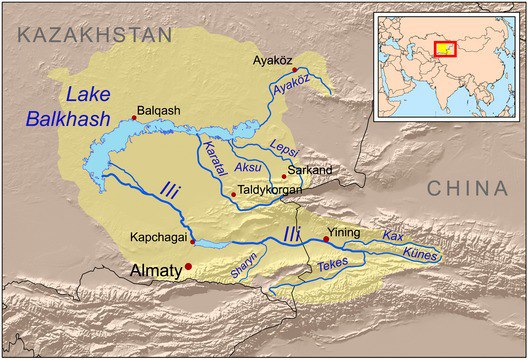
The Ministry of Water Resources and Irrigation of the Republic of Kazakhstan announced on November 8 that 13.5 billion cubic meters of water had been sent to Lake Balkhash via the Ili River from the Kapchagay Reservoir this year, raising the lake’s average water level to 341.6 meters above sea level.

The trans-boundary Ili River, originating in China, supplies about 70% of Lake Balkhash’s water. According to the ministry, this year’s average water flow at the Kazakhstan-China border was 384 cubic meters per second, a 17% increase from last year.

Lake Balkhash, located 280 kilometers northwest of Almaty, Kazakhstan’s largest city, is the world’s fifteenth-largest lake. In May, reports indicated that Balkhash’s water level had risen by 23 centimeters since the start of the year, largely due to increased rainfall and snowmelt-related floods this past spring.

Earlier this month, The Times of Central Asia reported that Kazakhstan and China have initiated negotiations on the joint management and allocation of water from shared rivers. A key goal for Kazakhstan in these talks is to maintain optimal water levels in Lake Balkhash.
Three major rivers in Kazakhstan — the Irtysh, Ili, and Emel — originate in China, making trans-boundary water management critical for the country.

In late August, The Times of Central Asia also reported that the Kapchagay Reservoir near Almaty had filled to capacity for the first time in a decade. The reservoir collects water from the Ili River and regulates its flow to Lake Balkhash.

Uncategorized

CAREC Ministers Approve Climate Action Plan and Launch Regional Climate Fund

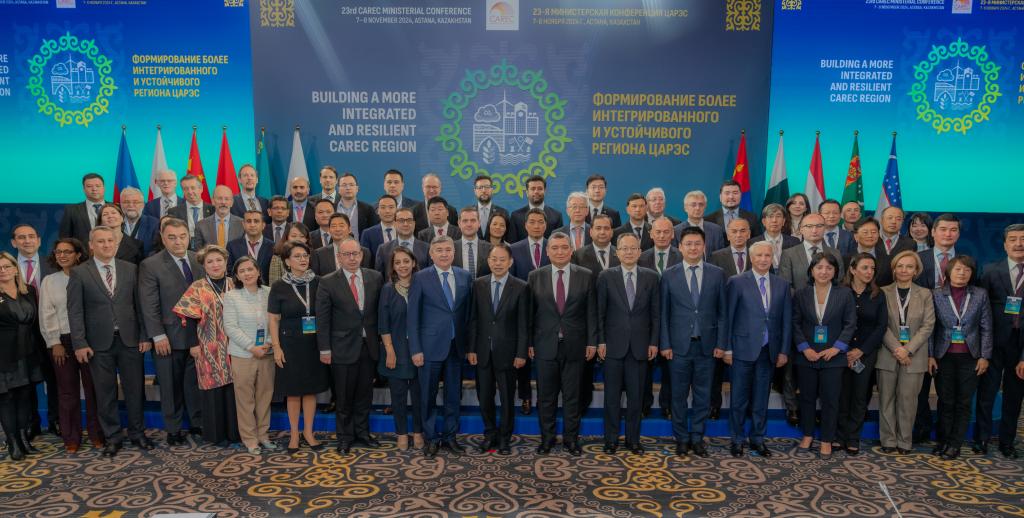
At the 23rd CAREC Ministerial Conference held in Astana on November 8, member countries of the Central Asia Regional Economic Cooperation (CAREC) Program—Afghanistan, Azerbaijan, China, Georgia, Kazakhstan, Kyrgyzstan, Mongolia, Pakistan, Tajikistan, Turkmenistan, and Uzbekistan—endorsed a new Climate Change Action Plan (CCAP) and launched the CAREC Climate and Sustainability Project Preparatory Fund (CSPPF). These initiatives aim to strengthen regional collaboration on climate resilience, low-carbon growth, and sustainable development.

The CAREC Program is a partnership of 11 countries and development partners that promotes sustainable development through regional cooperation, with the Asian Development Bank (ADB) hosting the CAREC Secretariat.

In his address at the conference, ADB President Masatsugu Asakawa stated, “The approval of the CAREC Climate Change Action Plan and the establishment of the Climate and Sustainability Project Preparatory Fund are significant milestones in our collective efforts to address climate change. By working together, we can build resilient infrastructure, develop early warning systems, and create a greener future powered by renewable energy.”

The CCAP, covering the period from 2025 to 2027, prioritizes initiatives aligned with the CAREC Climate Change Vision and focuses on four main areas to address climate challenges in the region. It aims to enhance climate risk preparedness, strengthen the water-energy-food nexus, promote low-carbon growth by reducing emissions and expanding renewable energy, and create a CAREC climate platform.
The CSPPF will support CAREC countries in developing viable regional climate projects that align with their commitments under the Paris Agreement.

On November 8, ADB signed fund contribution agreements with China’s Ministry of Finance and South Korea’s Ministry of Economy and Finance, generating an initial $5 million in funding for the CSPPF.

Speaking at the Ministerial Conference, Kazakhstan’s Prime Minister Olzhas Bektenov highlighted the CAREC Program’s significance for Central Asia, noting that over the past 20 years, it has mobilized about $51 billion for the region, with more than $9 billion invested in Kazakhstan.

During his visit to Kazakhstan, ADB’s Asakawa met with President Kassym-Jomart Tokayev to discuss ongoing cooperation and future initiatives.

From 1994 to 2024, ADB financed projects in Kazakhstan valued at approximately $7 billion. Notably, ADB participated in the construction of the Western Europe–Western China highway corridor and the reconstruction of the Aktobe–Kandyagash road.