• KGS/USD = 0.01144 0%
  • KZT/USD = 0.00209 0%
  • TJS/USD = 0.10523 0%
  • UZS/USD = 0.00008 0%
  • TMT/USD = 0.28530 -0.14%
  • KGS/USD = 0.01144 0%
  • KZT/USD = 0.00209 0%
  • TJS/USD = 0.10523 0%
  • UZS/USD = 0.00008 0%
  • TMT/USD = 0.28530 -0.14%
  • KGS/USD = 0.01144 0%
  • KZT/USD = 0.00209 0%
  • TJS/USD = 0.10523 0%
  • UZS/USD = 0.00008 0%
  • TMT/USD = 0.28530 -0.14%
  • KGS/USD = 0.01144 0%
  • KZT/USD = 0.00209 0%
  • TJS/USD = 0.10523 0%
  • UZS/USD = 0.00008 0%
  • TMT/USD = 0.28530 -0.14%
  • KGS/USD = 0.01144 0%
  • KZT/USD = 0.00209 0%
  • TJS/USD = 0.10523 0%
  • UZS/USD = 0.00008 0%
  • TMT/USD = 0.28530 -0.14%
  • KGS/USD = 0.01144 0%
  • KZT/USD = 0.00209 0%
  • TJS/USD = 0.10523 0%
  • UZS/USD = 0.00008 0%
  • TMT/USD = 0.28530 -0.14%
  • KGS/USD = 0.01144 0%
  • KZT/USD = 0.00209 0%
  • TJS/USD = 0.10523 0%
  • UZS/USD = 0.00008 0%
  • TMT/USD = 0.28530 -0.14%
  • KGS/USD = 0.01144 0%
  • KZT/USD = 0.00209 0%
  • TJS/USD = 0.10523 0%
  • UZS/USD = 0.00008 0%
  • TMT/USD = 0.28530 -0.14%

Uzbekistan’s 2026 Reform Program Introduces Life Imprisonment for Pedophilia

President Shavkat Mirziyoyev has approved draft reform programs setting out priority measures for 2026, along with the State Program for implementing the “Uzbekistan-2030” Strategy during what has been declared the “Year of Community and Social Prosperity,” according to the presidential press service.

The documents were presented to the president at a briefing that highlighted a new methodology drawing on advanced international experience. Officials stated that the drafts define the main policy directions and target indicators for the coming year, in line with the President’s Address to the public and the Parliament, the Oliy Majlis, and outline specific implementation mechanisms.

A distinction was drawn between the reform programs and the State Program. The reform programs consolidate initiatives proposed by the president and identify the most urgent reforms for 2026. These include modernizing mahalla infrastructure in line with the concept of a “New Uzbekistan,” shifting the economy toward technology and innovation-driven growth while stimulating domestic demand, upgrading professional training systems and reshaping the labor market, ensuring environmental sustainability and rational water use, strengthening public administration and the judicial system, and reinforcing social cohesion.

Officials emphasized a shift from “document development” to measurable results. Each initiative is accompanied by defined implementation mechanisms and key performance indicators to assess progress by the end of the year. Individual officials have been assigned personal responsibility and coordinating state bodies have been designated.

The State Program structures the implementation of the Uzbekistan-2030 Strategy targets for 2026 and includes 337 specific measures. It included the preparation of 59 key legislative and regulatory drafts across sectors, along with 12 additional drafts related to major strategic reforms.

Public consultation played a significant role in shaping the document. From January 23 to February 1, the draft State Program was published for public discussion. According to official data, more than 5 million users viewed the document online, and over 22,000 comments and proposals were submitted. More than 50 discussions were held at universities and state institutions, involving approximately 10,000 students, faculty members, and civil servants. Nearly 1,000 proposals were incorporated into the final draft.

Among the approved initiatives are stricter penalties for violence against women and children, the introduction of life imprisonment for pedophilia, reforms to mortgage and electric vehicle lending mechanisms, an increase in the share of renewable energy to 30%, strengthened anti-corruption measures, and the introduction of juries in criminal proceedings.

In a related regional context, discussions on criminal justice reform have also intensified elsewhere in Central Asia. In Kazakhstan, the Health Ministry previously proposed tightening procedures related to chemical castration for individuals convicted of sexual crimes against minors, reflecting a broader regional debate on the protection of vulnerable groups.

The Uzbek government plans to allocate 250.5 trillion UZS (more than $20.4 billion) from budgetary sources and attract an additional $50.4 billion to finance the 2026 programs. The Ministry of Justice and the Chamber of Accounts will conduct ongoing monitoring, while the Cabinet of Ministers will review progress quarterly. Reports are to be submitted to the Legislative Chamber every six months and to the president on a monthly basis.
Kazakhstani Skater Denis Ten, Killed in 2018, Is Honored As Nation Celebrates Olympic Gold  

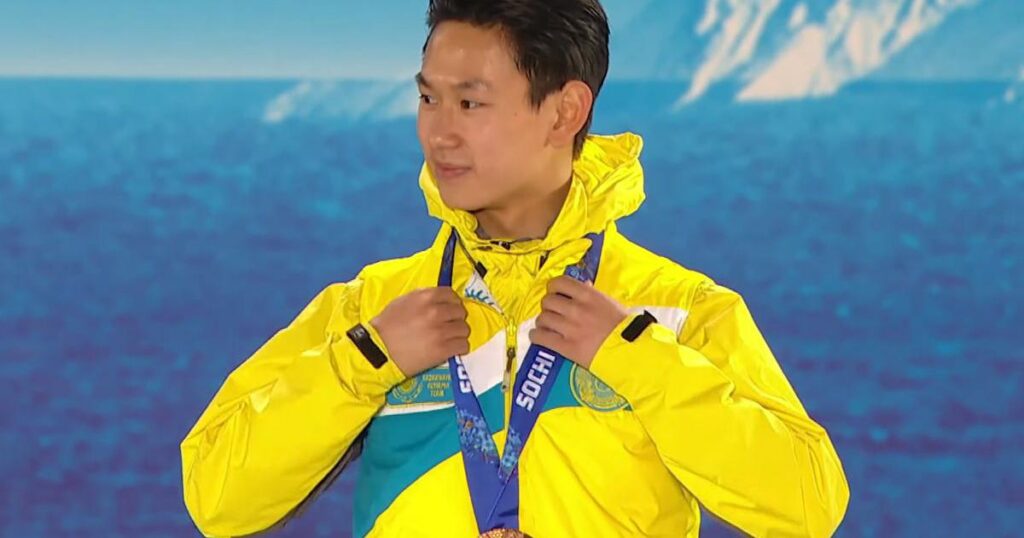
After Olympic figure skater Mikhail Shaidorov won gold for Kazakhstan, he was quick to pay tribute to Denis Ten, a Kazakhstani who got the bronze medal in the same event at the 2014 Winter Olympics and was killed in an attempted robbery in Almaty four years later.

It was a bittersweet moment. Shaidorov, 21, was basking in his extraordinary accomplishment in Milan, Italy last weekend even as he honored an inspiring figure whose violent death in 2018 shocked Kazakhstan, a country that was delighted when Ten made it onto the podium in Sochi, Russia.

“I think my medal would have meant a lot to Denis Ten,” Shaidorov said in comments posted on social media by Kazakhstan’s Olympic team. “He opened the way for us. This path was thorny for him and for me. And I want to express my gratitude to Denis for what he did for our sport.”

A pioneer of the sport in Kazakhstan, Ten skated as a boy at a shopping center rink in Almaty and later trained in Russia. He was a popular figure and had his own skating show called “Denis Ten and Friends.”

Shaidorov followed a similar path, developed early skills in Almaty and, at one point, attending a master class led by Ten. Shaidorov received extensive training in Russia under Olympic champion Alexei Urmanov. While crediting Urmanov for helping him become a world class figure skater, Shaidorov bristles at the idea that he is closer to Russia than the country where he was born.

“I was born, lived, and still live in Almaty, and I spend a lot of time in Kazakhstan, in my beloved city,” he said in an interview with the Russian outlet Sport24 last year. “But I started skating at the Ramstore shopping center, where many figure skaters got their start, including Denis Ten. It had one of the very first rinks in Kazakhstan.”

Ten was fatally stabbed during a robbery attempt in Almaty. Two men were sentenced to long prison terms for his murder. Thousands, many weeping, turned out for Ten’s funeral at a sports venue. The skater was of Korean descent and he was also mourned in South Korea.

Shaidorov, who wears teeth braces, has a disarming quality. He has skated in a bulky panda suit in exhibitions. He performed with assurance at the Olympics as other skaters, particularly the American favorite Ilia Malinin, made missteps. It was the first gold medal for Kazakhstan in any sport at a Winter Olympics since the games in Lillehammer, Norway in 1994.

Shaidorov skated to music performed by Kazakhstani singer Dimash Kudaibergen, who said he would give a car to the Olympian for his achievement.

“You did not let down Denis, the pride of our country, my friend, your brother, whom our nation sadly lost,” the international star said in a video message to Shaidorov. “You fulfilled your duty to him, to the country, and to the people with honor and at the highest level.”

Ten also skated at times to Kudaibergen’s music during his career.

Prosecutor Seeks Life Sentences for Crocus City Hall Attack Defendants

A state prosecutor has asked the Moscow City Court to sentence the alleged perpetrators of the Crocus City Hall attack to life imprisonment in a maximum-security penal colony. The request was made during closing arguments, lawyer Daniil Gauthier, who represents victims in the case, told RBC.

According to the report, Fariduni Shamsiddin, Dalerjon Mirzoev, Muhammadsobir Faizov, and Saidkrom Rachabalizoda are charged with undergoing training for the purpose of carrying out terrorist activities, illegal arms trafficking, participation in the activities of a terrorist organization, and committing a terrorist act under several articles of the Criminal Code.

The state prosecutor also requested life sentences for 11 other defendants whom investigators consider accomplices. For four additional suspects, prosecutors are seeking prison terms ranging from 11 years and 9 months to 22 years and 10 months.

Lawyer Lyudmila Ayvar, representing the victims, said the injured parties are insisting on the harshest possible punishment for both the direct perpetrators and their alleged accomplices. “Responsibility for terrorists must be inevitable, and the punishment must be proportionate to the scale of the grief caused and the public danger of what was committed,” she told RBC. She added that victims are asking the court to satisfy civil claims totaling more than 65 million rubles. “Terrorism is a crime that strikes not only specific individuals but also the very sense of security in the country. Leniency in sentencing would sound like permission to repeat it,” Ayvar said.

The attack took place on March 22, 2024, at the Crocus City Hall concert venue in Krasnogorsk, in the Moscow region. According to investigators, four armed men entered the hall, opened fire on the audience, and set the building on fire. As a result, 149 people were killed and more than 550 were injured. The building was almost completely destroyed by the blaze.

Over 5,700 ISIS Detainees Transferred from Syria to Iraq, Including Central Asians

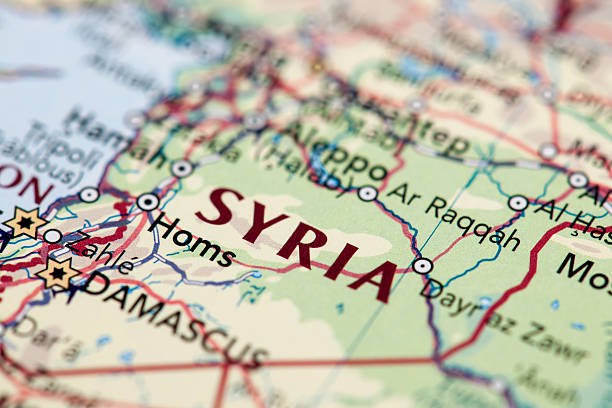
A total of 5,704 ISIS detainees have been transferred from prisons in northeastern Syria to Iraq, including dozens of citizens from Central Asian countries, according to data from Iraq’s Ministry of Justice shared by journalist and Iraqi Observatory for Human Rights founder Mustafa Saadoun on X.

The figures, issued by the Iraqi Correctional Service under the Ministry of Justice, detail the number of inmates held at Al-Karkh Central Prison by nationality. Among them are 36 citizens of Uzbekistan, 63 of Tajikistan, 42 of Kyrgyzstan, and four of Kazakhstan. The list also includes 165 individuals identified as “Turkestan,” 130 from Russia, and 3,544 Syrians, who make up the largest group.

Saadoun told Shafaq News that the transfer of ISIS detainees from camps and detention centers in northeastern Syria could place “extreme pressure” on Iraq’s already overcrowded prison system. He warned that overcrowding levels could exceed 300% if facilities are not properly equipped to absorb the influx.

“The success of the transfer depends primarily on the prisons’ ability to absorb detainees through modern isolation and classification mechanisms,” Saadoun said. He urged authorities to develop rehabilitation and reform programs that uphold the rule of law and prevent ideological spillover caused by the improper mixing of prisoners.

He also described deteriorating infrastructure inside detention facilities. “Inmates are often forced to sleep in shifts in narrow, poorly ventilated corridors without sunlight,” he said, adding that such conditions create breeding grounds for contagious diseases, including scabies and tuberculosis.

Last month, United States Central Command announced it had begun a “safe and systematic” transfer of around 7,000 ISIS detainees from northeastern Syria to what it described as secure facilities in Iraq, in coordination with Iraqi authorities. However, Reuters later reported that fewer than 500 detainees had been transferred in the initial phase after Baghdad requested a slowdown to negotiate with foreign governments over the repatriation of their nationals and to prepare additional detention capacity.

Iraqi officials have cautioned that accepting the full number of detainees could overwhelm the judicial system, particularly as many foreign fighters may face the death penalty under Iraqi law.

Central Asian governments have previously faced challenges repatriating their citizens from conflict zones in Syria and Iraq, conducting special operations in recent years to return women and children, while cases involving male detainees have remained more complex.

Turkmenistan Effectively Bans Passengers from Taking Food Abroad

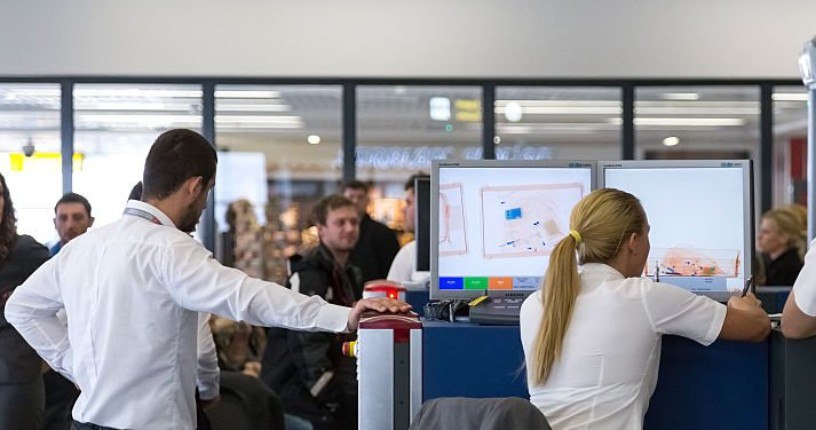
Since February, passengers departing from Turkmenistan’s capital Ashgabat have effectively been prohibited from taking food products out of the country. The restrictions reportedly apply to meat and fish products, canned goods and even bread. No official explanation has been provided.

According to turkmen.news, a ban on the export of most food items was introduced at Ashgabat International Airport in February. The measures affect passengers flying to Turkey, the United Arab Emirates and other destinations.

Controls are reportedly carried out before the main customs inspection, in the oversized baggage area. Only after this additional screening are travelers allowed to proceed to standard border control procedures. However, few passengers reportedly pass the initial check without issue.

Eyewitnesses cited by the outlet say that many passengers are found carrying canned kaurma (meat preserved in fat), as well as sausages, smoked and salted fish, canned meat and fish, condensed milk, homemade preserves, vinegar and bread.

Confiscated products must be left behind. Passengers accompanied by relatives are reportedly allowed to hand over the food to them. Those traveling alone are said to ask taxi drivers to return the items to their homes, while some leave bags on airport benches.

There has been no official statement clarifying the situation. The Customs Service of Turkmenistan has not published any formal ban on the export of food products, except for sturgeon. Food items are also not listed among prohibited exports on the website of Turkmenistan Airlines.

Sources cited by turkmen.news suggest that the tightened controls may be linked to cases in which Turkmen food products were confiscated at foreign airports, particularly in Istanbul and the Russian city of Kazan. In early February, more than 10 kilograms of honey and over 53 kilograms of meat were reportedly seized from Turkmen citizens in Kazan.

A year earlier, turkmen.news reported increased scrutiny of passengers carrying food. At that time, checks were described as less systematic and, according to sources, were often accompanied by alleged demands for bribes rather than consistent enforcement of formal regulations.

For many Turkmen students studying abroad, food brought from home is not only a matter of preference but also an economic necessity. Preserved products such as canned goods and kaurma can be stored for extended periods and significantly reduce living expenses. Turkmen food products are generally cheaper than comparable goods in Turkey, Russia or the United Arab Emirates.

Researchers Name Abdukodir Khusanov Fastest Center Back in Champions League

Uzbekistan national team defender Abdukodir Khusanov has been ranked the fastest central defender currently competing in the UEFA Champions League, according to new data released by the CIES Football Observatory.

The Switzerland-based research group published its latest Weekly Post featuring exclusive Gradient data on running speeds among players whose clubs remain in the competition. The report analyzed maximum speeds and distance covered across different speed categories for five positional groups.

Khusanov, who plays for Manchester City, recorded a top speed of 35.8 kilometers per hour, placing him first among center backs. He finished ahead of Tottenham Hotspur defender Micky van de Ven in the same category.

The CIES report also highlighted the fastest players in other positions. Among full-backs, Achraf Hakimi and Nuno Mendes led the rankings, while Archie Gray topped the central midfield category. Anthony Gordon was the fastest among wide midfielders and wingers, and Kylian Mbappé led among center forwards.

The data further examined how players distributed their movement across different speed ranges. Among the 100 players analyzed, Mbappé, Victor Osimhen, and Luis Suárez covered the highest proportion of distance at walking pace, defined as below 7 kilometers per hour. In contrast, central midfielders Häkon Evjen, João Simões, and Lucas Bergvall recorded the lowest share of walking distance.

Earlier this month, the 21-year-old Khusanov was named Manchester City’s Player of the Month for January after winning a fan vote by a wide margin. The club praised his composure and tactical discipline, noting that his decision-making under pressure stood out during seven appearances across competitions.