• KGS/USD = 0.01144 0%
  • KZT/USD = 0.00211 0%
  • TJS/USD = 0.10432 -0.29%
  • UZS/USD = 0.00008 0%
  • TMT/USD = 0.28571 0.28%
  • KGS/USD = 0.01144 0%
  • KZT/USD = 0.00211 0%
  • TJS/USD = 0.10432 -0.29%
  • UZS/USD = 0.00008 0%
  • TMT/USD = 0.28571 0.28%
  • KGS/USD = 0.01144 0%
  • KZT/USD = 0.00211 0%
  • TJS/USD = 0.10432 -0.29%
  • UZS/USD = 0.00008 0%
  • TMT/USD = 0.28571 0.28%
  • KGS/USD = 0.01144 0%
  • KZT/USD = 0.00211 0%
  • TJS/USD = 0.10432 -0.29%
  • UZS/USD = 0.00008 0%
  • TMT/USD = 0.28571 0.28%
  • KGS/USD = 0.01144 0%
  • KZT/USD = 0.00211 0%
  • TJS/USD = 0.10432 -0.29%
  • UZS/USD = 0.00008 0%
  • TMT/USD = 0.28571 0.28%
  • KGS/USD = 0.01144 0%
  • KZT/USD = 0.00211 0%
  • TJS/USD = 0.10432 -0.29%
  • UZS/USD = 0.00008 0%
  • TMT/USD = 0.28571 0.28%
  • KGS/USD = 0.01144 0%
  • KZT/USD = 0.00211 0%
  • TJS/USD = 0.10432 -0.29%
  • UZS/USD = 0.00008 0%
  • TMT/USD = 0.28571 0.28%
  • KGS/USD = 0.01144 0%
  • KZT/USD = 0.00211 0%
  • TJS/USD = 0.10432 -0.29%
  • UZS/USD = 0.00008 0%
  • TMT/USD = 0.28571 0.28%

Uzbekistan’s Population Reaches 38.2 Million Despite Second Year of Declining Birth Rate

Uzbekistan’s permanent population stood at 38,236,704 as of January 1, 2026, marking a nearly 85% increase since independence, according to data released by the National Statistics Committee.

In 1991, when Uzbekistan gained independence, the population was approximately 20.6 million. Over the past 35 years, the country has added 17.6 million people, a steady demographic expansion. However, the latest figures suggest emerging shifts in birth rate trends.

In 2025, the number of registered births totaled 879,500, a 5.1% decrease compared to 2024, or 46,800 fewer births year-on-year. This marks the second consecutive annual decline in the national birth rate.

Economist Mirkomil Kholboyev, writing on his “Mirkonomika” channel, cautioned against drawing premature conclusions. “Births have declined for the second year in a row,” he wrote. “Since the overall fertility indicators have not yet been updated, it is difficult to determine whether the 2025 decline is mainly due to a smaller cohort of people of childbearing age, or to changes in reproductive decisions.”

The decline has also become more geographically widespread. In 2025, 179 districts and cities recorded a drop in births, the highest number in 15 years, compared to 155 districts in 2024.

These areas accounted for a combined reduction of 48,400 births, representing approximately 90% of all registered births nationwide. By contrast, only 25 districts recorded an increase in births in 2025, with a total gain of 1,722. For comparison, in 2024, birth increases in growing districts totaled 9,000 and represented 24% of all births, while in 2025 that share fell sharply to 8.6%.

Choking on Smog: Air Crisis in Öskemen Deepens

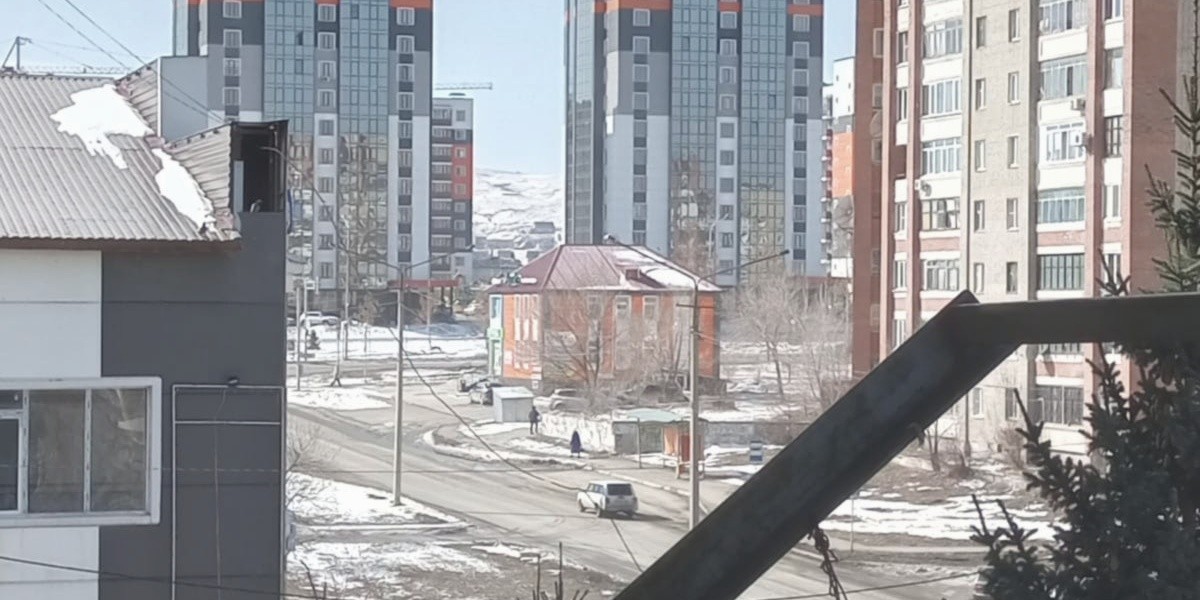
Heavy smog and sustained NMU-II adverse meteorological conditions reported by Kazhydromet continue to affect the city of Öskemen (Ust-Kamenogorsk) in eastern Kazakhstan, after authorities moved all students in grades 0–11 to remote learning on February 2. The decision followed several days of windless weather and a temperature inversion that trapped pollutants close to the ground.

According to Kazhydromet forecasts, unfavorable meteorological conditions are likely to remain in place, limiting dispersion. Air quality monitoring platforms show persistent spikes in fine particulate matter, raising renewed health concerns among residents.

Data from IQAir indicates that PM2.5 concentrations in Öskemen have at times reached levels classified as “hazardous,” significantly exceeding World Health Organization guidelines. Live readings continue to fluctuate depending on wind and temperature shifts, but pollution levels remain elevated compared to recommended norms.

Local authorities say the health of students remains the priority. The regional Department of Education confirmed that distance learning was introduced as a precautionary measure during the NMU-II period. Environmental specialists have advised residents to reduce outdoor activity, particularly children, the elderly, and those with respiratory conditions.
What’s Behind the Smog?

Specialists attribute the pollution to a combination of meteorological and structural factors.

A temperature inversion has created what meteorologists describe as a “thermal cap,” with warmer air overlaying colder surface air, preventing pollutants from dispersing. The absence of sustained wind has compounded the buildup.

Öskemen is also one of Kazakhstan’s most industrialized cities, home to major metallurgical enterprises, a coal-fired thermal power plant, and titanium-magnesium production facilities. Vehicle emissions and winter heating from coal and firewood in private homes add to the concentration of fine particulate matter.

The city’s geography further complicates the situation. Surrounded by mountainous terrain, Öskemen experiences restricted air circulation during stagnant winter conditions, allowing pollution to accumulate.
Monitoring and Mitigation

The East Kazakhstan Department of Ecology reported that an interagency task force, including Kazhydromet meteorologists and sanitary inspectors, conducted mobile laboratory monitoring during the peak of the episode. Authorities said industrial facilities reduced output under NMU protocols and that transport and municipal services were instructed to limit emissions.

Officials stated that monitored pollutants, including carbon monoxide, nitrogen oxides, sulfur compounds, chlorides, and suspended particles, were measured daily. While authorities described overall average indicators as remaining within permissible limits, independent monitoring services recorded significantly higher short-term PM2.5 spikes.

Public Reaction

Residents have expressed frustration online, posting photos and videos showing the city enveloped in haze. In comments responding to official statements, users described sore throats, headaches, and difficulty breathing.

One resident wrote: “It’s impossible to breathe in the city. This isn’t exaggeration, it’s reality. You, your children, your loved ones are breathing this air.”

Others questioned the official assessment, asking why schools were closed if pollution posed no threat to public health.
What Comes Next?

Kazhydromet forecasts suggest that wind and snowfall could help disperse accumulated pollutants in the coming days. However, recurring winter smog episodes have reignited debate over industrial emissions, household coal use, and long-term urban air quality policy.

In early February, regional Maslikhat deputy Bashimov Sovetovich filed a parliamentary inquiry urging stronger measures to address what he called the “systematic pollution” of Öskemen’s air.

Residents and environmental advocates are calling for tighter emissions controls, expansion of gas infrastructure to reduce coal heating, and greater transparency in monitoring data.

For now, pollution levels remain volatile, and the episode has once again highlighted the structural challenges facing one of Kazakhstan’s most industrialized cities.

Kazakhstan to Launch AI Fund Backed by National Bank

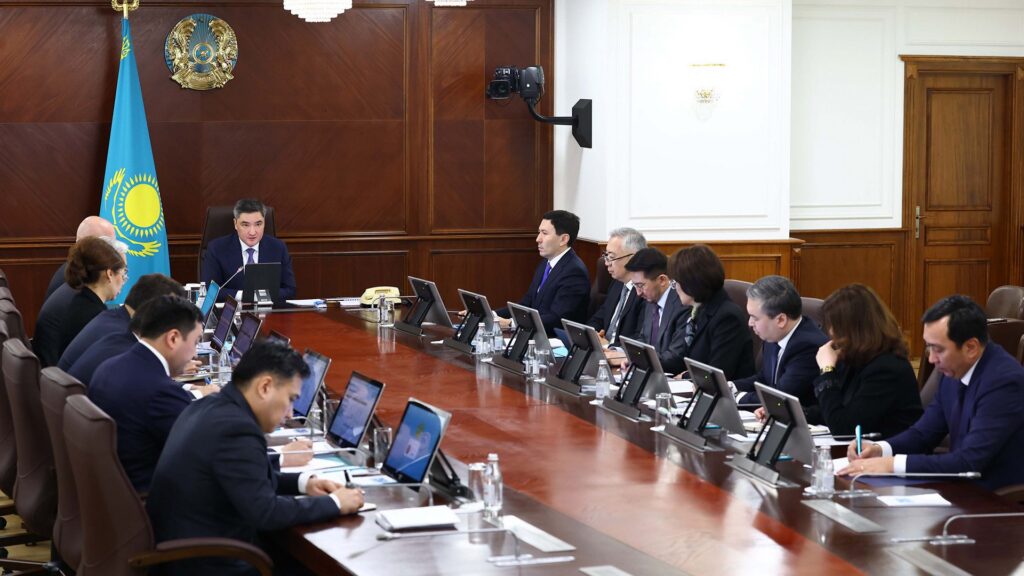
Kazakhstan will establish a dedicated Artificial Intelligence Fund to finance digital and educational initiatives, Deputy Prime Minister and Minister of Artificial Intelligence and Digital Development Zhaslan Madiev announced at an expanded government meeting.

According to Madiev, the fund will be capitalized using resources from the National Bank, with the government currently finalizing its financial and organizational structure. The fund is expected to serve as the main vehicle for identifying and supporting priority AI and digitalization projects, as well as educational programs.

Madiev cited international precedents, noting that leading technological nations allocate between 4% and 6% of GDP to digital development and artificial intelligence over three years. Based on ministry projections, such investments could yield a multiplier effect of 5 to 1, with the potential to contribute up to 1.5% of GDP annually in additional economic growth.

One of the fund’s key focuses will be integrating AI solutions into Kazakhstan’s public and quasi-public sectors. Simultaneously, the country is pursuing international tech partnerships. With presidential backing, Kazakhstan has approved the creation of a joint venture with Chinese artificial intelligence firm 01.AI. Scheduled to launch in March, the venture will operate the National Artificial Intelligence Platform and focus on developing AI agents to enhance public sector decision-making.

01.AI is a startup founded by former Google China CEO Kai-Fu Lee. The company is best known for its open-source language model Yi-34B, positioned as an alternative to ChatGPT.

At the meeting, President Kassym-Jomart Tokayev emphasized that AI is a foundational pillar of Kazakhstan’s emerging economic model. Anticipated benefits include increased labor productivity, growth in export-oriented industries, higher production of high value-added goods, and deeper integration into global digital networks.

However, Tokayev also cautioned against using insufficient digitalization as a scapegoat for systemic inefficiencies. “Technology should not serve as an excuse for management shortcomings,” he noted.

As previously reported by The Times of Central Asia, Kazakhstan joined OpenAI’s “Education for Countries” initiative, aimed at integrating AI tools into national education systems.

Kazakhstan Targets Raising Wage Share of GDP to 40%

The Kazakh government is preparing a series of measures aimed at accelerating wage growth and increasing the overall wage fund, with the goal of raising its share in the country’s GDP to 40%, Prime Minister Olzhas Bektenov announced during an expanded government meeting.

According to government estimates, household incomes are currently growing more slowly than the broader economy and corporate profits, including those generated with state support. At present, wages account for roughly 31% of Kazakhstan’s GDP, a figure considered relatively high by Central Asian standards but still below the levels seen in developed economies, where wage funds typically exceed 40% of GDP.

Kazakhstan’s GDP growth in 2025 reached $20.1 billion in monetary terms, with the economy expanding at an annual rate of 6.5%, according to official data.

To address the income gap, the government is developing a comprehensive package that includes financial, tax, and regulatory incentives for employers to raise wages. The initiative also prioritizes the creation of new, decently paid jobs, upskilling of the workforce, and reducing the financial burden on citizens. Real income growth has been designated a key economic policy priority for 2026.

A complementary role will be played by the upcoming Joint Action Program for 2026-2028, developed by the Cabinet, the financial regulator, and the National Bank. The program aims to stabilize the macroeconomic environment and improve public welfare, setting a target of household income growth at a rate of at least 2-3% above inflation each year.

According to official statistics, the average monthly salary in Kazakhstan stood at approximately $873 by the end of the third quarter of 2025. However, earlier reports indicated that the minimum wage will remain frozen at $172 in 2026, despite prior commitments to increase it.

Kyrgyzstan’s Crypto Market Generates More Tax Revenue Than Country’s Largest Bazaar

Kyrgyzstan’s virtual asset market has rapidly become one of the fastest-growing segments of the national economy. In the first nine months of 2025 alone, the country’s cryptocurrency turnover exceeded $7.9 billion, a figure that industry insiders believe could continue to rise substantially.

Kyrgyz law currently permits fully legal cryptocurrency transactions, and the authorities are actively working to enhance regulation and oversight. According to official figures, the total volume of crypto transactions last year surpassed $20.5 billion, generating $22.8 million in tax revenue.

Temir Kazybaev, Chairman of the Association of Virtual Asset Market Participants, told The Times of Central Asia that tax income from crypto turnover has already outpaced revenue collected from the Dordoi bazaar, Kyrgyzstan’s largest commodity trading hub, as well as the total from voluntary patent fees.

“Just over $7.9 million in taxes was collected from the Dordoi bazaar over the year. Patent tax collection totaled $13.6 million. In other words, the entire market and all individuals in Kyrgyzstan working under a patent paid as much tax as was collected from cryptocurrency turnover,” Kazybaev explained.

He noted a significant shift in public perception of the sector.

“A few years ago, most Kyrgyz people saw the crypto market as a scam or a pyramid scheme. That perception is changing. People and businesses now see it as an opportunity. This is in large part because President Sadyr Japarov is personally invested in the topic,” Kazybaev said.

He also highlighted recent developments in the market’s professional infrastructure.

“The development of virtual assets is a critical area. As far as I know, the National Council on Virtual Assets has a dedicated secretariat, and our association is deeply involved in this work. Educational events are being held actively. We are training compliance officers, including those focused on crypto, and we’ve already trained two groups of accountants in crypto asset accounting,” he said.

As of early 2026, more than 200 crypto exchanges and 11 mining companies are officially registered in Kyrgyzstan. The sector received a further boost with the launch of the USDTKG digital asset, a token said to be backed by Kyrgyz gold, which is gradually gaining domestic recognition.

Kyrgyzstan Plans Full Transition to Water-Saving Irrigation in Issyk-Kul Region

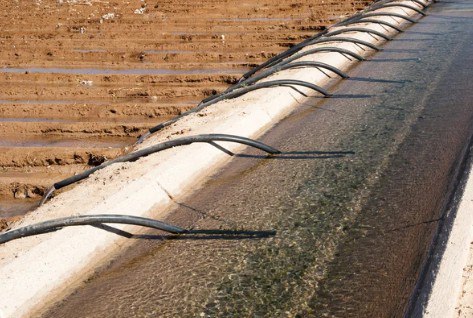
Kyrgyzstan’s government is preparing to fully transition the Issyk-Kul region to water-saving irrigation technologies, offering farmers preferential financing amid growing concerns over falling water levels in the country’s largest lake and key tourist destination.

Speaking in parliament on February 11, Deputy Chairman of the Cabinet of Ministers and Minister of Water Resources, Agriculture, and Processing Industry Bakyt Torobaev announced that farmers adopting drip or sprinkler irrigation systems will be eligible for low-interest loans at a preferential 2% rate. Lending is expected to begin next month.

Torobaev emphasized the urgency of reducing agricultural water consumption to stabilize inflows into Lake Issyk-Kul. “If we switch to drip irrigation, more water will flow into Issyk-Kul. If we use all the water for agriculture, none of it may reach the lake. Therefore, our goal is to fully transition the Issyk-Kul region to drip and sprinkler irrigation,” he told lawmakers.

Environmental pressure on the Issyk-Kul basin has intensified due to climate change and accelerated glacier retreat. The basin contains 957 glaciers, covering about 560.8 square kilometers, many of which are shrinking rapidly. Although around 120 rivers feed the lake, only about 80 reach it during the summer months due to irrigation withdrawals. Between 1927 and 2003, the lake’s level dropped by 2.75 meters, an effect largely attributed to inefficient water use.

Policy support for conservation has recently been formalized. In December 2025, the Cabinet of Ministers approved the Concept for the Sustainable Development of the Ecological and Economic System of Lake Issyk-Kul through 2030, alongside a detailed action plan prioritizing the adoption of water-saving agricultural technologies.

Under current plans, modern irrigation systems will be installed on 100,000 hectares of farmland across the Issyk-Kul region, potentially redirecting up to 200 million cubic meters of water back into the lake annually.

Nationwide, adoption of water-efficient irrigation remains limited but is accelerating. According to the Ministry of Water Resources, Agriculture, and Processing Industry, modern irrigation technologies currently cover around 16,000 hectares. The authorities aim to expand that area by 30,000-40,000 hectares each year, targeting 200,000 hectares under water-saving irrigation by 2030.

State-funded installations are also increasing. In 2026, drip and sprinkler systems are scheduled to be deployed on 5,270 hectares. Between 2024 and 2025, such systems were installed on 2,369 hectares, 641 hectares with drip irrigation, and 1,728 hectares with sprinkler systems. Kyrgyzstan currently has approximately 1 million hectares of irrigated agricultural land overall.