• KGS/USD = 0.01144 0%
  • KZT/USD = 0.00194 -0%
  • TJS/USD = 0.10834 -0.09%
  • UZS/USD = 0.00008 0%
  • TMT/USD = 0.28490 0%
  • KGS/USD = 0.01144 0%
  • KZT/USD = 0.00194 -0%
  • TJS/USD = 0.10834 -0.09%
  • UZS/USD = 0.00008 0%
  • TMT/USD = 0.28490 0%
  • KGS/USD = 0.01144 0%
  • KZT/USD = 0.00194 -0%
  • TJS/USD = 0.10834 -0.09%
  • UZS/USD = 0.00008 0%
  • TMT/USD = 0.28490 0%
  • KGS/USD = 0.01144 0%
  • KZT/USD = 0.00194 -0%
  • TJS/USD = 0.10834 -0.09%
  • UZS/USD = 0.00008 0%
  • TMT/USD = 0.28490 0%
  • KGS/USD = 0.01144 0%
  • KZT/USD = 0.00194 -0%
  • TJS/USD = 0.10834 -0.09%
  • UZS/USD = 0.00008 0%
  • TMT/USD = 0.28490 0%
  • KGS/USD = 0.01144 0%
  • KZT/USD = 0.00194 -0%
  • TJS/USD = 0.10834 -0.09%
  • UZS/USD = 0.00008 0%
  • TMT/USD = 0.28490 0%
  • KGS/USD = 0.01144 0%
  • KZT/USD = 0.00194 -0%
  • TJS/USD = 0.10834 -0.09%
  • UZS/USD = 0.00008 0%
  • TMT/USD = 0.28490 0%
  • KGS/USD = 0.01144 0%
  • KZT/USD = 0.00194 -0%
  • TJS/USD = 0.10834 -0.09%
  • UZS/USD = 0.00008 0%
  • TMT/USD = 0.28490 0%
10 December 2025

Kazakhstan and U.S. Focus on Strengthening Trade and Investment Cooperation

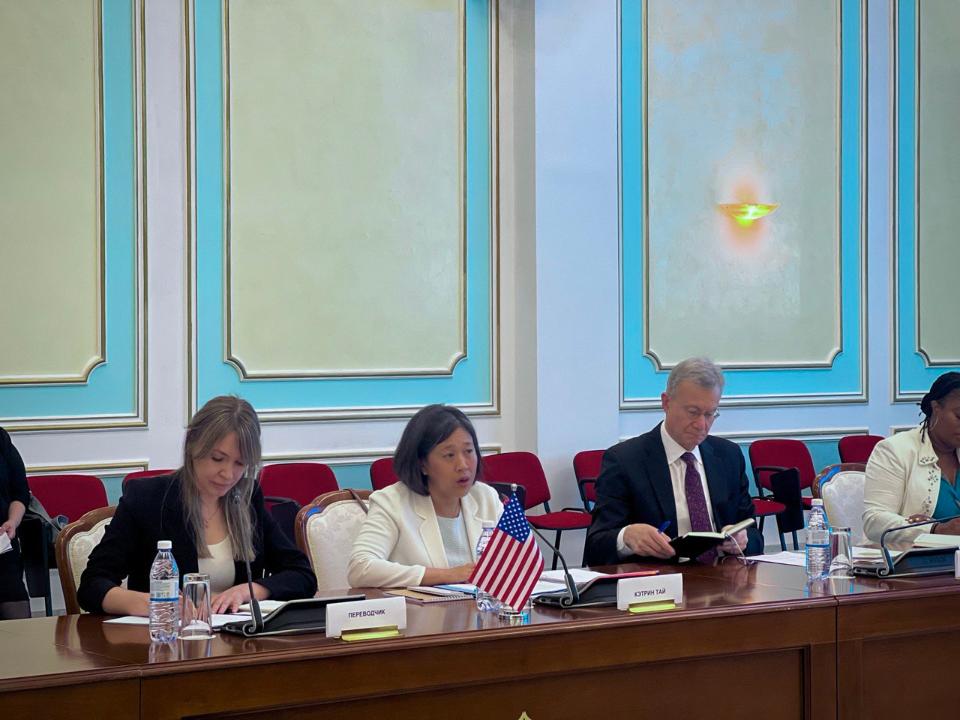
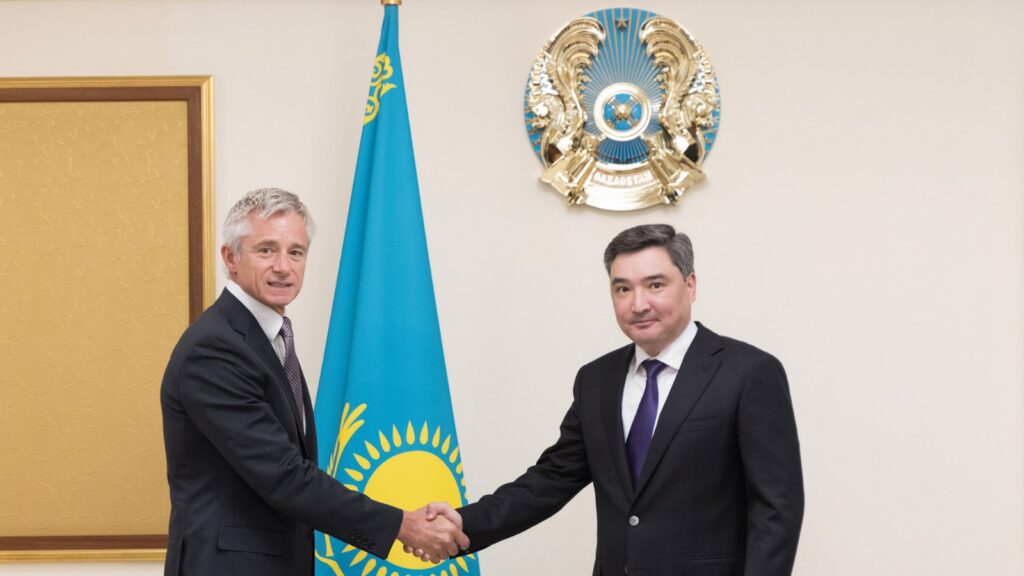
On 14 June, in Astana, Minister of Trade of Kazakhstan Arman Shakkaliev met U.S. Trade Representative Katherine Tai to discuss key areas of cooperation between the two countries.

As reported by the Kazakh Ministry of Trade and Integration, the USA is among Kazakhstan’s ten largest trading partners. With bilateral trade turnover demonstrating a steady growth, Kazakhstan is ready to increase non-resource exports of 90 commodities worth over $770 million to the U.S.

During the meeting, Kazakhstan’s trade minister mooted cancelling the Jackson-Vanik amendment, which restricts trade relations between the two countries, and expressed hope for an imminent decision by the U.S. Congress on the issue.

“We count on the soonest positive outcome of the work on the cancellation of the Jackson-Vanik amendment, which will give a new impetus to the development of trade and economic relations between our countries,” said Shakkaliev.

He also noted the important role of the Generalized System of Preferences (GSP) of the United States in strengthening bilateral trade and economic relations. For its part, Kazakhstan is ready to undertake necessary work to resume the application of the USA GSP.

Trade Representative Katherine Tai spoke optimistically on the development of trade relations and strengthening economic ties between the United States and Kazakhstan. After remarking that the extension of the USA GSP program will be considered by the US Congress next year, she confirmed her readiness to assist Kazakhstan in this matter.

U.S. and Central Asia Further Trade, Economic and Investment Cooperation

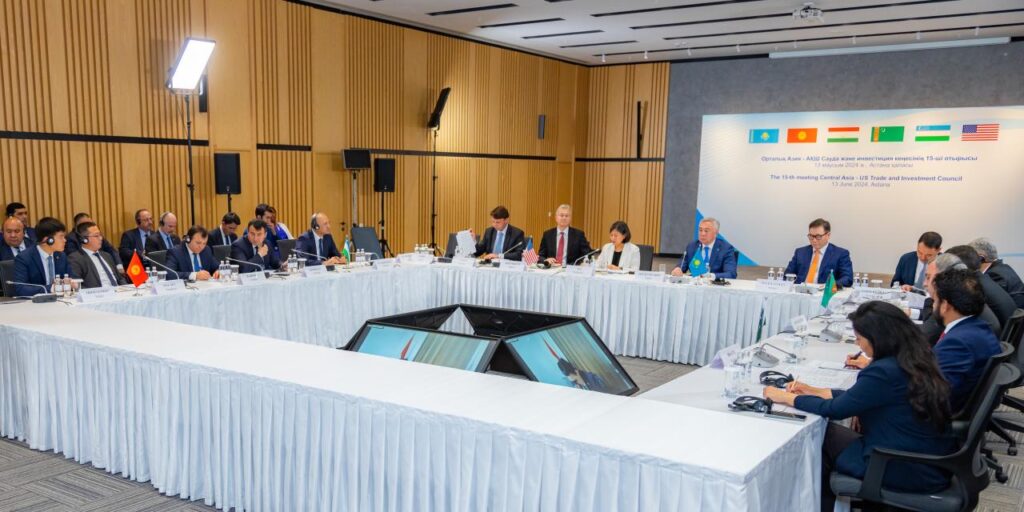
The 15th meeting of the U.S.-Central Asia Trade and Investment Framework Agreement (TIFA) Council was held in Astana on 13 June.

TIFA was signed in Washington in June 2004 by the United States, Kazakhstan, Kyrgyzstan, Tajikistan, Turkmenistan, and Uzbekistan to expand international trade, attract foreign investment, and establish trade relations between Central Asian countries and Afghanistan. The US-Central Asian Trade and Investment Council was established within its framework.

Reporting from Astana, the Kazakh Ministry of Trade and Integration, said that the agenda had covered prospects for diversifying trade and expanding investment cooperation. Representatives of the six countries also discussed the development of new trade routes to improve supply chain resilience and diversify the economy.

During the event, Kazakh Deputy Prime Minister Serik Zhumangarin remarked, “As one of the major economies in the region and a WTO member, Kazakhstan recognizes the high potential offered by TIFA to strengthen not only bilateral but also regional trade relations. This year’s meeting of the TIFA Central Asia Regional Council is further proof of the progressive development of regional cooperation and sustainability, which in turn, plays an important role in stabilizing world economy by connecting the global markets of both the West and the East.”

U.S. Trade Representative Katherine Tai, emphasizing the need to coordinate joint efforts to ensure sustainable growth of TIFA economies, stated:

“Central Asia remains a very important economic and strategic partner for the United States. We are also experiencing climate change and facing the consequences of technological and industrial progress. It is necessary to jointly develop traditional supply chains, the stability of which will ensure sustainable economic growth. The US is interested in improving the quality of trade, supplying critical metals for the production of cars and semiconductors.”


Uzbekistan and Korea Forge New, High-Tech Agenda for Strategic Partnership

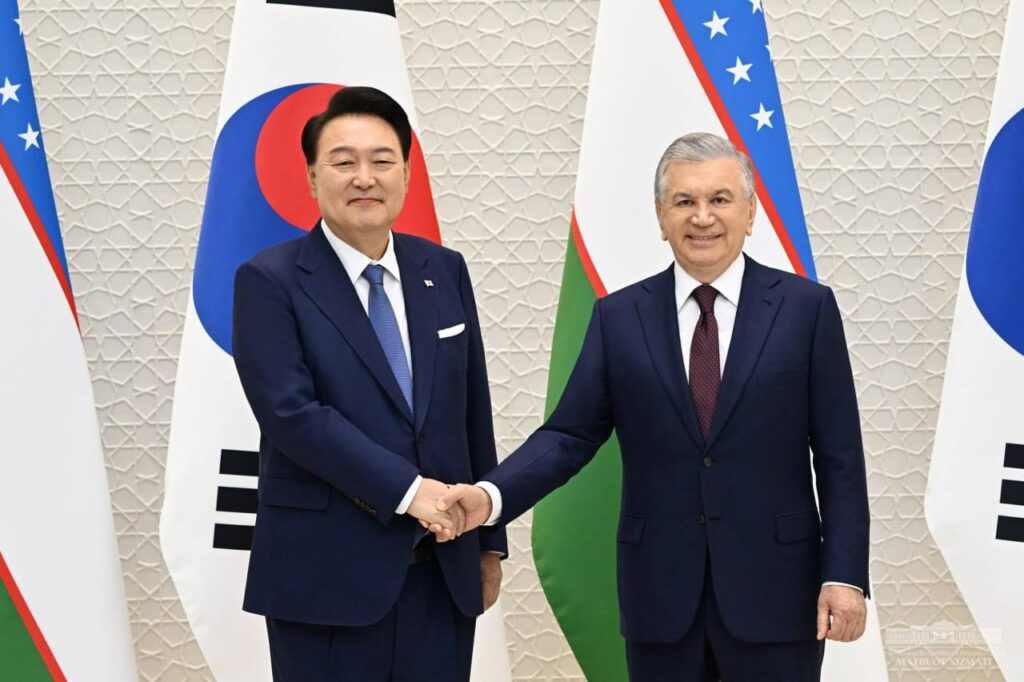
On 14 June, South Korean President Yoon Suk Yeol held talks with Uzbekistan President Shavkat Mirziyoyev.

During their meeting in Tashkent, it was noted that the Republic of Korea is among Uzbekistan’s leading trade and investment partners. Last year, bilateral trade turnover reached $2.5 billion, and Korean investments in Uzbekistan now exceed $7.5 billion.

Negotiations focused on the formation of a new, high-tech agenda for Uzbek-Korean strategic partnership over the next three years.

As a result, the two leaders tasked their governments to prepare a Strategic Program for the creation of a regional high-tech hub in Uzbekistan, with priority given to the following “anchor” areas of the Strategy:

Partnership on critical mineral resources with deep processing and creation of a complete added value chain.

Strategic cooperation in the field of semiconductors, in which the Republic of Korea is recognized as a global leader, and the implementation of plans to create in Uzbekistan’s first fully-fledged research and production cluster of semiconductor products.

Full-scale partnership in the chemical industry, including new projects to produce green hydrogen and ammonia, as well as finished rubber products.

Deepening cooperation in mechanical engineering. This spring, an assembly line for KIA cars was launched in Uzbekistan’s Jizzakh region, to be followed next year, by a plant with the capacity to manufacture over 60 thousand vehicles per year.

Transfer of technologies to develop “smart” agriculture, including via the digitalization of the agricultural sector,  the introduction of “smart” and “green” technologies. Agreements have already been reached on the creation of modern greenhouses and garden complexes in Uzbekistan’s regions based on renewable energy sources.

Infrastructure modernization and a program for urban development, based on the high interest of Korean banks and companies in the modernization of transport infrastructure,  and the design and construction of residential and commercial real estate in Uzbekistan on the principles of public-private partnership.

With regard to developing potential projects in  green energy and increase energy efficiency, strategic dialogue is to be resumed between energy ministers and a meeting organized in Uzbekistan in the near future.

Kyrgyz Banks Restrict Money Transfers to Russia

Several commercial banks in Kyrgyzstan have suspended work with Russian money transfer systems after the expansion of U.S. sanctions. Most cite as the reasons behind this decision both technical problems and exchange rate volatility.

The RSK Bank, which occupies one of the leading positions in Kyrgyz financial market, announced that, “Due to technical works, the following money transfer systems (sending and receiving) are not working at the moment: Astrasend, Unistream, Contact, Zolotaya Korona, Sberbank-Online.”

The temporary suspension of services to send and receive transfers in rubles  through the applications ‘Kompanion ’ and  ‘Unistream,’ was also reported by Kompanion Bank.

Mbank, among the most popular in the Kyrgyz market,  joined suit, stating that, “Due to the exchange rate volatility and possible sharp fluctuations of the currency market, a temporary restriction on ruble accounts and cards has been introduced (replenishment, transfers, conversions). ” Via its website, the bank confirmed its full protection of clients’  ruble accounts.

Five more Kyrgyz banks have now announced the introduction of restrictions on operations concerning dollar accounts and ruble/dollar conversion.

As reported by TCA on June 13, new U.S. sanctions were imposed on the Moscow Exchange, the Russian National Clearing Center (NCC), and the National Settlement Depository (NSD).

PepsiCo to Build Snack Production Plant in Kazakhstan

PepsiCo has announced plans to build a full-scale new plant to produce salty snacks, including Lays crisps, in Kazakhstan’s Almaty region. Implementation of the project was discussed at a meeting between Kazakhstan Prime Minister Olzhas Bektenov and David Manzini, President of PepsiCo in Central Asia, Russia, Belarus, and Caucasus.

According to the Kazakh prime minister’s press service, the project has already received $160 million in foreign investment.

The plant, anticipated as the largest of its kind in Central Asia, is scheduled to open in 2026. Its original capacity of up to 16,000 tons of finished products per year, will increase to 21,000 tons from 2027, for distribution to both the Central Asian market and abroad.

Up to a thousand people will be employed during the plant’s construction, with 350 skilled jobs created when it opens.

David Manzini stated PepsiCo’s intention to use locally sourced raw materials. The conclusion of contracts with Kazakh farmers on the delivery of test batches of potatoes is ongoing but all going to plan, the company will purchase up to 50-66 thousand tons of potatoes in 2026-2030, and increase the volume in later years.

Prime Minister Bektenov emphasized the importance of the project for the development of agriculture, increasing Kazakh farmers’ income and strengthening the economy. He mentioned that besides its positive impact the food industry and agribusiness, the plant will have a multiplier effect on related industries including transport, logistics, packaging, and processing of agricultural products.


Kazakhstan President Pinpoints Flaws in Tourism Development

On June 13, Kazakhstan President Kassym-Jomart Tokayev chaired a government meeting on the development of the country’s tourism industry.

He opened by noting that despite its favorable geographical location, the diversity of its nature, and its rich historical and cultural heritage, Kazakhstan’s wide-spanning tourism potential remains largely unexploited.

“Tourism as an important sector of the economy is not yet effective, which is a big omission of the government. Over the past four years, the share of tourism in the economic structure has decreased from 3.7% to 3.2%, almost threefold lower than the world average. According to this indicator, Kazakhstan falls below neighboring countries with similar climates and culture. It is obvious that a qualitative breakthrough in the development of the tourism industry requires urgent systemic measures,” said the president.

Tokayev then outlined areas in need of urgent improvement, beginning with problems posed by the country’s weak transport infrastructure for domestic tourism:

“The quality of railway transportation in the country is beyond criticism. Most of the rail carriages are worn out, and some do not even have air conditioning. The government needs to renew the fleet of rail carriages in the next five years. In addition, it is important to improve railway stations. Their appearance and infrastructure must meet international standards. In summer, the flow of railway passengers increases sharply. It is therefore necessary to increase the number of trains with comfortable carriages to the most popular destinations. The quality of our roads also leaves much to be desired, making it very difficult to reach remote recreation areas by car. There are practically no fully serviceable highways. The reconstruction of the Astana-Almaty highway, connecting the south and center of Kazakhstan, has been ongoing since 2021. There are many similar unfinished roads across the country and it is imperative that the government completes these road projects this year.”

The President emphasized that the poor logistics connectivity of holiday destinations affects not only domestic tourism, but also the influx of guests from abroad.

“Almost 90% of foreign tourists come to Kazakhstan from neighboring CIS [former Soviet] countries. There are still few tourists from non-CIS countries. International studies show that over 70% of travelers prefer to visit vacation destinations within a 4-hour flight, making Kazakhstan  very attractive to tourists from China, India, East Asia, and the Middle East. It is also necessary to consider, specific issues related to the national mentality of foreign tourists, their interests, and requests. Within 5 years we can double and even triple the number of foreign tourists but to do so, we need to develop air transport, firstly by expanding the presence of low-cost airlines on popular air routes. Their current share in passenger air transportation in Kazakhstan is only 21%.”

The head of state criticized the Government’s plans to simultaneously develop 20 tourist zones across the country, claiming the approach ineffective regarding the dispersion of the state’s limited resources. Instead, he recommended that efforts focused on the development of the most promising locations, in the shortest possible time, as hallmarks of Kazakhstan’s projection of its international tourist industry.

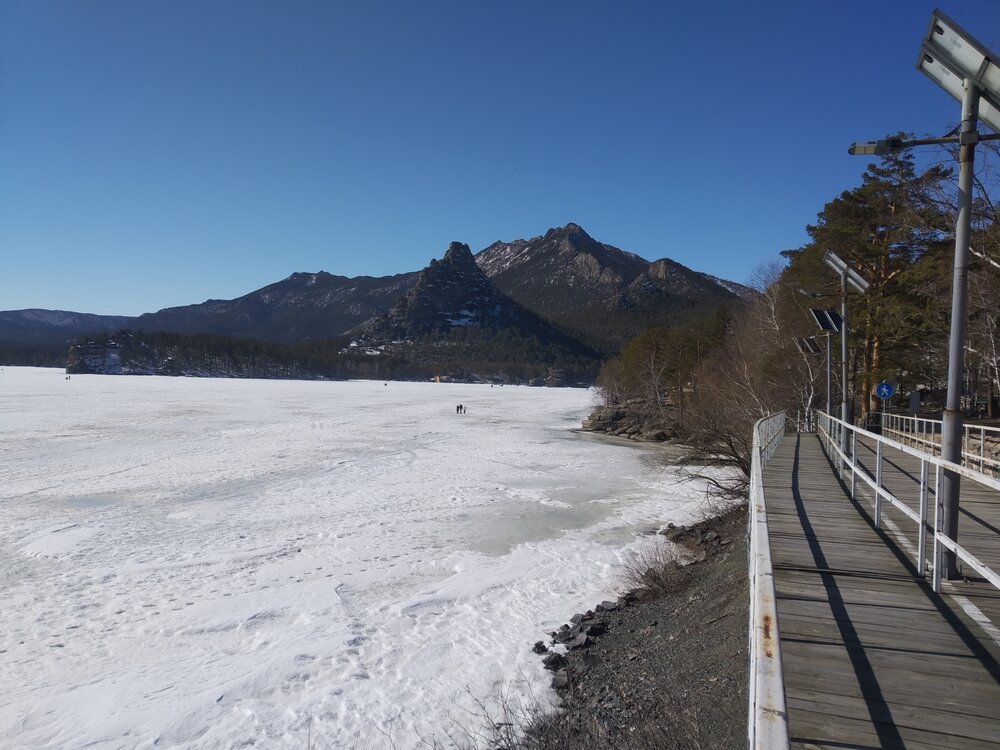
Citing examples, Tokayev continued: “The most promising destinations are the mountain cluster of the Almaty region, [Caspian Sea] beaches in Mangistau region, and the Shchuchinsk-Borovoye resort area. Almaty is the main center for tourism development in Kazakhstan. The city accounts for a quarter of the total tourist flow, including half of our foreign tourists. But the city’s tourism infrastructure cannot withstand the growing influx. In Shymbulak [ski resort], the flow of visitors on weekends and holidays exceeds its capacity 2.5-fold. Hence the importance of further development of the ski cluster, and especially, the construction of an all-season mountain resort in the Turgen gorge in the Almaty region.”

Moving on, the president instructed the government and the administration of the Mangystau region to join forces in attracting hotel and restaurant global brands and franchises to establish businesses in the Caspian Sea region to improve the quality of its tourism infrastructure. He also recommended, with reference to developments in Dubai and Baku, a revision of Aktau’s master plan for a resort along its coastline, in addition to an increase in flights to Aktau from Almaty, Aktobe, Shymkent, and Atyrau.

Praising the Shchuchinsk-Borovoye region as one of Kazakhstan’s unique assets in terms of its rich natural landscape, history and culture, the head of state stated:

“The proximity of Burabay [Borovoye] to Astana ensures a constant and ever-increasing influx of residents and tourists from the capital. However, progress on the construction of the area’s infrastructure is far too slow and plans for the development of the Shchuchinsk-Borovoye resort, adopted back in 2012, have yet to be fully implemented. Although promised 126 billion tenge, just 35 billion tenge has been allocated for its development and for over 10 years, the resort has been unable to install sewer treatment facilities. It is now crucial that the Government, the Presidential Administration, and the regional administration complete these projects as soon as possible.”.