• KGS/USD = 0.01144 0%
  • KZT/USD = 0.00193 -0%
  • TJS/USD = 0.10811 -0.28%
  • UZS/USD = 0.00008 0%
  • TMT/USD = 0.28490 0%
  • KGS/USD = 0.01144 0%
  • KZT/USD = 0.00193 -0%
  • TJS/USD = 0.10811 -0.28%
  • UZS/USD = 0.00008 0%
  • TMT/USD = 0.28490 0%
  • KGS/USD = 0.01144 0%
  • KZT/USD = 0.00193 -0%
  • TJS/USD = 0.10811 -0.28%
  • UZS/USD = 0.00008 0%
  • TMT/USD = 0.28490 0%
  • KGS/USD = 0.01144 0%
  • KZT/USD = 0.00193 -0%
  • TJS/USD = 0.10811 -0.28%
  • UZS/USD = 0.00008 0%
  • TMT/USD = 0.28490 0%
  • KGS/USD = 0.01144 0%
  • KZT/USD = 0.00193 -0%
  • TJS/USD = 0.10811 -0.28%
  • UZS/USD = 0.00008 0%
  • TMT/USD = 0.28490 0%
  • KGS/USD = 0.01144 0%
  • KZT/USD = 0.00193 -0%
  • TJS/USD = 0.10811 -0.28%
  • UZS/USD = 0.00008 0%
  • TMT/USD = 0.28490 0%
  • KGS/USD = 0.01144 0%
  • KZT/USD = 0.00193 -0%
  • TJS/USD = 0.10811 -0.28%
  • UZS/USD = 0.00008 0%
  • TMT/USD = 0.28490 0%
  • KGS/USD = 0.01144 0%
  • KZT/USD = 0.00193 -0%
  • TJS/USD = 0.10811 -0.28%
  • UZS/USD = 0.00008 0%
  • TMT/USD = 0.28490 0%
10 December 2025

Elite Kyrgyz Climber Gets Warm Homecoming After Himalayan Ascents

A 52-year-old climber from Kyrgyzstan has returned home after scaling two of the worlds’ highest peaks in a 10-day span in May. He said he climbed both Himalayan mountains without supplemental oxygen.

Eduard Kubatov, head of Kyrgyzstan’s mountaineering federation, was welcomed with flowers at Manas International Airport in Bishkek on Thursday after climbing the Lhotse and Makalu mountains, which are both more than 8,000 meters above sea level. Kubatov, who ascended Mount Everest three years ago, previously said he wanted to climb K2 in Pakistan this month in his bid to summit the 14 mountains internationally recognized as “eight-thousanders.”

Kubatov and climbing sherpa Dawa Chhiring got to the top of Makalu on May 30, 10 days after Kubatov summited Lhotse, said 14 Peaks Expedition, a trekking company based in Nepal that assisted him.

The Kyrgyz climber said on Instagram that both ascents were “non-oxygen,” meaning he took on the greater challenge of ascending without bottled oxygen, and that he accomplished “the first major mountaineering double in the history of Kyrgyz mountaineering.”

Climbing the world’s highest mountains without supplementary oxygen can be about 40% harder and so few climbers go without it that they are “like an endangered species,” Kubatov said on Facebook.

“It is extremely honorable and highly valued in the world mountaineering system!” said Kubatov, adding that he believes stronger Kyrgyz climbers will eclipse his accomplishments in the future.

In 1978, Reinhold Messner and Peter Habeler became the first people to climb without supplemental oxygen to the summit of Everest, the world’s highest mountain at 8,849 meters above sea level. Messner was also the first person to climb all 14 so-called “eight-thousanders.”

Veteran climber Tim Mosedale has said there will always be a debate about using supplemental oxygen to climb the highest mountains.

“Whether or not it is viewed as being ethical, it is undoubtedly sensible,” he wrote. “After all, a client who becomes debilitated puts the lives of other climbers, and the Climbing Sherpas, at risk.”

Kubatov returned to Bishkek with other Kyrgyz climbers who also climbed in Nepal. Ilim Karypbekov became the fourth Kyrgyz citizen to summit Everest, and Kadyr Saidilkan, who climbed Everest last year, added Lhotse to his list of accomplishments on this year’s trip.

Kyrgyzstan has a strong mountaineering tradition, and several peaks in the Central Asian country are in the 7,000-meter range.

Story of a Statue: Turkmenistan Shapes National Identity

The giant bronze statue of a robed man holding a book stands on the southern outskirts of Turkmenistan’s capital, Ashgabat, and is visible from many parts of the city. Including the granite base, it is more than 80 meters high. The sculptor says the rising sun illuminates the structure at dawn, giving it a hallowed aura.

Diplomats and other dignitaries recently assembled for the inauguration of the statue of Magtymguly Pyragy, a revered poet and philosopher who serves today as a state-sponsored symbol of national and cultural identity. Some carried bouquets of flowers as they walked up the steps toward the looming monolith. Later, there were fireworks, a multi-colored light show and a drone display in the sky that formed the image of a quill pen.

Led by President Serdar Berdimuhamedov, the ceremony on May 17 marked the 300th anniversary of the official birthday of Pyragy, who is little known outside Central Asia but is vital to a campaign of national cohesion in a country whose brand of personalized state control often seems opaque and eccentric to observers.

Pyragy was born in the 18th century in what is today Iran, and is associated with Sufi spiritualism. He wrote about love, family and morality, and also laced his poetry with yearning for Turkmen solidarity at a time of conflict and fragmentation. Today, his image adorns postage stamps and banknotes in Turkmenistan. A theater carries his name. A symphony. A street. A university. People put his verse to songs at festivals. His lines form aphorisms in Turkmen, a Turkic language spoken in parts of Central Asia.

Turkmenistan is of interest to foreign powers for its deep energy reserves, but this year its diplomats made an intense push in world capitals to get people interested in something else about the country: Magtymguly Pyragy. They promoted events about the poet in cities including Washington, Paris, Beijing and Seoul. The message was, as the state news agency put it, that Pyragy´s work is “an invaluable asset of all mankind.”

Indeed, the park where the giant Pyragy statue stands in Ashgabat also contains much, much smaller statues of writers from other parts of the world, including William Shakespeare, Fyodor Dostoevsky, Johann Wolfgang von Goethe and Rabindranath Tagore. One commentator has even compared Pyragy to German philosopher Immanuel Kant, saying they were born around the same time and had similar ideas.

Russian granite was transported in nearly 100 railway cars to Ashgabat for construction of the new Pyragy statue, according to contractor Alexander Petrov. The statue is among the more grandiose monuments in a capital studded with them.

Sculptor Saragt Babayev noted that the statue shows Pyragy in a turban, in contrast to an older image of the poet that shows him wearing a peaked Astrakhan hat, which was made of sheep fur and had no religious significance. That image dates to the time when Turkmenistan was part of the Soviet Union and Moscow was cracking down on expressions of Islamic piety.

“During the time when the poet lived and worked, the turban was a part of the clothing of imams, theologians and, in general, highly educated people such as Magtymguly Pyragy,” Babayev said, according to media outlet Turkmenportal. The sculptor said that “today’s historians have agreed and accepted the new image of the poet in which he appears with a turban.”

The Soviet authorities promoted their own version of Pyragy’s legacy, portraying him and other Turkic literary figures who lived before the Russian Revolution  as “proto-Socialist visionaries,” Michael Erdman, a curator at the British Library, wrote in 2021. Pyragy died in 1807, more than a century before the Bolshevik takeover.

However the poet’s legacy is shaped, some of his work holds up in today´s uncertain times.

Do not take for granted the state of the world,” Pyragy wrote.

VI ECG Film Festival Goes Beyond the Moving Image

The VI ECG Film Festival staged in London from 24-28 May, in partnership with the eighth UK Romford Film Festival at Premier Cinemas Romford, attracted over 100 entries from 22 countries.

The Eurasian Creative Guild (ECG) is the sole platform promoting Eurasian cinema in the UK and this year’s festival featured work by directors from Poland, the UK, Kyrgyzstan, Spain, Russia, Iran, Uzbekistan, China, Armenia, and Kuwait.

The non-profit organization was founded by Marat Ahmedjanov in London in 2015 to unite and promote Eurasian cultural and artistic practices to English-speakers, and as befits its mission, the festival went far beyond the ‘moving image’ to showcase work by visual artists, authors, poets, and musicians.

In film, the competition attracted over 100 competition entries from 22 countries and with support from  SIFFA film festival organiser Lubov Balagova-Kandur, included screenings of several Russian films such as the comedy ‘Aul’s Challenge;’ the war drama ‘Maria. Save Moscow;’ a documentary on the poet ‘3723 Voznesensky’, and a Jordanian love story ‘Cherkes’.

Central Asian films took several awards, including Best Eurasian Short film: ‘Happy Independence Day’ by Camila Sagyntkan (Kazakhstan); Best Eurasian Documentary Film: Sailing Seven Seas by Tatania Borsh (Russia-Kyrgyzstan); Audience Choice Award: ‘Sharaf Rashidov- Inspirer for the Development of Mirzachul’ by  Shukhrat Khaitov (Uzbekistan); and the Honorary Achievement Certificate for Documentary Drama: ‘Behtarin’ by Mohsen Rahimi (Kuwait-Tajikistan).

Visual artists from Kyrgyzstan took centre stage in the exhibition ‘‘Nomadic Narratives’, which also highlighted work by Dungan artist Rahima Arli, created during her ECG Horizons Rugby residency near London.

ECG has a long and ongoing tradition of publishing works by Central Asian writers which would otherwise remain inaccessible to English readers, under Hertfordshire Press. Editor John Farndon took pleasure in presenting three new stories under the collective title ‘Akhriman, Lord of Darkness’ by highly renowned Tajik author Gulsifat Shahidi, as well as ‘Is It Necessary to Worship at Notre Dame?’ by Kazakh author Alikhan Zhaksylyk.

Lovers of literature also enjoyed the opportunity to view the Kazat Akmatov Memorial in Romford, which both honours the esteemed Kyrgyz writer and serves as a beacon of strength for all Central Asian artists living and visiting London.

The well-established Azerbaijani poet Sahib Mamedov read poems which he dedicated to the festival participants.

Music too, featured highly at the event. In addition to a concert, medals of appreciation from Marta Brassart, ECG Chair, were presented to the musical duo Sherkhon, alongside artist Rahima Arli and young film director Timur Akhmedjanov, and recitals given by the duo from Uzbekistan Sherxon and the director of the Kazakh Cultural Centre in London, Kamshat Kumysbai.

Now in its sixth season, the festival continues to gather momentum and this year, attracted audiences from Italy, Kazakhstan, Poland, USA, Russia, Kyrgyzstan, Austria, and Uzbekistan, and welcomed as guests of honour, the Mayor of Romford, Gerry O’Sullivan with MPs from the London Borough of Havering, and representatives from the embassies of Kyrgyzstan, Uzbekistan, Tajikistan, Russia and Belarus.

As testimony to ECG’s unique promotion of Eurasian film, cinema audiences were joined by famous directors and producers Paul Brett, Kathy Tyson, Cammy Darweish and Meredith Brett.

Submissions for 2025 are now open for the VII ECG Film Festival via the online platform through Filmfreeway.

Is Afghanistan Ready for Dialogue with Central Asia on Water Issues?

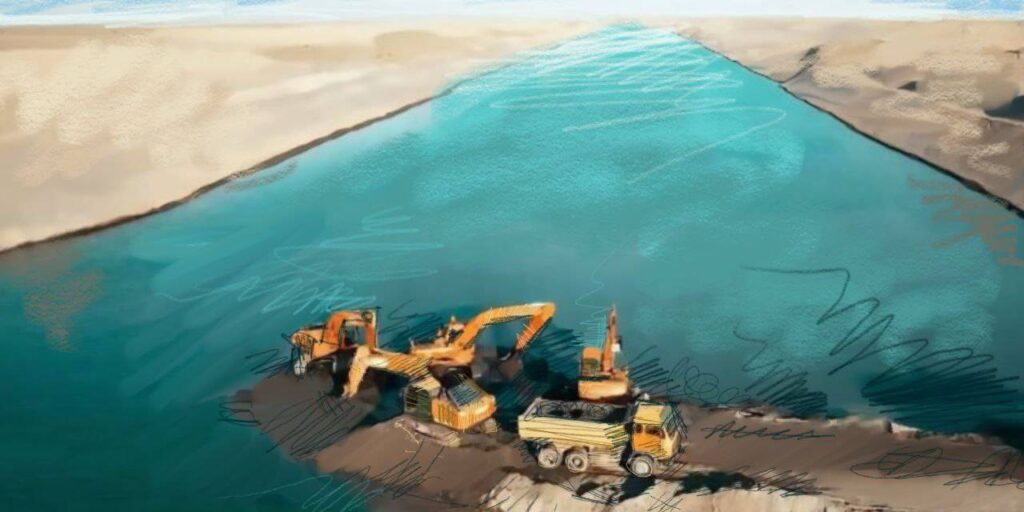
Against the backdrop of the silence of Central Asian countries, as well as their lack of a coordinated position on the construction of the Qosh Tepa Canal in northern Afghanistan, the Taliban are moving forward with the project with growing confidence and without regard to their neighbors.

Last October, at the ceremony to mark the launch of the second phase of the canal’s construction, Afghan Deputy Prime Minister Abdul Salam Hanafi called Qosh Tepa, “one of the most significant development projects in Afghanistan,” while its realization should remove all doubts about the capabilities of the new Afghan authorities, he added.

There is no point in discussing the economic rationale for the canal; like other practical measures taken by the Taliban in the water and energy sphere, for Afghanistan, where 90% of the population is employed in agriculture, the provision of irrigation water is undoubtedly an important task. According to the UN, over the past four decades, desertification has affected more than 75% of the total land area in the northern, western, and southern regions of the country, reducing the vegetation of pasture land, accelerating land degradation, and impacting crop production.

However, this socio-environmental problem affects the interests of all the peoples of Central Asia, which geographically includes the entire north of Afghanistan. It arose as an objective need for development, and solving it requires the combined efforts of all countries in the region, which is already on the verge of a serious water crisis that threatens not only economic development, but also the lives of millions of people.

In general, the Taliban have emphasized their openness in matters of trans-boundary water management, but, so far, these are only statements. They are more motivated by political issues around their international recognition. That is why it is important for them to participate in global events, such as UN climate change conferences, but they have yet to take part in any climate talks. Hopefully, Afghan representatives will be invited to the COP29 Global Impact Conference in Baku this November, especially since one of the key topics of this forum will be a “just energy transition.” It would be interesting to hear what the Taliban have to offer.

Though the authorities in Kabul have had some success in water regulation with Iran, the same cannot be said about Central Asia. This clearly owes to the fact that the five Central Asian republics have not taken a unified position on trans-boundary waters with Afghanistan. And their southern neighbor has taken advantage of this – to date, Kabul has not held any full-fledged official consultations with any Central Asian country on the Qosh Tepa Canal.

However, just as bilateral formats will not yield results (unlike in Iran’s case), the Taliban leadership will not be able to resolve water issues easily with the Central Asian countries.

Afghanistan is not a party to the Central Asian Agreement on Cooperation in the Field of Joint Management on the Utilization and Protection of Water Resources from Interstate Sources. It was signed in Almaty back in 1992, at the dawn of the independence of the five republics, while a civil war was raging in Afghanistan.

Back then, the Central Asian states relied on the regulatory base between the USSR and Afghanistan, which in one way or another regulated the use of trans-boundary waters, including the Treaty Concerning the Regime of the Soviet-Afghan State Frontier (1958), Protocol between the USSR and Afghanistan on the Joint Execution of Works for the Integrated Utilization of the Water Resources in the Frontier Section of the Amu Darya River (1958) and the Agreement on Joint Study of the Possibilities of Integrated Use of Water and Energy Resources of the Pyanj and Amu Darya Rivers (1964), among others. In addition, the Agreement on Cooperation in the Development and Management of Water Resources of the Pyanj and Amu Darya Rivers was signed by Tajikistan and Afghanistan in 2010.

Qosh Tepa, referred to as a “national pride project” in Afghanistan, is of strategic importance for the country. However, it is sure to have a negative impact on the countries located in the lower reaches of the Amu Darya. You do not need to be an expert to understand this. In the absence of dialogue and transparent actions, this rhetorical threat may turn into a very serious, real challenge for the countries of Central Asia in the near term.

In the spirit of geopolitical rivalry, all sorts of political theories and opinions have sprung up around the Qosh Tepa project.

For example, opponents of the Taliban have declared their intention to populate the future fertile areas along the canal with Pashtuns from the east of the country, including repatriates from Pakistan and families of members of Tehrik-i-Taliban Pakistan, which would be a blow to natives of the north (Tajiks, Uzbeks, Turkmen, and Hazaras).

Another version is that the region along the Qosh Tepa will be a magnet for the terrorist organization Islamic State Khorasan Province (ISKP), which, it is argued, will create sleeper cells here with an eye to Central Asia. Moreover, according to this version, ISKP will use the Qosh Tepa Canal to intensify the fight against the Taliban and turn “national pride” against the Taliban, at whose hands all the peoples of Central Asia would suffer.

Anti-Western versions point to plans for the U.S., claimed to be financing the project, to play the “water card” in Central Asia through Qosh Tepa and thereby have greater influence in the region. It would also oppose Chinese interests, such as the development of oil fields in northern Afghanistan and the Belt and Road Initiative.

All these versions have one thing in common – direct threats to the countries of Central Asia, which, of course, cannot but alarm them. However, currently, the Central Asian countries are taking a wait-and-see approach, preferring to work with Afghanistan bilaterally, even though, it must be noted, there are no results to be seen.

It is important for the Taliban to understand that water cannot be a subject of bargaining and should not be considered a lever of political and economic pressure on Afghanistan’s northern neighbors. The Central Asian countries have acquired existential experience in dealing with issues of joint water use and can act as a united front to protect their interests.

The Central Asian countries proceed from an understanding that one way or another, the Qosh Tepa Canal will be operational, and in the future new precedents for water use will arise on the long border with Afghanistan (the total length is over 2,292 km of which more than 1,298 km is a river). It is important how this and other projects in this sphere will turn out. It remains unclear whether the canal bed will be lined – which would prevent significant loss of water – whether technical standards will be followed, and what the regime for servicing the complex hydraulic structure will be, among many other questions to be answered.

Water is a sphere for joint, responsible decisions. The Qosh Tepa Canal may, in fact, be the starting point for, as the Taliban themselves claim, the development of good neighborly relations based on mutual respect. This is especially true given the growing regional paradigm around Afghanistan.

Meanwhile, the Central Asian countries do not need to come up with a new institution for dialogue with Kabul – the International Fund for Saving the Aral Sea (IFAS) has been around since 1993, described by Kazakhstan’s President Tokayev at the IFAS summit in Dushanbe in September 2023 as “one of the few successful mechanisms of regional cooperation, demonstrating the agency of Central Asia in the international arena.”

Nothing prevents Afghanistan from joining this Central Asian club on water issues. For a start, Afghanistan could be granted observer status in the Interstate Commission for Water Coordination (ICWC), which is the only body in Central Asia authorized to make binding decisions on current and future issues of interstate water allocation and use.

There is no other way for the Taliban, since on the issue of joint water use Central Asia has agency and is expanding it.


Aidar Borangaziev is a Kazakhstani diplomat with experience in diplomatic service in Iran and Afghanistan. He is the founder of the Open World Center for Analysis and Forecasting Foundation (Astana) and an expert in regional security research.

How the Trans-Caspian Corridor will Revitalize Trade between Asia and Europe.

Kazakhstan’s Transport Minister, Marat Karabayev has stated that geopolitical tensions are disrupting traditional logistics chains and jeopardizing global trade.

As reported in an article published in the Chinese business publication, “South China Morning Post, ” he claimed that developing the Trans-Caspian transport corridor is essential for increasing transit potential.

Karabayev believes the Trans-Caspian international transportation route is an effective alternative to traditional maritime routes. The overland corridor connects Southeast Asia and China with Europe, crossing Kazakhstan, Azerbaijan, Georgia, and Turkey. Last year, cargo traffic along this route exceeded 2.7 million tons, up 86%.

“Kazakhstan can play a key role here. As the largest country between Asia and Europe, it is an important transit hub for trade between the two continents. Kazakhstan accounts for about 80% of all land transit traffic from China to Europe,” said Karabayev.

He noted that the Trans-Caspian corridor has undergone a steady development over the past decade. In recent years, geopolitical changes have given it additional impetus, especially since the number of container ships crossing through the Suez Canal in 2023, decreased by 67%  and the cost of sea transportation from Shanghai to European countries has almost tripled in recent months.

Given that overland transit would reduce costs and become a more viable logistical option, Kazakhstan is committed to improving infrastructure and terminal facilities, increasing rolling stock, removing administrative barriers, and creating favorable carrier conditions.

“However, for the Middle Corridor to achieve its goals, we need the support and participation of other countries,” advised Karabayev. “Austria, Germany, Latvia, Latvia, Lithuania, Estonia, and Hungary have expressed interest in joining the Trans-Caspian International Transport Route Association. The EU recently announced an investment of 10 billion euros ($10.85 billion). In addition, a roadmap for development until 2027 has been agreed with Azerbaijan, Georgia, and Turkey.”

First NPP Reactor in Uzbekistan May Start Before 2033

Spot.uz reports that the first reactor of the Small Nuclear Power Plant is planned to be operational in five years. The project will be built near Tuzkon Lake, Farish District, Jizzakh Region. The cost has yet to be disclosed.

“The cost of the low-power nuclear power plant construction project based on six RITM-200N reactor units with an installed capacity of 330 MW is confidential information and will not be disclosed,” Uzatom told Spot.uz.

The small nuclear power plant’s first reactor will be commissioned 60 months after the completion of priority works, which should begin this summer. Each subsequent reactor will be commissioned within six months. The full commissioning will occur before 2033.

“During the construction of a low-power nuclear power plant, local general industrial equipment, products, and components are used by the specifications specified in the project documents. Considering the long service life of the small nuclear power plant, it is necessary to use local raw materials,” Uzatom stated.

The Times of Central Asia previously reported that the contract for the construction of the NPP was concluded on May 27th, during Russian President Vladimir Putin’s visit to Tashkent, between the Directorate for NPP Construction under the Atomic Energy Agency and the Atomstroyexport joint stock company (Rosatom’s engineering department).