• KGS/USD = 0.01144 0%
  • KZT/USD = 0.00196 -0%
  • TJS/USD = 0.10899 -0%
  • UZS/USD = 0.00008 -0%
  • TMT/USD = 0.28490 0%
  • KGS/USD = 0.01144 0%
  • KZT/USD = 0.00196 -0%
  • TJS/USD = 0.10899 -0%
  • UZS/USD = 0.00008 -0%
  • TMT/USD = 0.28490 0%
  • KGS/USD = 0.01144 0%
  • KZT/USD = 0.00196 -0%
  • TJS/USD = 0.10899 -0%
  • UZS/USD = 0.00008 -0%
  • TMT/USD = 0.28490 0%
  • KGS/USD = 0.01144 0%
  • KZT/USD = 0.00196 -0%
  • TJS/USD = 0.10899 -0%
  • UZS/USD = 0.00008 -0%
  • TMT/USD = 0.28490 0%
  • KGS/USD = 0.01144 0%
  • KZT/USD = 0.00196 -0%
  • TJS/USD = 0.10899 -0%
  • UZS/USD = 0.00008 -0%
  • TMT/USD = 0.28490 0%
  • KGS/USD = 0.01144 0%
  • KZT/USD = 0.00196 -0%
  • TJS/USD = 0.10899 -0%
  • UZS/USD = 0.00008 -0%
  • TMT/USD = 0.28490 0%
  • KGS/USD = 0.01144 0%
  • KZT/USD = 0.00196 -0%
  • TJS/USD = 0.10899 -0%
  • UZS/USD = 0.00008 -0%
  • TMT/USD = 0.28490 0%
  • KGS/USD = 0.01144 0%
  • KZT/USD = 0.00196 -0%
  • TJS/USD = 0.10899 -0%
  • UZS/USD = 0.00008 -0%
  • TMT/USD = 0.28490 0%
08 December 2025

World Bank to Support Kyrgyzstan’s Food Industry

The World Bank’s International Development Association will loan Kyrgyzstan $35 million to develop agro-food clusters in the Chui, Jalal-Abad, and Naryn regions.

Of that amount, $5 million is a grant, and $30 million is an interest-free loan for 12 years with a six-year grace period.

Kyrgyzstan’s deputy minister for water resources and agriculture, Kubat Kaseyinov, said the allocated money will be used to develop a dairy cluster in Chui and Jalal-Abad.

There are also plans to improve the seed system and breeding farms throughout the country. This includes providing equipment for seed farms, developing infrastructure, improving animal breeding policies and regulations, developing a national meat and dairy farming plan, and supporting selected breeding farms.

Kazakhstan Promotes Investment Opportunities in South Korea

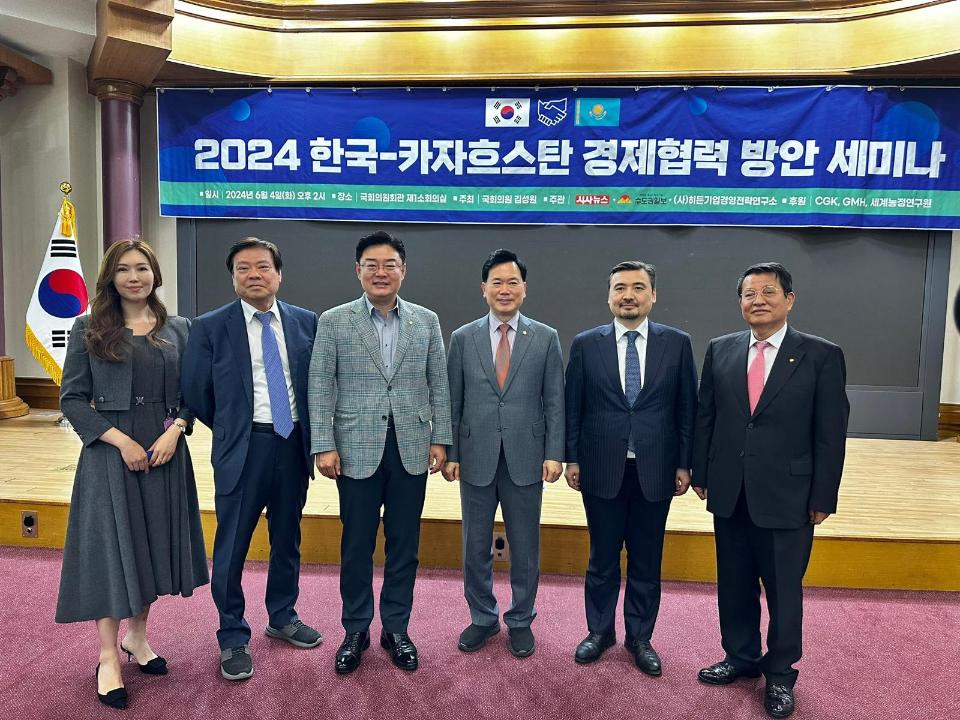
On June 4, Seoul hosted a seminar organized by Caspian Group Korea and several Korean organizations, on the development of bilateral economic cooperation and investment opportunities offered by Kazakhstan.

Endorsed by Kazakhstan’s Foreign Ministry as a significant platform for promoting investment opportunities to the Korean business community, the seminar was attended by deputies of the National Assembly of the Republic of Korea, Kim Song Won and Kim Seung Soo, and Korean companies including Samsung, Hyundai, KPMG Korea, KT, and CJ.

In his address, Deputy of the National Assembly Kim Song Won referred to the important relationship between Kazakhstan and Korea, and emphasized the need to create synergy by combining advanced Korean technologies and rich Kazakh natural resources.

Ambassador of Kazakhstan to the Republic of Korea, Nurgali Arystanov, likewise welcomed strengthening cooperation between the two countries and particularly, the input of Korea’s experience in Kazakhstan’s industrial development, smart city technologies, healthcare systems, as well as agriculture and smart farms.

Focus then turned to the new Alatau City project, an ambitious centre in Kazakhstan which designed to attract for Korean advanced technologies, will play a significant role in strengthening bilateral investment cooperation and the development of sustainable urban infrastructure.


Foreign Investment in Central Asia is Following Demographic Trends

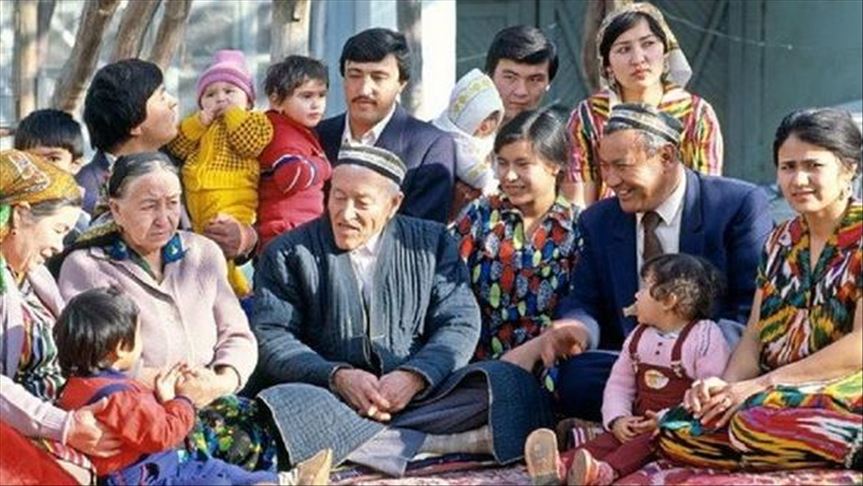
The population growth in Central Asia, combined with worsening demographic situations across the rest of the post-Soviet space, means a gradual shift in power and investment toward the regional powers of Uzbekistan and Kazakhstan.

Thanks to their growing markets – unlike Belarus and Russia, where the population is slowly declining, and especially Ukraine – Uzbekistan and Kazakhstan are starting large projects with the participation of foreign investors. In particular, Russia is showing increased interest in Central Asia, with the US and the EU also keen to engage financially.

Recently, Kazakhstani political scientist Marat Shibutov noted on social media that politicians have realized the benefits of investing in countries with major population growth. He argued that power dynamics across the post-Soviet space are changing in line with that.

Shibutov quoted an article that he co-authored with Yuri Solozobov in May 2019: “according to statistics, in 1991 there were 20 million people in Uzbekistan and 51 million in Ukraine. Now, there are officially 32.6 million in Uzbekistan (experts say about 34 million) and 42 million in Ukraine (the real figure is unknown). But soon, everything is set to change dramatically. In fact, in 2-5 years, Uzbekistan will equal or surpass Ukraine in population – this will be a turning point in the post-Soviet space. First and foremost, Uzbekistan’s investment and trade position will improve, especially in the consumer goods segment. Considering the nuclear power plant project being implemented with the help of Russia and the Ustyurt oil and gas fields, Uzbekistan will become a more promising country for foreign investors than Ukraine, whose development will be entirely about defense spending and internal political issues.”

Due to the war that started in 2022, Shibutov’s forecast has materialized even faster. According to UN estimates, Ukraine’s population this year is barely 37 million. No one has accurate data since the last census in this country was carried out in 2001. As of 2023, the Ministry of Social Policy of Ukraine put the figure even lower than the UN, at 36 million. Thus, after Russia (with a population of over 140 million), Uzbekistan is likely the second most populous country of the former USSR.

In Kazakhstan the population is growing even faster than in Uzbekistan. Russian and Kazakh businesses are implementing 135 projects worth $26.5 billion. Additionally, 67 joint projects worth $14 billion are being planned across key economic industries, including machine building, metallurgy, and chemicals. They are expected to create 11,000 jobs.

According to Russian ambassador to Kazakhstan Alexei Borodavkin, there are more than 18,000 enterprises with Russian capital in Kazakhstan and about 4,000 joint ventures with Kazakh partners. Overall, Russia and Kazakhstan have investments totaling $33.5 billion across 143 projects. In November last year, a memorandum of cooperation was signed between the countries’ ministries of energy to build three thermal power plants (TPP) in Kazakhstan – Kokshetau TPP, Semey TPP, and Ust-Kamenogorsk TPP. The combined capacity of the new coal-fired facilities will be about 1 GW (Kokshetau TPP 240 MW, Semey TPP 360 MW, and Ust-Kamenogorsk TPP 560 MW).

In addition, the Russians are one of the favorites in the stakes to be selected to build Kazakhstan’s first nuclear power plant, which is planned to be located in the densely populated Almaty region. The cost of the project, according to preliminary estimates, will be $10-15 billion.

To balance Russia’s growing influence in Central Asia, western countries are also showing increased interest in the region. In April of this year, British foreign minister David Cameron visited the five Central Asian countries, signaling the UK’s intention to invest in the rapidly growing regional economy. In September 2023, the Central Asian heads of state met with US president Joe Biden in the C5+1 format. The leaders were then hosted by German chancellor Olaf Scholz for a summit in Berlin, followed not long after by a visit to Kazakhstan and Uzbekistan by French president Emmanuel Macron.

Shibutov, in the abovementioned 2019 article, forecasts a further dwindling of the population in other post-Soviet countries like Lithuania, Latvia, Estonia, Moldova, Armenia, and Georgia. This forecast still looks well-founded, while all the Central Asian countries are seeing steady population growth.


French Cargo Airline Plans to Use Uzbekistan’s Navoi Airport

CMA CGM Air Cargo, a French cargo airline, plans to deliver cargo from China to Europe via Uzbekistan. The carrier intends to use Navoi Airport as a transit point.

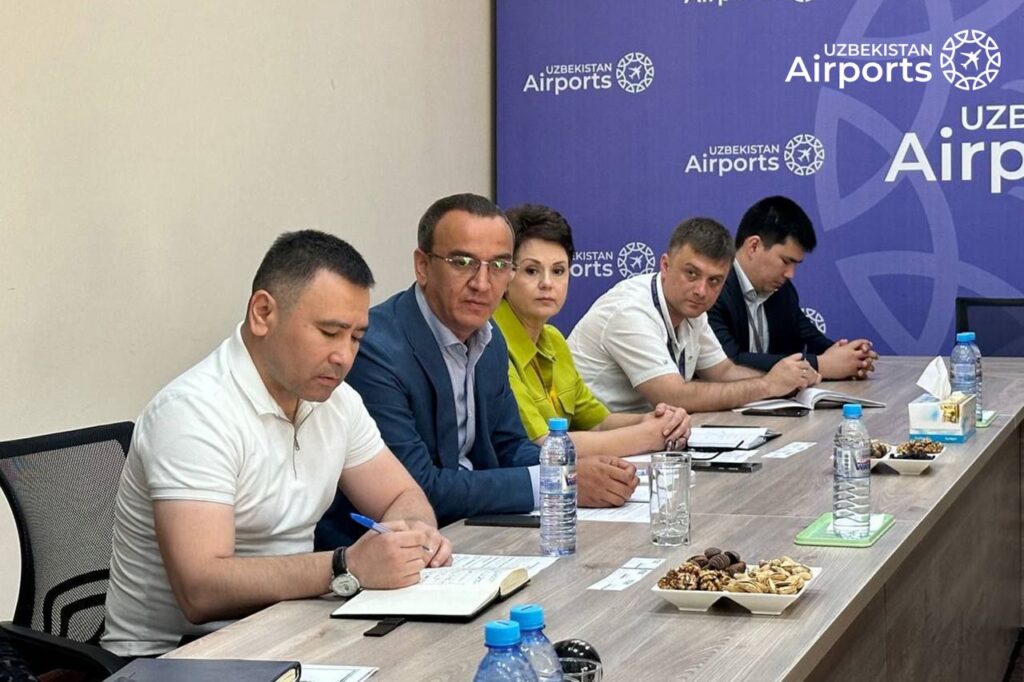
Representatives of Uzbekistan Airports, Uzaviation, and Uzaeronavigatsia Center recently met with the French CMA CGM Air Cargo delegation, headed by General Director Damien Mazauder, in Tashkent.

The airline will carry out five flights a week on Airbus A330 aircraft, and Navoi Airport will become a transit point for technical landings, refueling, and crew changes.

CMA CGM Air Cargo is headquartered in Paris; it was established in 2021 as an air division of the CMA CGM transportation group.

Kazakhstan’s Bolashak Program: More Trouble Than It’s Worth?

In 1993, Nursultan Nazarbayev, the first president of Kazakhstan, established the Bolashak (‘Future’ in Kazakh) International Scholarship. Its goal was to help gifted Kazakhstani youth obtain a high-quality foreign education. However, the program is currently mired in scandals with alarming regularity.

Of course, most of these clickbait stories are minor — such as a 2022 incident with the famous singer Dimash Qudaibergen. He was selected for the Bolashak Program and went abroad before changing his mind. He tried to transfer the scholarship to someone else but was forced to return the money to the state.

Still, several cases indicate that behind the scenes at the Center for International Programs, which administers the scholarship, something is not right. So far, no one has intervened – the program is still running – but the latest scandal could attract the attention of Kazakhstan’s president Kassym-Jomart Tokayev. And he has already expressed dissatisfaction with some of the conditions of the scholarship.

Getting the president’s attention

Let’s unpack the current scandal, which has to be extinguished by a senior official such as the minister of education and science. Kazakhstani Natalya Vorobyova recorded a video message to Tokayev, saying that in 2016, she and her colleague Makpal Daribaeva acted as debt guarantors for her former colleague Valeria Gavrilenko, who had completed the Bolashak Program. According to Vorobyova, Gavrilenko “in 2019, conspiring with the center’s employees… illegally withdrew two apartments [that had been pledged to the center] as collateral and went off to live in the UK.” Now, her debt – graduates of the program are required to work in Kazakhstani government agencies for 3-5 years (depending on the region) – has to be repaid by the guarantors, i.e., by Vorobyova and Daribaeva. They owe about KZT30 million ($60,000).

The press service of the Center for International Programs explained that since Gavrilenko evaded paying off the debt, the agreement transferred it to the guarantors.

Just days later, on May 30, Sayasat Nurbek, who heads Kazakhstan’s Ministry of Education and Science, intervened, saying that an agreement had been reached with Gavrilenko whereby she would pay off her debt, with a corresponding agreement already signed by her.

“Since Gavrilenko took it upon herself to fully return the money, an agreement was signed with her, and she has begun to pay back the money. Accordingly, the claims against the guarantors are withdrawn. Nevertheless, we were forced to initiate a case against all three obligation-bearers. We were forced to do this because they are jointly liable under the law. If Gavrilenko pays the full amount, the claims against the guarantors will be dropped. Unfortunately, they seem to have been advised incorrectly. They felt threatened that they would be forced to pay full damages. Today, we are concentrating all claims on Gavrilenko,” Nurbek said in the Senate as he was answering questions from journalists.

As for the third party in this scandal – which, according to the minister, is also responsible – it is the former president of the Center for International Programs, Zhanbolat Meldeshov, under whose watch Gavrilenko had the opportunity to remove the property as collateral and did not have to work off the debt after studying in the UK, where she, in fact, stayed to live. Meirzhan Alpysbay and Askar Sharambaev, who served as vice president and head of the legal department at the center, respectively, also signed the notice about the collateral being removed.

Meldeshov was already the culprit in a high-profile incident. In 2017, a complaint against him was sent to the Presidential Administration. He was accused of firing center employees to make room to hire his acquaintances and treating staff rudely, and he got a severe reprimand from the education minister.

“People of the future”

The Kazakhstani public has an overwhelmingly negative attitude toward the Bolashak Program, seeing it as a way for powerful bureaucrats and the ruling elite to send their relatives to study at prestigious western universities at the state’s expense. This discriminatory attitude is attributable to the fact that in the ranks of Bolashak graduates, there are people like Bauyrzhan Baybek, the former akim (head of the city administration) of Almaty and the son of Nazarbayev’s classmate, and Gabidullah Abdrakhimov, the ex-mayor of Shymkent who started the meme “work in Kazakhstan, relax in London.” And the list goes on. Thirteen thousand Kazakhstanis have been educated under the Bolashak Program since it was established 30 years ago, and there is bound to be a certain percentage of rich kids (mazhory) among them. The same is true of “defectors” – if you believe the official statement of the Center for International Programs press service, less than 1% of Bolashak recipients did not fulfill their government service obligation or did not complete their studies.

The Bolashak Scholarship provides an opportunity for gifted Kazakhstanis to study at the 70 highest-ranked foreign universities at the expense of the state. The need for such a program became evident with the collapse of the Soviet Union and the outflow of professionals abroad. As early as November 1993, Bolashak was launched.

A few years ago, political scientist Daniyar Ashimbaev, who authored the book Who is Who in Kazakhstan, offered his explanation for society’s prejudiced attitude toward “Bolashakers”:

“By the mid-2000s, more and more program graduates were back in the country and were called to serve in government. But here, a mistake was made. Firstly, Bolashakers were seen as a whole group and not divided by specialization. Secondly, this attitude caused a kind of ‘messianic complex’ within the first waves of Bolashakers, when they began to behave like ‘people of the future’ with ‘youthful maximalism.’ Thirdly, they went right away to the upper echelons of power (at one point, there was an initiative to have only two deputy ministers at each ministry, and one had to be a graduate of the program), with no attention being paid to the fact that the majority had no experience either in the civil service or business. This campaign provoked a negative attitude toward Bolashakers, and it took several years to find compromise solutions.”

Besides the Bolashak Scholarship, there is also an association of the same name, created in 2001 by program graduates. In 2008, it was headed by Bauyrzhan Baybek, the former mayor of Almaty. Ashimbaev attributes the abovementioned “compromise solutions” to Baybek, yet in fact, the further strengthening of Baybek gave Bolashakers mostly unfounded ambitions, as if they were the ones who would soon rule the country. Incidentally, one Bolashak alumnus is the notorious Kuandyk Bishimbayev, over which Nazarbayev himself once lamented.

“I feel very sorry for ex-Minister Kuandyk Bishimbayev, to be honest – [we] educated him, put him through Bolashak, and pinned our hopes on him. And this is how it ended up,” Nazarbayev said in 2018 at an extended government meeting on high-level corruption.

Are changes coming?

What about Tokayev’s dissatisfaction with the Bolashak Program? In 2008, Nazarbayev initiated, as they called it then, a “qualitative expansion” of the scholarship: the age limit for applicants was significantly increased, and quotas were introduced for civil servants.

In 2019, at an extended government meeting on improving the effectiveness of the civil service, Tokayev criticized the government. Tokayev’s anger was primarily directed at the Ministry of Education and Science and the Ministry of National Economy, where officials as high-ranking as deputy ministers had “suddenly” left their posts to study under the Bolashak Program.

“Look, studying under the Bolashak Program at 45 years or older, what are we talking about? And this is not an isolated incident – there are examples across a number of government institutions at lower levels. Workers come to their bosses and say: I was admitted to the Bolashak Program, let me go to study… It is an absurdity. This is not a civil service. Where is the continuity? Where is the institutional memory of the workers?” an indignant Tokayev said. He instructed his administration to reconsider the conditions for participating in the program.

In his view, civil servants should improve their knowledge at their own expense and in their free time if they want to.

However, since then, the country has experienced a series of extreme events, including a pandemic and several natural disasters, so it is unsurprising that no one has gotten around to dealing with the Bolashak Program. Perhaps now, against the backdrop of the scandal with the debt guarantors, Tokayev’s order will be remembered.

Nazarbayev In-Law, Askar Kulibayev’s Oil Terminal Seized

Representatives of the General Prosecutor’s Office of Kazakhstan have reported that an oil terminal in the port of Aktau belonging to Askar Kulibayev has been returned to the state. The 134-hectare property is valued at $66 million.

“It was established that in 2011, the oil terminal was alienated into the ownership of Kulibayev’s company. On February 26th, 2024, by the decision of the Specialized Inter-district Economic Court of Mangistau region, the claim of the Almaty city prosecutor was satisfied, and the oil terminal was returned to the state’s ownership,” said the supervisory body.

The Almaty prosecutor’s office stated that the claim was filed to compensate for the damage caused by the unlawful seizure of a foreign investor’s property. However, the official message does not name the affected company.

Now 87-years-old, Askar Kulibayev served as First Secretary of the Guryev (now Atyrau) Regional Committee of the Communist Party of Kazakhstan and as the Minister of Construction in independent Kazakhstan. He is the matchmaker of former President Nursultan Nazarbayev’s daughter, and the father of Kazakhstan’s richest man, Timur Kulibayev. In 2024, Timur Kulibayev and his wife Dinara Kulibayeva, still sit atop the list of the richest Kazakhs. The combined fortune of the Nazarbayev family is estimated at almost $10 billion.