• KGS/USD = 0.01144 0%
  • KZT/USD = 0.00210 0%
  • TJS/USD = 0.10438 0%
  • UZS/USD = 0.00008 0%
  • TMT/USD = 0.28490 0%
  • KGS/USD = 0.01144 0%
  • KZT/USD = 0.00210 0%
  • TJS/USD = 0.10438 0%
  • UZS/USD = 0.00008 0%
  • TMT/USD = 0.28490 0%
  • KGS/USD = 0.01144 0%
  • KZT/USD = 0.00210 0%
  • TJS/USD = 0.10438 0%
  • UZS/USD = 0.00008 0%
  • TMT/USD = 0.28490 0%
  • KGS/USD = 0.01144 0%
  • KZT/USD = 0.00210 0%
  • TJS/USD = 0.10438 0%
  • UZS/USD = 0.00008 0%
  • TMT/USD = 0.28490 0%
  • KGS/USD = 0.01144 0%
  • KZT/USD = 0.00210 0%
  • TJS/USD = 0.10438 0%
  • UZS/USD = 0.00008 0%
  • TMT/USD = 0.28490 0%
  • KGS/USD = 0.01144 0%
  • KZT/USD = 0.00210 0%
  • TJS/USD = 0.10438 0%
  • UZS/USD = 0.00008 0%
  • TMT/USD = 0.28490 0%
  • KGS/USD = 0.01144 0%
  • KZT/USD = 0.00210 0%
  • TJS/USD = 0.10438 0%
  • UZS/USD = 0.00008 0%
  • TMT/USD = 0.28490 0%
  • KGS/USD = 0.01144 0%
  • KZT/USD = 0.00210 0%
  • TJS/USD = 0.10438 0%
  • UZS/USD = 0.00008 0%
  • TMT/USD = 0.28490 0%

From Alatau to Almaty by Air: How Kazakhstan’s First Air Taxi Service Will Operate

The Almaty region is preparing to introduce a groundbreaking new mode of transport for Kazakhstan: electric air taxis. While the project remains in the development and testing phase, key details about routes, aircraft, and the projected launch timeline have already been outlined.

The first air taxi routes are expected to connect the newly developing city of Alatau with Almaty and other settlements across the region. The aircraft under consideration for this initiative is the Joby Aviation S4, an electric vertical take-off and landing (eVTOL) model developed by U.S.-based Joby Aviation. Test flights are scheduled for 2026.

Alatau Advance Air Group, a private company, has been designated as the air mobility operator for the Alatau region. In collaboration with partners from the U.S., South Korea, China, and Italy, the company is working on aircraft research, infrastructure planning, and building a testing ecosystem to support future operations.

Joby Aviation, one of the global leaders in eVTOL technology, has been named a strategic partner. The selected S4 model is in the final stages of certification by the U.S. Federal Aviation Administration (FAA) and has already undergone real-world testing. The aircraft is designed to carry four passengers and one pilot.

These capabilities will allow the air taxi service to cover both urban routes within the Almaty agglomeration and longer intercity routes across the wider region.

To accommodate operations, a network of vertiports, dedicated airfields for vertical take-off aircraft, is planned for Alatau, Almaty, and other key regional locations. The project is currently in the design phase, with testing sites under consideration.

Demonstration flights are slated for 2026, with commercial services expected to launch once aircraft certification by the FAA is finalized and validated by Kazakhstan’s aviation authorities.

“Air taxis will become an innovative form of transport that will provide fast connections between Alatau, Almaty, and other cities in the region,” the Almaty mayor’s office commented.

Flight pricing is expected to be announced following testing and preparations for the commercial rollout.

The air taxi concept was first introduced in October 2024 at a development forum in South Korea focused on the Alatau project. The initiative is being led by Alatau Advance Air Group, founded in March 2025. The company is connected via Caspian Integrity to entrepreneur and former senator Yuri Tskhai, one of the key investors behind Alatau City.

In November, a strategic agreement was signed in the U.S. between Kazakhstan’s Ministry of Digital Development and AI, Joby Aero, Alatau Advance Air Group, and entrepreneur Vyacheslav Kim. The deal includes the purchase of eVTOL aircraft valued at approximately $300 million.

Joby Aviation continues to be a major player in the global eVTOL industry, competing with major aerospace and automotive firms including Airbus, Boeing, Embraer, Honda, Hyundai, and Toyota.

Where Motherhood Meets Innovation: The Kyrgyz Startup Mama Space

Female tech founders face a lot more challenges globally, and Kyrgyzstan’s startup ecosystem is unfortunately no exception. Being a nascent stage ecosystem makes things even worse: according to IFC, in emerging markets, only 11% of seed funding goes to startups with women on their founding team. Despite such significant barriers, there is a generation of female founders with global ambitions. One of them is Gulnaza Khalmanbetova, who is using technology to make pregnancy and motherhood more peaceful.

Mama Space provides an ecosystem for pregnancy and motherhood. Its pregnancy tracker covers every stage, providing an entire library of up-to-date, medically approved articles and educational videos. An AI chatbot can answer questions about pregnancy with evidence-based knowledge. And there is a loyal online community where every mother can find support and understanding.

“It was my second experience of pregnancy that prompted me to create the app. My second pregnancy was complicated and could have ended in tragedy. During one of the surgeries, in the fifth month of pregnancy, I promised myself that if everything went well for me and my unborn son, I would do everything possible to ensure that every mother could find support and not be left alone with her problems. This is how the idea of Mama Space was born — a platform designed so that every woman can go through the stages of motherhood with reliable informational support,” recalled Gulnaza Khalmanbetova, CEO and Founder of Mama Space.

All images provided by Mama Space

In December 2025, during the Digital Startup Awards in Tashkent, Mama Space was named “Best Women-Founded Startup” — one of the many awards Mama Space has collected so far.

Khalmanbetova had previously had a successful career in the international development sector. Those organising, optimizing, and networking skills came in handy when entering the unpredictable path of a startup founder, with an aim to help women who are planning a pregnancy, are currently pregnant, or have recently given birth.

One of the sources of ideas for startup founders is trying to solve problems they face themselves. This was exactly the case with Mama Space. During her first pregnancy, which brought anxiety and difficulties with finding proper information, Khalmanbetova was inspired to organise a community of mothers with an event to celebrate pregnancy and motherhood. She named the event Mama Fest, which now brings together hundreds of women to celebrate motherhood. 

Mama Space is a textbook example of a successful launch. The MVP — the minimal viable product — was ready in three months, despite the fact that Khalmanbetova and her team still had their full-time jobs. And Khalmanbetova, traditionally for startup founders, has to wear a number of hats and utilise all her skills, from programming and business development to graphic design and running social media.

Given that the product is directly related to health, the startup relies on science and professional doctors. Mama Space partners with the Kyrgyz Association of Obstetricians, Gynecologists, and Neonatologists.

In June 2024, Mama Space won the ‘Unicorn from KG’ incubation program run by the High Technology Park of the Kyrgyz Republic. As a result, the team took part in the five-week Hero Training program by Draper University in Silicon Valley. In September the same year, Mama Space was awarded 2nd place during the regional Central Asian finals of the largest global startup contest for women, She Loves Tech. In February 202,5 Mama Space made it to the Top 10 of the Aurora Tech Award by inDrive out of 2,018 applications from 116 countries.

The preliminary goal of Mama Space is to become Central Asia’s number 1 parenting app. But Central Asia is not the final destination — Khalmanbetova aims to go global. She tells The Times of Central Asia: “Mama Space is not just a business for me — it’s my way of caring, supporting, and holding space for mothers. While many startups are driven by profit, I am driven by impact. I truly believe that real sustainability grows from meaningful impact.”

Uzbekistan Eases Data Localization Rules to Support Global Payment Platforms

Uzbekistan’s Senate has approved amendments to the Law on Personal Data, a move aimed at easing restrictions that have hindered the operation of international online payment platforms and slowed digital economic growth. The changes were adopted during the Senate’s 13th plenary session, according to official parliamentary sources.

Lawmakers noted that an increasing number of Uzbek freelance developers are selling software products and digital content to foreign clients via global platforms. While some major services accept payments through bank cards or transfers, others, such as Upwork, Fiverr, Envato, and Storyblocks, rely almost exclusively on PayPal. However, PayPal does not fully support bank cards issued in Uzbekistan, largely due to the country’s data localization requirements.

Under the current legislation, personal data must be stored on servers located within Uzbekistan. This requirement has discouraged several international payment providers from entering the local market. Senators stated that the newly approved amendments aim to remove these barriers and establish clearer conditions for cross-border data use.

The revised law stipulates that only specific categories of personal data, such as biometric, genetic, and telecommunications-related information, must remain stored domestically. Other types of personal data may be transferred and stored abroad, provided that strict information security protocols are observed. The Cabinet of Ministers will be authorized to approve a list of countries deemed to offer adequate personal data protection standards.

According to lawmakers, these changes will accelerate the development of fintech, e-commerce, and the broader digital economy. They are also expected to enable legal and transparent payment mechanisms for freelancers and improve access to contactless payment options for foreign tourists.

The reform builds on a government initiative launched in October 2024, when authorities instructed the Tourism Committee, the Central Bank, and the Ministry of Digital Technologies to engage with payment providers such as Alipay, Apple Pay, Google Pay, PayPal, and UniPay. The directive included a review of national legislation to facilitate their integration into Uzbekistan’s financial system.

Almaty to Host 2029 Asian Winter Games

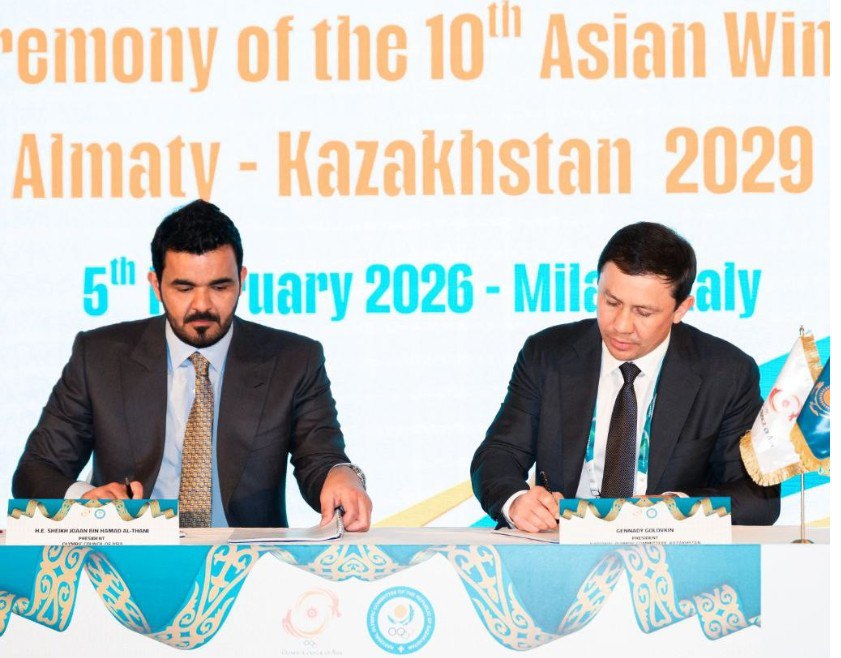
Almaty, Kazakhstan’s largest city nestled in the foothills of the Alatau Mountains, has been selected to host the 2029 Asian Winter Games, the country’s National Olympic Committee (NOC) has announced.

The agreement was signed on February 6 in Milan, coinciding with the opening of the Winter Olympics. Almaty’s selection is credited largely to its robust existing sports infrastructure, much of which was developed for the 2011 Asian Winter Games, co-hosted by Almaty and Astana.

Almaty also hosted the 2017 Winter Universiade, further demonstrating its capacity to stage major international sporting events. Kazakhstan’s Ministry of Tourism and Sports emphasized that the 2029 Games will rely on current facilities, avoiding the need for large-scale new construction. “The existing sports complexes allow competitions to be held in all sports included in the program of the Winter Asian Games,” the ministry said.

The NOC of Kazakhstan noted that leveraging existing infrastructure and prior experience will ensure a cost-effective and efficient approach to hosting. Organizing a second edition of the Winter Asian Games is viewed as a strategic move to further develop Olympic sports in the country.

“Hosting major international competitions, including the Asian Games, is of strategic importance for the country. It reflects the high level of trust placed in us by the international sports community and recognizes Kazakhstan’s potential,” said Gennady Golovkin, the head of the National Olympic Committee. He added that Almaty possesses all the necessary sports and urban infrastructure, eliminating the need for additional construction.

Saudi Arabia had previously been awarded hosting rights for the 2029 Asian Winter Games but later postponed the event due to large-scale infrastructure developments and extended preparation timelines.

As previously reported by The Times of Central Asia, Kazakhstan placed fourth among 34 countries in the medal tally at the 2025 Asian Winter Games, securing 20 medals.

Kazakh Civil Servants Fined Nearly $100,000 for Poor Public Services

In 2025, Kazakh civil servants were fined a total of $99,300 for violations related to the provision of public services, according to the Agency for Civil Service Affairs (ACSA).

The agency reported that 917 administrative reports were filed against 442 officials for infractions such as missed deadlines, improper procedures for issuing permits, and unjustified refusals of service. Of those held accountable, 375 were local government employees and 67 represented central government agencies.

In addition to financial penalties, 1,636 public employees faced disciplinary measures, 1,331 from local administrations and 305 from ministries and central agencies. Among them, 27.3% were in managerial positions.

Over the course of the year, more than 478,000 violations in the provision of public services were identified: 130,751 in central government bodies and 347,692 at the local level. These included 147,105 instances of missed deadlines. The rights of 12,340 service recipients were restored as a result of investigations.

The ACSA also received 2,737 complaints related to public service quality. Most grievances concerned local government officials, state-owned enterprises, and agencies involved in land administration. Following these complaints, 481 unscheduled inspections were conducted, leading to the restoration of the rights of 233 citizens.

In total, the agency carried out 4,316 control measures in 2025. These resulted in 720 formal submissions and 2,164 orders to rectify violations, 2,026 of which were executed.

As previously reported by The Times of Central Asia, Kazakhstan is prioritizing digital transformation to enhance public service delivery. A unified electronic platform for the construction industry is scheduled for launch in 2026, aiming to streamline bureaucratic processes and increase transparency.

Kazakhstan Bets on Pakistan for Central Asian Connectivity

In early February, Kazakh President Kassym-Jomart Tokayev made a historic visit to Pakistan. The last such visit was a two-day trip in 2003 by then-President Nursultan Nazarbayev, during which he met with the Pakistani president at the time, General Pervez Musharraf.

Kazakhstan’s outreach to Pakistan reflects a broader recalibration of its connectivity strategy, as Astana looks to secure more reliable southbound trade routes amid shifting geopolitical and logistical constraints across Eurasia.

The topic of connectivity was already on the table in 2003, and it was also one of the most important issues during the latest visit, with Tokayev discussing the issue with Pakistani Prime Minister Shehbaz Sharif.

The trip culminated in the signing of 37 agreements in various fields, including strategic sectors such as mining and, more generally, trade, with the aim of increasing trade from the current $250 million to $1 billion. Official statements indicate that both sides are aiming to reach that target within approximately the next two years. From a political point of view, the bilateral relationship has been elevated to the rank of Strategic Partnership.

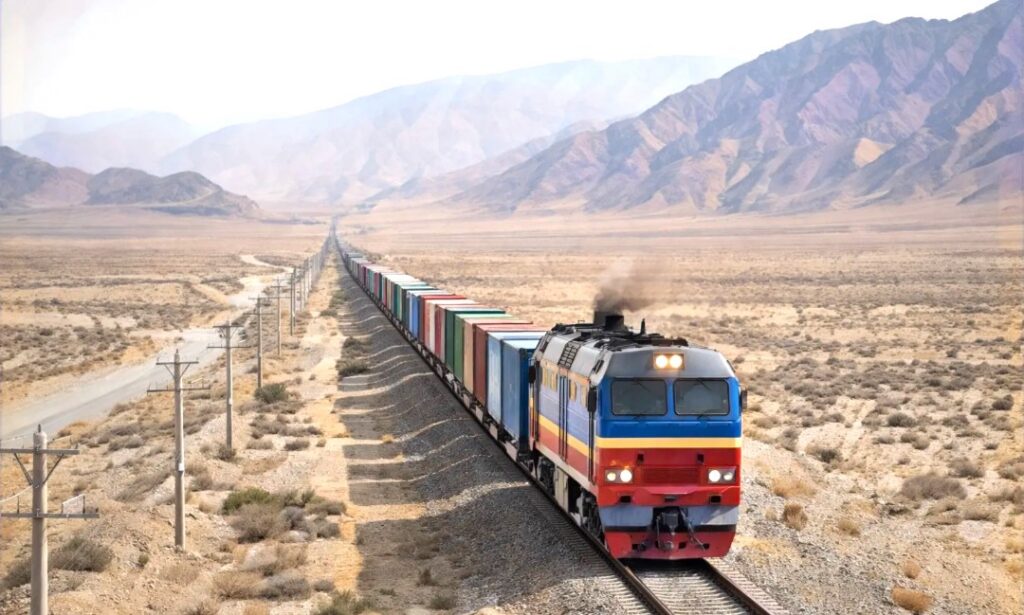
In an official statement released following the visit, great importance was placed upon the issue of connectivity and logistics between South and Central Asia. From this point of view, the Kazakhstan-Turkmenistan-Afghanistan-Pakistan railway took center stage. If completed, the project would connect Kazakhstan to the ports of Karachi and Gwadar and allow Pakistan to be included in the North–South International Transport Corridor and Trans-Caspian Middle Corridor logistics routes. Speaking to the Pakistani media in the days leading up to Tokayev’s trip, the Kazakh ambassador to Pakistan, Yerzhan Kistafin, stated Astana’s willingness to fully finance the construction of the infrastructure, at a total cost of around $7 billion. Kazakhstan’s move represents an acceleration of a logistical competition in this arena involving various players, with some at the forefront, such as Pakistan and Iran, and others further behind, such as China and India.

It has been talked about for some time, but the backbone of the Kazakhstan-Turkmenistan-Afghanistan-Pakistan railway has only recently begun to take shape, as confirmed to The Times of Central Asia by Dr. Nargiza Umarova, Head of the Center for Strategic Connectivity at the Institute for Advanced International Studies (IAIS), Uzbekistan: “In 2024, Kazakhstan joined the project to construct a railway through Afghanistan, also known as the western trans-Afghan route. The Turkmenistan-Afghanistan-Pakistan (TAP) railway corridor is designed to integrate the transport systems of Central and South Asia, which will stimulate trade and economic ties between the two regions. The TAP railway, which runs through western Afghanistan to the border with Pakistan, could be extended to Pakistani ports on the Indian Ocean. This would provide Central Asian countries with an alternative route to the open seas in addition to the southern ports of Iran.”

Pakistan’s importance as the destination for Kazakhstan’s logistics ambitions was confirmed by Dr. Marriyam Siddique, Assistant Professor at the Pakistan Navy War College in Lahore: “Pakistan serves as the primary maritime gateway for Kazakhstan’s ‘land-linked’ strategy, offering the shortest geographical access to the Arabian Sea,” she told TCA. “By providing deep-sea port facilities at Karachi and Gwadar, Pakistan enables Kazakhstan to diversify its trade routes away from traditional reliance on Russia and China.”

A possible rail link along the north-south axis is also highly regarded by Islamabad, as emphasized by Dr. Adilbek Yermekbayev, Associate Professor at the Center for Regional Affairs of the Al-Farabi Kazakh National University in Almaty: “For Pakistan, the development of transit links with Kazakhstan is economically and strategically attractive, as it provides access to Central Asian markets and, in the longer term, potentially to the markets of Russia and Belarus,” he told TCA. “From Islamabad’s perspective, such connectivity would strengthen Pakistan’s position as a regional transit hub linking South Asia, Central Asia, and parts of the post-Soviet space.”

The potential is clear, as is the main risk associated with the railway. “Afghanistan is geographically indispensable but politically and institutionally fragile as a transit link between Pakistan and Kazakhstan,” stated Yermekbayev. “From Kazakhstan’s perspective, however, it is the current Afghan authorities that may be able to provide a minimum level of security along key transport routes.”

This is a vision echoed by Dr. Siddique, who told TCA that, “The project’s viability depends entirely on Afghan stability.”

Pakistan’s growing role could ultimately undermine Iran’s position. In recent years, Iran had emerged as one of the most promising countries in terms of Central Asian connectivity, but now the situation could be set to change.

“Iran’s port infrastructure competes with Pakistan’s maritime transport capabilities,” Umarova said in assessing the current situation. “There are two strategic ports in southern Iran: Bandar Abbas and Chabahar. Both are used by Central Asian countries to access global trade markets.”

The fact that Tehran is ahead of Islamabad in this regard was also highlighted by Yermekbayev: “Iran plays a more practical and institutionally established role in providing southern transit options for Kazakhstan. Through existing railway and multimodal corridors, Iran already offers Kazakhstan access to ports on the Persian Gulf, making this route significantly more operational than the still largely prospective Pakistan–Afghanistan corridor. At the same time, this role is constrained by both external and internal risks. Consequently, Astana treats the Iranian route as one element within a broader diversification strategy rather than as a single dominant solution.”

According to Siddique, Astana’s recent moves could suggest that this process of “replacement” is already well advanced: “While Iran’s International North-South Transport Corridor is currently more established, Kazakhstan’s offer to fully finance the rail link to Pakistan could shift the competitive balance by removing Islamabad’s capital constraints. If Kazakhstan successfully secures the Afghan segment, the Pakistani route may emerge as a faster, more cost-effective alternative to the Iranian ports.”

As Russia becomes a less predictable partner, including in logistics, and Iran faces renewed internal and external pressures, Kazakhstan’s engagement with Pakistan marks a notable acceleration in a connectivity agenda that has long produced more plans than completed projects.