• KGS/USD = 0.01144 0%
  • KZT/USD = 0.00212 0%
  • TJS/USD = 0.10523 0%
  • UZS/USD = 0.00008 0%
  • TMT/USD = 0.28530 0%
  • KGS/USD = 0.01144 0%
  • KZT/USD = 0.00212 0%
  • TJS/USD = 0.10523 0%
  • UZS/USD = 0.00008 0%
  • TMT/USD = 0.28530 0%
  • KGS/USD = 0.01144 0%
  • KZT/USD = 0.00212 0%
  • TJS/USD = 0.10523 0%
  • UZS/USD = 0.00008 0%
  • TMT/USD = 0.28530 0%
  • KGS/USD = 0.01144 0%
  • KZT/USD = 0.00212 0%
  • TJS/USD = 0.10523 0%
  • UZS/USD = 0.00008 0%
  • TMT/USD = 0.28530 0%
  • KGS/USD = 0.01144 0%
  • KZT/USD = 0.00212 0%
  • TJS/USD = 0.10523 0%
  • UZS/USD = 0.00008 0%
  • TMT/USD = 0.28530 0%
  • KGS/USD = 0.01144 0%
  • KZT/USD = 0.00212 0%
  • TJS/USD = 0.10523 0%
  • UZS/USD = 0.00008 0%
  • TMT/USD = 0.28530 0%
  • KGS/USD = 0.01144 0%
  • KZT/USD = 0.00212 0%
  • TJS/USD = 0.10523 0%
  • UZS/USD = 0.00008 0%
  • TMT/USD = 0.28530 0%
  • KGS/USD = 0.01144 0%
  • KZT/USD = 0.00212 0%
  • TJS/USD = 0.10523 0%
  • UZS/USD = 0.00008 0%
  • TMT/USD = 0.28530 0%

Kyrgyzstan to Begin Manufacturing Helicopters

Daiyrbek Orunbekov, Head of the Information Policy Service of the Kyrgyz Presidential Administration, stated on his Facebook page that Kyrgyzstan has begun production on ultralight small-size two-seat helicopters.

Describing the helicopter, he wrote: “It is a two-seater, can hold 70 liters of fuel, and flies 600 kilometers in 3 hours; pricing starts at around 60 thousand dollars.” He also added that automobile, helicopter, and other manufacturing plants would soon be opening in the country.

The production of helicopters in Kyrgyzstan, assembled from components supplies by Poland, is the country’s first foray into the market.

The helicopters can be used for various tasks, from pilot training and aerial photography to police patrols, power line control, medical personnel transport, and aerial agricultural work, and according to Orunbekov, interest has already been expressed by UAE companies in the test models.

The Times of Central Asia previously reported that the German company “Linding Group” plans to invest some 10 million dollars in assembling aircraft in Almaty, Kazakhstan.

Kazakhstan’s Longest Road Tunnel Opens on Western Europe – Western China Transport Corridor

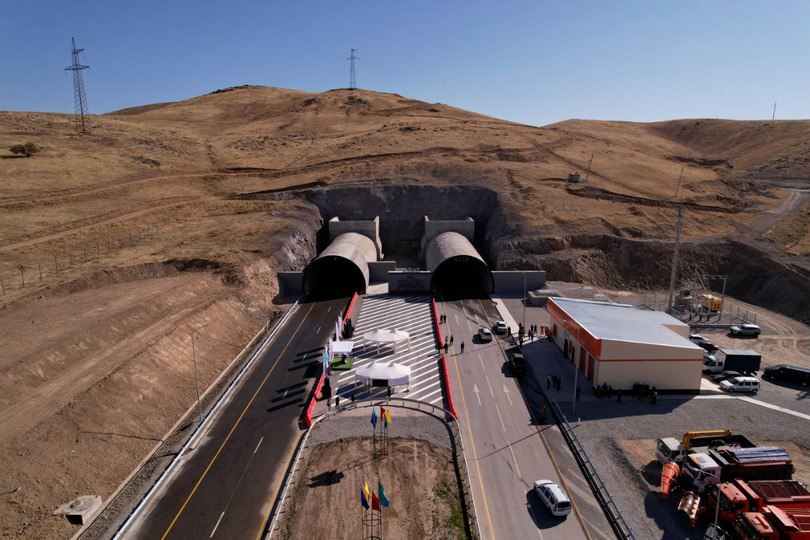
On September 12, a new tunnel was opened at the Shakpak Baba pass in Kazakhstan’s southern Turkestan region.

As the Kazakh Ministry of Transport reported, it is the longest automobile tunnel in Kazakhstan. The two-lane tunnel is 840 meters long, 11 meters wide, and 8 meters high. Control centers on both sides of the tunnel monitor lighting, ventilation, and traffic lights. The tunnel’s opening will facilitate traveling and cargo transportation during winter.

At the tunnel’s opening ceremony, Kazakhstan’s Deputy Minister of Transport Satzhan Ablaliyev stated: “The opening of this tunnel is an important event for Kazakhstan’s transport infrastructure. It will not only improve the region’s year-round transport accessibility but will also significantly increase traffic safety in this difficult section. The tunnel will prevent drivers from being trapped in the snow on the Shakpak Baba pass in winter. In addition, the main traffic flow will now be redirected to bypass the village of Shakpak Baba, increasing safety in the village.”

The tunnel is part of the Kazakh section of the international road transport corridor Western Europe-Western China. With a total length of 8,445 km, the corridor runs 2,233 km through Russia, 2,787 km through Kazakhstan, and 3,425 km through China.

In July, Kazakh Minister of Transport Marat Karabayev announced that in 2024, Kazakhstan planned to repair and construct 12,000 kilometers of road.

Swedish Company to Help Turkmenistan Establish Fast Payment System

The Swedish IT company “CMA,” specializing in software solutions for financial markets, has signed an exclusive agreement with Turkmen company “Abraýly Işler”, at the International Conference “HI-TECH Turkmenistan 2024.”

Noting the value of cooperation in creating a national system of fast payments, CMA Regional Director Maxim Nescheret stated, “We have already implemented similar projects in more than 50 countries, and we hope to share our experience with Turkmenistan in creating this important system.”

CMA, founded in 1983, currently provides over 37 central banks and many commercial banks worldwide with solutions for instant payment systems, central depositories, and automated clearing houses. Built on CMA’s advanced technology platform for high performance, scalability, and security, the service is customized to meet each client’s needs.

In addition to the fast payment system, CMA is engaged in discussion with Turkmenistan’s stock market regarding the possibility of creating basic services, including a central depository and settlement center, to help attract external investments and expand cooperation with foreign investors.

Although Turkmenistan is actively modernizing its banking sector and digital payments, including the introduction of a contactless payment system and mobile applications to facilitate transactions, challenges remain.

One of the main issues is the need for infrastructure to support fast and contactless payments. Although local banks such as Halkbank have introduced mobile apps and terminals for contactless transactions, their usage remains limited. Moreover, people often lose money due to bank failures and technical problems.

Kyrgyzstan Signs Agreement with Leading Ratings Agencies

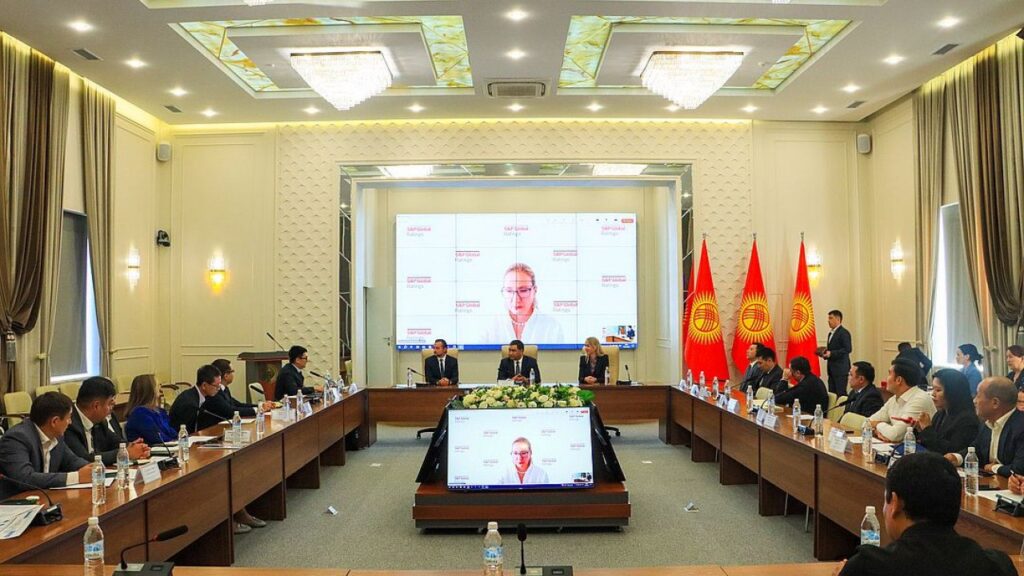
The Kyrgyz Ministry of Economy and Commerce has signed an agreement with the ratings agencies S&P (Standard and Poor’s) and Fitch.

In a statement, the ministry said: “To build the republic’s potential in the international arena and to enter international markets, it is necessary to cooperate with the three big international rating agencies: Moody’s, S&P, and Fitch.”

This week, Minister of Economy Daniyar Amangeldiev met with representatives from S&P and Fitch and Oppenheimer Europe Ltd’s investment bank. Oppenheimer Europe Ltd. will act as a consultant for work with the rating agencies. The parties discussed the prospects of strengthening cooperation and joint work in assessing credit risks and Kyrgyzstan’s investment attractiveness.

“The parties expressed readiness to work on actively assigning and improving long-term rating. This will create prerequisites for strengthening the confidence of partners and investors”, the agencies commented.

Rating agency representatives informed Kyrgyz officials about the need to assign a credit rating and the stages of entering international capital markets.

In 2015, the Ministry of Economy of Kyrgyzstan signed an agreement with rating agencies Moody’s and Standard and Poor’s, giving the country an international credit rating for the first time.

In 2016, the Kyrgyz authorities rejected the services of Standard and Poor’s, for unnamed reasons.

In May 2024, Moody’s raised Kyrgyzstan’s credit rating from negative to stable. Contrary to the agency’s forecasts, Kyrgyzstan’s economy and budget indicators have been virtually unaffected by Western sanctions imposed on Russia, the country’s largest trading partner.

Central Asia Seeks Increase in Trade with China

On September 12, the Central Asia-Jiangsu Trade Center, a multifunctional platform showcasing exports from Kazakhstan, Uzbekistan, Tajikistan, and Turkmenistan, opened in Nanjing, the main city of Jiangsu Province in eastern China.

According to the Kazakh Ministry of Trade and Integration, the operation of the Center in Jiangsu Province, known for its developed infrastructure, will facilitate access to the huge Chinese market for all five Central Asian countries.

Plans are now in place to launch a similar multifunctional center in Kazakhstan’s capital, Astana, to showcase Chinese and Kazakh goods.

Official statistics show continued growth of trade turnover between Kazakhstan and China. During the first seven months of this year, bilateral trade increased by 2.8% compared to the same period in 2023,  and amounted to $16.8 billion. Between January and July 2024, trade between Kazakhstan and Jiangsu Province grew by over $1 billion, from $723.3 million to $1.758 billion.

As reported by  Kazakh Minister of Trade Arman Shakkaliyev, Jiangsu Province currently imports products, mainly from the industrial and agricultural sectors, worth more than $266 billion annually.

Kara-Suu Crossing Reopens on Kyrgyz-Uzbek Border

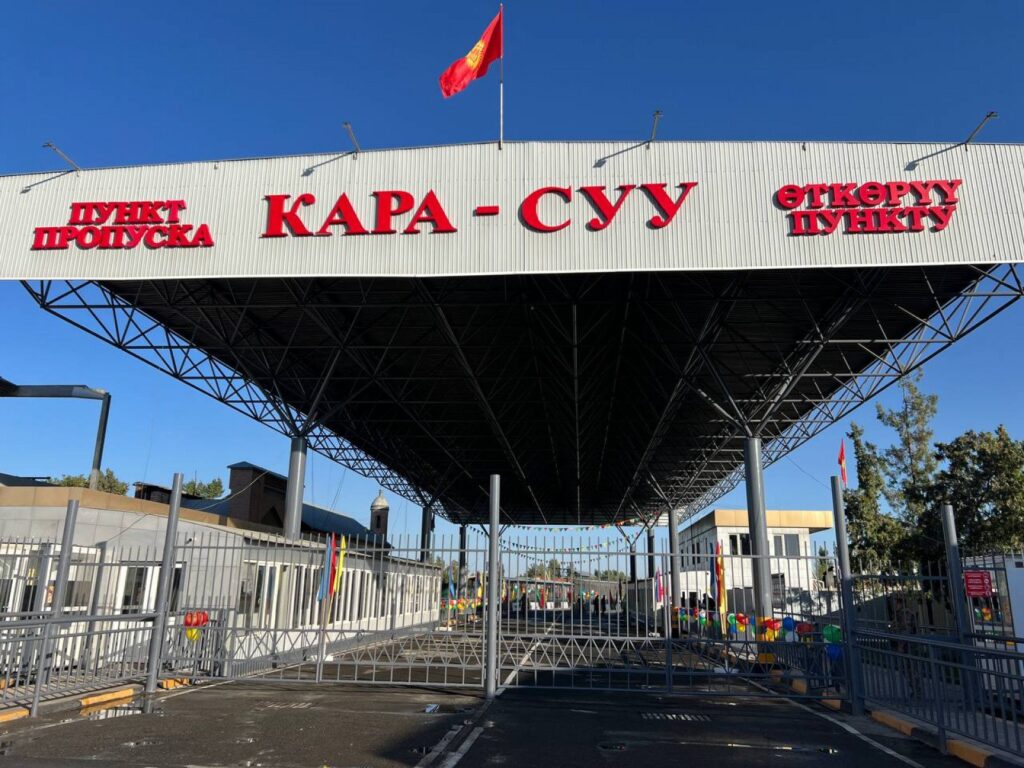
On September 12, the Kara-Suu checkpoint was reopened at the border between Kyrgyzstan and Uzbekistan.

Located near the town of Kara-Suu in Kyrgyzstan’s southern Osh region, on the border with Uzbekistan’s Andijan region, the Kara-Suu crossing was closed 14 years ago. It has reopened amid the two neighboring states’ improved political and economic relations.

Speaking at the checkpoint’s opening ceremony, Bakyt Torobaev, the Deputy Chairman of Kyrgyzstan’s Cabinet of Ministers, emphasized that its reopening will be beneficial to citizens of both countries.

“Previously, many Kyrgyz and Uzbek citizens had to stand in lines at the Dostuk checkpoint to cross the border. The opening of Kara-Suu will solve the problem of queues when crossing the border. The opening of this checkpoint is an important step towards strengthening economic, social, and cultural ties between our countries and increasing tourist flows,” Torobaev said.

On the same day, the renovated Ken-Sai and Uch-Kurgan border checkpoints were opened between the Jalal-Abad region in Kyrgyzstan and the Namangan region of Uzbekistan.

According to official statistics, more than 14 million people crossed the Kyrgyz-Uzbek border in 2023, and in the first eight months of 2024, this figure reached 11 million, 1.5 million more than in the same period last year.

In 2023, trade between Kyrgyzstan and Uzbekistan amounted to $693.6 million. In the first seven months of 2024, it reached $428 million, a 6.7% increase compared to the same period in 2023.

During a state visit to Uzbekistan back in July, Kyrgyzstan’s President Sadyr Japarov and Uzbek President Shavkat Mirziyoyev focused on measures to increase bilateral trade to $2 billion in the coming years and launch a “green-light corridor” for the transportation of agricultural produce between the two countries.