• KGS/USD = 0.01144 0%
  • KZT/USD = 0.00213 0%
  • TJS/USD = 0.10607 0.57%
  • UZS/USD = 0.00008 0%
  • TMT/USD = 0.28530 0%
  • KGS/USD = 0.01144 0%
  • KZT/USD = 0.00213 0%
  • TJS/USD = 0.10607 0.57%
  • UZS/USD = 0.00008 0%
  • TMT/USD = 0.28530 0%
  • KGS/USD = 0.01144 0%
  • KZT/USD = 0.00213 0%
  • TJS/USD = 0.10607 0.57%
  • UZS/USD = 0.00008 0%
  • TMT/USD = 0.28530 0%
  • KGS/USD = 0.01144 0%
  • KZT/USD = 0.00213 0%
  • TJS/USD = 0.10607 0.57%
  • UZS/USD = 0.00008 0%
  • TMT/USD = 0.28530 0%
  • KGS/USD = 0.01144 0%
  • KZT/USD = 0.00213 0%
  • TJS/USD = 0.10607 0.57%
  • UZS/USD = 0.00008 0%
  • TMT/USD = 0.28530 0%
  • KGS/USD = 0.01144 0%
  • KZT/USD = 0.00213 0%
  • TJS/USD = 0.10607 0.57%
  • UZS/USD = 0.00008 0%
  • TMT/USD = 0.28530 0%
  • KGS/USD = 0.01144 0%
  • KZT/USD = 0.00213 0%
  • TJS/USD = 0.10607 0.57%
  • UZS/USD = 0.00008 0%
  • TMT/USD = 0.28530 0%
  • KGS/USD = 0.01144 0%
  • KZT/USD = 0.00213 0%
  • TJS/USD = 0.10607 0.57%
  • UZS/USD = 0.00008 0%
  • TMT/USD = 0.28530 0%

Kazakhstan’s Reservoirs Prepared for Spring Flooding

Kazakhstan’s authorities have announced that the country’s water management infrastructure is prepared for the spring flood period. According to the Ministry of Water Resources and Irrigation, the total available storage capacity in the country’s large reservoirs exceeds the projected volume of snowmelt inflows, with the highest water levels currently recorded in the eastern regions.

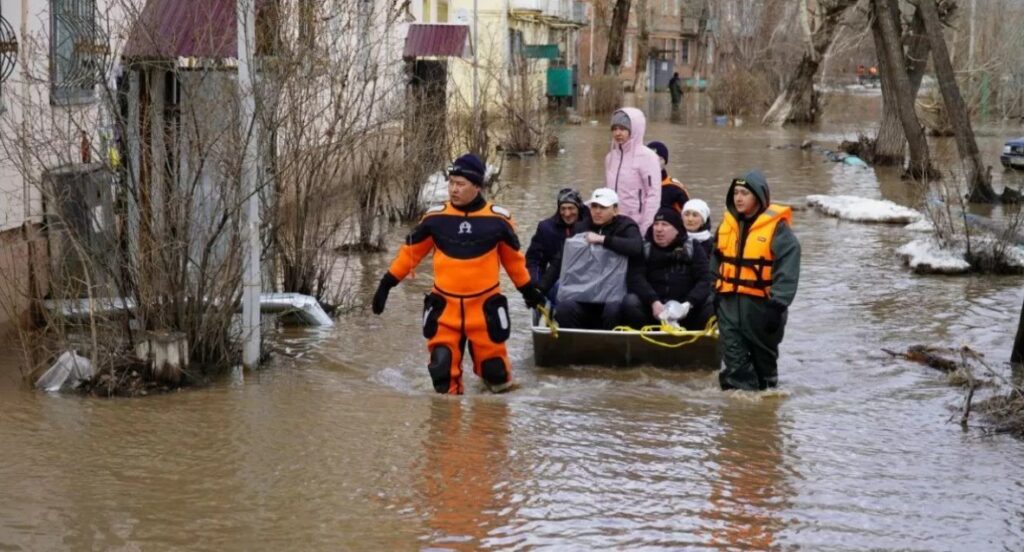
Flood preparedness has remained a priority for the government since 2024, when Kazakhstan experienced its most severe spring flooding in 80 years. The disaster affected dozens of settlements and forced the evacuation of more than 120,000 people, drawing sharp criticism of local authorities. In response, the central government intensified coordination efforts and preventive measures.

As of February, the ministry reported that the total available storage capacity in large reservoirs exceeds 14.3 billion cubic meters. Projected spring inflows are estimated at between 9.1 billion and 13.9 billion cubic meters.

The ministry also announced inspections of hydraulic infrastructure and ongoing repair work at 39 facilities. Major repairs have been completed at the Charske Reservoir in the Abai region, the Akzhar Reservoir in Shymkent, the Sholak Dam in the Aktobe region, and the reconstructed dam in the village of Stepnoye in the Kostanay region.

In addition, riverbed preparation measures are underway. Under the 2025-2027 Roadmap for River Rehabilitation, nearly 167 kilometers of riverbeds in western, central, and northern regions have already been cleaned and deepened. In 2026, similar work is planned across six additional regions, covering approximately 193 kilometers.

Kazakhstan has also strengthened coordination with neighboring countries. In 2025, a joint working group was established with Russia to address flooding and elevated water levels, including along the transboundary Ural River. The final forecast for water levels in the basin is expected in early March.

According to Kazakh officials, the Russian side has stated that water discharges from the Iriklinskoye Reservoir during the flood period will not exceed 200 cubic meters per second. An emergency notification and monitoring system for transboundary water flows along the Irtysh River is also in operation with China, including regular exercises and communication checks.

The Times of Central Asia previously reported that in 2025 Kazakhstan began releasing water from key reservoirs as early as January to increase available storage capacity ahead of the spring flood season.

Uzbekistan and United States to Establish Investment Platform

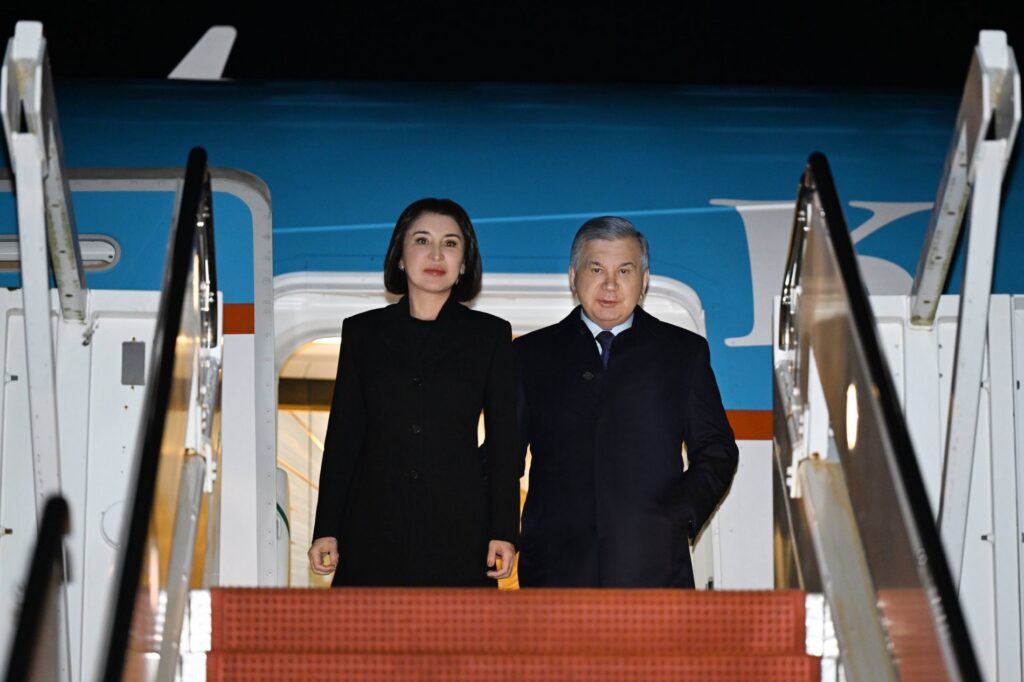
Shavkat Mirziyoyev has arrived in Washington with his spouse on a working visit that includes participation in the first summit of the Board of Peace and a series of business engagements aimed at strengthening bilateral economic ties. According to the presidential press service, the visit is focused on expanding trade, investment, and financial cooperation with U.S. partners.

As part of his program in Washington, Mirziyoyev met with John Jovanovic, President and Chairman of the Export-Import Bank of the United States, and Ben Black, Chief Executive Officer of the U.S. International Development Finance Corporation. The discussions centered on expanding financial support for priority industrial and infrastructure projects in Uzbekistan.

Officials noted that negotiations held last year with U.S. President Donald Trump gave new impetus to trade and investment cooperation. In particular, the two sides reviewed progress in supporting the activities of the bilateral Business Council and advancing plans to launch an Investment Platform intended to promote major projects on a systematic basis.

Cooperation with the Export-Import Bank is expected to include increased financing for large-scale industrial and infrastructure initiatives, as well as assistance with the supply of high-technology equipment. During talks with the Development Finance Corporation, emphasis was placed on strengthening investment mechanisms and facilitating the corporation’s participation in national and regional projects, including the development of Uzbekistan’s financial market and energy sector.

At the conclusion of the meetings, the parties exchanged an Agreement on the Establishment of an Investment Platform between Uzbekistan and the United States in the presence of the Uzbek president.

The current visit builds on steps taken last November, when Uzbekistan announced the creation of the Uzbekistan-U.S. Business and Investment Council. The body was formalized by presidential decree following Mirziyoyev’s official visit to Washington within the C5+1 framework. The council is jointly chaired by senior representatives of both countries and is designed to serve as an institutional mechanism for deepening commercial cooperation.

During his Washington meetings, Mirziyoyev also invited the American side to participate in the upcoming Tashkent International Investment Forum, underscoring continued efforts to attract U.S. business engagement in Uzbekistan’s economic reforms.

Uzbekistan Strengthens Protection of Argali Sheep and Other Rare Species

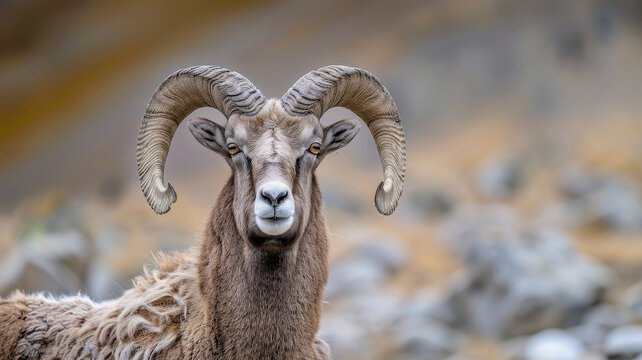
Uzbekistan is intensifying conservation efforts in its protected areas, with new data indicating a stable population of its endangered wild sheep, the Kyzylkum argali, in the Nurata State Nature Reserve.

According to the National Committee for Ecology and Climate Change, the reserve is currently home to approximately 1,700-1,800 argali, also known as Severtsov’s wild sheep. Monitoring data collected in recent years show that the population has remained stable, highlighting the effectiveness of ongoing conservation and protection measures.

The Kyzylkum argali is classified as an endangered species. It is listed in the national Red Book, included in the International Union for Conservation of Nature Red List of Threatened Species, and protected under Appendix II of the Convention on International Trade in Endangered Species of Wild Fauna and Flora, which regulates international trade in vulnerable species. As a result, systematic monitoring of the population remains a priority for environmental authorities.

Established in 1973, the Nurata State Nature Reserve is located in the Farish district of the Jizzakh region and plays a key role in preserving biodiversity in the Nurata mountain range. A total of 247 animal species have been recorded in the reserve, 31 of which are included in Uzbekistan’s Red Book. Specialists note that the stable argali population is closely linked to broader ecosystem protection measures, strengthened anti-poaching enforcement, and continuous scientific monitoring.

Further progress is expected under the national development strategy “Uzbekistan – 2030,” which prioritizes environmental security, expansion of specially protected natural areas, and long-term conservation of rare plant and animal species.

Officials state that protection measures for Red Book species will continue to be reinforced, with the aim of sustaining positive trends observed in Uzbekistan’s reserves, including the Nurata reserve, over the long term.

The stable argali population in Nurata is increasingly cited by environmental authorities as an example of how consistent policy implementation and institutional oversight can contribute to preserving the country’s natural heritage.

Gurbanguly Berdymuhamedov’s Unannounced Visit to Florida Draws Attention

From February 16 to 18, Gurbanguly Berdymuhamedov, Turkmenistan’s former president and current Chairman of the Halk Maslahaty, Turkmenistan’s highest representative body, visited the U.S. state of Florida.

Turkmen state media did not disclose details of the visit’s program, limiting coverage to a brief report on the trip.

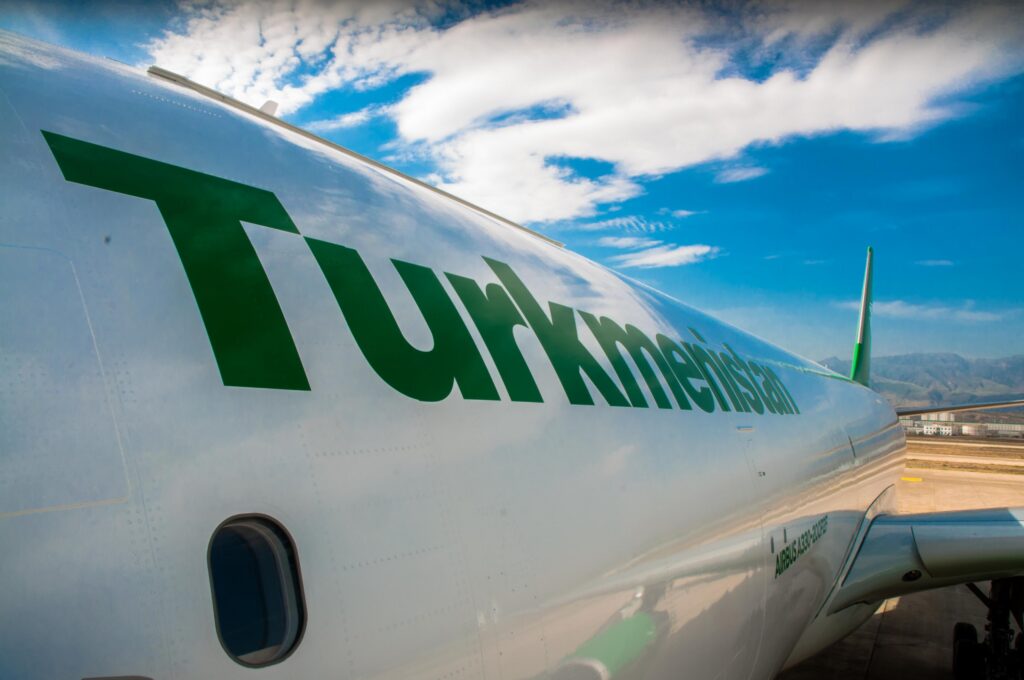
Berdymuhamedov arrived at Fort Lauderdale-Hollywood International Airport aboard a government Boeing 777 (tail number EZ-A780). Local journalists and aviation observers reported possible damage to the aircraft’s horizontal stabilizer. The green-and-white liveried airliner remained parked at the airport for several days.

Aaron Rosen, president of the World Affairs Council of Miami, noted that the visit coincided with renewed U.S. interest in Central Asia. According to Rosen, the region is strategically significant due to its energy resources, geopolitical location, and security considerations. He also referred to recent statements by Turkmenistan’s Foreign Ministry emphasizing the importance of dialogue with Washington to develop constructive relations.

U.S. media reported that Berdymuhamedov’s trip overlapped with President Donald Trump’s weekend stay at his Mar-a-Lago residence, located approximately a 45-minute drive from Fort Lauderdale-Hollywood International Airport.

Local 10 News footage showed heightened security measures and a VIP passenger boarding the Boeing 777 prior to departure. The aircraft left Florida several days later. Separately, a government Boeing 737 (tail number EZ-A700) arrived from Ashgabat, refueling in Glasgow before continuing to Florida.

After a brief stop in Florida, the Boeing 737 returned to Turkmenistan, making an additional refueling stop in Munich.

Turkmen authorities have not officially disclosed the purpose of Berdymuhamedov’s visit.  Turkmenistan’s current president is Serdar Berdymuhamedov, Gurbanguly Berdymuhamedov’s son.

Kazakhstan Launches High-Resolution Weather Forecast Powered by Supercomputer

Kazakhstan has introduced a new high-resolution digital weather forecasting system powered by the country’s most powerful supercomputer, marking a significant step toward strengthening national hydrometeorological security.

The National Hydrometeorological Service, Kazhydromet, has deployed the Weather Research and Forecasting (WRF) model across the entire territory of the country. The system provides forecasts with a spatial resolution of 2 kilometers, significantly enhancing the accuracy and detail of weather predictions.

All computations are carried out on Central Asia’s most powerful supercomputer at the Farabi Supercomputer Center, located at Al-Farabi Kazakh National University in Almaty.

According to Amirkhan Temirbayev, Director of the Farabi Supercomputer Center, the new model strengthens Kazakhstan’s ability to anticipate hazardous natural phenomena and respond more effectively to climate-related risks.

“The new system improves early warnings of dangerous weather events, particularly in the mountainous regions of Almaty and southeastern Kazakhstan and enhances the country’s hydrometeorological security. Accurately modeling atmospheric processes requires millions of calculations that conventional servers cannot handle. A supercomputer is no longer just a scientific instrument, it is infrastructure of national importance,” Temirbayev said.

He added that the initiative demonstrates how university-based high-performance computing resources are increasingly being used to address applied government needs. While the supercomputer is currently dedicated to weather forecasting, potential future applications include flood and mudflow modeling, climate analysis, air quality monitoring, and digital urban simulations.

Kazhydromet plans to publish outputs from the new WRF model on its official website, where users will have access to interactive weather maps and detailed forecasts for all regions of Kazakhstan.

Uzbekistan Discusses Local Production of Hungarian Magnus Aircraft

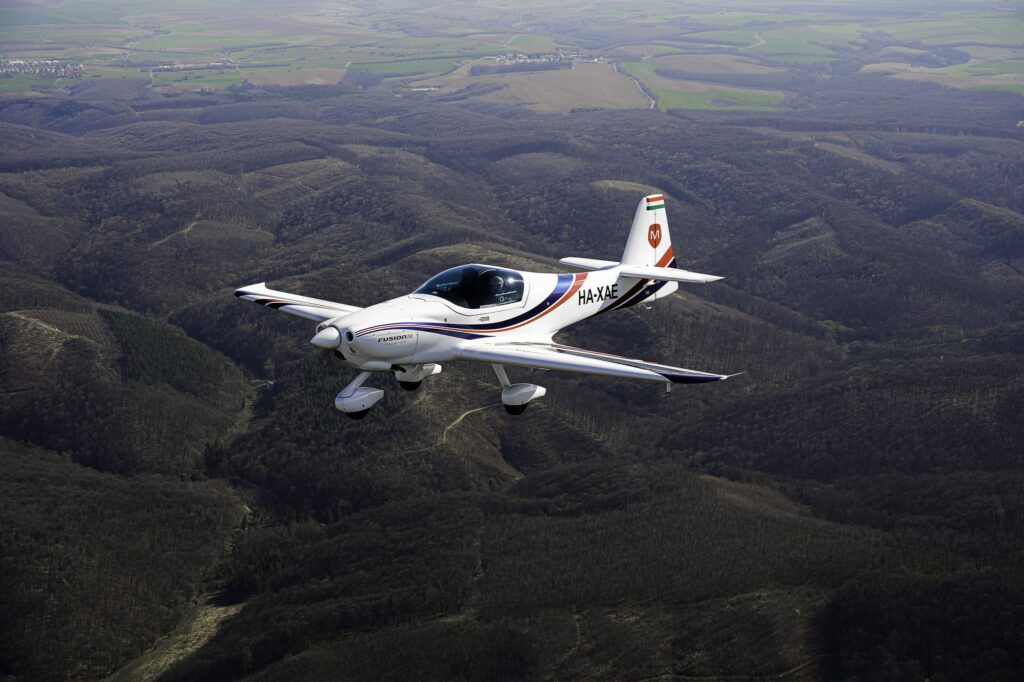
Uzbekistan is continuing efforts to expand its aviation sector, as Deputy Minister of Transport Jasurbek Choriyev held talks with Laszlo Borosh, Chief Executive Officer of the Hungarian company Magnus Aircraft Zrt., on the potential production of the Magnus Fusion 212 aircraft in the country.

According to the Ministry of Transport, the meeting focused on prospects for assembling and manufacturing the lightweight composite aircraft in Uzbekistan. The Magnus Fusion 212 is produced by the Hungary-based firm, which specializes in the design, production, and sale of innovative aircraft made from composite materials.

Magnus Aircraft is headquartered in Pogány, Hungary, near Pécs-Pogány International Airport, where it operates a facility covering approximately 8,000 square meters. The company is active in several international markets, including the United States, China, Kenya, Nigeria, Serbia, and countries in the Middle East.

Earlier this month, Brazilian aerospace manufacturer Embraer Defense & Security announced at the Singapore Airshow that Uzbekistan is the previously undisclosed buyer of its C-390 Millennium military transport aircraft. In a statement released on February 3, the company identified Uzbekistan as the first Central Asian country to acquire and operate the aircraft.

Embraer stated that the Uzbek Air Force will use the C-390 primarily for transport and humanitarian missions, strengthening national airlift and emergency response capabilities. “We officially welcome the Republic of Uzbekistan to the group of C-390 operators,” said Bosco da Costa Junior, President and CEO of Embraer Defense & Security.