• KGS/USD = 0.01144 0%
  • KZT/USD = 0.00192 -0%
  • TJS/USD = 0.10849 0.37%
  • UZS/USD = 0.00008 0%
  • TMT/USD = 0.28490 0%
  • KGS/USD = 0.01144 0%
  • KZT/USD = 0.00192 -0%
  • TJS/USD = 0.10849 0.37%
  • UZS/USD = 0.00008 0%
  • TMT/USD = 0.28490 0%
  • KGS/USD = 0.01144 0%
  • KZT/USD = 0.00192 -0%
  • TJS/USD = 0.10849 0.37%
  • UZS/USD = 0.00008 0%
  • TMT/USD = 0.28490 0%
  • KGS/USD = 0.01144 0%
  • KZT/USD = 0.00192 -0%
  • TJS/USD = 0.10849 0.37%
  • UZS/USD = 0.00008 0%
  • TMT/USD = 0.28490 0%
  • KGS/USD = 0.01144 0%
  • KZT/USD = 0.00192 -0%
  • TJS/USD = 0.10849 0.37%
  • UZS/USD = 0.00008 0%
  • TMT/USD = 0.28490 0%
  • KGS/USD = 0.01144 0%
  • KZT/USD = 0.00192 -0%
  • TJS/USD = 0.10849 0.37%
  • UZS/USD = 0.00008 0%
  • TMT/USD = 0.28490 0%
  • KGS/USD = 0.01144 0%
  • KZT/USD = 0.00192 -0%
  • TJS/USD = 0.10849 0.37%
  • UZS/USD = 0.00008 0%
  • TMT/USD = 0.28490 0%
  • KGS/USD = 0.01144 0%
  • KZT/USD = 0.00192 -0%
  • TJS/USD = 0.10849 0.37%
  • UZS/USD = 0.00008 0%
  • TMT/USD = 0.28490 0%
11 December 2025

Migrant Laborers in Russia Deprived of Free Medical Care

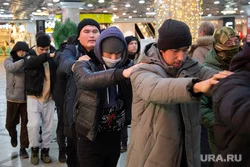
Citizens of Tajikistan and Uzbekistan working in Russia will not be able to count on free medical care until 2026 within the framework of compulsory medical insurance (CMI), according to a report by the Ministry of Health of Russia.

Based on agreements with the republics, citizens can be employed only if they acquire voluntary medical insurance (VMI) policies or with the employer’s guarantee to pay for medical care at his or her own expense. Migrants can only receive free emergency medical care.

The Crocus City Hall terrorist attack prompted the Russian Interior Ministry to take a number of restrictive measures relating to migrants. Among the planned changes are a reduction in the term of temporary stays by foreigners to 90 days per calendar year, introduction of mandatory biometric identification at entry, and the creation of digital profiles for foreigners.

There are also more radical proposals. For example, Sergei Mironov, chairman of the Just Russia – For Truth political party, said that he believes it’s necessary to introduce a visa regime between Russia and Central Asian countries.

Labor migrants remain one of the most vulnerable parts of the population, and Uzbekistan has in recent years taken a number of measures to protect their interests both inside and outside the country. A recent decree by President Shavkat Mirziyoyev provides for reimbursement of expenses for taking qualification exams in foreign languages and professional trades of up to $80, for applying for a work visa of up to $134, and for buying travel tickets of up to $53. In addition, migrants are provided with subsidies for insurance for the migrant laborer and his or her family members, as well as guaranteed free medical examinations for them. Workers abroad whose rights may have been violated can count on free legal counsel. They can also contact 24-hour migrant support call centers in case of difficult situations.

The Ministry of Employment of Uzbekistan is currently negotiating the opening of representative offices or centers in Great Britain (London), Germany (Berlin), Turkey (Istanbul) and Saudi Arabia (Riyadh) to provide legal assistance to migrant workers. The state employs workers returning from labor migration or provides subsidies to start their own businesses.
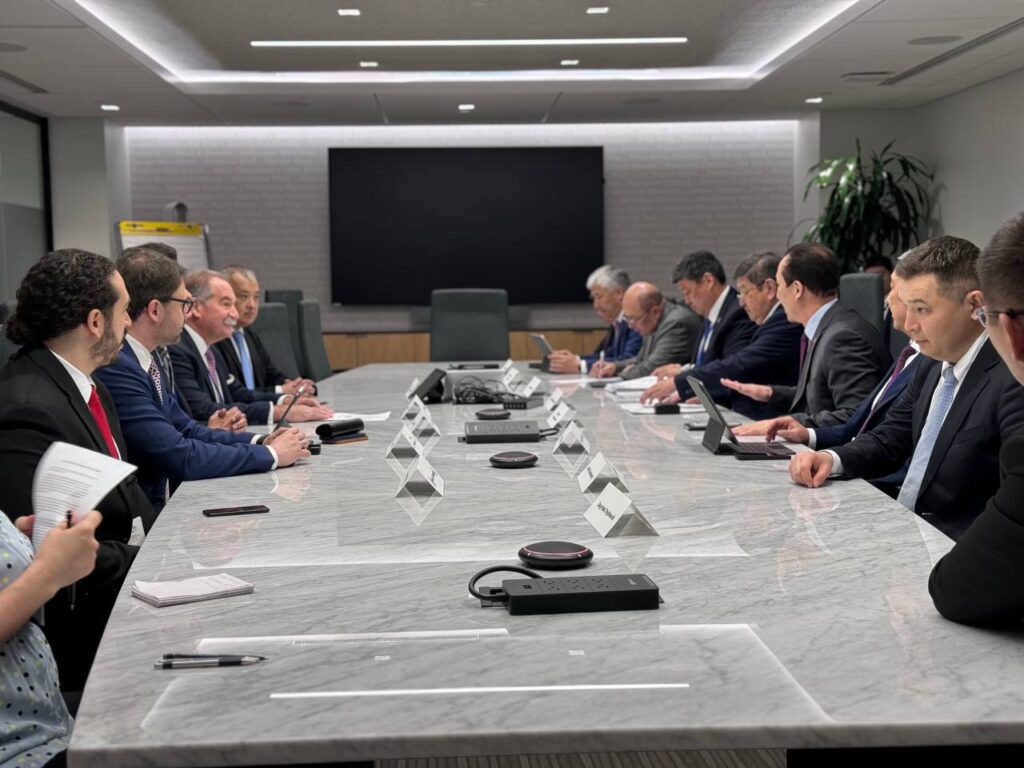

Kyrgyz PM Japarov In U.S. For Talks With Energy Investors

Kyrgyzstan’s prime minister Akylbek Japarov is in the United States this week, and will meet with potential investors as Kyrgyzstan looks to grow its energy sector.

Japarov will meet with the heads of the World Bank, International Monetary Fund, the U.S. Agency for International Development (USAID), the U.S.-Kyrgyz Chamber of Commerce, Asian Infrastructure Investment Bank, Asian Development Bank and the European Investment Bank. He will also meet with representatives of leading tech corporations, according to the Kyrgyz government’s press service.

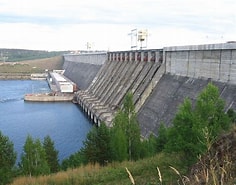
Kyrgyzstan’s largest energy project is the construction of a hydroelectric power plant on the Naryn River, for which the World Bank has allocated a soft loan of $5 million for a feasibility study. Kyrgyz authorities are also negotiating a $500 million loan to construct the hydropower plant. In total, according to current estimates, the project will cost about $5 billion.

The Times of Central Asia has previously reported that the Kyrgyz Chamber of Commerce and Industry intends to open representative offices in the U.S.

State Mortgages in Kyrgyzstan Can Now Be Obtained Without Credit History

On April 15, a law introducing a mechanism called “Shared Housing Construction” within the framework of the program, “My House 2021-2026” came into force in Kyrgyzstan. The program, as defined by the State Mortgage Company (SMC) of Kyrgyzstan, is available to all citizens.

According to authorities, Kyrgyz citizens should be able to participate in collective housing developments without risks. According to the new program, citizens can apply for state mortgages without possessing a bank credit history in the country. Furthermore, those wishing to take out a mortgage will not have their incomes checked and will not have to submit to a work history.

“Until today, one of the problems of housing provision [for] citizens in the republic was the lack of a state mechanism of equity financing of housing construction. In this regard, President Sadyr Japarov on January 30 this year signed a decree ‘On measures to further improve the mechanisms of housing provision and construction of housing for citizens of the Kyrgyz Republic in the field of state housing policy'” – reported the SMC’s website.

Loans under the program will be issued under certain conditions: the down-payment should be at least 50% of the cost of the housing, the mortgage can be taken for up to 15 years at 8% per annum. Residential mortgage issuance by commercial banks in Kyrgyzstan today operates on more stringent conditions. For example, the interest rate for borrowers starts at 20% with a down-payment of at least one-third of the value of the property.

Earlier, Kyrgyz President Sadyr Japarov instructed the Cabinet of Ministers to determine the list of state-owned land plots to be transferred to the SMC.

Taliban Returns 120,000 Liters of Uzbek Oil Products Over Low-Quality

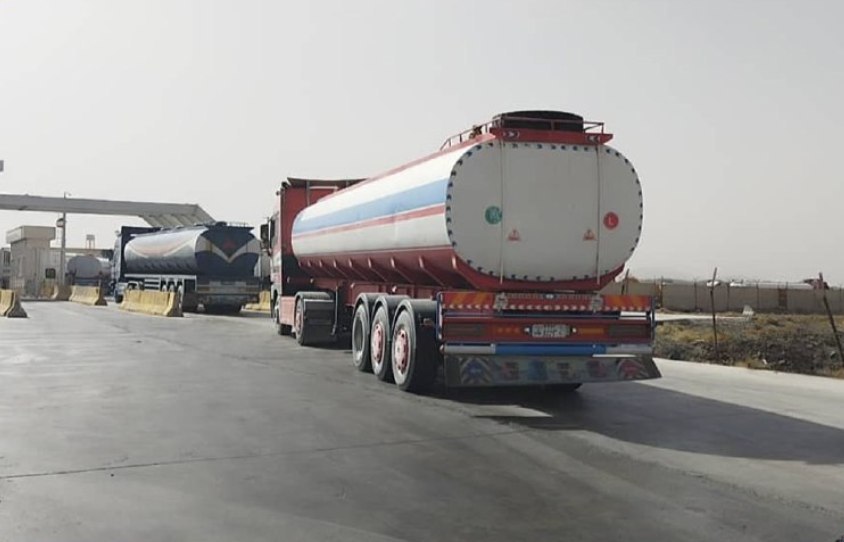
The National Department of Standards of Afghanistan has reported that it returned two tanker trucks worth of oil products with a volume of 120,000 liters from the port of Hairatan back to Uzbekistan. According to Radio Television of Afghanistan (RTA) English, the reason for this was the low quality of the imported refined products.

Furthermore, the National Administration of Standards sent back another 19 oil tankers from Sheikh Abu Nasr Farahi Port to Iran over their low-quality. The standards board once again asked Afghan businessmen to prevent the import of low-quality goods into the country.

In January of this year, it was reported that the Taliban returned more than 62 tons of low-quality oil to Uzbekistan through the Hairatan border point. In response to this, Uzbekneftgaz Chairman Bahadir Sidikov said the report was misinterpreted, and that the oil products returned by the Taliban was of high quality. Sidikov stated that the product was returned not because of its low quality, but because its standard isn’t available in Afghanistan.

“This new product was supposed to enter the Afghan market. Unfortunately, the first batch was sent back. But it’s a process. It will not be easy to enter every market. To prove the quality of this product, we sold 1,000 tons of the same diesel to Estonia last month. They received it as a “premium” and ordered 10,000 tons [more]. Currently, we are producing 10,000 tons of [oil] products. In addition, there are inter-governmental agreements,” commented Sidikov at that time.

Kyrgyzstan, Kazakhstan and Uzbekistan Consider Joint-Stock Company to Build Kambarata HPP-1

Kazakhstan’s Ministry of Energy has announced that the draft Agreement between the governments of Kyrgyzstan, Kazakhstan, and Uzbekistan on the joint implementation of the construction and operation of Kambarata hydroelectric power plant (HPP)-1 has been posted on Kazakhstan’s official Internet portal Open Legal Acts.

Available for public discussion, the agreement outlines the terms of cooperation between the parties in the proposed construction of Kambarata HPP-1 on the Naryn River in Kyrgyzstan.

To implement the project, the proposed joint-stock company will be financed with 34 percent of authorized capital belonging to Kyrgyzstan, 33 percent to Kazakhstan, and 33 percent to Uzbekistan.

The cost of construction is estimated between $5 billion and $6 billion and although the majority of funds will be drawn from the founders, further investment will be sought from loans and grants from international financial institutions and commercial banks.

According to the draft, at the end of the project implementation period, the shares and assets of Kambarata HPP-1 will become the sole property of the Kyrgyz side.

If realized, Kambarata HPP-1 will be the largest hydropower plant in Kyrgyzstan.

Open Society to Close its Foundation in Kyrgyzstan, Citing Law on Foreign-Funded NGOs

The Open Society Foundations said it will close its national foundation in Kyrgyzstan after the country’s parliament passed a new law that tightens control over non-governmental groups that receive foreign funding.

Open Society, which was founded by billionaire investor and philanthropist George Soros, said Monday that the law“imposes restrictive, broad, and ill-defined regulations” on internationally funded NGOs. The decision to pull out of Kyrgyzstan came two weeks after the country’s president, Sadyr Japarov, signed the law, saying more rigorous registration requirements and financial oversight would make non-governmental groups more accountable.

The dispute between the government of Kyrgyzstan and foreign-funded groups represent a wider struggle over the direction of the Central Asian country. Opponents of Japarov believe he is systematically rolling back relative freedoms inKyrgyzstan. The president says local NGOS are embezzling money from foreign donors, an allegation denied by civil society groups.

The Soros Foundation-Kyrgyzstan has spent more than $115 million on projects in education, public health, criminal justice, supplying water to rural communities and other areas since it opened in 1993, a year in which the Central Asian nation was mired in crisis after the fall of the Soviet Union, Open Society said.

Under the new law, foreign-funded NGOs must “report broadly defined ‘political’ activities to the authorities” and risk uncertain consequences, Open Society said in a statement. Its president, Binaifer Nowrojee, said “this repressive new law will see civil society operate in a climate of uncertainty and intimidation.”

The Open Society Foundations, which funds activities in more than 120 countries, says it aims to promote justice, human rights and democratic governance. It says it joins “policy debates on controversial issues that other funders might avoid” and the group has attracted criticism from conservative and authoritarian leaders in a number of countries.

The United Nations has expressed concern about Kyrgyzstan’s so-called “foreign representatives” law. Jeremy Laurence, spokesperson for the UN High Commissioner for Human Rights, said on April 8 that many affected NGOs could close to avoid possible arbitrary checks by the authorities or having to pay for annual audits, or might end up self-censoring if they continue operations.