• KGS/USD = 0.01144 0%
  • KZT/USD = 0.00196 -0%
  • TJS/USD = 0.10899 -0%
  • UZS/USD = 0.00008 -0%
  • TMT/USD = 0.28490 0%
  • KGS/USD = 0.01144 0%
  • KZT/USD = 0.00196 -0%
  • TJS/USD = 0.10899 -0%
  • UZS/USD = 0.00008 -0%
  • TMT/USD = 0.28490 0%
  • KGS/USD = 0.01144 0%
  • KZT/USD = 0.00196 -0%
  • TJS/USD = 0.10899 -0%
  • UZS/USD = 0.00008 -0%
  • TMT/USD = 0.28490 0%
  • KGS/USD = 0.01144 0%
  • KZT/USD = 0.00196 -0%
  • TJS/USD = 0.10899 -0%
  • UZS/USD = 0.00008 -0%
  • TMT/USD = 0.28490 0%
  • KGS/USD = 0.01144 0%
  • KZT/USD = 0.00196 -0%
  • TJS/USD = 0.10899 -0%
  • UZS/USD = 0.00008 -0%
  • TMT/USD = 0.28490 0%
  • KGS/USD = 0.01144 0%
  • KZT/USD = 0.00196 -0%
  • TJS/USD = 0.10899 -0%
  • UZS/USD = 0.00008 -0%
  • TMT/USD = 0.28490 0%
  • KGS/USD = 0.01144 0%
  • KZT/USD = 0.00196 -0%
  • TJS/USD = 0.10899 -0%
  • UZS/USD = 0.00008 -0%
  • TMT/USD = 0.28490 0%
  • KGS/USD = 0.01144 0%
  • KZT/USD = 0.00196 -0%
  • TJS/USD = 0.10899 -0%
  • UZS/USD = 0.00008 -0%
  • TMT/USD = 0.28490 0%
08 December 2025

“Your Life is Your Freedom” – Women Rally in Almaty

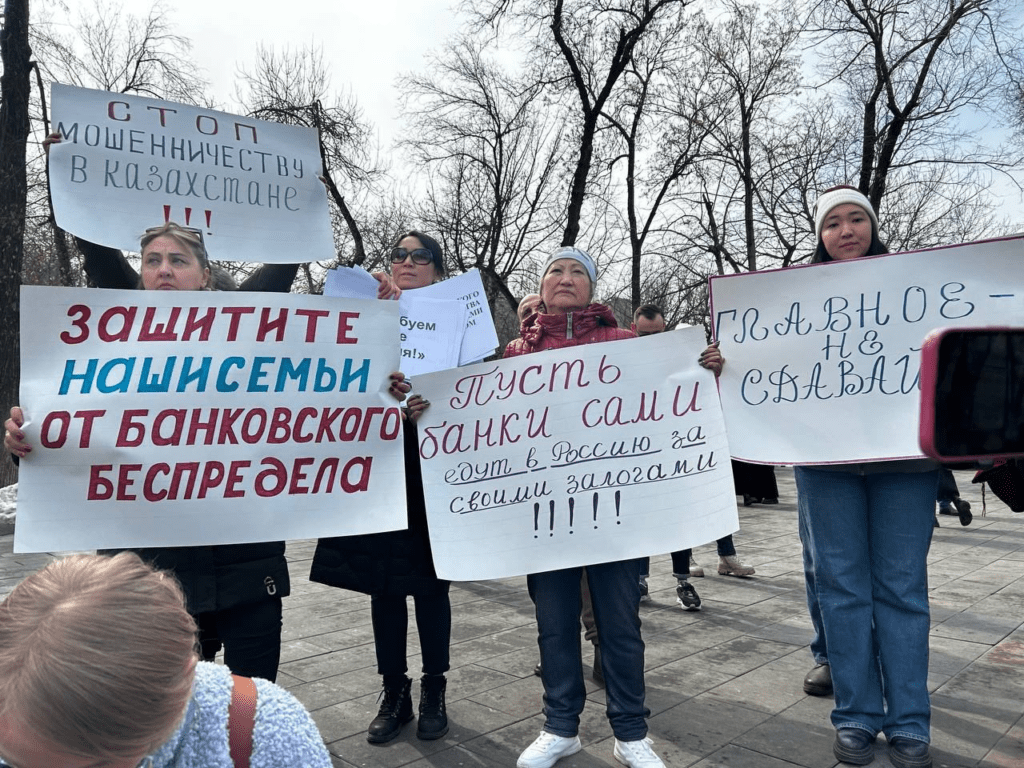
A rally in support of women’s rights was held in Almaty on March 7th. The event, which was approved by the city administration, was organized by Bibinur Sheralieva, an activist from the regional council for family and social protection under the Amanat Party. The gathering took place in Mahatma Gandhi Park, a place usually reserved for such events.

Sheraliyeva, the organizer of the rally, put forward demands to protect the rights of divorced women, proposing that alimony laws be amended to offer a fixed amount, regardless of the fathers’ income. She also advocated the introduction of mandatory marriage contracts to take into account the property interests of women and children during divorce proceedings.

In addition to the organizers, a woman took the stage to share her experience of facing domestic violence and told of the tragedy of losing her home due to systematic beatings by her father-in-law. Her story highlighted the problem of impunity for aggressors.

The rally also called for the repeal of the amendment on reconciliation of parties under the new law on domestic violence, as well as a legal ban on the practice of tokal (second wife) and polygamy.

The rally was not without controversy, however, with one attendee demanding a ban on “feminist and LGBT propaganda,” which drew disapproval from the majority of the crowd. Another organizer of the rally, Dilnar Insenova, declared her support for the need to “protect family values,” expressing doubts about the impact of European standards on society in Kazakhstan.

The rally briefly descended into absurdity when, instead of delivering her planned speech, Insenova began to dance to the song “Chyna” by the Kazakh artist, Irina Kairatovna, provoking laughter from those filming clips against a backdrop of portraits of domestic violence victims, their videos going viral on social media.

Most continued to draw attention to important issues, however; raising placards and chanting slogans such as “Your life is your freedom” and “We demand the protection of women’s rights,” and demonstrating their commitment to positive change in the area of women’s rights.
Kazakhstan Secures Foreign Investment in 40 Major Projects for 2024

Following a meeting on March 12th with the Board of Directors of Kazakh Invest, Kazakhstan’s Prime Minister Olzhas Bektenov announced that foreign investment had been secured for the launch of over 40 projects this year.

Kazakh Invest, a national company aimed to attract foreign investment in priority sectors of the economy, currently supports 200 projects. Worth $27.3 billion, the projects have created 68,800 jobs.

One of the most significant projects is the manufacture of medical equipment by the American company GE Healthcare in Astana. Products include ultrasound and CT machines for Kazakhstan’s hospitals as well as for export. The American company also plans to provide educational programs for staff in the Kazakh healthcare system.

Other forthcoming projects include the production of anticancer drugs by the Swiss company Roche in Almaty, and the manufacture of ceramic tiles, dry building mixes and construction adhesives by the Austrian company Lasselsberger in Astana. The latter’s new plant will create over 200 jobs and reduce the country’s dependence on imported products.

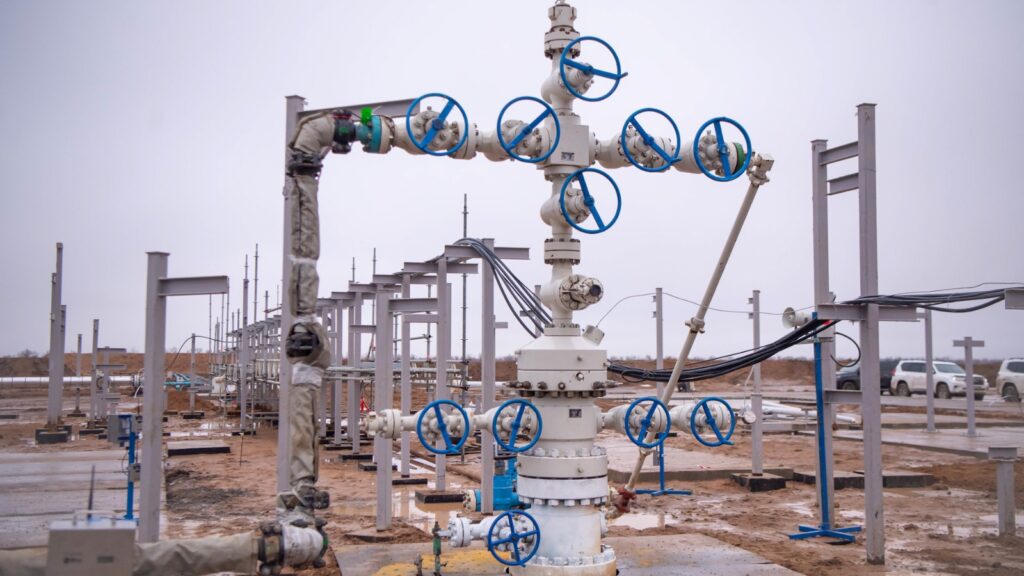
As instructed by the prime minister, Kazakh Invest is focused on attracting investment in projects with high added value; specifically, grain processing, the production of in-demand types of plastics, and the domestic production of oil and gas equipment.

Looking ahead, Bektenov stressed that to achieve the target set by the head of state to increase the economy to $450 billion by 2029, at least $150 billion of foreign investment must be attracted during the intervening period.

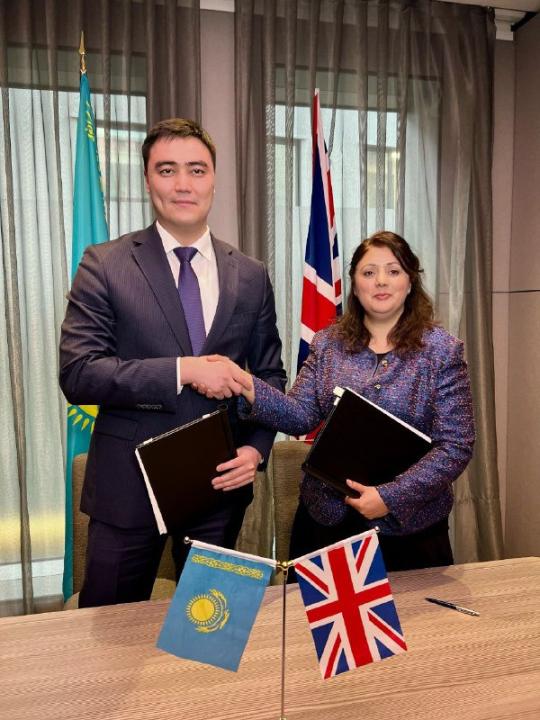
Kazakhstan and Great Britain Sign Strategic Partnership on Critical Minerals

A strategic partnership on critical minerals has been signed by Iran Sharkhan, Kazakhstan’s Deputy Minister of Industry and Construction, and Nusrat Ghani, UK’s Minister of State at the Department for Business and Trade, Minister of State for the Investment Security Unit, and Minister for Industry and Economic Security.

The document was signed in London at the Mineral Processing and Circular Economy Business Forum (March 11-15).

At his meeting with Nusrat Ghani, Mr Sharkhan discussed Kazakhstan’s principal aims, including the exchange of raw materials for technology and entry into the global value chain. He also encouraged British companies’ involvement in investment projects in Kazakhstan.

The forum included B2B meetings, where entrepreneurs from Kazakhstan and Great Britain discussed collaboration in the field of critical raw materials and specific project proposals. The Kazakh delegation also held meetings with UK mining and metallurgical companies: Techmet, Maritime House Ltd., Ionic Rare Earth, Mkango Resources Ltd., Haig Barrett Partners, and FSEE.

Female Entrepreneurs to Expand Mentoring – Great Strides for Uzbekistan

The Association of Business Coaches of Kazakhstan has launched the TalpynUp mentoring program for Central Asian women entrepreneurs. The project will be supported by the USAID Entrepreneurship and Business Environment Development Project at Imperial College, London.

The six-month mentoring program will begin on April 20th in Kazakhstan, Uzbekistan, and Kyrgyzstan. It will help Central Asian women improve their business skills, and is aimed at those who have a business that has been operating for one to three years. Also, young businesswomen under the age of 29 who are mothers of children with special developmental needs will be able to gain valuable knowledge completely free of charge. The intensive mentoring program is based on individual training, mentoring and practical sessions with business coaches and experts. It consists of six modules focusing on such areas as sales, taxes and finance, human resources, management, and more.

The organizers have emphasized the need for their program by explaining that, in the near future, artificial intelligence (AI) will replace many professions, especially those in which women are currently employed. Therefore, they need to develop and improve their skills and master new digital professions.

In total, 190 female entrepreneurs from Kazakhstan have already been trained under the TalpynUp program. Now 60 young women each from Kyrgyzstan and Uzbekistan, and 120 Kazakhstani women will have access to the program.

In 2022, the World Bank published comparative data on the earnings of men and women. Experts found that women around the world have, on average, only 77% of the legal rights that men have. However, according to the organization, Uzbekistan has made significant progress in ensuring equal rights for men and women. For example, the country has legislated equal pay regardless of gender, expanded the areas where women can work on an equal basis with men, and criminalized domestic violence.

Thanks to these reforms, Uzbekistan has become one of the five countries with the greatest progress in gender equality – along with Jordan, Malaysia, Sierra Leone and Togo – and took first place in Central Asia in the Women, Business and the Law ranking.

It’s worth noting that the number of women engaged in business in Uzbekistan has doubled over the past five years to 205,000. About 200,000 women have been trained in professions and business, and more than 400,000 women and girls have gained employment.

Iraq in Negotiation with Iran to Transfer Gas from Turkmenistan

Iraq Minister of Electricity Ziad Ali Fadel has announced ongoing negotiations regarding the transit of gas from Turkmenistan through Iran to Iraq and according to a report by Iran Oil Gas, Iraq may receive Turkmen gas as early as this summer if agreed by the partners concerned.

In November 2023, representatives of Turkmenistan and Iraq signed a protocol outlining the principal commercial terms of the agreement to enable the shipment of 9 billion cubic meters of Turkmen gas to Iraq through Iran within five years.

In January 2024 it was reported that Iraq had completed all the steps necessary to begin importing gas from Turkmenistan. The main reason for postponement of delivery as scheduled lies with the need for a comprehensive agreement to be reached with the transit country Iran.

With reference to the country’s gas debt with Iran, the Iraq Ministry of Energy stated, “The Ministry of Electric Energy has paid all gas payments to the Iranian side and deposited them in a special account in [an] Iraqi commercial bank. But the payment process has not been completed due to international sanctions. Now, based on the agreement between the two sides, Iranian gas is being replaced by Iraqi crude oil.”

Kazakhstan to Satisfy Italy’s Appetite for Horsemeat

The Kazakh Minister of Trade and Integration Arman Shakkaliev has announced plans by Kazakhstan and Italy to create a joint product brand ‘Made in Kazakhstan’.

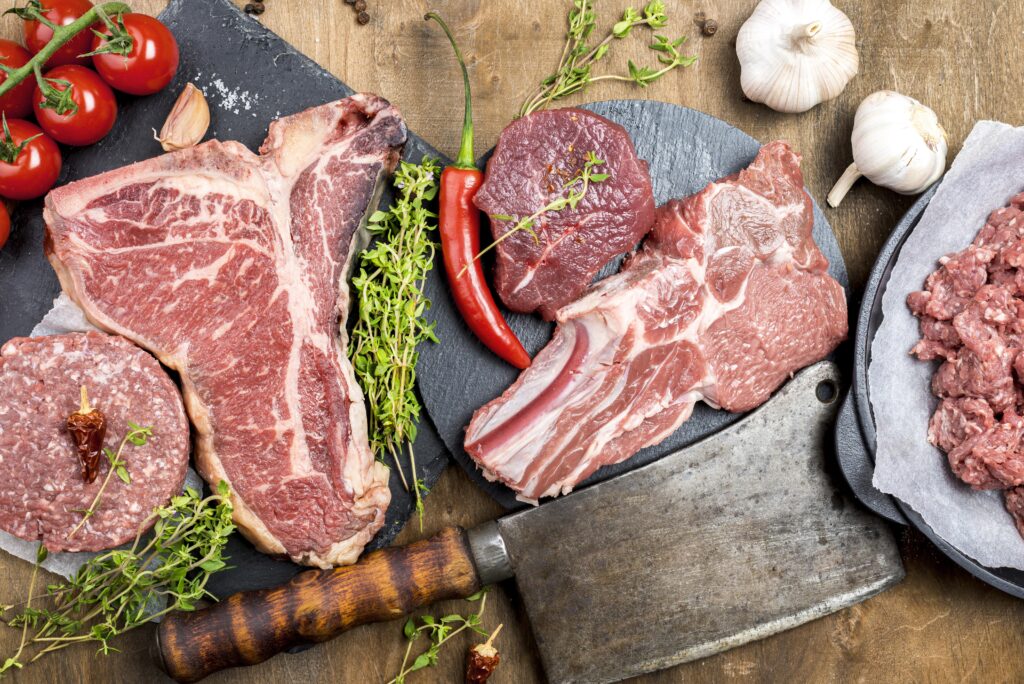
The venture aims to address Italy’s growing demand for horsemeat; a commodity currently imported from other countries and reportedly valued at over $140 million worth per year.

In addition to chilled horsemeat, the minister reported that ‘Made in Kazakhstan’ would also supply Italy with locally sourced caviar and honey.

The initiative will benefit both countries. For Italy, it represents a fresh source of high-quality meat for the country’s economically significant restaurant sector, and for Kazakhstan, open up a new market which by promoting agricultural development, will contribute to economical growth, especially in rural communities.

Kazakhstan is currently a major supplier of horsemeat to countries such as Mongolia, Argentina and Uruguay.