• KGS/USD = 0.01143 -0%
  • KZT/USD = 0.00192 -0%
  • TJS/USD = 0.10820 0.19%
  • UZS/USD = 0.00008 0%
  • TMT/USD = 0.28575 0%
  • KGS/USD = 0.01143 -0%
  • KZT/USD = 0.00192 -0%
  • TJS/USD = 0.10820 0.19%
  • UZS/USD = 0.00008 0%
  • TMT/USD = 0.28575 0%
  • KGS/USD = 0.01143 -0%
  • KZT/USD = 0.00192 -0%
  • TJS/USD = 0.10820 0.19%
  • UZS/USD = 0.00008 0%
  • TMT/USD = 0.28575 0%
  • KGS/USD = 0.01143 -0%
  • KZT/USD = 0.00192 -0%
  • TJS/USD = 0.10820 0.19%
  • UZS/USD = 0.00008 0%
  • TMT/USD = 0.28575 0%
  • KGS/USD = 0.01143 -0%
  • KZT/USD = 0.00192 -0%
  • TJS/USD = 0.10820 0.19%
  • UZS/USD = 0.00008 0%
  • TMT/USD = 0.28575 0%
  • KGS/USD = 0.01143 -0%
  • KZT/USD = 0.00192 -0%
  • TJS/USD = 0.10820 0.19%
  • UZS/USD = 0.00008 0%
  • TMT/USD = 0.28575 0%
  • KGS/USD = 0.01143 -0%
  • KZT/USD = 0.00192 -0%
  • TJS/USD = 0.10820 0.19%
  • UZS/USD = 0.00008 0%
  • TMT/USD = 0.28575 0%
  • KGS/USD = 0.01143 -0%
  • KZT/USD = 0.00192 -0%
  • TJS/USD = 0.10820 0.19%
  • UZS/USD = 0.00008 0%
  • TMT/USD = 0.28575 0%
13 December 2025

Turkish Doctors to Help Create a Centre for Organ Transplants in Kyrgyzstan

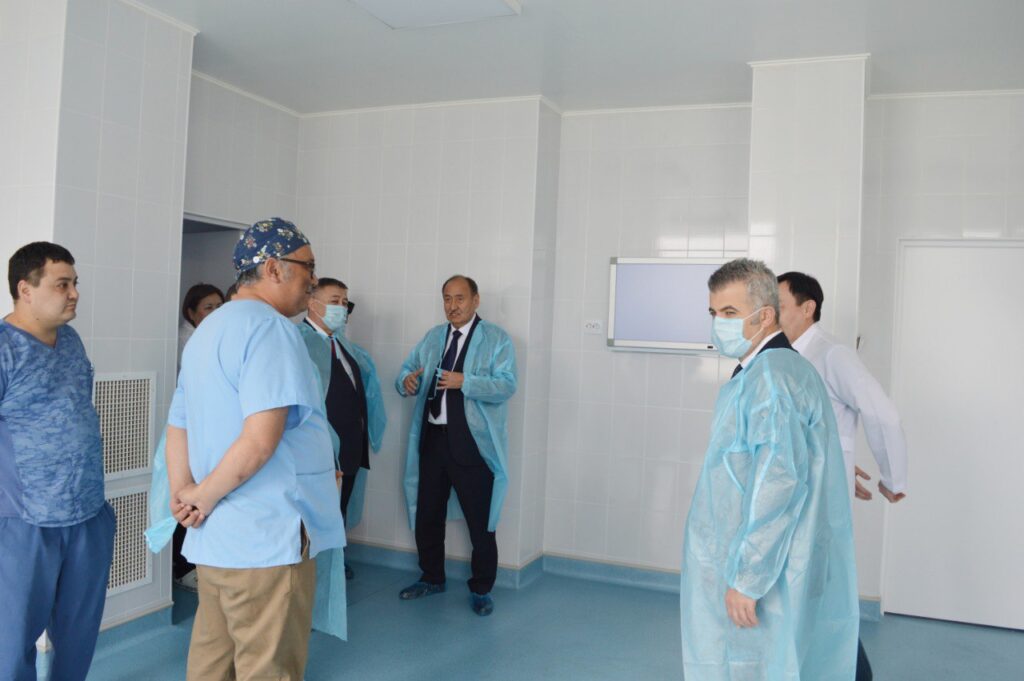
The Kyrgyz Ministry of Health has reported on a visit to Bishkek by doctors from Turkey’s Inonu University to assess the potential of Kyrgyz clinics to perform high-tech operations.

The delegation from Turkey’s leading centre for organ transplantation was greeted by the President of Kyrgyzstan. Accompanied by the Minister of Health, they then visited the National Surgical Centre where plans are in place to perform kidney transplants, and afterwards, the Centre for Maternal and Child Health, which plans to perform bone marrow transplants.

After receiving the experts’ recommendations on the readiness of operating rooms and intensive care units to receive patients, Kyrgyz Health Minister Alymkadyr Beishenaliyev reported, “To establish a successful liver transplant operative, $2 million will be allocated for the purchase the necessary equipment. Twenty million Kyrgyz som ($220,000) will also be allocated to repair the operating and resuscitation departments of the National Surgical Centre.”

He added that apart from those issues, the Kyrgyz hospitals meet all the requirements necessary for organ transplants.

Head of the Turkish delegation, Inonu University Rector Ahmet Kizilay, drew attention to the fact that to date, 65 Kyrgyz doctors had received training at their medical centre, considered one of the world’s leading clinics for organ transplantation, and a further 33 Kyrgyz specialists were currently on site to improve their qualifications.

At the beginning of the year, Kyrgyz President Sadyr Japarov signed a law allowing state and private clinics in Kyrgyzstan to perform organ transplants, with the provision that donors were related to the patients. The presidents of Kyrgyzstan and Turkey subsequently came to an agreement whereby Turkish doctors would help Kyrgyz doctors gain relevant experience and skills through the latter performing kidney transplants in Turkey. In the interim, doctors from Kazakhstan have also pitched in by performing a free operation for a Kyrgyz girl together with Kyrgyz doctors.

Though poised to create a centre for liver transplantation, the Kyrgyz Ministry of Health has emphasized the need for continued research on related problems and best practices of other countries.
Tajik Citizens Committed Terrorist Attacks in 10 Countries in the Past Three Years

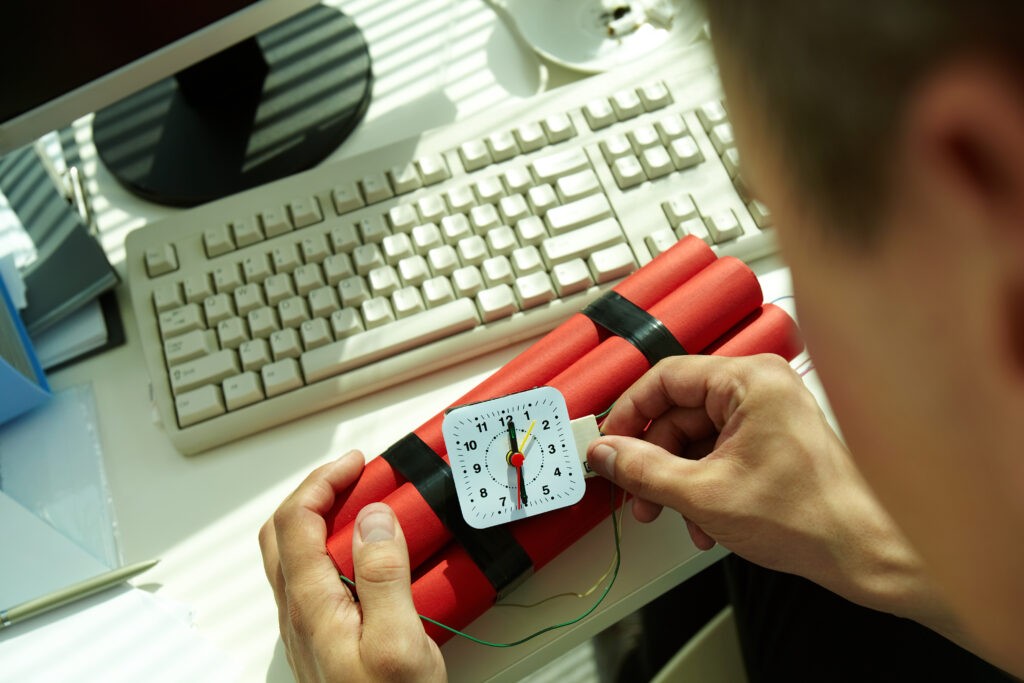
In a speech to dignitaries and religious leaders on the eve of Ramadan, Tajikistan’s President Imamali Rahmon reported that over the past three years, 24 Tajikistani nationals had carried out terrorist attacks in 10 different countries.

Referencing the fact that despite the country’s ban on 28 extremist and terrorist groups, individuals continued to pledge their alliance, the president stated, “Over the past 10 years, 6,680 crimes of extremist and terrorist nature, including 86 terrorist acts and assassination attempts, have been detected and registered in our country. Eleven terrorist acts and assassination attempts have been prevented.”

Voicing concern over the growing number of terrorist attacks committed by Tajik nationals abroad and the negative impact on the country’s reputation, the president stated, “Based on the information at hand, 24 of our nationals in ten different countries have carried out acts of terrorism in the last three years, including detonating explosives in large crowds. Suicide is not jihad, but a great sin that contradicts the teachings and requirements of Islam. Interest groups and special services in certain countries are responsible for creating these initiatives and are preying on the ignorance, inexperience, and lack of knowledge of some of our young people.”

According to Rahmon, 4,075 nationals are currently wanted for radical and terrorist crime. The Tajik prosecutor’s office and other law enforcement agencies were directed to step up efforts to integrate and repatriate the said individuals, including providing them with jobs and assisting with their adaptation.

Uzbekistan Ranks Fifth Among Tajikistan’s Bilateral Trade Partners

In a report issued by the Tajik state news outlet Khovar, Tajikistan’s and Uzbekistan’s intergovernmental commission on trade and economic cooperation met in Dushanbe on March 12th.

The Tajik side stated its interest in collaborating with the Uzbek industrial sector to develop sizable industrial parks in Tajikistan. Proposals currently under consideration include production in the fields of building materials, pharmaceuticals, electronics, information technology, food, mining and metallurgy, textiles and clothing, and agricultural machinery and equipment.

In addition, representatives from both countries shared perspectives on the the manufacture of tyres in cooperation with OJSC Talko, as well as the joint production of automobiles in Tajikistan.

In 2023, bilateral trade between the two countries reached $500 million. With a share of 6.1 percent of Tajikistan’s foreign trade total, Uzbekistan ranks fifth among its bilateral trade partners.

“You’re Afraid I’m Not Beautiful; I’m Afraid You’ll Kill Me” – Women Rally in Bishkek

On International Women’s Day on March 8th, hundreds of people took to the streets of Bishkek to participate in the annual march for women’s rights. Under the slogan “A woman’s life is a mirror of the time,” the march started from the monument to revolutionary fighters on Chui Avenue and ended in Gorky Square on Isanov Street.

The marchers carried placards and made calls for an end to violence against women, to ensure their freedom and protect freedom of speech. One of the speakers was Asel Nogoibayeva, who said she had first-hand experience of domestic violence. Her words left a lasting impression, as did her call for the police to address the problems of domestic violence.

Marches on March 8th in support of women’s rights have become an annual tradition in Bishkek, with the main theme always for the authorities to pay attention to women’s issues.

“I went with a double-sided poster that said: ‘You’re afraid I’m not beautiful; I’m afraid you’ll kill me’ and on the other side, ‘Only a human being can give birth to a human being,’” Saraya, a participant at the rally told TCA. “I also printed out some posters that I handed out.”

Saraya said that the march went exactly as planned with no deviations and expressed her joy at the increase in the number of participants, including girls with their boyfriends, which is a testament to the expanded audience and impact of the event. “Of course, marching is not the only way to influence people,” she said. “It doesn’t work if once a year you walk around with placards and then forget about it. Businesses, for example, have different ways of attracting customers – social media, word of mouth, banners, etc. A march is like an advertising campaign, periodically loudly and announcing itself so that people don’t forget it. Only women’s rights are not a business – they’re a struggle for justice.”

Kazakhstan to Introduce Luxury Tax on Items from Yachts to Cigars

Kazakhstan’s Ministry of National Economy has announced proposals to introduce a new law on taxes and other mandatory payments to the national budget in 2024.

The proposed amendments to the tax code will raise rates in cases where the value of possessions held by any individual exceeds $1 million and is directed specifically at those who own yachts and private planes. According to the ministry, 490 yachts in Kazakhstan are registered to individuals. The maximum tax currently paid on watercraft is currently around $421 but is set to increase in line with rates paid in Europe where tax is calculated according to the length of a yacht. In Greece for example, the annual tax on ‘luxury’ yachts over 5 metres in length, varies from $852 to $2558, and rises sharply if the length exceeds 12 metres.

The ministry also proposes to introduce excise taxes on high end alcoholic beverages and cigars. The excise duty set on imported Macallan 50YO whisky priced at $13,300 for 0.70 litres, is $1.50; on Remy Martin Louis XIII cognac priced at $9,300 for 3 litres, $0.67; and Chateau Petrus wine worth $1,900 for 0.75 litres, $0.058. The new tax will also on impact other imported luxury goods, including Cohiba cigars worth $317 for 15 pieces and Don Antonio Churchills cigars priced at $266 for 40 pieces.

The fundamental aims of the new taxes are to equalize the socioeconomic situation of different segments of the population, to increase the nation’s revenue, and to regulate consumption of certain goods. The ministry did however report that since the new measures would potentially reduce domestic consumption of ‘luxury’ goods, the cost of administering tax on such could exceed the income generated.

New amendments are also forecast to harmonize excise on general tobacco. Current legislation already provides for a gradual increase in excise taxes on cigarettes. Due to reach $30.6 per thousand cigarettes this year, it is 20% below the indicative rate.

In addition, the new tax code will consider the transition to graduated tax rates in different sectors of the economy, accelerating the introduction of progressive taxation, reforming special tax regimes, and streamlining and reducing tax benefits by at least 20 percent. The package of amendments will include a revision of tax administration. Digitized control will enable both a 30 percent reduction in the need for paper tax return forms, and simplify VAT refunds. Other changes include an exemption from taxes and other fees for foreign and domestic investors during the first three years of their implementing new manufacturing projects.

The ministry’s document is publicly available for discussion until March 27, with the new tax code expected to be adopted in October of this year.

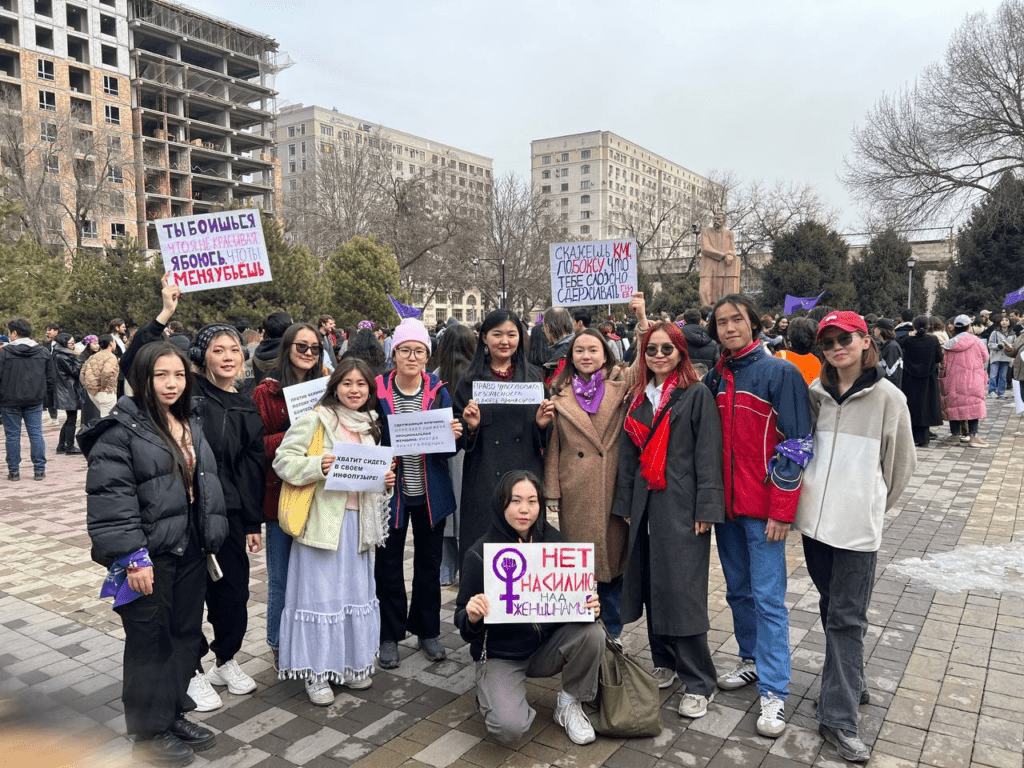
“Your Life is Your Freedom” – Women Rally in Almaty

A rally in support of women’s rights was held in Almaty on March 7th. The event, which was approved by the city administration, was organized by Bibinur Sheralieva, an activist from the regional council for family and social protection under the Amanat Party. The gathering took place in Mahatma Gandhi Park, a place usually reserved for such events.

Sheraliyeva, the organizer of the rally, put forward demands to protect the rights of divorced women, proposing that alimony laws be amended to offer a fixed amount, regardless of the fathers’ income. She also advocated the introduction of mandatory marriage contracts to take into account the property interests of women and children during divorce proceedings.

In addition to the organizers, a woman took the stage to share her experience of facing domestic violence and told of the tragedy of losing her home due to systematic beatings by her father-in-law. Her story highlighted the problem of impunity for aggressors.

The rally also called for the repeal of the amendment on reconciliation of parties under the new law on domestic violence, as well as a legal ban on the practice of tokal (second wife) and polygamy.

The rally was not without controversy, however, with one attendee demanding a ban on “feminist and LGBT propaganda,” which drew disapproval from the majority of the crowd. Another organizer of the rally, Dilnar Insenova, declared her support for the need to “protect family values,” expressing doubts about the impact of European standards on society in Kazakhstan.

The rally briefly descended into absurdity when, instead of delivering her planned speech, Insenova began to dance to the song “Chyna” by the Kazakh artist, Irina Kairatovna, provoking laughter from those filming clips against a backdrop of portraits of domestic violence victims, their videos going viral on social media.

Most continued to draw attention to important issues, however; raising placards and chanting slogans such as “Your life is your freedom” and “We demand the protection of women’s rights,” and demonstrating their commitment to positive change in the area of women’s rights.