• KGS/USD = 0.01144 0%
  • KZT/USD = 0.00212 0%
  • TJS/USD = 0.10456 0.19%
  • UZS/USD = 0.00008 0%
  • TMT/USD = 0.28490 0%
  • KGS/USD = 0.01144 0%
  • KZT/USD = 0.00212 0%
  • TJS/USD = 0.10456 0.19%
  • UZS/USD = 0.00008 0%
  • TMT/USD = 0.28490 0%
  • KGS/USD = 0.01144 0%
  • KZT/USD = 0.00212 0%
  • TJS/USD = 0.10456 0.19%
  • UZS/USD = 0.00008 0%
  • TMT/USD = 0.28490 0%
  • KGS/USD = 0.01144 0%
  • KZT/USD = 0.00212 0%
  • TJS/USD = 0.10456 0.19%
  • UZS/USD = 0.00008 0%
  • TMT/USD = 0.28490 0%
  • KGS/USD = 0.01144 0%
  • KZT/USD = 0.00212 0%
  • TJS/USD = 0.10456 0.19%
  • UZS/USD = 0.00008 0%
  • TMT/USD = 0.28490 0%
  • KGS/USD = 0.01144 0%
  • KZT/USD = 0.00212 0%
  • TJS/USD = 0.10456 0.19%
  • UZS/USD = 0.00008 0%
  • TMT/USD = 0.28490 0%
  • KGS/USD = 0.01144 0%
  • KZT/USD = 0.00212 0%
  • TJS/USD = 0.10456 0.19%
  • UZS/USD = 0.00008 0%
  • TMT/USD = 0.28490 0%
  • KGS/USD = 0.01144 0%
  • KZT/USD = 0.00212 0%
  • TJS/USD = 0.10456 0.19%
  • UZS/USD = 0.00008 0%
  • TMT/USD = 0.28490 0%

Astana–Israel Talks Span Technology, Trade, and Holocaust Remembrance

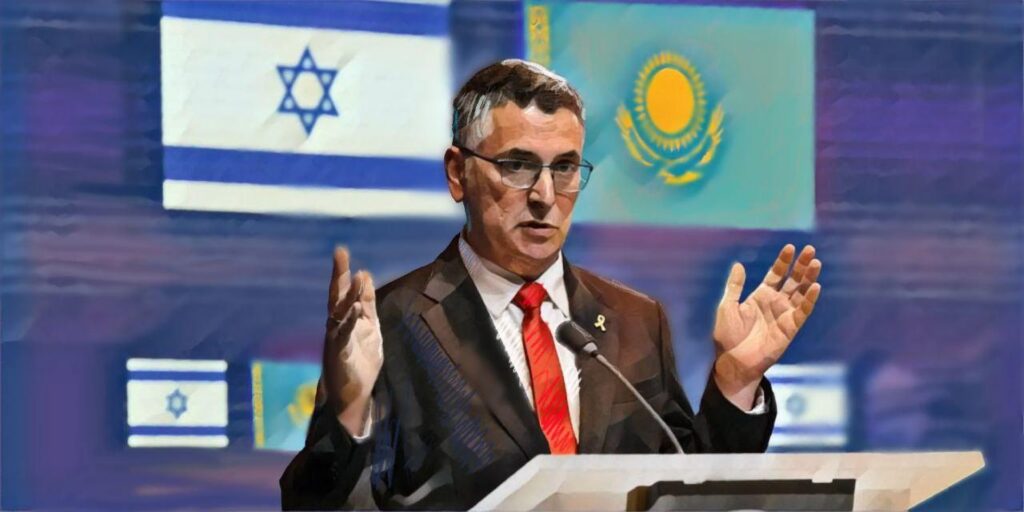
Kazakh President Kassym-Jomart Tokayev met Israeli Foreign Minister Gideon Sa’ar in Astana on January 27, marking the first official visit by an Israeli foreign minister to Kazakhstan in almost 16 years, and underscoring Astana’s stated interest in deepening economic and technological cooperation with Israel as it continues to recalibrate its foreign policy.

According to the Kazakh presidential administration, the talks focused on expanding bilateral relations across trade, investment, science, and technology, with both sides emphasizing practical areas of cooperation. The visit came as Kazakhstan seeks to diversify its economy beyond hydrocarbons and strengthen partnerships with countries at the forefront of applied innovation.

Tokayev said the visit demonstrated Israel’s commitment to strengthening comprehensive cooperation with Kazakhstan, while discussions highlighted concrete sectors for collaboration, including artificial intelligence, agrotechnology, water resource management, and digital governance. These areas align closely with Kazakhstan’s national development priorities, particularly its focus on digital transformation, public-sector reform, and productivity-driven growth.

Economic cooperation featured prominently throughout the visit. A Kazakh-Israeli business forum was held alongside the high-level talks, aimed at translating diplomatic engagement into commercial outcomes. Kazakhstan’s Foreign Ministry said the forum is expected to support new investment partnerships and initiate joint projects in high-value sectors, with a focus on technology transfer and localized projects.

Kazakh officials said bilateral trade reached $162.4 million between January and November 2025, with exports totaling $92.1 million and imports $70.3 million. While modest in absolute terms, the figures were cited as evidence of untapped potential, particularly in non-resource sectors where Israeli companies have global expertise.

As part of the discussions, Kazakhstan invited Israeli firms to participate in national digital transformation initiatives, including projects related to e-government, data-driven public services, and digital infrastructure. Officials cited Kazakhstan’s recent progress in digital governance and public-sector innovation as a foundation for expanded cooperation.

Kazakhstan and Israel established diplomatic relations in 1992, shortly after Kazakhstan gained independence. Israel opened its embassy in Almaty in 1996, while Kazakhstan inaugurated its embassy in Tel Aviv in 2000, laying the groundwork for steady but largely low-profile bilateral ties.

Political relations have traditionally been pragmatic, with cooperation focused on trade, agriculture, healthcare, and education rather than formal alliances. Bilateral trade has remained modest, reflecting limited commercial engagement beyond specific sectors such as agrotechnology, pharmaceuticals, and water management.

In recent years, Astana has shown growing interest in Israel’s applied innovation ecosystem, particularly in areas aligned with Kazakhstan’s domestic reform agenda, including digital governance, artificial intelligence, and public-sector modernization. Israeli firms have previously participated in pilot projects and advisory initiatives in Kazakhstan, though large-scale joint ventures have been limited.

Kazakhstan has also positioned itself as a neutral diplomatic actor in the Middle East, maintaining relations with Israel while emphasizing interfaith dialogue and mediation.

Beyond economic ties, the talks also addressed regional and international issues, including developments in the Middle East and Kazakhstan’s diplomatic positioning in support of the objectives underpinning the Abraham Accords framework. Sa’ar welcomed Kazakhstan’s engagement, describing it as a constructive contribution to dialogue and cooperation between Israel and Muslim-majority countries.

Sa’ar also held separate talks with Kazakh Deputy Prime Minister and Foreign Minister Murat Nurtleu as part of the 12th round of political consultations between the two countries. According to Israel’s Foreign Ministry, the discussions covered bilateral relations, regional security, and further steps to expand intergovernmental cooperation.

The timing of the visit coincided with International Holocaust Remembrance Day. The two sides discussed cooperation on Holocaust remembrance and education, with reference to the work of the International Holocaust Remembrance Alliance (IHRA), according to official statements. At a Holocaust Remembrance Day event, Sa’ar stated that “antisemitism … is once again showing its ugly face,” adding that “we have sworn — never again! This oath will not be broken.”

In a message marking the day, Tokayev wrote that, “Firmly condemning any manifestations of ethnic and religious hatred and violence, our country supports the collective efforts of the international community to prevent a repetition of such crimes against humanity. Kazakhstan became home to many Jews evacuated during the Holocaust, and today the Jewish community is an integral part of our society.”

Sa’ar also acknowledged Kazakhstan’s humanitarian legacy during World War II and praised its emphasis on interfaith dialogue and tolerance, including its role in hosting the Congress of Leaders of World and Traditional Religions.

Kazakh officials described the visit as supporting longer-term efforts to expand the country’s role in regional connectivity, linking Central Asia with the Middle East and broader Eurasian markets. For Israel, Kazakhstan represents the region’s largest economy and a strategic entry point into Central Asian and Eurasian value chains.

While no major agreements were announced, both sides described the meetings as laying the groundwork for deeper cooperation, particularly in technology-driven sectors where joint projects and third-country exports are seen as longer-term goals.

Officials said follow-up work is expected through existing bilateral mechanisms, with further consultations planned to translate political commitments into concrete economic and technological outcomes.
Bishkek Unveils New Master Plan for 2050

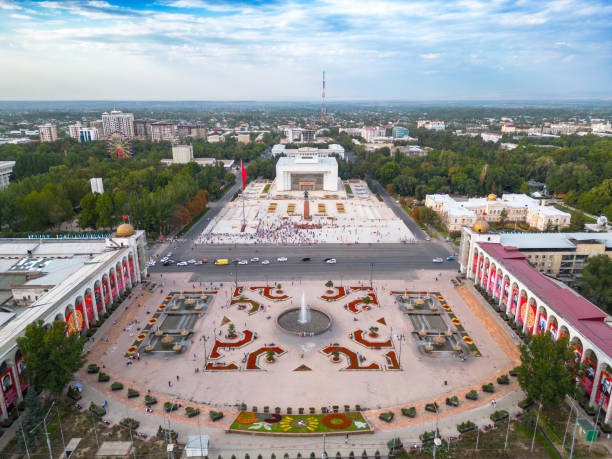
Kyrgyz authorities have submitted a draft law outlining a new master plan for the development of Bishkek through 2050, now open for public discussion.

The document defines long-term priorities for the capital’s growth across several sectors, including transport infrastructure, environmental management, economic development, and spatial expansion. Once adopted, the plan will become the principal framework for territorial planning and will be legally binding for decisions related to construction and land use.

According to the draft, Bishkek’s official population is expected to rise from 1.3 million to 1.9 million by 2050. However, the city is already believed to house approximately 2 million people, with urban development having long exceeded administrative boundaries. As a result, Bishkek is currently facing critical shortages of housing, employment, and transport infrastructure.

The plan’s authors stress that continued development of the city center alone is no longer viable, as it is already overburdened in terms of both transport and utilities.

To address this, the master plan proposes moving away from the current “center-bedroom” model. Instead, employment opportunities should be created within districts and suburbs, supported by improved transport accessibility across all parts of the city. This approach aims to reduce commuting to the center, alleviate traffic congestion, and lessen pressure on the road network.

Key infrastructure upgrades include the introduction of an intra-city railway and a high-speed bus system operating along dedicated corridors. A network of transport hubs will also be established, with the goal of reducing residents’ reliance on private vehicles.

Developed in 2025 by the Bishkek City Hall in cooperation with the Scientific Research Institute of Prospective Urban Development in St. Petersburg, the plan is now being updated based on public feedback.

The most contentious element of the proposal is the renovation program, which calls for the demolition of a substantial number of two, three, and four-storey buildings in central areas and along major roads. Many residents are concerned that state compensation for demolished properties may fall short of market value, a topic that has become one of the most debated during public consultations.

Environmental improvements are also a core component. Bishkek frequently ranks among the most polluted cities in the Eurasia region. To address this, the plan includes a “green framework” for the city: expanding river and canal beds, creating green corridors, and enhancing recreational zones.

Uzbekistan Uncovers Large-Scale Corruption, Files Charges Against Senior Interior Officials

Uzbekistan has launched criminal proceedings against senior officials in the Ministry of Internal Affairs as part of a sweeping anti-corruption campaign that has exposed extensive financial violations across the country.

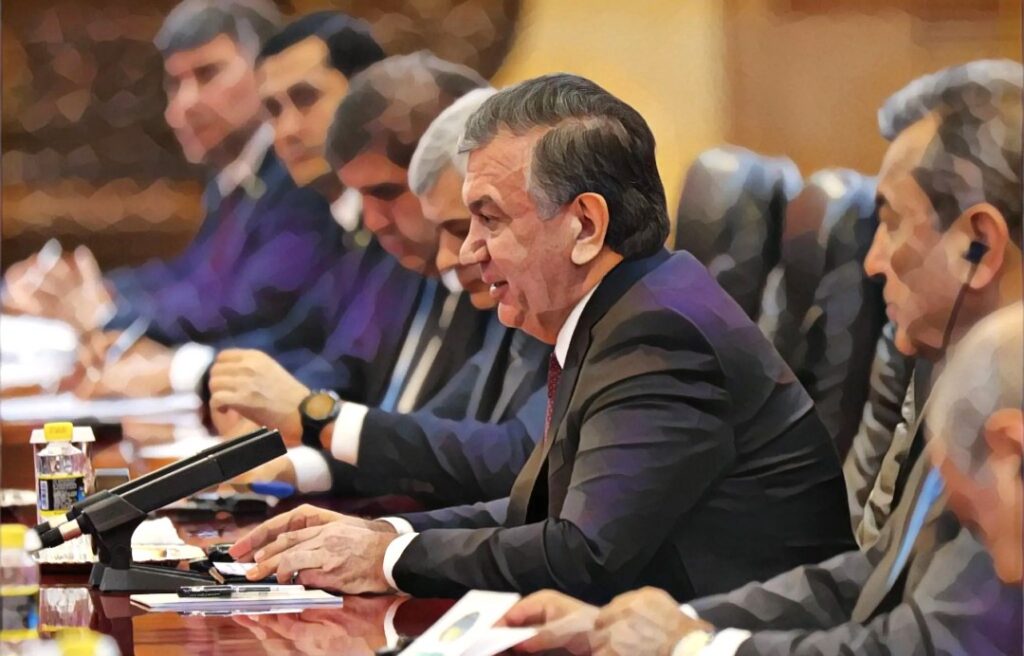
At a government meeting on January 27, President Shavkat Mirziyoyev announced that investigations had uncovered 53 trillion Uzbekistani som ($4.38 billion) in financial irregularities and misappropriated funds. Of that, damage linked directly to corruption schemes totaled 4.2 trillion som ($347.3 million), according to a statement from the president’s press secretary.

Authorities reported that 1.3 trillion som ($107.5 million) in damages has already been recovered, and 55 individuals have been arrested nationwide in connection with corruption-related activities.

Among the highest-profile cases is one involving the Ministry of Internal Affairs. Criminal proceedings have been initiated against Deputy Interior Minister Bekmurod Abdullayev and Rustam Tursunov, head of the ministry’s Penitentiary Department. Investigators allege that 186 billion som ($15.38 million) in budget funds were embezzled through fraudulent state procurement schemes within the ministry.

“Every single som of state money will be placed under strict and effective control. Responsibility is inevitable, and punishment will be severe,” Mirziyoyev said during the meeting.

In addition to budget-related losses, audits also identified more than $8 billion in debt associated with foreign trade operations. Mirziyoyev described the findings as alarming and announced the introduction of internal compliance and anti-corruption systems across government bodies and state enterprises.

He also addressed personnel management within law enforcement. Despite mandatory retirement ages, 55 for colonels and 60 for generals, over 300 officers exceeding these limits are reportedly still in leadership roles. By contrast, all top officials in the Ministry of Emergency Situations are currently under 50 years old.

Mirziyoyev underscored the need to promote a new generation of professional and accountable young leaders while also harnessing the expertise of retired or soon-to-retire officers through mentorship and youth engagement programs.

The meeting concluded with directives to conduct a critical review of officials responsible for oversight and security in state institutions. The initiative is part of a broader effort to strengthen financial discipline and governance throughout the public sector.

Kyrgyzstan Bans Animal Imports from India to Prevent Nipah Virus Spread

On January 28, Kyrgyzstan’s Veterinary Service imposed temporary restrictions on the import of live animals and animal products from India in response to confirmed cases of Nipah virus infections.

According to the World Health Organization (WHO), Nipah virus is a severe zoonotic disease transmitted to humans through contact with infected animals, such as fruit bats or pigs, or through consumption of food contaminated by bat secretions. Human-to-human transmission is also possible through close contact. The virus has an estimated case-fatality rate of 40% to 75%.

Two confirmed cases of Nipah virus were reported in late December in India’s eastern state of West Bengal. Both infected individuals were healthcare workers. Following these reports, authorities in Thailand, Singapore, Hong Kong, and Malaysia intensified airport screenings to contain the risk of cross-border transmission.

Kyrgyzstan’s Ministry of Health has issued a statement urging the public to remain calm, noting that no cases of Nipah virus have been registered in the country. The ministry assured that the healthcare system is prepared to respond swiftly to potential epidemiological threats.

As a preventive measure, sanitary and quarantine controls have been tightened at Kyrgyzstan’s border crossings. The ministry continues to collaborate with the WHO and other international partners to monitor developments and coordinate containment efforts.

In neighboring Kazakhstan, the Ministry of Health issued a similar statement confirming that no cases of Nipah virus infection have been detected and that the epidemiological situation remains under control. As a precaution, Kazakhstan has also enhanced screening procedures at all border checkpoints, with special attention to travelers arriving from India and Southeast Asia.

Russian TV Comments on Central Asia Trigger Strong Reaction from Uzbek Analysts

A recent broadcast on Russia’s state television channel Russia-1 has sparked strong backlash in Central Asia after inflammatory remarks aired on the political talk show Evening with Vladimir Solovyov questioned the independence and foreign policy choices of post-Soviet countries in Central Asia and the South Caucasus.

The controversy began when political analyst Sergey Mikheyev, who served as a representative for President Vladimir Putin during Russia’s 2024 election campaign, criticized Moscow’s approach toward former Soviet republics, calling it “ineffective” and overly generous.

“Our policy toward the post-Soviet space was not very effective,” Mikheyev said. “The situation where Russia owes everyone and no one owes Russia anything is a dead end. We solve many of their problems, labor migration, assistance, many other things and yet we are always the ones who must give.”

He added, “We spoiled them. We spoiled them too much. We will not tolerate this anymore.”

Program host Solovyov supported the tone of Mikheyev’s remarks, adding: “If I am forced to speak about you like this, then think about what you are doing wrong.”

The broadcast quickly spread across social media platforms in Central Asia, prompting swift reactions from regional analysts, particularly in Uzbekistan, who criticized the rhetoric as imperial and patronizing.

Uzbek political scientist and university professor Sherzodkhon Qudratkhodja called the discussion an emotional outburst rooted in nostalgia for a lost empire. “They spoke like sentinels, bitterly offended by the entire former Soviet Union,” he wrote on social media. He added that Mikheyev’s phrase “we spoiled them” infantilized independent states, framing them as unruly children rather than equal partners.

“The logic is simple: if you don’t obey, you’re ‘nervous.’ If you want independence, you’re ‘spoiled.’ Their favorite phrase is that others ‘must know their place,’” Qudratkhodja wrote.

He also rejected the idea that Central Asian countries are exploiting Russia or living at its expense. “No one is blackmailing anyone. No one owes us anything, and we owe no one anything,” he stated, emphasizing Uzbekistan’s commitment to “equal rights and mutual respect in international relations.”

Another Uzbek analyst, G‘ayratxo‘ja Saydaliyev, argued that Mikheyev’s comments reflect a broader worldview within segments of the Russian political elite. “This is an open expression of a geopolitical mindset where Central Asia is not seen as a partner, but as a subordinate,” he wrote. “Independent foreign policy is treated not only as ingratitude but as illegitimate.”

Saydaliyev noted Mikheyev’s additional remarks on Iran and Turkey, interpreting them as evidence of growing Russian anxiety over shifting alliances. He argued that Moscow views Iran as a counterbalance to the U.S. and Turkey, and fears that losing influence over Tehran could further weaken Russia’s position, potentially prompting it to exert more pressure on post-Soviet neighbors.

Turkey’s rising role in Central Asia and the concept of a “Turkic world” were also framed by Mikheyev as a geopolitical threat. Saydaliyev concluded that deeper regional ties with Ankara are being viewed in Moscow not as legitimate foreign policy, but as a challenge to Russian dominance.

“The biggest challenge for Central Asia is to maintain sovereignty in the face of aggressive rhetoric and geopolitical pressure,” he warned.

The analysts also highlighted Mikheyev’s claim that events in Ukraine were partly the result of Russia “spoiling” its neighbors, interpreting this as a veiled threat that independence could lead to punitive action.

While the program cited migration and economic aid as justifications for Russian influence, Qudratkhodja pointed out that Russia itself suffers from labor shortages and relies heavily on Central Asian migrants to support its economy.

Neither the Russian Foreign Ministry nor the Kremlin has commented publicly on the broadcast or the backlash.

The episode adds to a growing list of media incidents that have fueled unease in Central Asia about how Russia views its relationships with neighboring states. For many in the region, such rhetoric undermines Moscow’s professed commitment to equal partnerships.

As Qudratkhodja concluded, “States are not children to be raised, and the world is not a television studio.”

TAPI Gas Pipeline Advances Toward Herat, Afghanistan

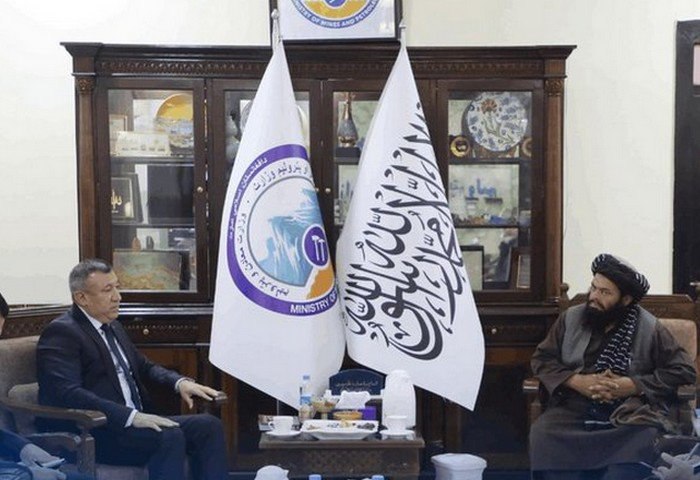
Progress on the Turkmenistan-Afghanistan-Pakistan-India (TAPI) gas pipeline, one of the largest energy infrastructure projects in the region, was the central focus of recent talks between Turkmenistan’s Ambassador to Afghanistan, Khoja Ovezov, and Afghanistan’s Minister of Mining and Petroleum, Hedayatullah Badri.

According to Turkmenistan’s state oil and gas company, Turkmennebit, the Turkmen delegation briefed its Afghan counterparts on the current phase of construction and outlined upcoming steps. Both sides expressed optimism that the pipeline will reach the western Afghan city of Herat by the end of 2026, a key milestone for the project.

The TAPI pipeline is projected to span approximately 1,814 kilometers, with 214 kilometers running through Turkmenistan, 774 kilometers through Afghanistan, and 826 kilometers through Pakistan, ending at the Indian border. The Afghan segment is not only the longest outside of Pakistan but also the most challenging, both logistically and politically.

The most recent development in the project, the opening of the Serhetabat-Herat section, officially named Arkadagyň ak ýoly (“Arkadag’s White Path”), was marked on October 20, 2025.

Once operational, the pipeline is expected to bring substantial economic benefits to the participating countries. Afghanistan could receive over $1 billion annually in transit and related revenues, while Pakistan is projected to earn between $200 million and $250 million. These figures, according to project stakeholders, represent a significant step toward the economic goals of each nation involved.

Preparatory work has already been completed on a 91-kilometer stretch of the TAPI route in Herat province. The necessary infrastructure is in place, and worker camps have been established along the pipeline corridor.