“We Are Contenders”: Uzbekistan’s Chess Talents Aim High

“Uzbekistan, the new chess superpower?” says the website of Europe Échecs, a French chess publication.
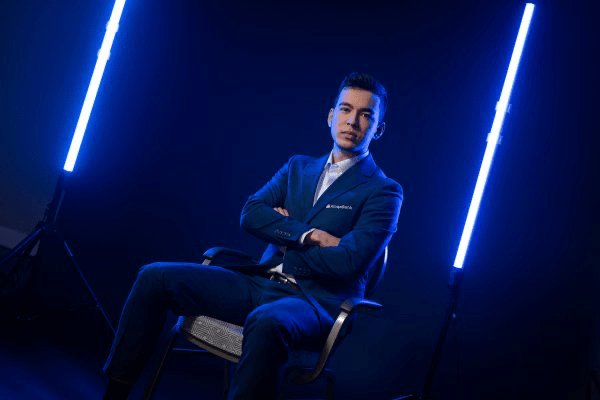
The lead article in the January 2026 edition of the monthly magazine focuses on the extraordinary rise of Uzbek chess and shows photos of Nodirbek Abdusattorov and Javokhir Sindarov, two grandmasters from the Central Asian country who were atop the standings early this week in the Tata Steel Chess Tournament in the Netherlands.
Abdusattorov and Sindarov faced each other in the ninth round on Tuesday, playing to a draw that kept both of them in the lead of the elite contest that ends on February 1 after 13 rounds. Abdusattorov was first with six points, while Sindarov was second with five and a half points. However, the race is tightening — Sindarov now shares second place with 14-year-old Turkish prodigy Yağız Kaan Erdoğmuş and Dutch player Jorden van Foreest.
Sometimes called the “Wimbledon of chess,” the Tata Steel event in the seaside town of Wijk aan Zee has attracted the game’s greats over many years. They have included Garry Kasparov, Anatoly Karpov and Magnus Carlsen. The presence of two Uzbek players in the 14-participant Masters competition this year is a testament to the depth of top-tier talent in Uzbekistan, which is challenging India and other top chess nations in the world.
Born in Tashkent, 21-year-old Abdusattorov became a grandmaster at the age of 13 and is ranked twelth in the world with a rating of 2751. He has previously competed in the Tata Steel event, finishing in the top three in the last three years, according to the tournament. He won the FIDE World Rapid Chess Championship in 2021 and was part of the team from Uzbekistan that won gold at the 2022 Chess Olympiad in Chennai, India. FIDE is the international governing body of chess.
“It made us realize that we aren’t just ‘participants´ anymore; we are contenders,” Rayhona O’ktamova of Uzbekistan wrote in a Chess.com blog titled: “Why Everyone is Suddenly Talking About Uzbekistan.”
“What I love most isn’t just the trophies, it’s how the atmosphere in our country changed,” O´ktamova said. “Before, if a kid said ‘I want to be a professional chess player,´ parents might say, ‘Maybe study something more serious?´ But now? You see kids in every park with a board. Chess has become our ‘national sport.´ It’s our art, our marathon, and our pride.”
Sindarov, who was also born in Tashkent, is another high performer. The 20-year-old was 12 when he became a grandmaster and now has a world ranking of 21 and a rating of 2726. He won the FIDE World Cup in 2025, qualifying for this year’s Candidates Tournament, which determines who can challenge the world champion. The current champion is India’s Gukesh Dommaraju.
“I hope this is just the beginning — the victories of Uzbek chess will only grow from here,” Sindarov said after winning the FIDE World Cup.
Alongside Abdusattorov, Sindarov was also in Uzbekistan’s winning team at the 2022 Chess Olympiad. The city of Samarkand in Uzbekistan will host the next Chess Olympiad in September. Uzbekistan is currently 12th in the FIDE national rankings.
Uzbekistan’s Sarvinoz Begmuratova, 13, recently secured the the title of FIDE Woman Master, a sign of similar promise on the women’s side.
Chess commentators attribute Uzbekistan’s success to its focus on chess programs in schools and at the grassroots level, building on a strong tradition of the game that developed when it was a Soviet republic. Rustam Kasimdzhanov, the first Uzbek to become FIDE world champion (2004), said the collapse of the Soviet Union in 1991 helped his career because he “suddenly” became champion of his newly independent country, giving him more access to international competitions.
In contrast to the chaos of the immediate post-Soviet period, Uzbekistan today has a well-developed infrastructure and state funding for chess that has propelled top players from an early age, Kasimdzhanov said in a 2024 interview with Millennium Chess, a German maker of electronic chessboards and computers.
“They had grandmaster training at an age where – at a corresponding age – I didn’t even know what a grandmaster was,” he said. Late last year, Kasimdzhanov was appointed head coach of the men’s national chess team of Uzbekistan.
The next generation of chess talent is getting an early start. This month, Tashkent hosted a national championship for boys and girls under six years old.