• KGS/USD = 0.01144 0%
  • KZT/USD = 0.00212 0%
  • TJS/USD = 0.10432 -0.29%
  • UZS/USD = 0.00008 0%
  • TMT/USD = 0.28490 0%
  • KGS/USD = 0.01144 0%
  • KZT/USD = 0.00212 0%
  • TJS/USD = 0.10432 -0.29%
  • UZS/USD = 0.00008 0%
  • TMT/USD = 0.28490 0%
  • KGS/USD = 0.01144 0%
  • KZT/USD = 0.00212 0%
  • TJS/USD = 0.10432 -0.29%
  • UZS/USD = 0.00008 0%
  • TMT/USD = 0.28490 0%
  • KGS/USD = 0.01144 0%
  • KZT/USD = 0.00212 0%
  • TJS/USD = 0.10432 -0.29%
  • UZS/USD = 0.00008 0%
  • TMT/USD = 0.28490 0%
  • KGS/USD = 0.01144 0%
  • KZT/USD = 0.00212 0%
  • TJS/USD = 0.10432 -0.29%
  • UZS/USD = 0.00008 0%
  • TMT/USD = 0.28490 0%
  • KGS/USD = 0.01144 0%
  • KZT/USD = 0.00212 0%
  • TJS/USD = 0.10432 -0.29%
  • UZS/USD = 0.00008 0%
  • TMT/USD = 0.28490 0%
  • KGS/USD = 0.01144 0%
  • KZT/USD = 0.00212 0%
  • TJS/USD = 0.10432 -0.29%
  • UZS/USD = 0.00008 0%
  • TMT/USD = 0.28490 0%
  • KGS/USD = 0.01144 0%
  • KZT/USD = 0.00212 0%
  • TJS/USD = 0.10432 -0.29%
  • UZS/USD = 0.00008 0%
  • TMT/USD = 0.28490 0%

Kazakh Government Transfers Control of Controversial Medical Fund to Ministry of Finance

The Kazakh government has restructured the management of the Social Medical Insurance Fund (SMIF), transferring oversight of its operations to the Ministry of Finance. The decision was formalized by Prime Minister Olzhas Bektenov following a comprehensive audit of the fund’s financial activities conducted over the past month.

The SMIF serves as the principal operator of Kazakhstan’s Compulsory Social Medical Insurance (CSMI) system. It collects contributions from employees, employers, and the state, then allocates these funds to medical institutions based on the volume of services rendered.

However, the fund’s operations have faced sustained public and parliamentary criticism. In January 2025, members of parliament declared that the SMIF had lost the public’s trust and called for tighter oversight of its expenditures.

Delayed Audit and Financial Irregularities

Despite growing concerns, a large-scale audit had long been postponed. It was not until December 2025 that the Prime Minister tasked the Ministry of Finance with analyzing the fund’s financial flows.

Finance Minister Madi Takiev presented the audit’s findings last week. According to the government press service, the results raised serious concerns about the overall effectiveness of the country’s healthcare financing model.

Despite a steady rise in expenditures, the Ministry of Finance found that SMIF’s efficiency had not improved. Since 2020, the fund’s investment income totaled $1.1 billion, including $383 million in 2025 alone. A significant portion of these funds, however, was not allocated toward medical services, and instead accumulated in the fund’s reserves.

Overbilling and Digital System Failures

An IT audit of the healthcare information system revealed extensive violations in service reporting. These included billing for fictitious patients, services provided without medical necessity, and instances of double financing. Numerous cases documented implausibly high volumes of procedures performed within short timeframes.

Several high-profile anomalies stood out. In some reports, medical services were recorded for individuals who were deceased at the time. In another case, minors were allegedly prescribed more than a thousand medications in a single day.

Tax authorities also conducted a desk audit of the directors of medical institutions, comparing declared incomes with actual property holdings.

Transition to Centralized Oversight

In response to the audit, Bektenov ordered that all materials be forwarded to law enforcement agencies for further investigation.

This marks the effective dismantling of SMIF’s former autonomous governance model in favor of centralized control by the Ministry of Finance.

The move comes amid rising fiscal pressure on the healthcare system. In 2026, the government will continue to fund medical insurance premiums for socially vulnerable groups. As previously reported by The Times of Central Asia, the state will finance insurance coverage for over one million unemployed citizens.

Kazakhstan and Uzbekistan to Install Hydro Posts on Syr Darya River

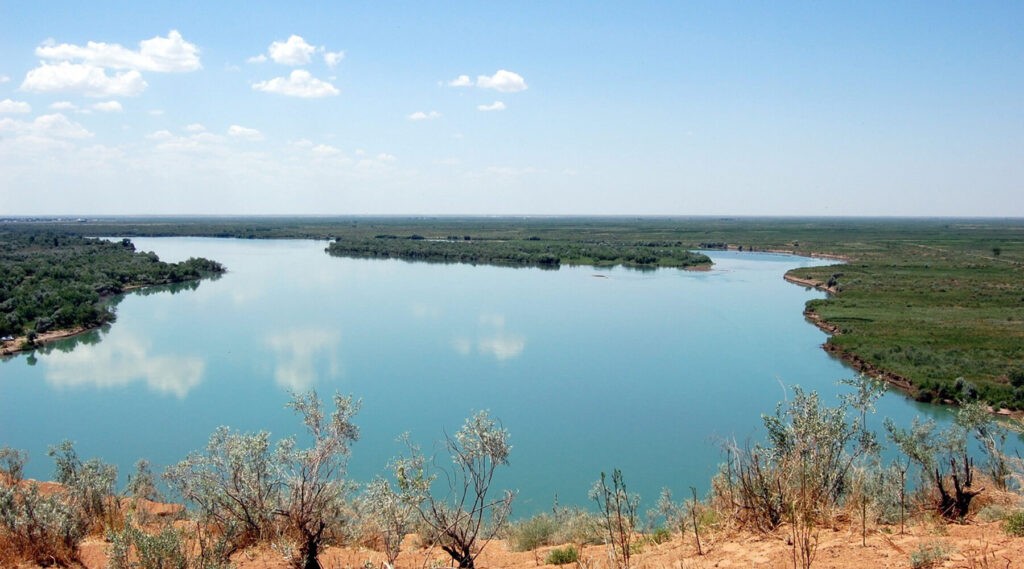
Kazakhstan and Uzbekistan are moving forward with the installation of ten automated hydro posts along the Syr Darya River, five in each country, as part of a joint initiative to enhance transparency and accuracy in transboundary water accounting and distribution for irrigation. The project is supported by the German Agency for International Cooperation (GIZ).

The initiative was a key item on the agenda during a January 19 meeting between Kazakhstan’s Minister of Water Resources and Irrigation, Nurzhan Nurzhigitov, and Uzbekistan’s Minister of Water Resources, Shavkat Khamrayev, held in the Kazakh city of Turkestan.

The Syr Darya River is critical for agricultural irrigation across Central Asia, particularly in Kazakhstan’s southern regions, Turkistan, Kyzylorda, and Zhambyl, which depend heavily on its waters. The river originates in Kyrgyzstan and flows through Uzbekistan before entering Kazakhstan.

Nurzhigitov highlighted that Kazakhstan and Uzbekistan signed an intergovernmental agreement last year on the joint management and rational use of transboundary water resources. “The agreement is a significant contribution to the development of water diplomacy in Central Asia and clearly defines key areas for further mutually beneficial cooperation. We intend to continue developing our bilateral partnership in the spirit of good neighborliness, mutual respect, and constructive dialogue,” Nurzhigitov stated.

The ministers also reviewed progress on the maintenance and repair of the interstate Dostyk (Friendship) Canal, which channels irrigation water from Uzbekistan into Kazakhstan. Last year, Kazakhstan undertook mechanized cleaning of the canal’s bed, slopes, and collectors, and carried out repairs on gates and barrier structures. These efforts will continue in 2026.

Given the Syr Darya’s importance to regional agriculture, Kazakhstan and Uzbekistan have also launched a joint project to revise irrigation regimes within the basin. The goal is to optimize agricultural water use and improve environmental sustainability.

According to the Kazakh Ministry of Water Resources and Irrigation, the Aral-Syr Darya basin supplies water to more than 35% of Kazakhstan’s irrigated land, with agriculture accounting for 98% of water withdrawals.

Kazakh officials recently presented water inflow forecasts for 2026 and emphasized the urgency of boosting water-use efficiency amid continued low-flow conditions. Declining inflows into the Naryn-Syr Darya system pose a threat to irrigation supplies for the upcoming growing season.

Tokayev Floats Vice President Post at National Kurultai as Kazakhstan Weighs Political Overhaul

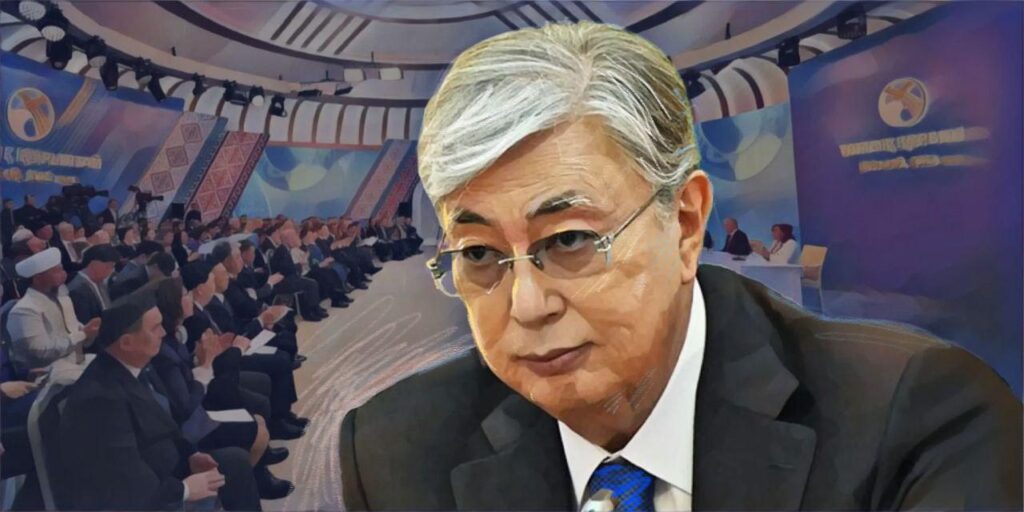
President Kassym-Jomart Tokayev used the fifth session of Kazakhstan’s National Kurultai on January 20 to propose creating a vice president’s post and embedding the new institution in the constitution, as part of a broader package of political reforms aimed at reshaping the country’s system of governance.

Under the proposal, the vice president would be appointed by the president and confirmed by parliament by a simple majority vote. The president would define the vice president’s authority, which could include representing Kazakhstan at international forums and negotiations, representing the head of state in parliament, and engaging with domestic and international organizations in political, scientific, cultural, and educational fields.

“The establishment of this position will stabilize the process of state governance, and will also bring final clarity regarding the hierarchy of power,” Tokayev said at the Kurultai.

Kazakhstan does not currently have a vice president. Executive authority is vested in the presidency, while the government is led by a prime minister, with succession procedures defined by the constitution. Tokayev said the key provisions governing the new post, including its functions, should be enshrined directly in the constitution.

The vice presidency was presented as part of a wider administrative restructuring. Tokayev said several administrative structures that support the current parliament would be abolished, along with the position of state counselor. He added that the functions, structure, and management system of the Presidential Administration would be reformed in line with practical needs.

The Kurultai session in Kyzylorda took place as the administration advances a more far-reaching overhaul of the legislature. Tokayev has promoted a transition from Kazakhstan’s bicameral parliament, composed of the Senate and the Mazhilis, to a unicameral system, arguing that the change would simplify governance and shorten decision-making chains.

President Tokayev at the National Kurultai; image: Akorda.kz

He outlined parameters for a future unicameral parliament, saying it could consist of around 145 deputies, be led by three vice-chairs, and operate with no more than eight standing committees. He also proposed renaming the legislature the “Kurultai,” saying the term reflects historical traditions of popular representation.

The parliamentary reform agenda is being developed by a working group that began reviewing constitutional options in late 2025. The idea of moving to a unicameral system was first raised in Tokayev’s national address on September 8, 2025.

On January 19, Tokayev held a meeting with the working group on parliamentary reform in Astana, where aides reported that the group had reviewed constitutional approaches to reshaping the legislature and discussed key approaches to constitutional reform based on proposals from citizens, experts, and civil organizations.

Tokayev has tied the parliamentary overhaul to a nationwide vote. He reaffirmed that citizens would make the final decision through a referendum and said Kazakhstan is targeting 2027 for a public vote on abolishing the Senate and moving to a unicameral legislature.

The latest reform proposals build on constitutional changes adopted after the unrest of January 2022. In June 2022, Kazakhstan held a nationwide referendum on proposed constitutional amendments, with more than 77% of participating voters approving changes that altered about one-third of the constitution and sought to expand the role of parliament and reshape state governance. The vote followed President Tokayev’s decree in May 2022.

Later in 2022, Kazakhstan’s parliament and Constitutional Council endorsed a shift to a single, non-renewable seven-year presidential term, replacing the previous two-term five-year limit.

Alongside the vice presidency, Tokayev proposed dismantling existing consultative bodies and replacing them with a new institution, the People’s Council of Kazakhstan, known in Kazakh as Qazaqstannyn Khalyk Kenesi. He said the Assembly of the People of Kazakhstan and the National Kurultai had largely fulfilled their historical missions.

Under the proposal, the People’s Council would become the country’s highest consultative body. It would consist of 126 members drawn from ethnocultural associations, public organizations, maslikhats (local elected councils), and regional public councils. All members would be appointed by the president, while the chair would be elected from among the council’s members.

The proposal represents a significant shift for the Assembly of the People of Kazakhstan, established in 1995 and chaired by the president. The Assembly includes more than 500 members and functions as a civil-society platform aimed at preserving interethnic harmony.

Tokayev said proposals raised at previous National Kurultai sessions have resulted in the adoption of 26 laws, including measures related to women’s rights, child protection, gambling restrictions, drug policy, onomastics, and reforms to the state awards system.

The National Kurultai was created in 2022 and holds annual sessions in different regions. Previous meetings took place in Ulytau, Turkestan, Atyrau, and Burabay.

If implemented, Tokayev’s proposals would amount to the most far-reaching institutional redesign since the 2022 constitutional reset, combining a new vice presidency with a unicameral parliament and a reconfigured consultative system. The president did not specify when draft constitutional amendments would be submitted.

Taken together, the proposals would centralize the redesign of executive, legislative, and consultative institutions within a single reform cycle, while deferring questions about the balance of power to a future constitutional debate.

Kyrgyzstan Increases Excise Taxes on Alcohol and Sweetened Beverages

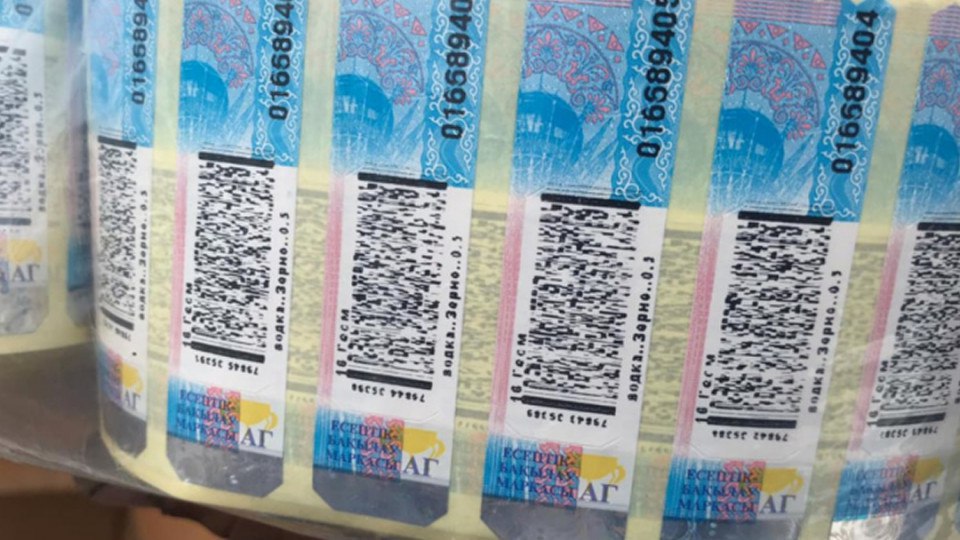
The Kyrgyz Cabinet of Ministers has approved a rise in excise tax rates on alcoholic beverages and sugar-containing drinks, including children’s juices, as part of a broader phased tax reform strategy

According to the State Tax Service (STS), the adjustments are part of a long-term initiative that will continue incrementally through the end of the decade.

The excise tax on vodka and spirits has increased from approximately $1.8 to $2.2 per liter, with an additional annual increase of about $0.2 expected in the coming years. Rates for other alcoholic beverages have also been revised:

  • Wine: increased by approximately $0.05 per liter (now around $0.2)
  • Cognac: increased by about $0.4 per liter (now about $1.6)
  • Beer: increased by roughly $0.03 per liter (now approximately $0.2)

The tax agency highlighted that the changes are being implemented gradually to mitigate potential inflationary effects on retail prices. Officials stated that the reform has a social dimension, aiming to curb consumption of products deemed harmful to public health.

In the first 11 months of last year, Kyrgyzstan collected approximately $228.5 million in excise tax revenues. Of that total, around $55 million came from domestically produced goods, including $38.8 million from alcohol sales.

New Tax Introduced on Sugar-Containing Beverages

The reform also introduces an excise tax on sugar-containing beverages for the first time, including products previously classified as baby food. Previously, such items were exempt, leading to regulatory loopholes.

The STS explained that some manufacturers registered sweetened beverages as baby food to avoid excise duties, creating unfair competition in the market. To close this gap, all sugar-containing beverages, including children’s juices, will now be taxed at a minimum rate of about $0.03 per liter.

Given the typically small packaging sizes, authorities estimate the retail price increase per unit will be modest, approximately $0.01.

The reform reflects a growing regional trend of leveraging fiscal policy to discourage unhealthy consumption habits while generating revenue for public spending.

Tashkent Choked by Smog: What 2025 Revealed and How Residents Are Responding

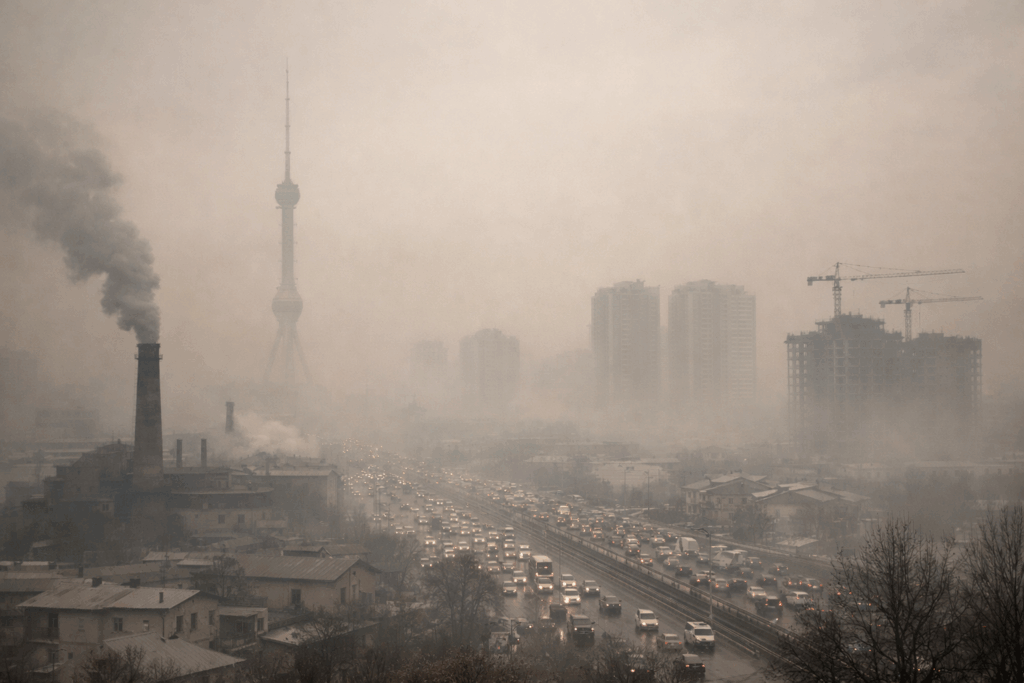
The year 2025 proved especially challenging for air quality in Uzbekistan’s capital, with Tashkent repeatedly ranking among the world’s most polluted cities during peak smog episodes. At times, short-term air quality readings placed it alongside major Asian megacities during severe pollution spikes.

These rankings were more than just statistics. Thick smog became a daily reality for residents, disrupting everyday life and intensifying concerns over public health and long-term environmental sustainability.

Coal, Cars, and Construction: What’s Fueling the Smog

Officials from Uzbekistan’s Ministry of Ecology and independent environmental researchers say Tashkent’s air pollution is primarily caused by human activity.

The heaviest blow came from municipal furnaces and boiler houses. Amid ongoing natural gas shortages, many public facilities, including schools, kindergartens, and hospitals, were converted to coal or fuel oil, resulting in a surge of emissions. Uzbekistan’s coal consumption jumped from 3.9 million tons in 2019 to 6.7 million tons in 2023.

Emissions from these sources accumulate in the lower atmosphere during the cold season, exacerbating pollution.

Vehicle emissions are another major contributor. Tashkent has approximately 193 vehicles per 1,000 residents, roughly double the national average. Many cars run on low-octane AI-80 gasoline, which contains high levels of harmful impurities. While coal use has surged, vehicle emissions remain a serious issue. In 2019, motor transport accounted for the majority of urban air emissions in several districts of the city.

Adding to the problem are industrial plants on the city’s outskirts, frequent dust storms during dry seasons, and unregulated urban development. High-rise construction has created wind barriers that disrupt air circulation, while green spaces, Tashkent’s natural air filters, have steadily disappeared. Despite an official moratorium on tree cutting, official and environmental group estimates indicate that around 49,000 trees have been felled since 2019, often by developers who face only minimal penalties.

According to Uzbekistan’s Ministry of Ecology, PM2.5 concentrations in Tashkent routinely exceed World Health Organization guidelines. During peak smog episodes in early February 2024, pollutant levels were recorded at up to 22 times the WHO’s recommended annual limits. These fine particles penetrate deep into the lungs, triggering allergies, inflammation, and cardiovascular issues. A 2019 World Bank report cited air pollution as the cause of 89 deaths per 100,000 people in Uzbekistan, the highest rate in Central Asia. Winter smog episodes have intensified since then.

Living Under a Haze: Residents Speak Out

For many Tashkent residents, smog has become part of everyday life. People commonly report throat and eye irritation, a constant dusty haze, and difficulty breathing.

“It’s dusty and hard to breathe, you feel it all the time,” said Victoria Son, 18, a student at Bucheon University.

Karina Sagidullina, 19, a videographer and programmer with severe dust allergies, said the polluted air significantly affects her health. “My nose often gets blocked, I sneeze a lot. I have to do wet cleaning at home every day,” she said.

Some residents, however, say they are less affected. “So far, I don’t really feel the air pollution. I breathe normally and don’t wear a mask,” said Toligen Nuriddinov, 22.

Others find the situation increasingly difficult. “There’s nothing to breathe. The air is very polluted, that’s why I left,” said Rufina Aminova, 19, an e-business student.

Kristina Lee, 19, described similar conditions: “It’s dusty, smoggy, hard to breathe, especially if you stay outside for a long time.”

Davud Kobulov, 25, an electrical fitter, noted that air quality varies by season. “Tashkent is very dusty. Your nose gets clogged, the air feels toxic. But in winter, when there’s precipitation, it becomes easier, the air feels fresher,” he said.

Young Activists Push for Change

Until recently, air pollution attracted little public attention in Uzbekistan. But in 2025, youth-led environmental movements pushed the issue into the national spotlight.

Student groups launched grassroots campaigns, planting trees, distributing face masks, and promoting cycling over driving. Some young developers began experimenting with mobile tools to track air quality, while universities formed student clubs focused on sustainability and urban greening.

In a rare alignment, the government has supported these initiatives. Uzbekistan designated 2025 as the Year of Environmental Protection and the “Green” Economy, and adopted a national strategy to engage young people in climate action.

Government Response and Public Expectations

Mounting public pressure has pushed the government to address the issue. Until recently, Uzbekistan lacked a formal PM2.5 standard or a comprehensive air protection plan. That is now beginning to change.

In its updated Third Nationally Determined Contribution (NDC), Uzbekistan pledged to expand renewable energy production and raise installed capacity to 25,000 megawatts by 2030.

The Ministry of Ecology has introduced a 12-point plan to combat air pollution. Key proposals include:

  • Establishing a “green belt” of forest plantations around Tashkent
  • Mandating gas and dust filtration at industrial sites
  • Strengthening air quality monitoring
  • Banning the sale of AI-80 gasoline
  • Restricting fuel oil use to emergencies
  • Phasing out pre-2010 vehicles
  • Increasing penalties for illegal tree cutting
  • Launching a nationwide tree-planting campaign with a goal of 200 million new plantings

Officials describe these steps as part of an evolving policy response rather than a single, fully implemented program.

Many Tashkent residents say they hope the city’s air pollution will improve, particularly during the winter months, when smog levels are often at their worst.

Kazakh Diplomacy: Why Tokayev Aligned Kazakhstan With the Abraham Accords

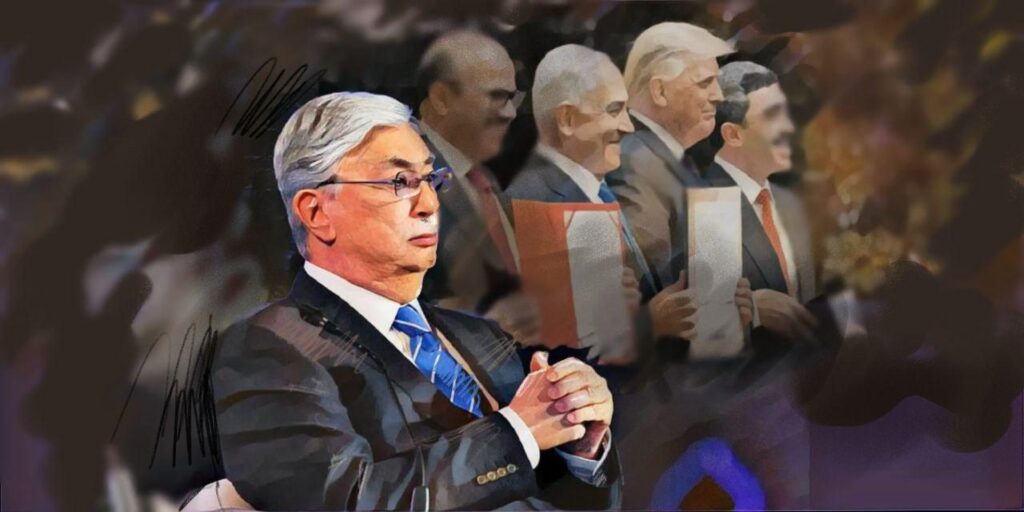
On November 6, 2025, President Kassym-Jomart Tokayev confirmed that Kazakhstan had formally acceded to the Abraham Accords, aligning the Central Asian state with the U.S.-brokered diplomatic framework. Launched during Trump’s first presidential term, the Abraham Accords seek to expand diplomatic normalization between Israel and Muslim-majority states. Initially signed in September 2020 by Israel and the United Arab Emirates, and separately by Israel and Bahrain, the Abraham Accords were later expanded to include Morocco and Sudan.

Within the broader Abraham Accords framework, Washington continues to seek Saudi Arabia’s participation, a step viewed as diplomatically significant given the kingdom’s custodianship of two of Islam’s holiest sites. However, the process was derailed following the outbreak of the Gaza war in late 2023, triggered by a Hamas attack on Israel. Riyadh has since insisted that normalization can only proceed once there is meaningful progress toward establishing a Palestinian state.

Kazakhstan, a secular state with a Muslim-majority population, has maintained diplomatic ties with Israel since April 1992. Embassies were opened in 1996, and bilateral relations have expanded steadily, including in trade, defense, and humanitarian fields. In 2016, Israeli Prime Minister Benjamin Netanyahu visited Kazakhstan, highlighting the strength of this relationship. These longstanding ties help explain why Kazakhstan’s accession did not mark a shift in its bilateral relationship with Israel.

Because Kazakhstan established full diplomatic relations with Israel decades ago, several analysts have described the country’s accession to the Abraham Accords as largely symbolic. Uzbek political scientist Kamoliddin Rabbimov argues that the decision was a calculated gesture rather than a shift in Kazakhstan’s geopolitical orientation.

“The question arises: is Kazakhstan really ready to weaken its relations with China, Turkey, and Russia in order to join the American-Israeli alliance? I don’t think so,” Rabbimov said. “President Tokayev most likely just formally supported Trump’s initiative by saying ‘yes’ without putting any real geopolitical meaning into it. Nevertheless, even such a ‘yes’ is capable of slightly upsetting the balance in Kazakhstan’s foreign policy.”

Giorgio Cafiero, the CEO of Washington-based Gulf State Analytics, views the move as strategic positioning. “Given the Trump administration’s determination to expand the scope of the Abraham Accords, this move by Kazakhstan was a relatively easy way to win the White House’s favor.”

German analysts at Kettner Edelmetalle emphasize Kazakhstan’s natural resource wealth as a key factor. “The country has significant deposits of minerals and rare earth elements, resources that are indispensable for modern technologies. By strengthening ties with Washington, Astana apparently hopes to attract more American investment in this strategically important sector.”

Eldar Mamedov, non-resident fellow at the Queens Institute and a former senior advisor to the European Parliament, views the development through the lens of geopolitical balancing. “The Abraham Accords are merely a tool in Astana’s deliberate efforts to diversify its geopolitical dependence on Moscow and strengthen its strategic relations with the United States,” he writes. “Perceiving them as the beginning of a new, ideologically defined bloc misinterprets the fundamentally pragmatic and self-interested nature of Kazakhstan’s calculations.”

Kazakhstan’s accession to the Abraham Accords reflects Tokayev’s broader effort to balance relations with major powers. While it may not represent a dramatic reorientation of foreign policy, the move raises Kazakhstan’s diplomatic profile in Washington without signaling a fundamental shift in its multi-vector foreign policy.