President Kassym-Jomart Tokayev has called for negotiations among nuclear powers and urged faster action to bring the Comprehensive Nuclear-Test-Ban Treaty, designed to prohibit all nuclear test explosions, into force as Kazakhstan marked the 35th anniversary of the closure of the Semipalatinsk nuclear test site on August 29.
The date also marks the International Day against Nuclear Tests, established by the UN General Assembly at Kazakhstan’s initiative in 2009.
“Our country’s position as one of the leaders of the global anti-nuclear movement remains unchanged. We call for negotiations among nuclear powers, the earliest possible entry into force of the Comprehensive Nuclear-Test-Ban Treaty, and decisive multilateral action to eliminate the threat of nuclear weapons use,” Tokayev said.
He said Kazakhstan’s decision to relinquish the world’s fourth-largest inherited nuclear arsenal reflected a choice in favor of peace, security, and sustainable development. Tokayev also said nuclear energy should be used exclusively for peaceful purposes, linking the country’s referendum-backed development of nuclear power to its long-term economic, scientific, and technological development.
A Call After New START’s Expiry
New START, the last U.S.-Russian strategic nuclear arms treaty, expired on February 5, 2026. On-site inspections, paused by mutual agreement in March 2020 because of the pandemic, never resumed. Russia blocked inspections in 2022 and halted treaty-required data exchanges after suspending implementation in 2023. The treaty’s expiry removed the last legally binding bilateral limits on deployed U.S. and Russian strategic nuclear forces, with no successor agreement in place.
The Comprehensive Nuclear-Test-Ban Treaty has still not entered into force nearly three decades after opening for signature. It has been signed by 188 states and ratified by 179. Ratification by nine of the 44 states whose ratification is required for the treaty to enter into force is still needed.
China, Egypt, Iran, Israel, and the United States have signed but not ratified. India, North Korea, and Pakistan have not signed, while Russia revoked its ratification in 2023.
Speaking at a Stimson Center event in Washington on August 26, co-hosted by the Tony Blair Institute for Global Change and attended by The Times of Central Asia, International Atomic Energy Agency (IAEA) Director General Rafael Mariano Grossi made a broader case for renewed engagement.
“This is an era for diplomacy,” Grossi said, arguing that growing international fragmentation has made diplomacy more necessary.
Tokayev also brings direct experience to the issue. Before becoming president, he served as a UN under-secretary-general and director-general of the UN Office at Geneva, the UN secretary-general’s personal representative to the Conference on Disarmament, and secretary-general of the Conference on Disarmament.
Disarmament in Practice
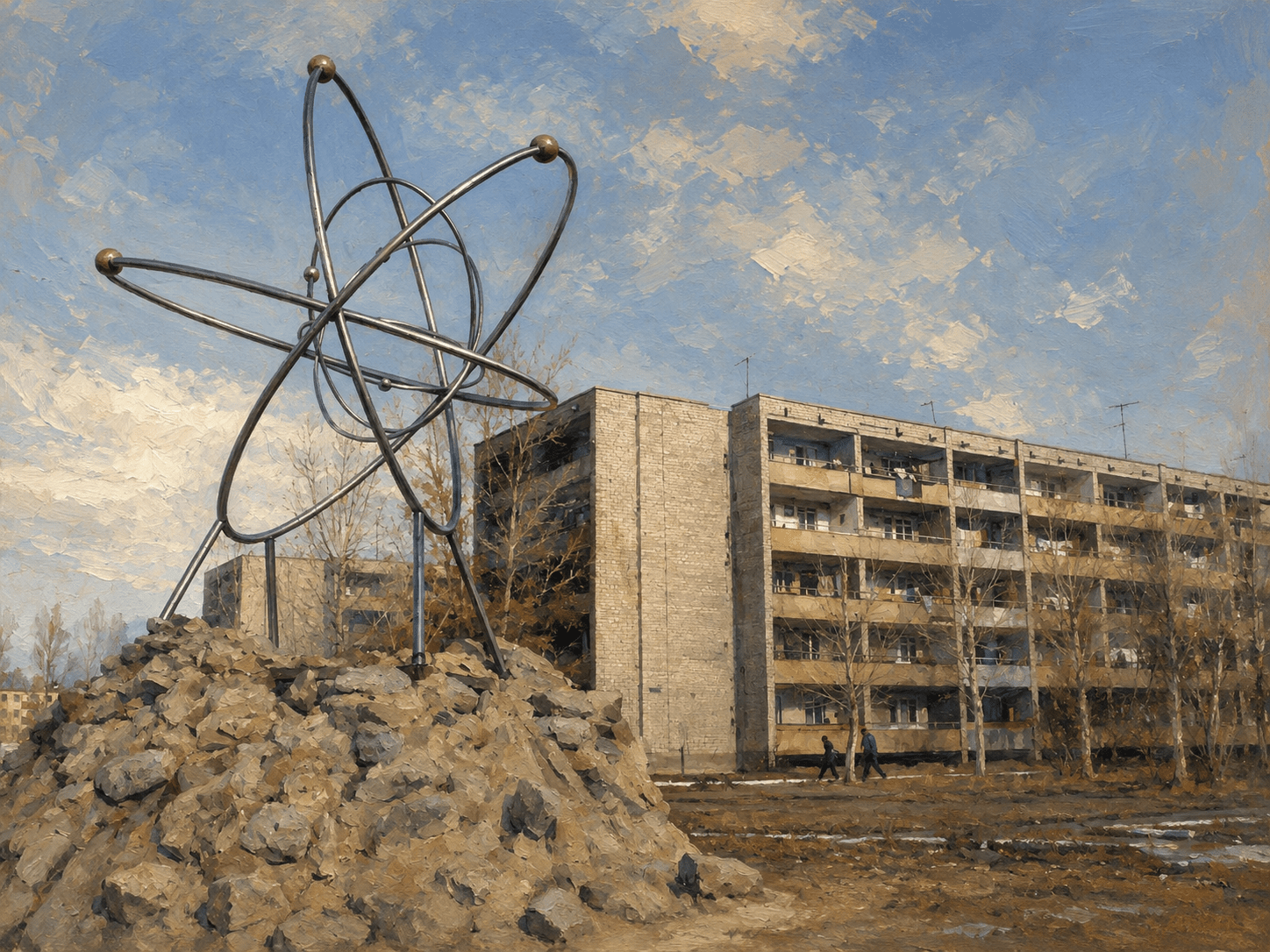
The Soviet Union conducted 456 nuclear tests at Semipalatinsk between 1949 and 1989, causing lasting damage to human health and the environment in surrounding regions. After independence, Kazakhstan transferred the nuclear warheads on its territory to Russia, joined the Nuclear Non-Proliferation Treaty as a non-nuclear-weapon state, and worked with the United States to dismantle associated infrastructure under the Cooperative Threat Reduction program.
Much of that cooperation took place through the program commonly known as Nunn–Lugar. Kazakhstan and the United States also carried out Project Sapphire in 1994, removing nearly 600 kilograms of highly enriched uranium from Kazakhstan for secure storage and disposition in the United States.
John Lugar, executive director of The Lugar Center, told The Times of Central Asia: “At a time when formal arms-control frameworks are weakening, Kazakhstan offers an important reminder that nuclear risk reduction is still possible. The Nunn–Lugar partnership succeeded because both countries treated nuclear security as a shared interest and translated political commitments into concrete action.”
Kazakhstan now hosts the IAEA Low Enriched Uranium Bank at the Ulba Metallurgical Plant in Oskemen, a 90-metric-ton reserve of low-enriched uranium suitable for producing civilian reactor fuel. The bank itself is a supply of last resort rather than a uranium down-blending facility, although Ulba has separately been used in Kazakhstan-U.S. non-proliferation work to down-blend fresh highly enriched reactor fuel.
Together, these projects have given Kazakhstan practical experience in nuclear security, non-proliferation, and international safeguards. They also reinforce the distinction at the center of Tokayev’s position between opposition to nuclear weapons and support for peaceful nuclear technology.
A Role if Iran Diplomacy Resumes
Kazakhstan’s experience could become relevant if diplomacy over Iran’s nuclear program resumes. A June memorandum between Washington and Tehran said the disposition of Iran’s stockpiled enriched material would be resolved through a mutually agreed mechanism, with on-site down-blending under IAEA supervision as the minimum approach. The memorandum later collapsed, and U.S.-Iran negotiations are now stalled.
Earlier, on May 26, Tokayev reaffirmed Kazakhstan’s readiness, strictly as a gesture of goodwill and subject to appropriate international agreements, to assist in resolving the situation surrounding Iran’s nuclear program. Grossi said Kazakhstan had the political authority, infrastructure, and scientific and technical base needed to implement possible agreements.
Kazakhstan also has experience in Iran nuclear diplomacy. It hosted two rounds of talks between Iran and six world powers in Almaty in 2013. As part of the implementation of the 2015 nuclear agreement, Kazatomprom later supplied Iran with 60 metric tons of natural uranium on commercial terms as compensation for low-enriched uranium removed from Iran.
The existing IAEA fuel bank is a supply-of-last-resort mechanism for eligible countries whose normal nuclear-fuel supplies are disrupted.
Any Kazakh role involving Iran’s enriched uranium stockpile would require a separate legal and technical arrangement under IAEA safeguards. Kazakhstan’s most realistic contribution would be to provide a venue, technical cooperation, or support for an internationally agreed arrangement once the political terms had been settled.
Kazakhstan’s Case for Renewed Arms Control
Thirty-five years after Semipalatinsk closed, Tokayev’s appeal rests on a record rather than rhetoric. Kazakhstan shut the test site, relinquished an inherited nuclear arsenal, and placed its nuclear activities within the international non-proliferation and safeguards system. It cannot compel the nuclear powers to negotiate, but it can point to what deliberate political choices can achieve.
With New START gone and the test-ban treaty still not in force, Tokayev’s message is that delay is itself a decision — one that leaves the world with fewer binding limits, less transparency, and a growing risk of nuclear weapons use. Kazakhstan made its choice 35 years ago. The nuclear powers now face theirs.