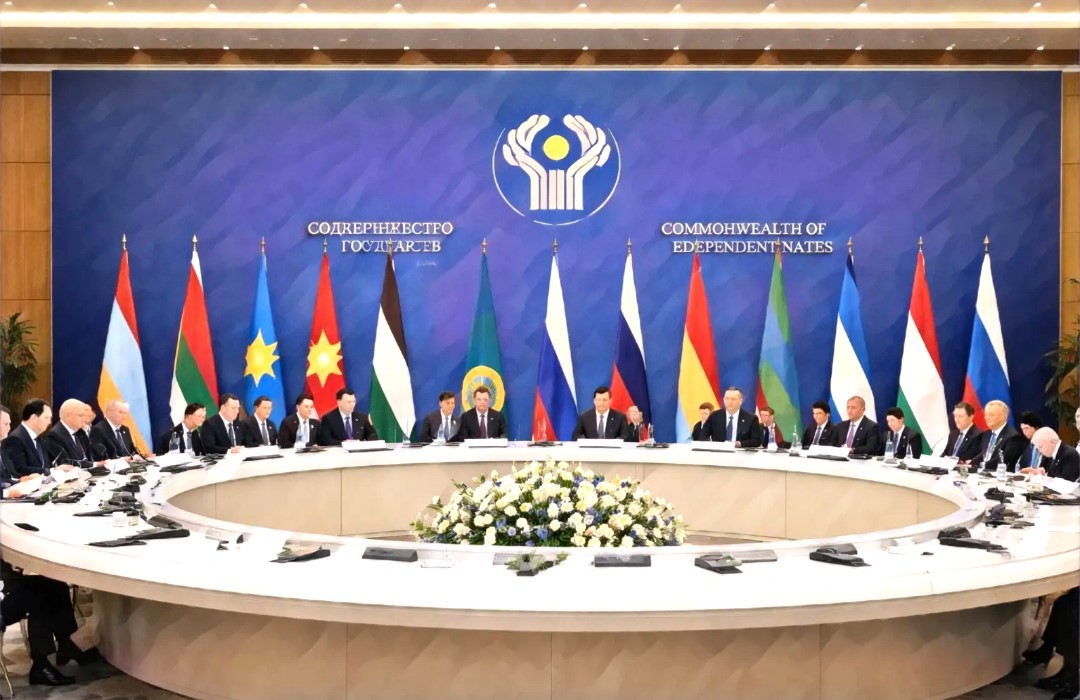
The Commonwealth of Independent States has pledged its full support for Turkmenistan’s chairmanship of the CIS in 2026, signaling a rare moment of consensus around Ashgabat’s role within the post-Soviet bloc.
According to a statement from the CIS Executive Committee, member states agreed to assist Turkmenistan in implementing its chairmanship program, including organizational, analytical, and coordination support. The commitment was discussed during consultations involving CIS officials and representatives of member governments, with a focus on continuity and practical cooperation within the organization.
Turkmenistan, which maintains a policy of permanent neutrality and typically limits its participation in multilateral institutions, is expected to use the chairmanship to emphasize economic cooperation, transport connectivity, and humanitarian initiatives. While Ashgabat has historically kept a low profile within the CIS, its upcoming leadership role offers an opportunity to shape the bloc’s agenda at a time when its relevance is increasingly being questioned.
Formed after the collapse of the Soviet Union in 1991, the CIS continues to function as a platform for dialogue and technical cooperation, despite waning political influence and increasing overlap with newer regional formats. For Central Asian states, CIS mechanisms still intersect with trade coordination, labor migration frameworks, and regulatory alignment, even as governments pursue more diversified foreign policy strategies.
Turkmenistan’s chairmanship will coincide with broader regional shifts, as Central Asian countries balance engagement with legacy post-Soviet institutions against emerging diplomatic and economic initiatives. Observers note that Ashgabat is likely to adopt a cautious and pragmatic approach, avoiding overt political positioning while focusing on areas consistent with its neutrality doctrine.
Further details of Turkmenistan’s chairmanship priorities are expected to be announced in the coming months, as the CIS Executive Committee and Turkmen authorities finalize the agenda and calendar of events.