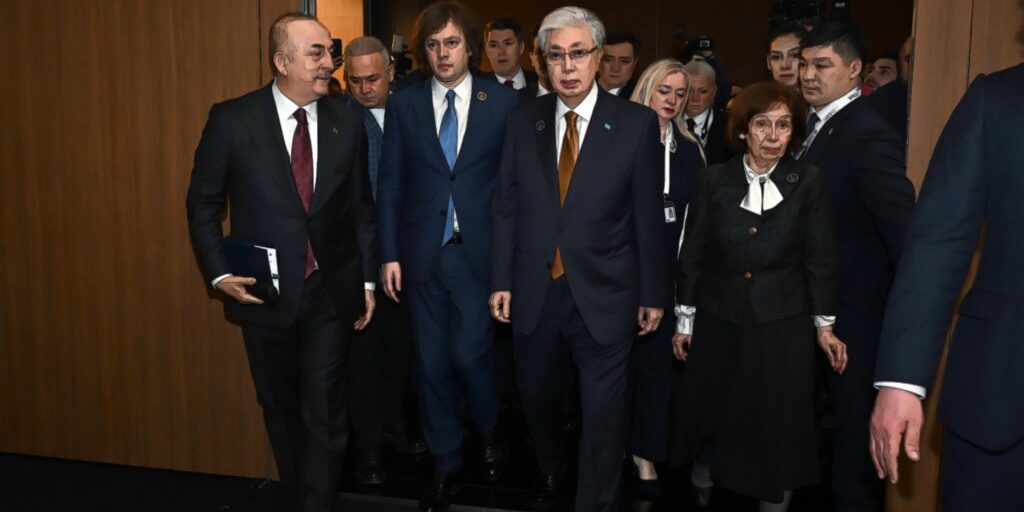
The Antalya Diplomacy Forum, from April 17 to 19, brought together heads of state, foreign ministers, and senior officials at a tense moment in international politics. The official theme, “Mapping Tomorrow, Managing Uncertainties,” reflected the backdrop: war in the Middle East, pressure on trade, and growing doubts about the strength of international institutions. Central Asia did not dominate the gathering, but the region was visible across the program and in the meetings around it. Kazakhstan’s President Kassym-Jomart Tokayev was the highest-profile regional figure in attendance, while Kyrgyzstan sent Foreign Minister Jeenbek Kulubaev, Turkmenistan sent Foreign Minister Rashid Meredov, and Tajikistan sent Deputy Foreign Minister Farrukh Sharifzoda. Uzbekistan was also active through Foreign Minister Bakhtiyor Saidov in meetings held during the forum dates.
The strongest Central Asian intervention came from Tokayev. Speaking at a panel session, he said the United Nations remains indispensable, but also made clear that its present structure is failing to keep up with current crises. “We must honestly acknowledge that the Security Council is the central element in the reform of the United Nations,” he said. He also warned that many key negotiations now take place outside the UN system, in separate capitals and closed rooms, rather than through the institution that was built for that purpose.
Tokayev framed the problem in practical terms rather than abstract ones. He said global leaders must approach peace and security “with a strong sense of responsibility,” adding that “we must act more responsibly and exercise restraint.” Tokayev also said Kazakhstan calls on all countries involved in the Iran conflict to cease hostilities while keeping the focus on the core issue of nuclear proliferation. His language matched the line Astana has tried to hold for years: avoid escalation, preserve room for dialogue, and keep diplomatic channels open.
Tokayev went further when he turned to the role of what he called “middle powers,” naming Kazakhstan and Türkiye among the states that, in his view, show a high degree of responsibility in both diplomacy and practice. He said it would “not be an exaggeration to say that today middle powers often demonstrate a greater degree of responsibility than major powers represented in the Security Council, which, regrettably, often obstruct the resolution of key global issues.” That was one of the sharper lines delivered at the summit. It also showed how Kazakhstan now wants to place itself in the world: not as a passive actor caught between larger powers, but as a state that can help steady an increasingly unstable system.
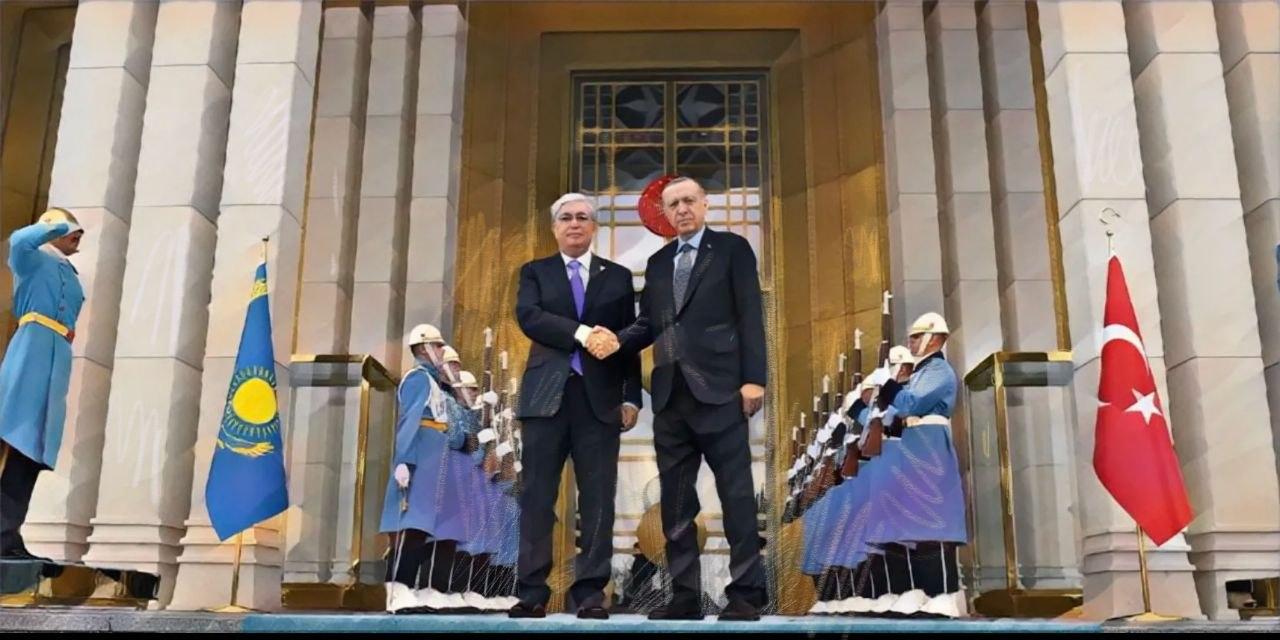
Türkiye was central to that framing. At the start of his remarks, Tokayev praised President Recep Tayyip Erdoğan’s role in the region and said Kazakhstan was looking forward to Erdoğan’s state visit next month. That also reflects a broader trend of closer coordination between Kazakhstan and Türkiye, including in the Trans-Caspian transport route (Middle Corridor) and shifting Caspian dynamics.
Uzbekistan approached the summit in Antalya differently. Tashkent did not have a presidential intervention on the main stage, but it used the gathering for a dense round of practical diplomacy. Foreign Minister Saidov took part in an informal meeting of the Council of Foreign Ministers of the Organization of Turkic States, where officials discussed transport, energy, green transformation, digitalization, innovation, and the “OTS Plus” format. In a separate move, Uzbekistan and Rwanda signed a joint communiqué establishing diplomatic relations. Saidov also held meetings with counterparts from Turkmenistan, Bangladesh, Jordan, Azerbaijan, Ukraine, and Lithuania.
That combination says a lot about Uzbekistan’s current diplomatic style: active, outward-looking, and practical. Antalya gave Tashkent a chance to deepen Turkic cooperation, widen its network, and leave with formal bilateral results. The Rwanda agreement did not change the strategic map, but it showed how Uzbekistan now uses multilateral gatherings to expand its diplomatic footprint in small, steady steps.
Kyrgyzstan placed the regional angle at the center of its presence. According to the national news agency, Kabar, Kulubaev joined talks with the Central Asian delegations and Türkiye on the region’s changing role in global affairs, its advantages, current security risks, and the prospects for deeper integration. He also participated in the OTS foreign ministers’ meeting on the sidelines of the summit. The language emerging from those discussions presented Central Asia not as a fragmented space, but as a region with shared opportunities and shared exposure to risk.
Turkmenistan arrived with its emphasis firmly on infrastructure and energy. Meredov said that construction of all gas transport infrastructure for the Turkmen section of the TAPI pipeline had been “fully completed, covering more than 200 kilometers,” and that work in Afghanistan now extends over more than 150 kilometers. The wider question remains as to whether TAPI is still struggling to become more than a partial project. Meredov also met Saidov on the sidelines to discuss bilateral and multilateral plans for the year ahead.
Tajikistan was less visible than its neighbors, but it was present. Sharifzoda attended the forum and held a meeting with the adviser to the prime minister of Bangladesh on April 18, targeting bilateral contacts rather than headline speeches.
No dramatic Central Asian breakthrough came out of Antalya. There was no new regional pact and no sweeping declaration from the five republics. But the forum still showed something important. Kazakhstan drew the most attention through Tokayev’s call for UN reform, preventive diplomacy, and a stronger role for middle powers. Uzbekistan used the gathering for practical diplomacy and new bilateral steps. Kyrgyzstan joined discussions that framed Central Asia as a region with growing weight in global affairs. Turkmenistan kept the focus on transit and energy. Tajikistan maintained bilateral contacts. Taken together, those appearances showed a region that is becoming more coordinated, more outward-looking, and more confident in using major international forums to advance its interests.