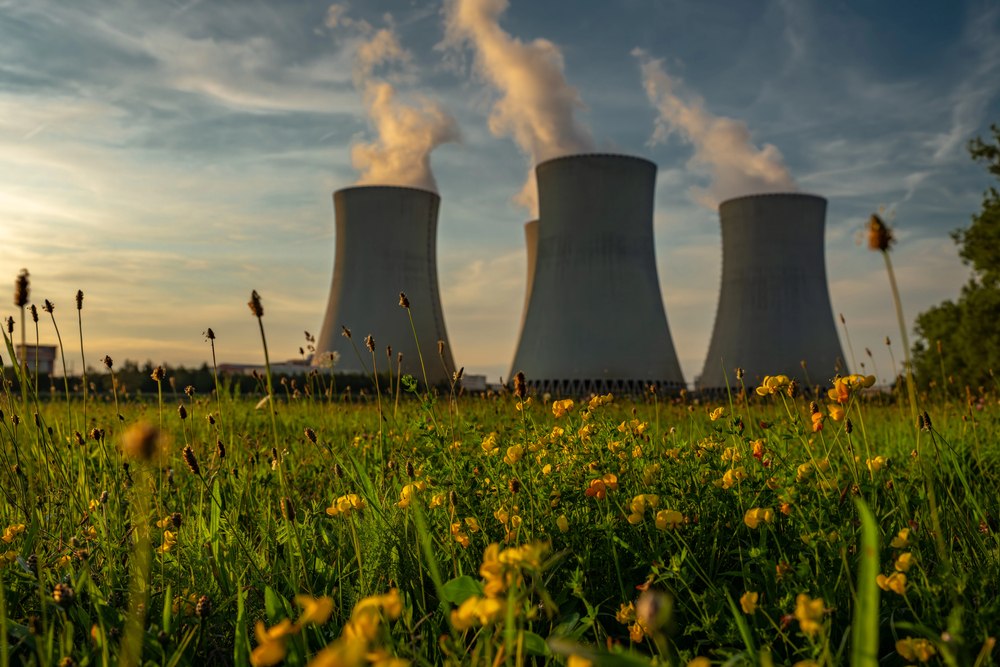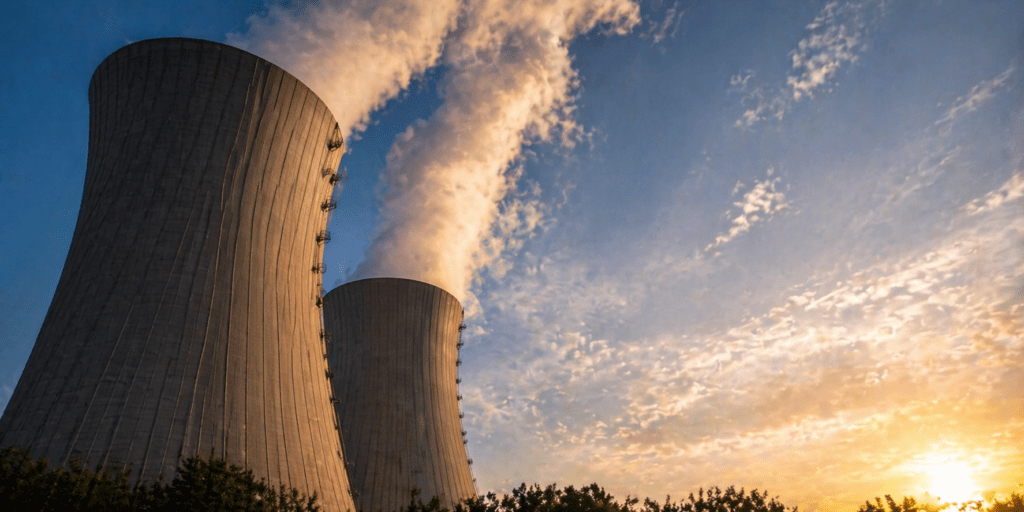
Uzbekistan plans to use a dry cooling system at its first nuclear power plant, under construction in Jizzakh region, to reduce water consumption. Instead of relying on conventional evaporative cooling, the plant will use air to dissipate heat. The plan comes as Uzbekistan faces growing pressure on its limited water supplies, much of which are used for agriculture.
The plans were announced by Azim Akhmedkhodjayev, director of Uzbekistan’s Atomic Energy Agency, Uzatom, at the international World Atomic Days forum held in Antalya, Turkey, on November 12–13.
“Taking water from nature is something we simply have no right to do,” Akhmedkhodjayev said, nothing that the system would reduce the plant’s demand for water and help protect local water resources.
Dry cooling significantly reduces water consumption, although a nuclear power plant cannot operate entirely without water, which is needed for various technical and safety-related processes. The technology also has a limitation: it becomes less effective at removing heat in hot weather. Given Jizzakh region’s high summer temperatures, this will require particular attention during the design process. Uzatom has not disclosed how much water the system is expected to save or how summer temperatures might affect electricity output.
Uzbekistan’s first nuclear power plant is being built in the Farish district of Jizzakh region with the participation of Russia’s state nuclear corporation Rosatom. The project includes two large VVER-1000 reactors of 1,000 megawatts each and two smaller RITM-200N reactors, each rated at 55 megawatts, with a combined capacity of 2.11 gigawatts. Expected annual electricity generation is approximately 17.2 billion kilowatt-hours.
The original 2024 agreement called for six small reactors. The project was subsequently revised to combine large and small power units at a single site. Construction officially began on June 4, 2026, with the first concrete poured overnight on June 4–5 for the foundation of the first small reactor unit.
The completed plant is estimated to supply around 14–15% of Uzbekistan’s electricity consumption. According to Uzatom, the larger reactors are intended to provide a steady supply of electricity, while the smaller units will help balance the power system when generation from solar and wind farms falls.
Construction began with the smaller reactors. According to Akhmedkhodjayev, the integrated design of the RITM-200N eliminates the need for large-diameter piping within the reactor unit, which he said reduces the risk of a sudden loss of coolant.
Locating the reactors at a single site will allow them to share infrastructure, emergency response systems, and training facilities. Specialists are being trained at the Tashkent branch of the National Research Nuclear University MEPhI, while local equipment suppliers are expected to participate through the Atom-Sanoat industrial zone.
The first small reactor is scheduled to undergo initial startup in late 2029, followed by the first large reactor in 2033. The entire complex is expected to be fully operational by 2035.
Uzbek authorities forecast that the country’s electricity consumption will reach 121 billion kilowatt-hours by 2035. At the same time, Uzbekistan is expanding solar and wind power generation as it seeks to reduce its dependence on natural gas.
Uzbekistan is also considering further nuclear expansion. In August, authorities announced preparations for a second plant, and in October they outlined plans for a third. Details of the proposed projects have yet to be finalized.