Uzbekistan has started building its first nuclear power plant, turning a project discussed for nearly a decade into one of the largest energy commitments in the country’s post-Soviet history. President Shavkat Mirziyoyev and Russian President Vladimir Putin launched construction on June 4 by video link from Saint Petersburg. The plant site in the Forish district of the Jizzakh region was connected to the ceremony. Rafael Mariano Grossi, director general of the International Atomic Energy Agency, also took part.
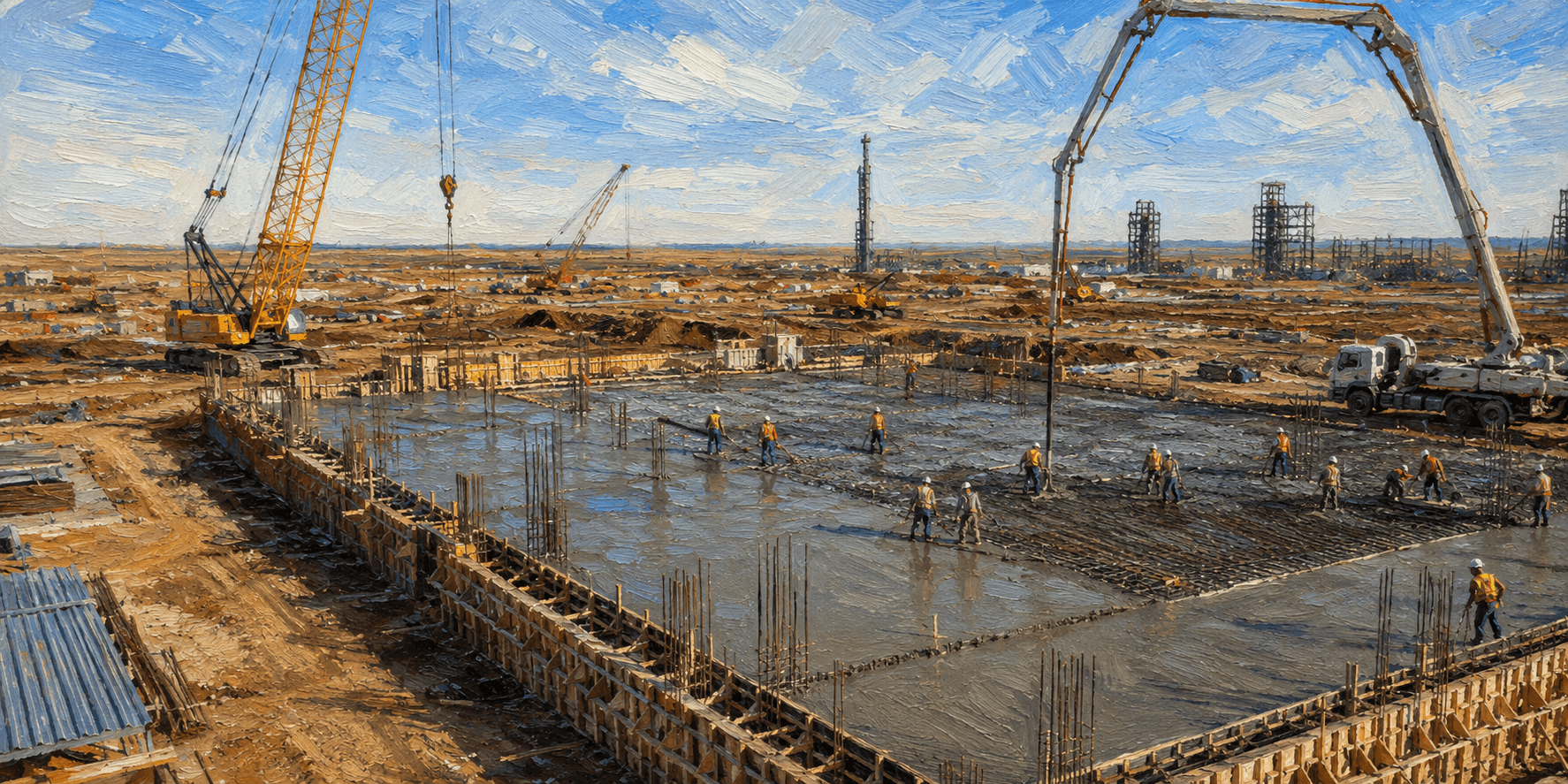
The first concrete pour began overnight from June 4 to June 5 for the foundation slab of the plant’s first small modular unit. The first stage used 133 cubic meters of concrete. The full pour is expected to exceed 10,000 cubic meters. Uzatom gave the site the official status of a nuclear power plant under construction under IAEA standards.
The plan is no longer the modest small-reactor scheme agreed in 2024. The current design combines two large VVER-1000 reactors with two smaller RITM-200N units. Together, they would give the Jizzakh plant more than 2.1 GW of installed capacity. The small and large units will share one site and supporting infrastructure. That shift raised both the scale and the financial and regulatory stakes.
This design is the latest version of a plan that has changed several times. Uzbekistan and Russia signed an intergovernmental agreement on peaceful nuclear cooperation in 2017. In 2018, Rosatom was expected to build two VVER-1200 reactors. The focus later shifted to Jizzakh. In May 2024, Uzbekistan and Rosatom signed a contract for a 330 MW small nuclear plant with six RITM-200N reactors. The plan changed again in 2025, when Tashkent and Moscow settled on the larger mixed-reactor format now under construction.
The timetable shows how long the project will take before Uzbekistan gets power from it. The first RITM-200N unit is listed for criticality in late 2029, with the two larger VVER-1000 reactors expected in 2033 and 2035.
The push reflects Uzbekistan’s fast-rising demand for power. The International Energy Agency says the country’s 2020-2030 electricity concept aims to lift generation from 63.6 billion kWh to 120.8 billion kWh by 2030, while cutting gas use in power generation. Uzbekistan produced 86.7 billion kWh in 2025. Renewable power is growing, but officials want a steady baseload supply for industry and cities.
Uzbek and Russian estimates put full annual output at about 17 billion kWh. Putin put the future share at up to 15% of Uzbekistan’s electricity use, with Reuters also placing the expected contribution at around 15% of demand. Those figures depend on the timing of each unit and on future consumption, which is still rising.
Financing is now one of the central questions. Uzatom director Azim Akhmedkhadjaev put the project’s base price at $9.5 billion and described that figure as the maximum contract amount. The estimate does not include planned localization, which Uzbekistan wants to raise to 30%. Tashkent wants loans to cover 85-90% of the project and may discuss funding with the New Development Bank and other partners.
Russia has also offered its own financing. Putin said Moscow would provide Uzbekistan with a concessional export loan and support the project across the plant’s life cycle. That support includes fuel supplies, maintenance and work with spent nuclear material. The loan amount and terms have not been made public. Tashkent has previously said it would judge any Russian credit by the competitiveness of its terms.
The future power price remains unsettled. Akhmedkhadjaev put the expected cost of nuclear electricity at below 1,000 Uzbek soums per kWh, but did not give a final tariff. The eventual price will depend on market reforms, including a planned wholesale electricity market and direct contracts for large consumers using more than 10 million kWh a year. Industry and consumers will not know the final cost until financing and market rules become clearer.
Water and safety will also shape the project. Uzbekistan has discussed dry cooling systems for the nuclear plant, including Hungarian technology, to reduce water consumption. The regulator will retain state control over license conditions, construction safety, and protection of the public and environment. Mirziyoyev called safety an absolute priority and said the plant would be prepared for operation under IAEA supervision.
In May, Moscow signed a separate agreement to build a two-unit VVER-1200 nuclear plant near Lake Balkhash, with export-loan financing included in the package. Kazakhstan has broken ground on the project, with early engineering and survey work underway. Together, the Uzbek and Kazakh plants would deepen Rosatom’s role in the region’s long-term energy system.
For Uzbekistan, the Jizzakh plant could give the country a new domestic nuclear industry and a steady source of power as demand rises and gas-fired generation comes under pressure. However, the project also locks Tashkent into a long construction schedule, major borrowing, Russian fuel-cycle arrangements, and years of safety oversight.
The Saint Petersburg ceremony gave the plan backing from both presidents. The work now shifts to financing, regulation, and delivery. Uzbekistan has poured the first concrete, but it still has to prove it can bring nuclear power into a grid already being reshaped by gas shortages, renewables, and rising demand.