Striving to be at the forefront of the climate transition, Kyrgyzstan is taking active steps toward renewable energy deployment, including the adoption of the Renewable Energy Development Program for 2026–2030. However, compared to other Central Asian states, Kyrgyzstan has been going through a paradoxical green transformation in a few key aspects.
On the one hand, state strategies, commitments to green transformation, and quotas to import electric vehicles (EVs) create the impression of active promotion of eco-friendly vehicles. On the other hand, a comprehensive shift has been impeded by inadequate infrastructure, a lack of charging stations, and technical and regulatory gaps. As a result, incentives to import and use EVs have outpaced the expansion of the country’s charging infrastructure.
Driving through Bishkek, one thing becomes clear about EV ownership: owners of private houses usually gain more practical benefits than apartment residents because they can install charging stations in their garages or yards. Nevertheless, according to statistics, Bishkek’s housing stock is characterized by a predominance of multi-apartment buildings: for 205,000 registered apartments there are only about 90,000 individual residential buildings (a ratio of more than 2.2 to 1). For apartment residents, the absence of dedicated infrastructure in residential parking areas can limit access to convenient and safe charging.
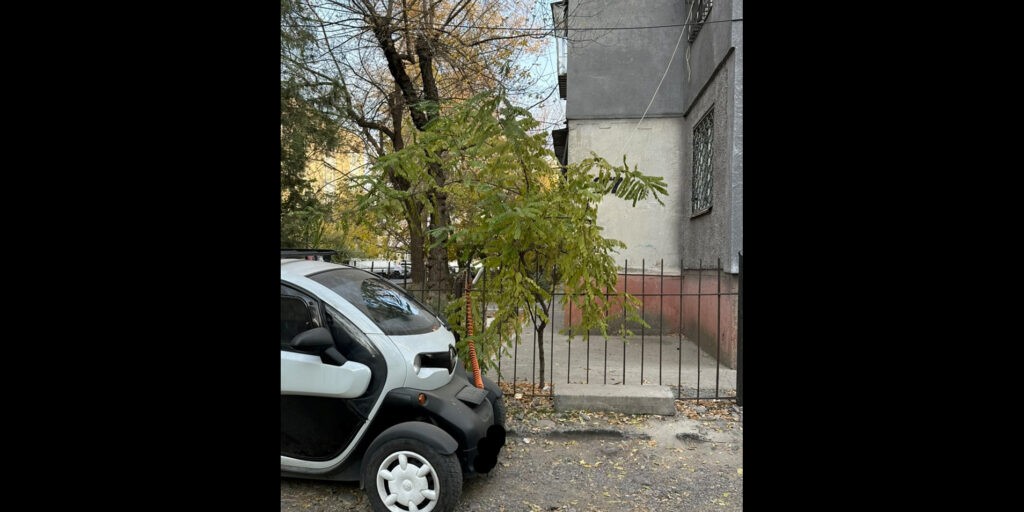
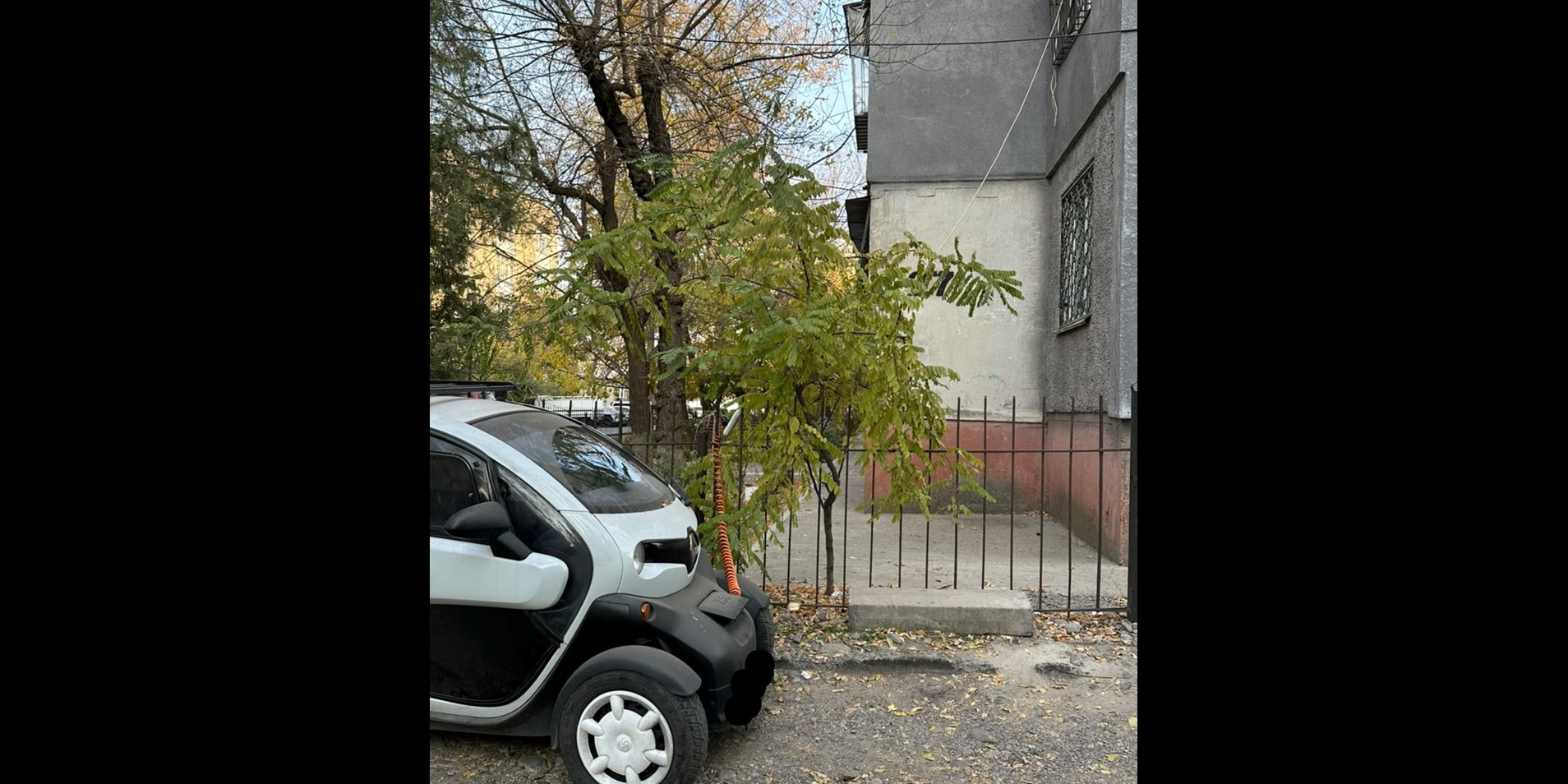
The lack of appropriately installed charging stations can lead to unsafe, “do-it-yourself” solutions. Many EV owners resort to workarounds, running long extension cords directly from apartment windows down to the street to their parked vehicles. When citizens have to resort to hazardous solutions and overload the outdated electrical wiring in homes, this unsafe charging method also features the aesthetic signs of infrastructural poverty.
An EV dealer who asked not to be named told us, “The primary concern is a high fire hazard: these extension cords are not designed to handle the sustained, high-power transmission required for charging, which can cause the cables to overheat. Furthermore, given our climate characterized by dry, hot summers and significant temperature fluctuations in winter, there is an increased risk of short circuits, which could damage not only the electric vehicle’s battery but also the building’s internal electrical wiring”.
Given these issues, we believe clear regulatory frameworks could mitigate those risks, but for now there is a loophole around homemade charging spots. There are no uniform rules among Bishkek’s homeowners’ associations and property management companies regarding the installation of outdoor electric vehicle (EV) chargers. Consequently, the courtyards of apartment buildings have become flashpoints for conflict, with residents arguing over the appropriation of parking spaces, the use of communal electricity, and the installation of makeshift, improvised wiring.
A logical solution to this impasse would be to incorporate charging infrastructure into the design phase of new residential developments. However, our observations of current construction projects in Bishkek reveal a discouraging reality: developers are largely ignoring the trend toward electrification. Neither in the architectural planning stages nor during the laying of foundations do they incorporate basic infrastructure for electric vehicles, effectively offloading this challenge onto future residents.
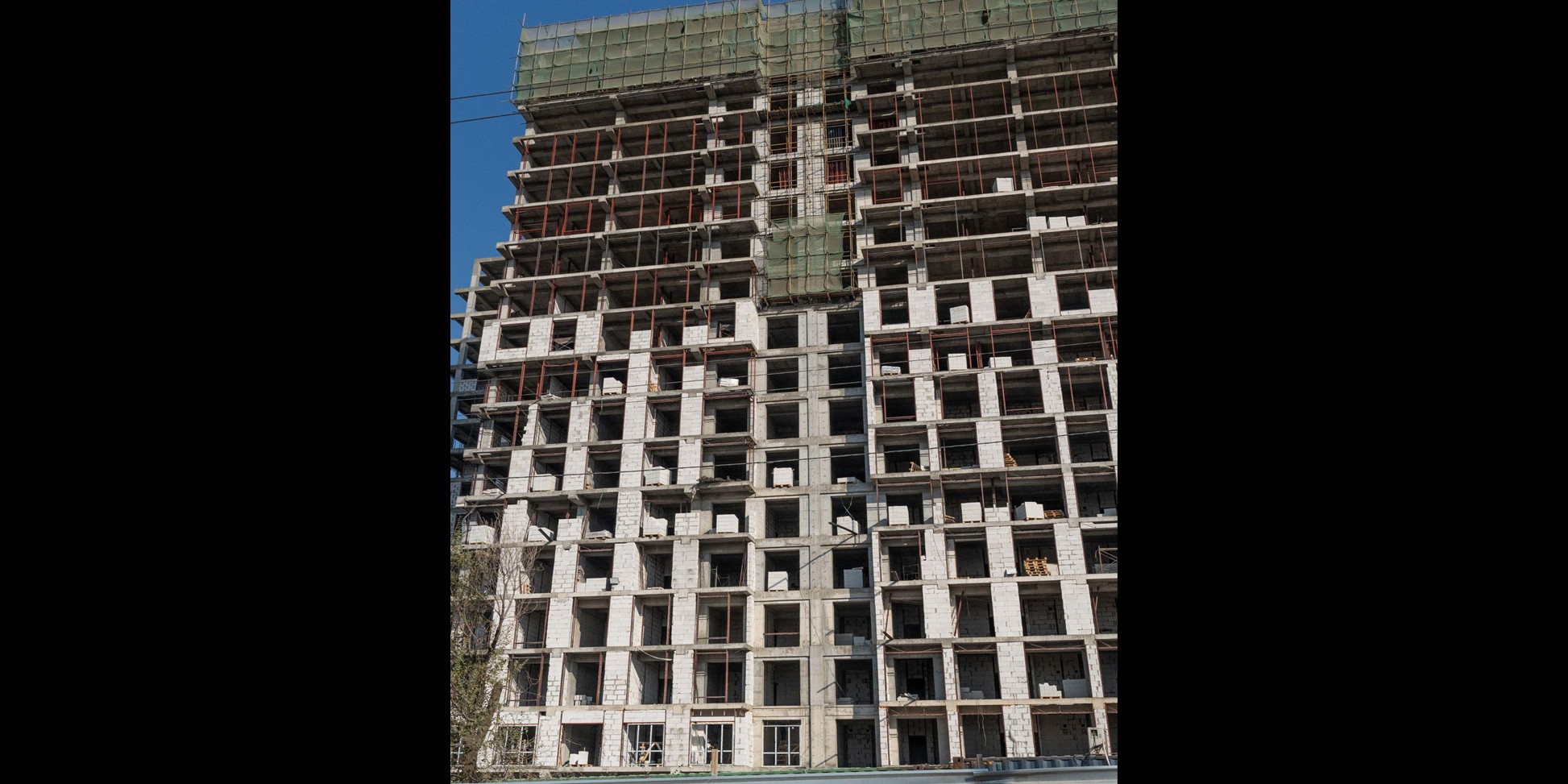
New construction in Bishkek is equipped with neither solar panels nor charging stations.
The regulatory approach to involving construction companies in green energy is inconsistent. According to Vesti.kg, an amendment dated September 28, 2026, requires the Ministry of Construction, Architecture, and Housing and Communal Services to incorporate renewable energy installations into the design requirements for commercial multi-story residential buildings. However, projects under the state housing program “Menin Uyüm” (“My Home”) are exempt from this requirement.
The regulator’s logic is clear: to prevent an increase in the cost per square meter and keep housing affordable for citizens. However, this approach plants a “ticking time bomb.” By exempting social housing from mandatory environmental and engineering upgrades, the state effectively shifts the entire burden of the green transition and electrification onto private developers and the commercial sector. As a result, the mass-market housing sector risks being cut off from modern energy-efficient infrastructure and facilities for electric vehicles for years to come.
To obtain an expert assessment of the identified development and infrastructure barriers, we consulted a practicing architect. Nurislam Myrzakanov, a member of the Union of Architects of Kyrgyzstan, co-founder of the Urban Development Foundation, and CEO of the architectural and development company ADD, commented:
“Establishing a charging hub within a residential complex requires obtaining at least three additional layers of technical and engineering approvals. The vast majority of construction companies in Bishkek do not plan to retain long-term management of the residential complexes they build, opting instead to hand them over to the residents immediately upon completion. Consequently, developers focus exclusively on meeting the mandatory urban planning minimums, like providing a specific number of parking spaces for the property.
“As a result, the integration of electric vehicle charging stations and rooftop solar panels is not viewed by the development market as a standard component of a modern building’s engineering infrastructure. Rather, it is seen as a distinct, separate business venture – one for which developers prefer to shift the associated risks and implementation costs onto third-party operators or the residents themselves.
“Any technological innovation, including charging hubs and solar panels, requires not just an initial installation, but also ongoing, professional maintenance. That is why construction firms have no incentive to add complexity to engineering systems. In the current environment, it is unclear which entity could reasonably take on the responsibility for maintaining such facilities.”
A second key factor, as highlighted in an interview with urbanist Atay Samybek, is the relatively low cost of electricity for residential consumers in Kyrgyzstan. As he noted, “relatively low electricity tariffs mean there is no urgent demand among the general public for alternative energy generation.”
At the same time, as Myrzakanov points out, the situation is different in the commercial sector: “For businesses, adopting renewable energy sources (RES) leads to tangible, direct savings on operating costs. Furthermore, the regulatory framework offers tax incentives for buildings with high energy-efficiency ratings. Therefore, long-term investments in renewable energy and infrastructure make sense for end-owners and commercial operators who manage a property over the long term. In contrast, construction companies that follow a ‘build-and-sell’ model see no benefit in integrating such infrastructure projects into their developments.”
We also discussed the spatial constraints that hinder the effective use of solar panels in Bishkek’s high-rise residential sector. Specifically, as Myrzakanov says, the usable roof area is extremely limited in relation to the total capacity required to service an entire building:
“There is a direct correlation based on the ratio of roof area to building height. In low-rise developments- up to 3, 5, or 7 stories- installing solar panels on the roof can make a meaningful contribution to the energy balance. However, in high-rise residential complexes (10 or 20+ stories), the population density and the number of apartments are disproportionately large compared to the available roof area. Consequently, the energy generated by such a limited surface area of solar panels is woefully insufficient to meet the needs of a high-rise building. In our own practice, we incorporate solar panel designs for social and commercial facilities, such as schools, hospitals, and business centers, where the entities operating the buildings are the same ones using the energy, and where the proportions of roof area are more favorable. In the case of high-rise residential buildings, however, developers reject these solutions due to their engineering impracticality, the disproportionate maintenance costs, and the lack of a clear, responsible party to manage the system…”
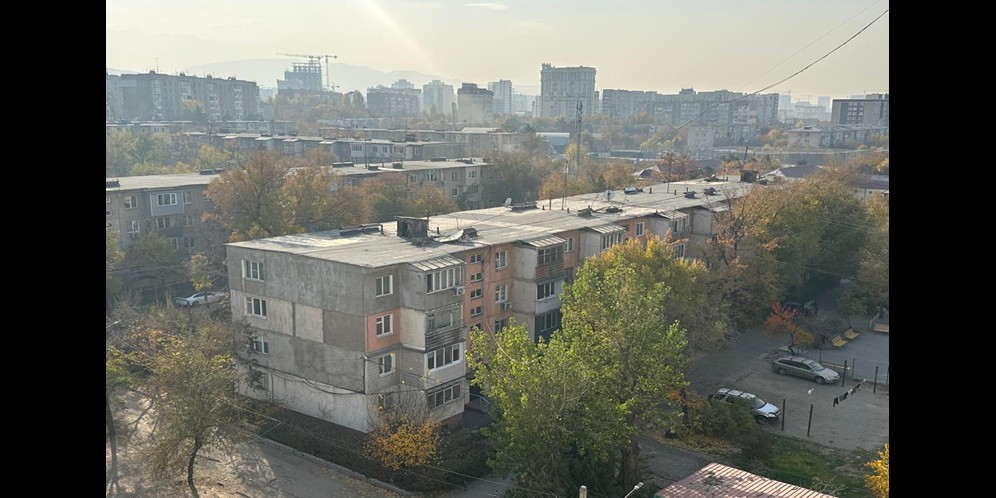
A four-story apartment complex in Bishkek presents unique challenges for retrofitting solar panels.
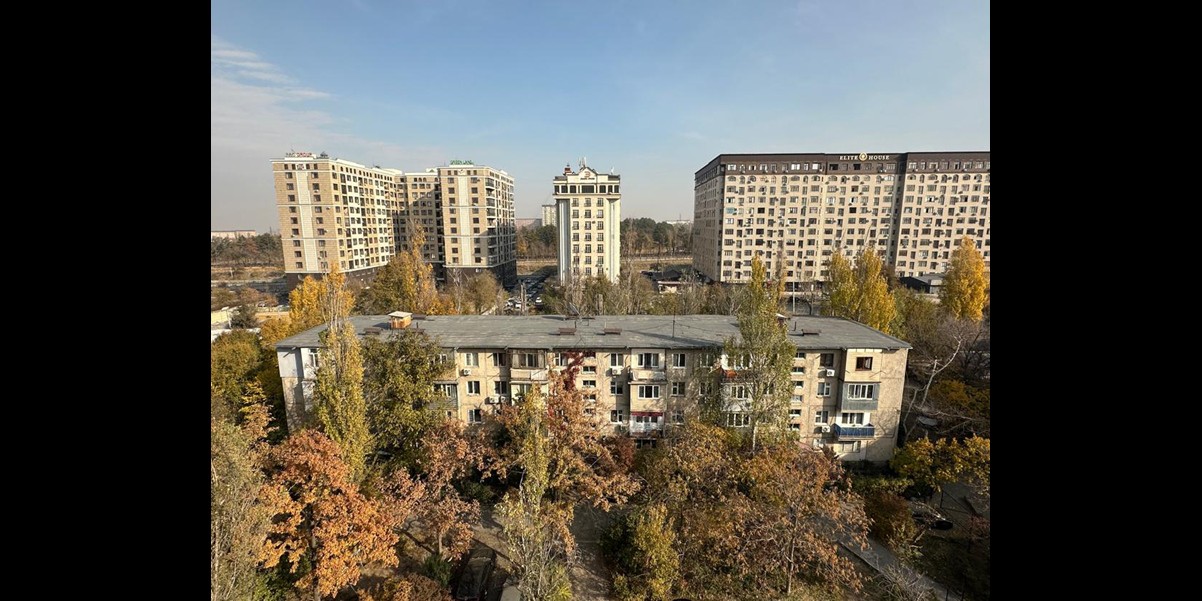
Bishkek’s skyline: new and old buildings present unique challenges for developers and solar installers.
The root problem with any technological upgrade in our context lies not so much in the installation of equipment as in the absence of a system for its ongoing maintenance. In the urban development sector, a paradoxical habit has taken hold: projects are built and their completion is reported, while the question of who will maintain them and with what funding is entirely ignored.
Drawing on his experience working on wastewater treatment facilities in Issyk-Kul, Myrzakanov pointed to problems caused by a shortage of qualified specialists and a lack of consistent maintenance.
The exact same scenario threatens “green” infrastructure. If developers are required to install charging hubs or solar panels without the establishment of transparent service management mechanisms or the training of personnel, these high-tech solutions will quickly devolve into non-functional, decorative features. Without a framework for professional operation, such innovations are simply not viable.
If we refer to international experience, China’s solution, at least for addressing the economic hurdles associated with renewables, has been to provide incentives to the private sector in the form of low-interest loans for infrastructure projects. This has allowed China to be agile in addressing changing demand for various projects. China’s investment in renewables at some stages even eclipsed its ability to move and store energy, but its ability to direct incentives into storage and transmission solutions made it possible to rapidly adapt its grid to climate extremes.
As part of its evolving strategy, China has explicitly encouraged the involvement of private enterprises in the energy sector beyond the fields of export-oriented clean energy manufacturing into areas of more strategic domestic importance, such as nuclear power, new energy storage and even into upstream oil and gas and mining.
This multi-faceted approach to adapting to climate change might be promising for Kyrgyzstan. State policy doesn’t merely have to solve for the existential risk associated with doing nothing, but strong economic policies can simultaneously bring a greater quality of life to everyone. Otherwise, if state policy doesn’t take the lead in climate change transformation, it could lead to increased populist reactions to the implementation of sustainable energy solutions. There is a common misconception, particularly in America and Europe, that spending and incentives for green infrastructure will somehow take away from the quality of life of working-class people. When improperly implemented, expenses passed down to the consumer can mobilize right-wing populism.
However, not every state has the same response to new renewable infrastructure projects, and we think places that use infrastructure initiatives to educate and employ their populations will be the most successful. Governments should not only make living affordable, but they also have to consider making infrastructure resilient and sustainable.
The green transition in Kyrgyzstan currently resembles a race where incentives for purchasing electric vehicles have surged ahead, while the underlying infrastructure has been left far behind. Efforts to shift the capital toward eco-friendly transport collide with the harsh reality of urban life: while car dealerships report rising sales, residents of Bishkek’s high-rise apartment buildings are forced to dangle household extension cords from their balconies, which highlights a profound systemic gap. Without clear regulations for homeowners’ associations, strict construction standards for new developments, and, most importantly, a professional maintenance system for new technologies, we risk turning a sound environmental initiative into a dangerous, chaotic mess. It is time for Kyrgyzstan to move beyond isolated incentives for vehicle imports and toward a comprehensive development of its domestic infrastructure. A true “green” transition does not begin the moment an attractive electric vehicle is purchased; rather, it begins when the owner can safely and conveniently charge that vehicle at home, while also being able to consciously choose the source of that electricity, whether it be a hydroelectric plant, a thermal power station, or local solar panels.
Central Asia Climate Campaign 2026 is implemented by the MediaNet International Centre for Journalism and n-ost with support from the Federal Ministry for Economic Cooperation and Development (BMZ) of the Federal Republic of Germany as part of the project “Communicating Climate in Central Asia”.
The views expressed in this article are those of the author and do not necessarily reflect the official policy or position of the publication, its affiliates, or any other organizations mentioned.