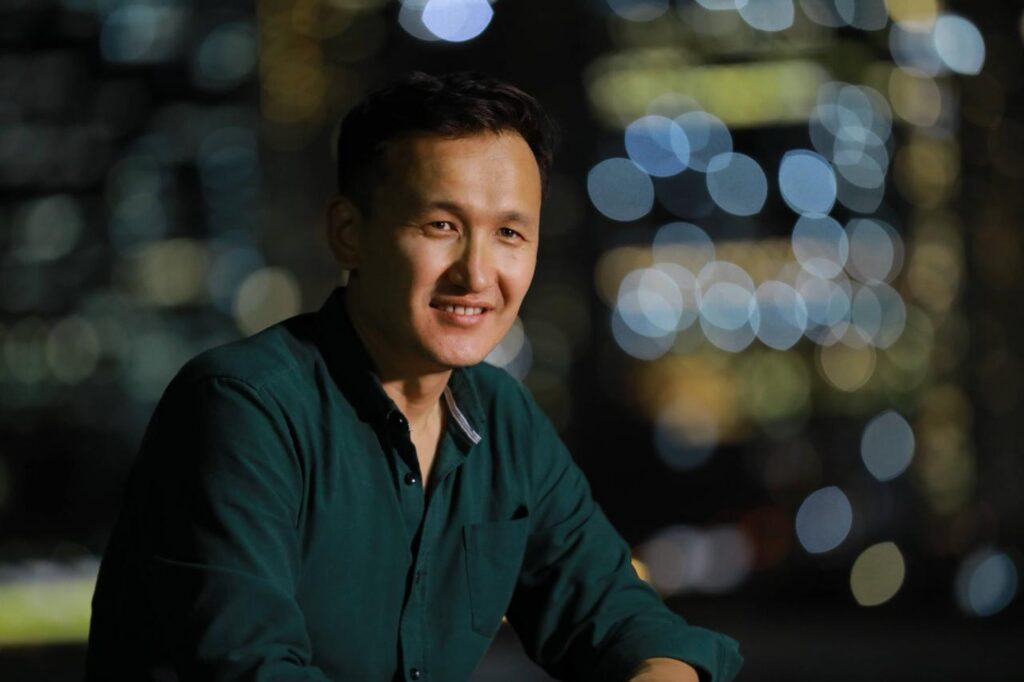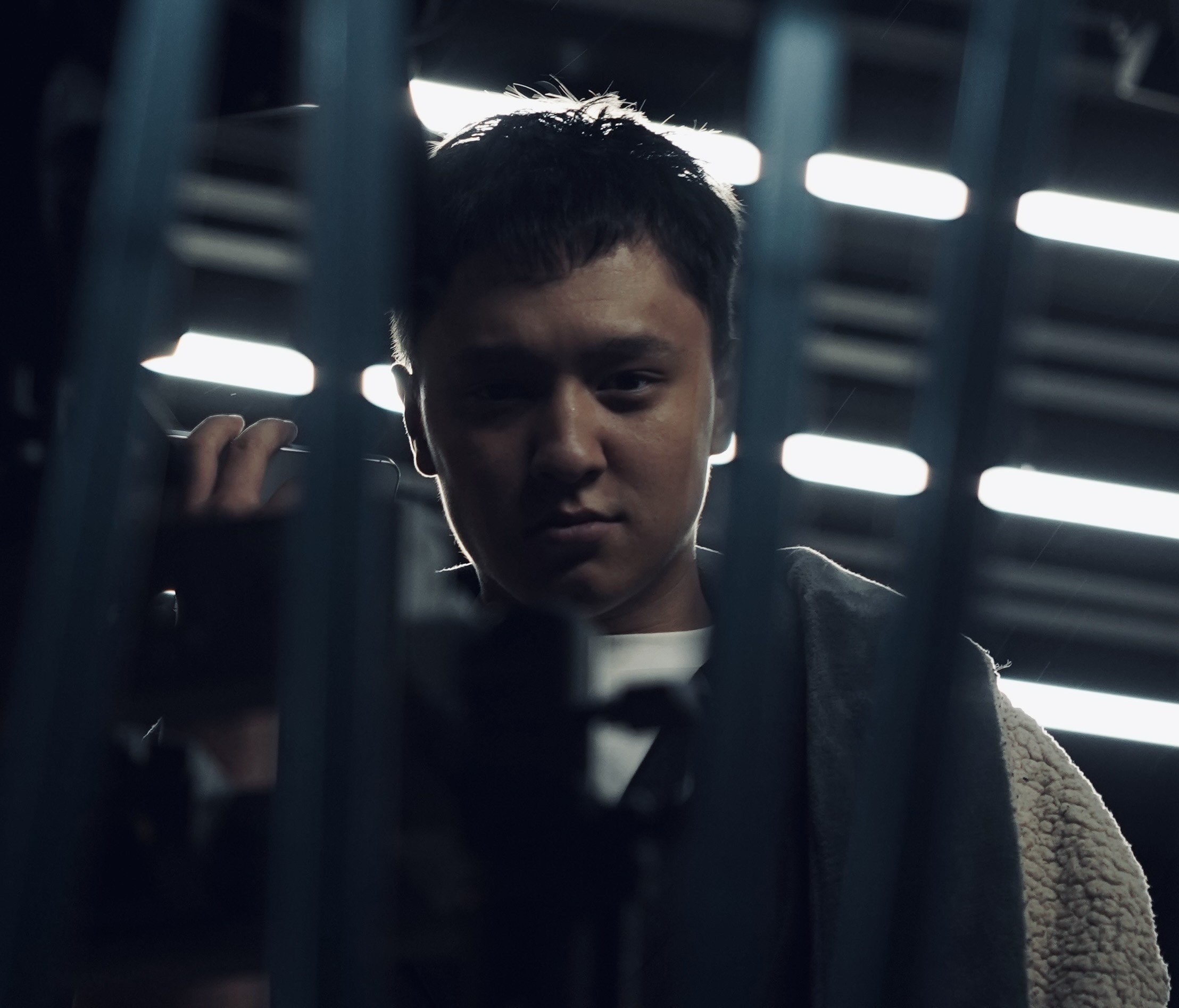
Rauan Akhmedov is one of Kazakhstan’s most sought-after young actors. Despite his rapidly rising career and growing international interest in Kazakh cinema, the 22-year-old says his priority is to continue developing within the domestic industry.
In an interview with The Times of Central Asia, he discusses the state of cinema in Kazakhstan, the role of personal experience in his acting, and why tradition and modernity are not mutually exclusive.
TCA: Your breakthrough came with Black Yard, directed by Dias Bertis. Is it true he noticed you while you were filming a small cameo in the series The Player?
Rauan: Yes. I came to the audition, and we were rehearsing a scene with another candidate, I think he was reading for a doctor. We weren’t getting it right, so at some point the director stepped away. I then suggested to my scene partner that we try a different approach. Dias overheard us, came over, and said, “Switch roles.” We did, and he decided I should take the part. Apparently, he liked my performance, and later he invited me to Black Yard.
TCA: You have three films coming out this spring. Is the Kazakhstani film industry becoming overcrowded? Do you feel the urge to work abroad?
Rauan: Not yet. I want to follow my own path and realize my potential here. I believe Kazakhstani cinema can reach a very high level. I don’t dream about Hollywood. If I ever end up there, I want it to be through a Kazakhstani project.
It’s important for me to stay at home, the language, the culture, the people. I want to grow here and contribute to the development of cinema in my country. Especially as audiences abroad are beginning to take an interest in our films. We haven’t conquered the world yet, but we’re improving all the time. Kazakhstan has strong potential.
TCA: Would you describe yourself as a patriot?
Rauan: Yes. I respect our filmmakers. When someone succeeds, when a film performs well at the box office, I’m genuinely pleased, even if it’s not my project. I think that once we overcome internal divisions and start supporting one another, we can achieve a great deal.
TCA: Many films are now being shot in the Kazakh language. Does that give Kazakh-speaking actors a competitive advantage?
Rauan: Probably. But in my view, that’s natural. Every country produces films in its own language. We are Kazakhs, who else will make films in Kazakh? At the same time, I respect all languages, Russian, English, Chinese.
The more languages you know, the broader your perspective.
TCA: You often portray characters from the 1990s, even though you were born in the 2000s. How do you research that period?
Rauan: Partly through my parents. But it’s not that long ago, you can find a lot online, and I experienced some of it myself. For example, we had a rotary phone at home. We often used a VCR to watch home videos, family celebrations, my parents’ wedding. I saw how young they were, how their wedding looked, and even footage from when I was brought home as a newborn.
TCA: What films and cartoons did you grow up watching?
Rauan: We watched everything on DVD. One of my favorites is Brother Bear. Also Open Season, Madagascar, Ice Age, generally, classic Hollywood animation.
TCA: When you read a script, can you immediately tell whether it’s strong?
Rauan: Usually, yes. The script that impressed me most was The Verdict. When I read the story about the men who took judges hostage because they disagreed with a court ruling, I immediately felt it was a strong project, and it turned out that way.
TCA: Black Yard can be interpreted as a story about children’s grievances towards their parents. Do you agree?
Rauan: I think so. No matter how hard you try, children will eventually express their grievances. My parents are divorced, and I found that difficult as a child. It hurt; I felt angry and wronged. But life isn’t perfect, it’s a decision made by two adults.
The divorce rate in Kazakhstan is high now, and it’s almost seen as normal, although in reality it’s a serious issue.
TCA: Does that personal experience influence your work?
Rauan: Yes, to some extent. Through my roles, I’ve worked through things I couldn’t fully articulate before. Working with a psychologist also helped. I realized I had a strong need for my father’s approval, I wanted him to say, “You’re doing great.”
Now I try to give that to myself. In a way, I’ve become my own source of support.
TCA: What is your relationship with your father like now?
Rauan: It varies. Sometimes we’re close, sometimes less so. He’s going through a difficult period, but I think he’ll get through it.
TCA: And are you closer to your mother?
Rauan: Yes. She’s proud of me. She invested a lot in my brother and me and made sure we received a good education. We’re close in age, he’s a year and a half older. We started university in the same year. He studied biotechnology, and I studied acting. They now live in Shymkent. My brother works with drones and runs his own business.
I love that city, it’s my home. But professionally, I feel I’ve outgrown it. It’s a place I want to return to, but not one where I can continue developing.
TCA: Social media has significantly changed actors’ lives. Does it create additional temptations?
Rauan: Yes, but I don’t want to live that way.
A fast-paced lifestyle is draining, not just physically, but emotionally. Over time, the spark fades. It becomes about chasing quick dopamine hits, and that’s exhausting. Research shows that constant exposure to this kind of stimulation affects mental health. It creates the illusion of experience, you feel as though something has happened, but in reality, it hasn’t.
That makes it harder to build real relationships. In my view, that’s unhealthy.
TCA: You come across as a fairly traditional person.
Rauan: I wouldn’t describe myself as strictly conservative, but I believe traditions exist for a reason.
For example, I recently learned about the custom of hanging sheep vertebrae at the entrance to a yurt. Many people assume it symbolizes strength, but in fact it had a practical purpose. It signaled that there was a newborn inside, so visitors should not enter, to avoid bringing in infections. It’s important to understand that traditions are not just symbolic, they often have practical logic behind them.
I’m open-minded, and I value that in others. I have a simple test: can I sit down with this person and have a quiet cup of tea? If so, then there’s a connection.