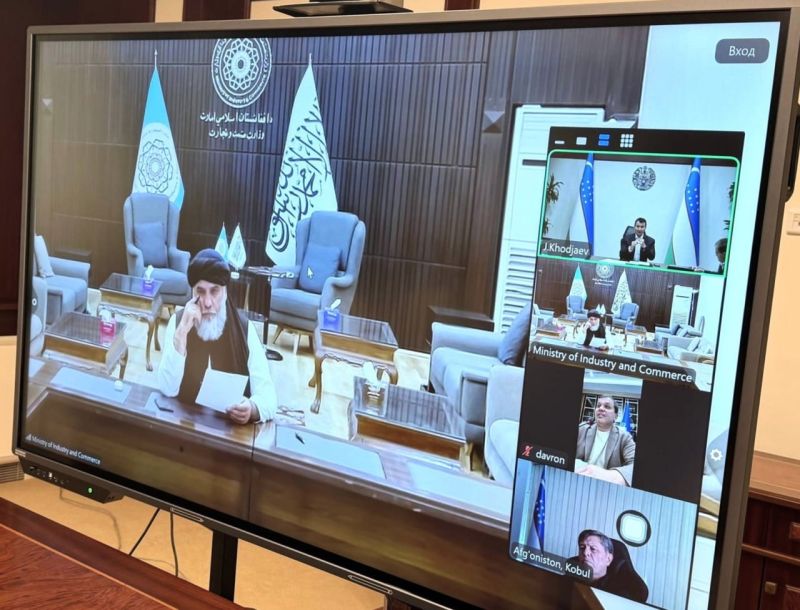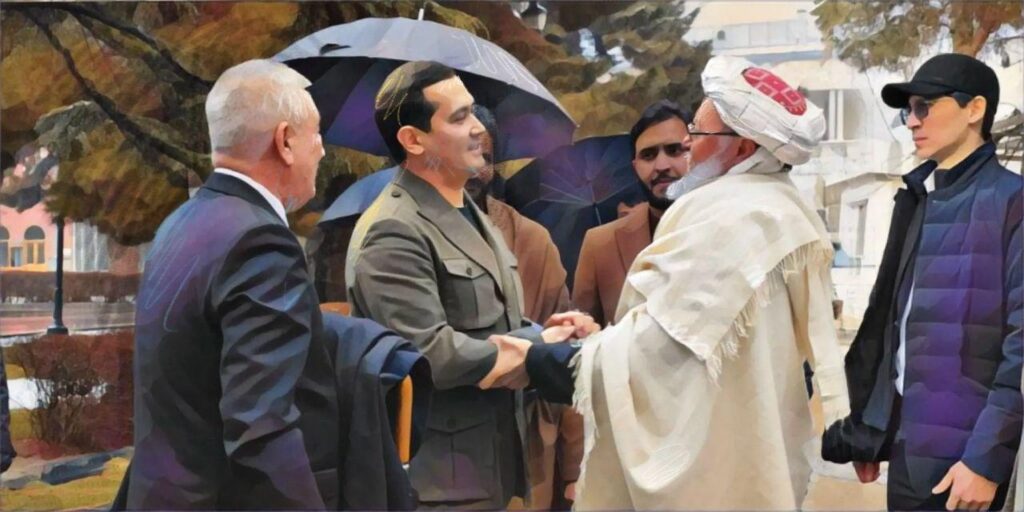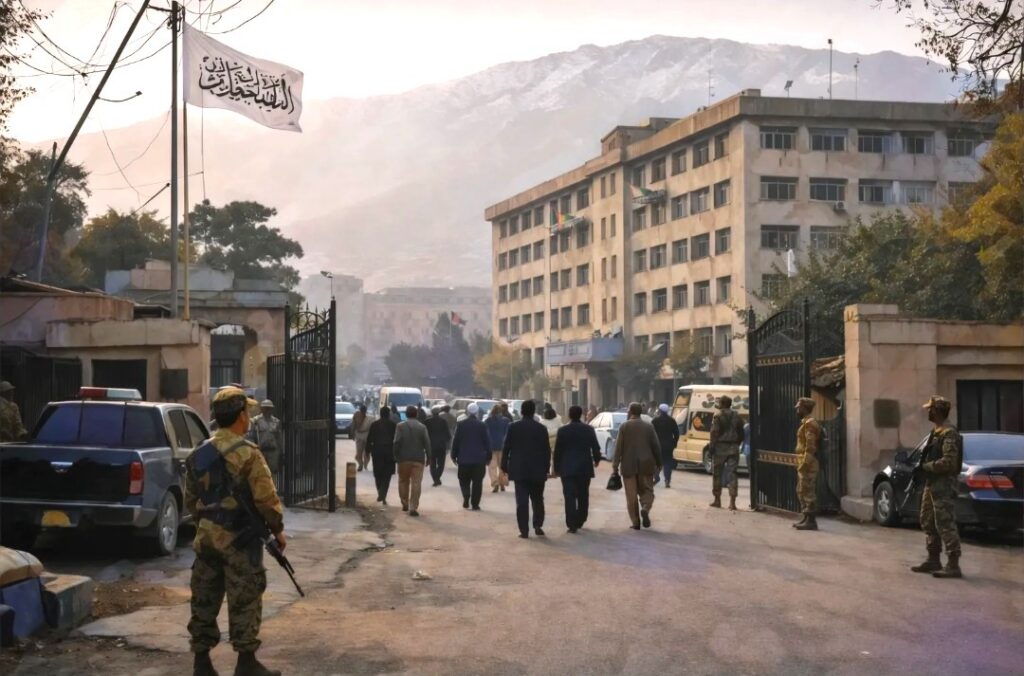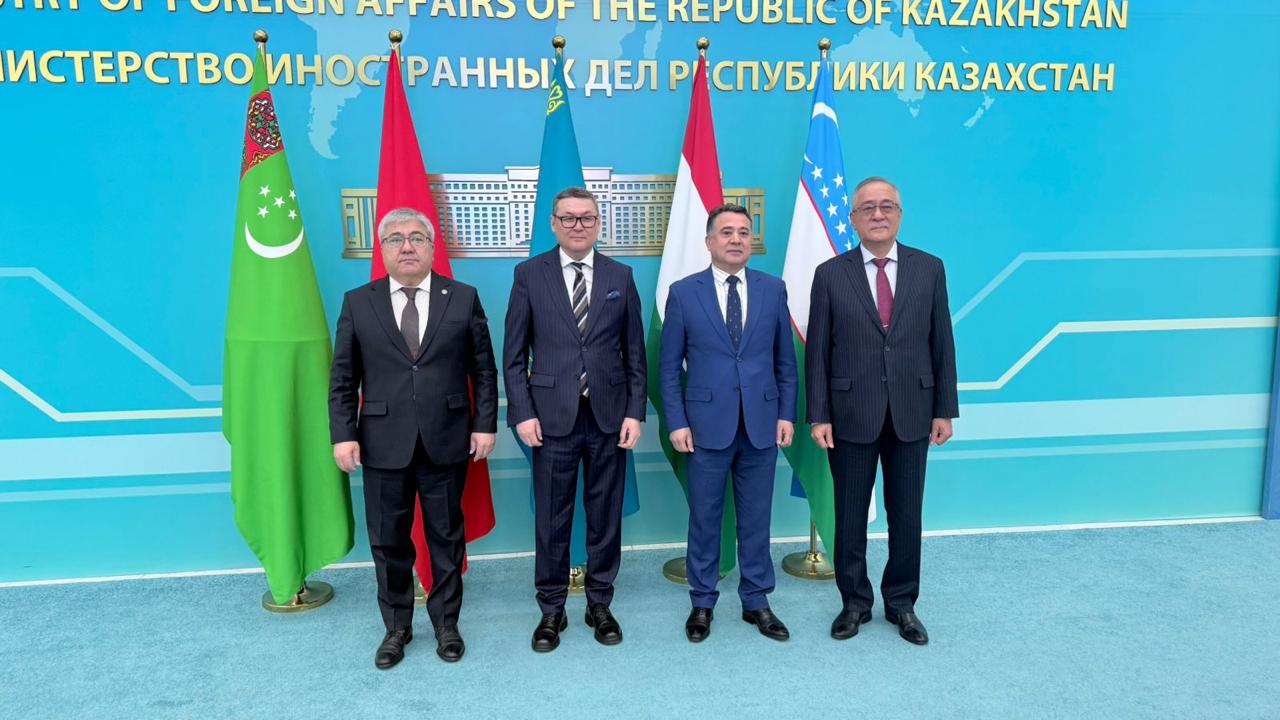
On Monday, Astana hosted an extraordinary meeting of the Regional Contact Group of Special Representatives of Central Asian Countries on Afghanistan, with delegations from Kazakhstan, Kyrgyzstan, Tajikistan, and Uzbekistan in attendance.
The agenda focused on trade and economic cooperation with Afghanistan, including joint projects, investment protection, transit tariff policy, and the development of transport corridors through Afghan territory.
The establishment of the group represents the practical implementation of agreements reached at the Sixth Consultative Meeting of the Heads of State of Central Asia, held in Astana in August 2024, and reflected in the Roadmap for Regional Cooperation for 2025-2027. The first meeting of the Contact Group took place on August 26 last year in Tashkent.
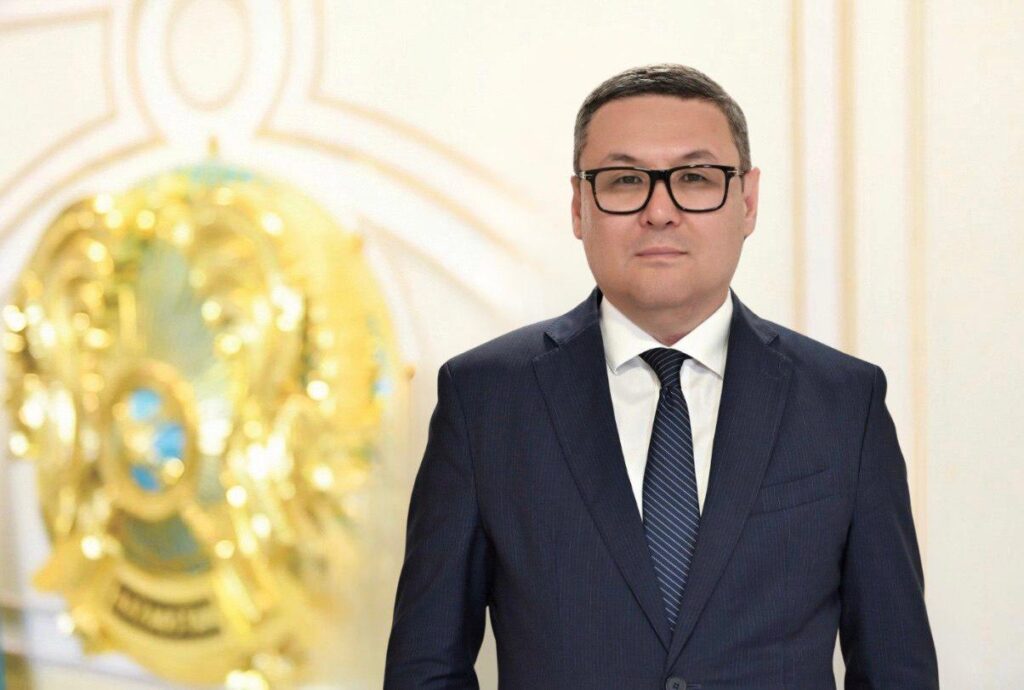
As noted by Erkin Tukumov, Special Representative of the President of Kazakhstan for Afghanistan, Astana is interested in a constructive exchange of views and in identifying practical solutions to pressing issues of cooperation with Afghanistan.
In recent years, Kazakhstan has consistently kept Afghanistan among its foreign policy priorities, avoiding rhetorical declarations in favor of a measured and systematic approach.
President Kassym-Jomart Tokayev has paid particular attention to Afghanistan since the change of power in Kabul in 2021. In the first weeks after the Taliban assumed control, Astana began articulating its position on international platforms.
One of the key statements was Tokayev’s address at the Shanghai Cooperation Organisation summit in Dushanbe on September 17, 2021. He advanced a thesis that has since been reiterated in various formats: Afghanistan should be viewed not only as a source of risk but also as a potential driver of regional development, provided that stability and economic recovery are achieved.
This position was further elaborated days later at the United Nations General Assembly. At that time, Kazakhstan was among the first to emphasize the need for inclusiveness in Afghanistan’s future political system, not as an abstract requirement, but as a practical condition for stability.
Another significant step was the creation last year of the post of Special Representative of the President for Afghanistan, to which Tukumov was appointed. This role goes beyond that of an interdepartmental coordinator: as a direct representative of the head of state, it elevates the Afghan portfolio to the level of strategic priority. The establishment of such a position signals a transition from a situational response to a more systematic policy.
The Astana meeting confirmed the intention of regional countries to deepen cooperation through a regular platform capable of coordinating actions and presenting them externally in a consolidated manner.
Some external observers suggest that Central Asian countries are only now beginning to develop a common position on Afghanistan. However, that position has largely taken shape in recent years. The current task is not to formulate it, but to coordinate it more precisely.
The meeting in Astana demonstrated that, for Central Asian countries, the primary concern is not the nature of the regime in Kabul, but Afghanistan’s capacity to function as a predictable economic partner and responsible participant in international relations.
For the region, it is essential that its southern neighbor operate in accordance with generally accepted economic standards, ensure reliable transit management, and integrate into regional cooperation frameworks. The objective is to anchor Afghanistan within the regional context, not as an object of concern or threat, but as a full-fledged participant in discussions on water resources, security, logistics, and environmental issues.
Efforts in recent years to establish broader international formats on Afghanistan have repeatedly encountered contradictions, given the diversity of external interests and the heavy political burden involved.
The Central Asian format differs fundamentally: it is an intra-regional dialogue. There is no external arbitration, no competing geopolitical agendas, and the focus remains on practical matters.
For Central Asia, Afghanistan is not an abstract issue of global politics, but a direct neighbor. This pragmatism is gradually assuming an institutional form, effectively shaping a regional Afghanistan track initiated and coordinated by the countries of Central Asia themselves.
Afghanistan has not yet responded to the Contact Group meeting. However, the event has attracted attention in the Afghan media. Some media outlets note that the country’s inclusion in regional processes is in the interests of not only Afghanistan itself, but also its neighbors. In particular, the idea was raised that the countries of Central Asia are capable of playing the role of “positive mediators” in building a pragmatic line of interaction with Kabul.