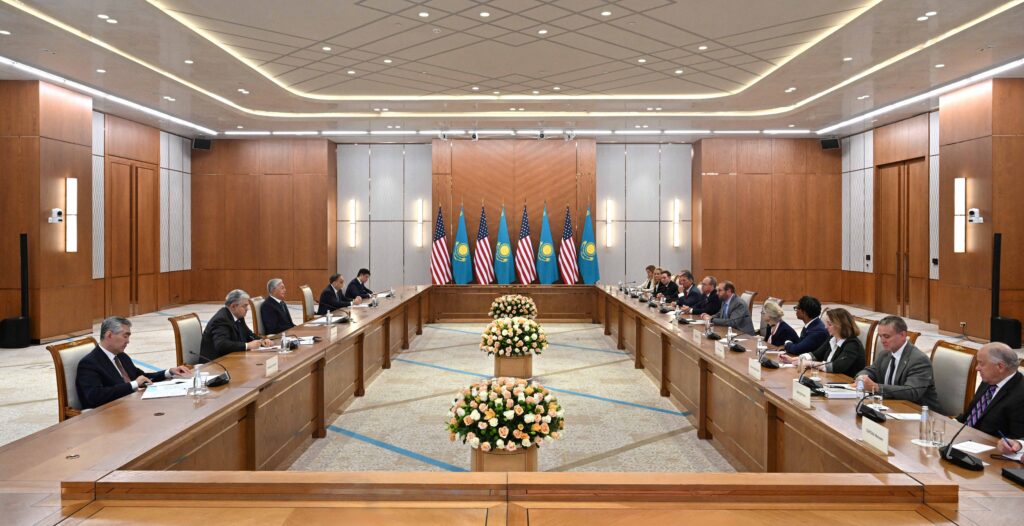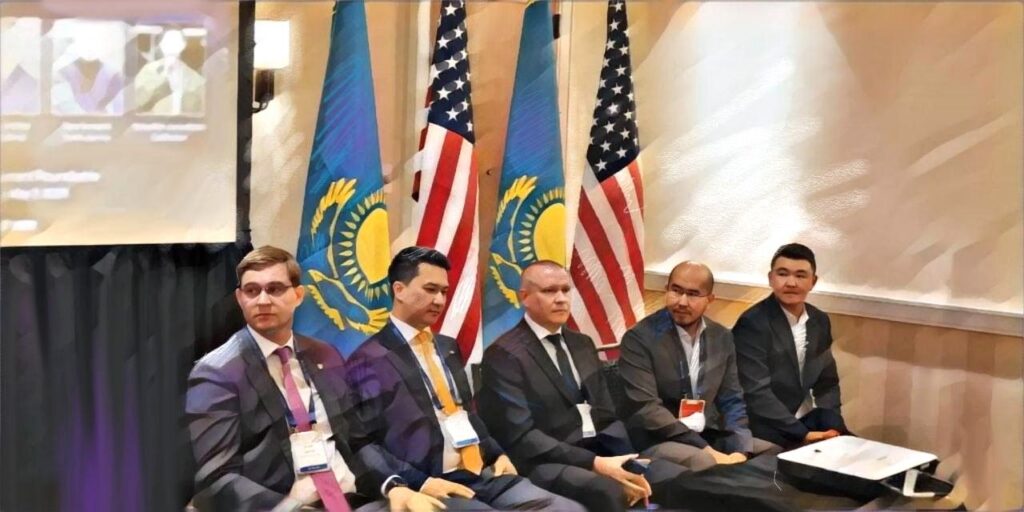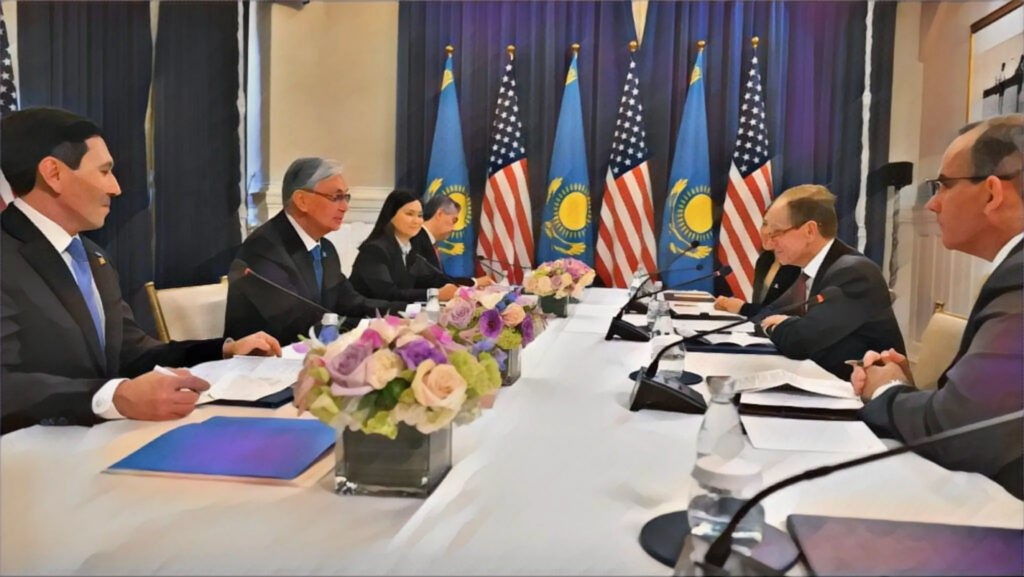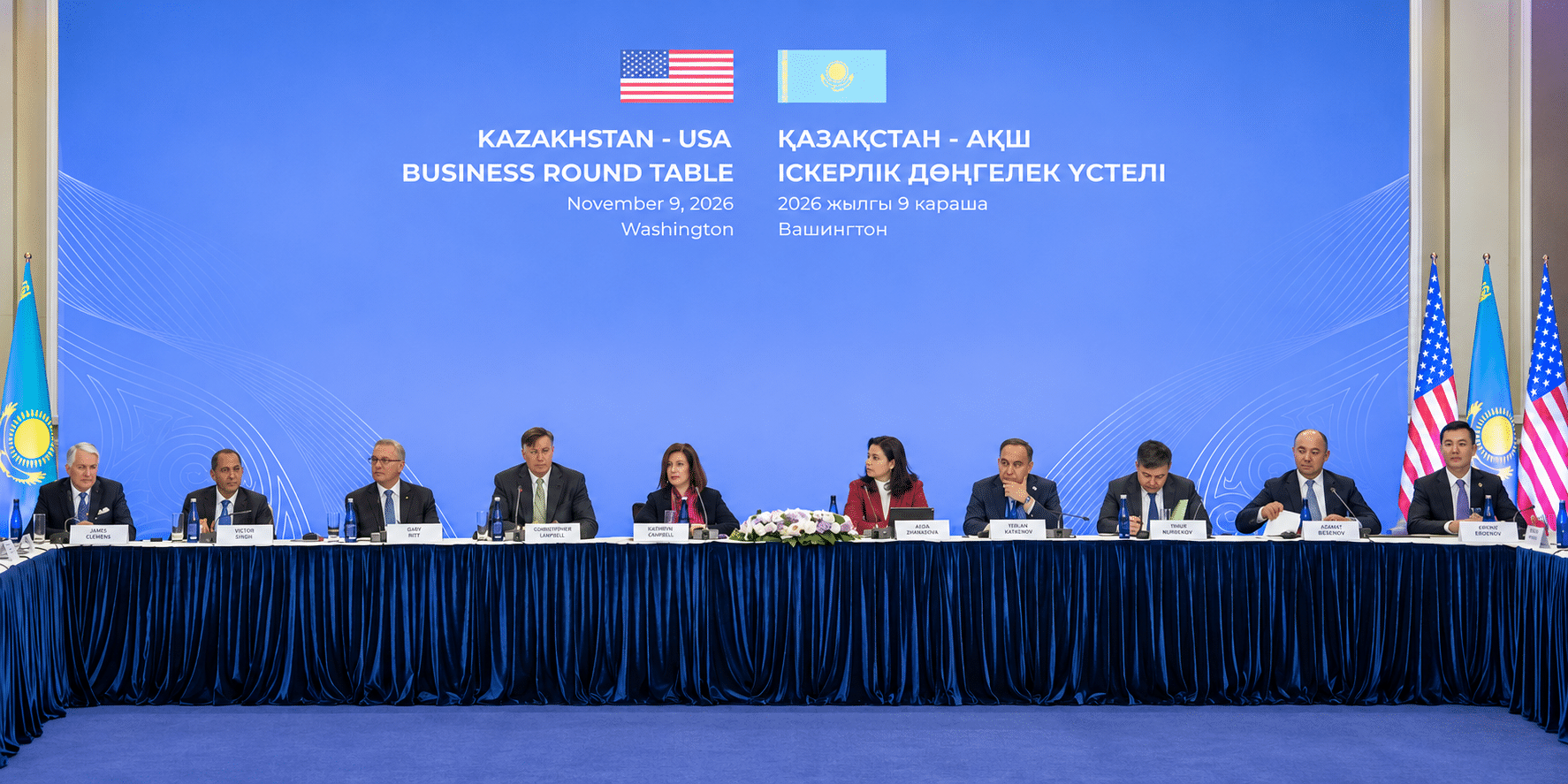
Kazakhstan brought the largest foreign delegation to the B20 summit in Washington, U.S. Chamber of Commerce President and CEO Suzanne Clark said, as American executives outlined expanding industrial operations and new investment opportunities in the country. The B20 is the G20’s business engagement group.
At a November 9 business roundtable, discussions ranged from PepsiCo‘s first locally manufactured Lay’s potato chips and Wabtec’s growing railway production capabilities to energy processing, AI infrastructure and critical minerals. Senior American and Kazakh officials emphasized the political support behind a commercial relationship built on decades of investment.
U.S. Deputy Secretary of State Christopher Landau said strengthening relations with Kazakhstan and its Central Asian neighbors had been a priority since he entered office, alongside restoring the prominence of economic and commercial matters in American diplomacy.
“I think President Tokayev is one of the most impressive world leaders,” Landau said, highlighting the Kazakh president’s ability to speak with the leaders of China, Russia and the United States in their own languages.
Landau said the region had historically received less attention in U.S. foreign policy than its strategic location and resources warranted. He also emphasized the unusually high level of engagement between Washington and Astana, describing the current relationship as producing results rarely seen in its 35-year history.
Yerzhan Kazykhan, President Kassym-Jomart Tokayev’s special representative for cooperation with the United States and honorary co-chair of the U.S.–Kazakhstan Business Council, said dialogue between Tokayev and President Donald Trump had given the relationship additional political momentum.
“Our shared task is to translate this momentum into tangible results for our businesses,” he said.
Ahead of Tokayev’s planned participation in the G20 summit in Miami, Kazykhan identified advanced manufacturing, critical minerals processing and technology transfer as priorities for further cooperation.
Manufacturing and Industrial Expansion
“We have moved beyond oil and uranium,” said Kanat Sharlapayev, chairman of the presidium of Atameken, Kazakhstan’s National Chamber of Entrepreneurs, pointing to PepsiCo and Wabtec as examples of the country’s expanding manufacturing base.
A PepsiCo representative reported that the company had recently produced its first bag of Lay’s potato chips in Kazakhstan using locally grown potatoes. The milestone forms part of an investment that the representative valued at $360 million, in what PepsiCo expects to become one of its largest snack manufacturing facilities globally. The facility is expected to support 900 jobs when fully operational, with an official inauguration planned for April 2027.
In railway manufacturing, Deputy Prime Minister and Minister of Transport Asel Zhanassova highlighted the progress of Kazakhstan’s longstanding partnership with Wabtec, including the $4.2 billion agreement signed in September 2025 covering 300 freight locomotives and long-term servicing.
Zhanassova said local production content exceeded 40% and more than 2,000 jobs had been created, including among Kazakh suppliers.
Kazakhstan Temir Zholy Chairman Yelzhas Otynshiyev described the next stage of the partnership. Building on an existing engine remanufacturing and overhaul center in Astana, KTZ plans to begin engine production in Kazakhstan in 2027, with the objective of becoming a regional manufacturing and service center for Wabtec.
Clay Neff, Chevron’s president of upstream, described more than three decades of cooperation with Kazakhstan as the foundation for continued partnership in the years ahead.
Neff cited approximately $222 billion in cumulative direct business contributions to Kazakhstani entities through the Tengizchevroil (TCO) joint venture since 1993. Kazakhstani citizens now hold 96% of TCO positions and 90% of its management and supervisory roles, he said.
Further industrial opportunities are emerging in gas processing, refining and petrochemicals. Vice Minister of Energy Sanzhar Zharkeshov outlined approximately $9 billion in gas-processing projects and plans to expand three refineries and develop a fourth by 2040, requiring up to $20 billion in investment.
KazMunayGas Chairman Askhat Khasenov pointed to American technologies already being used in a commissioned petrochemical plant and two major projects under construction. A Honeywell representative described three localization facilities in Kazakhstan, reflecting the company’s continuing manufacturing and technical presence.
A KBR representative outlined the company’s role in supplying technology for a new ammonia plant and Kazakhstan’s first planned sustainable aviation fuel facility. Its previously announced contract with KazMunayGas-Aero and KazFoodProducts covers technology licensing and engineering design.
Capital and Technology Partnerships
National Bank Governor Timur Suleimenov put Kazakhstan’s investments in the United States at approximately $77 billion, predominantly in portfolio holdings. He said the National Bank managed about $110 billion in assets, of which approximately $60 billion was invested in U.S. financial markets and the wider economy.
Kazakhstan, Central Asia’s largest economy, grew by 6.5% in 2025, Suleimenov said, with GDP projected to approach $400 billion in 2026.
Kazykhan outlined plans to allocate approximately $14 billion from Kazakhstan’s National Fund to infrastructure modernization through 2029, with the aim of attracting private capital and strengthening domestic production.
Kazakhstan’s Ambassador to the United States, Magzhan Ilyassov, emphasized that more than three decades of successful cooperation in the energy sector had established the confidence and trust needed to expand U.S. financing into digital technology, artificial intelligence, critical minerals exploration and processing, infrastructure development and other industries.
One example of the established financial relationship came from Saule Zhakayeva, chairwoman of Citibank Kazakhstan, who said Citi had helped mobilize more than $40 billion in financing for Kazakhstan since entering the market in 1994. She highlighted export-credit financing for the Wabtec–KTZ railway partnership as a model that could be extended to aviation, critical minerals, energy and digital infrastructure.
Critical minerals also attracted interest from Frank Fannon, a former U.S. assistant secretary of state for energy resources and co-founder and managing partner of the Orion Critical Minerals Consortium, which is backed by the U.S. International Development Finance Corporation, Orion-managed funds and Abu Dhabi’s ADQ.
Fannon highlighted Kazakhstan’s investment policies and outreach to American investors as reasons to consider projects in the country. He said the consortium was targeting mining projects capable of entering production within approximately three years.
Kazakhtelecom outlined its partnership with U.S.-based Firebird to develop AI infrastructure at Data Center Valley, inviting American cloud providers and AI platforms to participate in facilities intended to serve regional and international computing demand.
In financial technology, Suleimenov described Kazakhstan’s regulatory framework for digital financial assets as fully operational, supported by infrastructure connecting instant payments, biometrics and fraud prevention.
A Visa representative described the company’s work with Kazakhstan’s National Payment Corporation on AI-driven fraud monitoring for account-to-account payments. The representative also outlined plans to launch an e-government business card initiative in December 2026 and expand it during 2027.
Expanding International Connectivity
Zhanassova highlighted the potential to connect the Middle Corridor with the Trump Route for International Peace and Prosperity (TRIPP) in the South Caucasus. She welcomed interest from the U.S. International Development Finance Corporation in financing expansion of the Sarzha terminal at Kuryk port.
In aviation, Air Astana CEO Ibrahim Canliel reaffirmed plans to launch the first nonstop passenger services between Kazakhstan and the United States in 2027. A Boeing representative expressed support for the route.
The long-planned connection is expected to use Air Astana’s new Boeing 787-9 Dreamliners. Its introduction remains dependent on aircraft deliveries and completion of the necessary U.S. aviation safety and regulatory processes.
Protecting Investment and Sustaining Growth
Neff also emphasized the importance of maintaining reliable oil exports through the Caspian Pipeline Consortium, which he described as Kazakhstan’s highest-capacity and most economical crude export route. Neff said Chevron was working with Kazakhstan and governments in the United States and Europe to prevent geopolitical developments from creating unintended consequences for Kazakh exports.
Kazatomprom called for additional long-term uranium supply contracts with American customers. Earlier commitments would allow the company to plan production and logistics more effectively.
For technology companies, investment security also involves protecting intellectual property and sensitive systems. Erik Laykin, CEO of Global Data Risk, urged stronger safeguards as Kazakhstan expands cooperation with American companies in artificial intelligence and digital infrastructure.
“Capital follows opportunity, but technology follows trust,” he said.
Legal protections and the treatment of investors by government institutions were also addressed. First Deputy Prosecutor General Zhandos Umiraliyev outlined the role of Kazakhstan’s investor-protection committee in handling complaints involving government and quasi-government bodies.
In her remarks, Clark linked Kazakhstan’s growing commercial importance to companies’ interest in resilient and diversified supply chains. She stressed the need to remove investment barriers and ensure transparency, predictability, and a commitment to market-based growth.
“When these conditions are present, companies have the confidence they need to make long-term investments, create jobs, and strengthen their communities,” she said.