At the United Nations in late April, Robert Floyd, executive secretary of the Preparatory Commission for the Comprehensive Nuclear-Test-Ban Treaty Organization, warned that any renewed nuclear test by Russia, the United States, or another state could draw other nuclear powers back into testing. His remarks followed the re-emergence of nuclear testing as an issue in international political debate. Kazakhstan enters this debate from the opposite side of nuclear history. It is a former Soviet nuclear test ground that now defines its nuclear policy through civilian power, peaceful use, and non-proliferation.
Kazakhstan’s nuclear future is shaped by its nuclear past. The country was a Soviet nuclear test ground at Semipalatinsk, now Semey, where late-Soviet public-health concerns helped force nuclear testing into public politics before the site’s closure. After independence, Kazakhstan renounced the Soviet-era nuclear weapons it inherited on its territory. Its present nuclear-energy policy begins from that record. It is not a search for nuclear status, but a civilian program formed by restraint, public memory, and national development.
Semipalatinsk is the source of Kazakhstan’s authority on nuclear testing. Between 1949 and 1989, the Soviet Union used the site as one of its principal nuclear testing grounds. In total, 456 nuclear tests were conducted there, including 340 underground and 116 atmospheric tests. Kazakhstan closed the site in 1991. These facts remove the subject from arms-control abstraction. For Kazakhstan, nuclear testing is a territorial, social, public-health, and political inheritance, bound to the eastern steppe and the communities around the former test range.
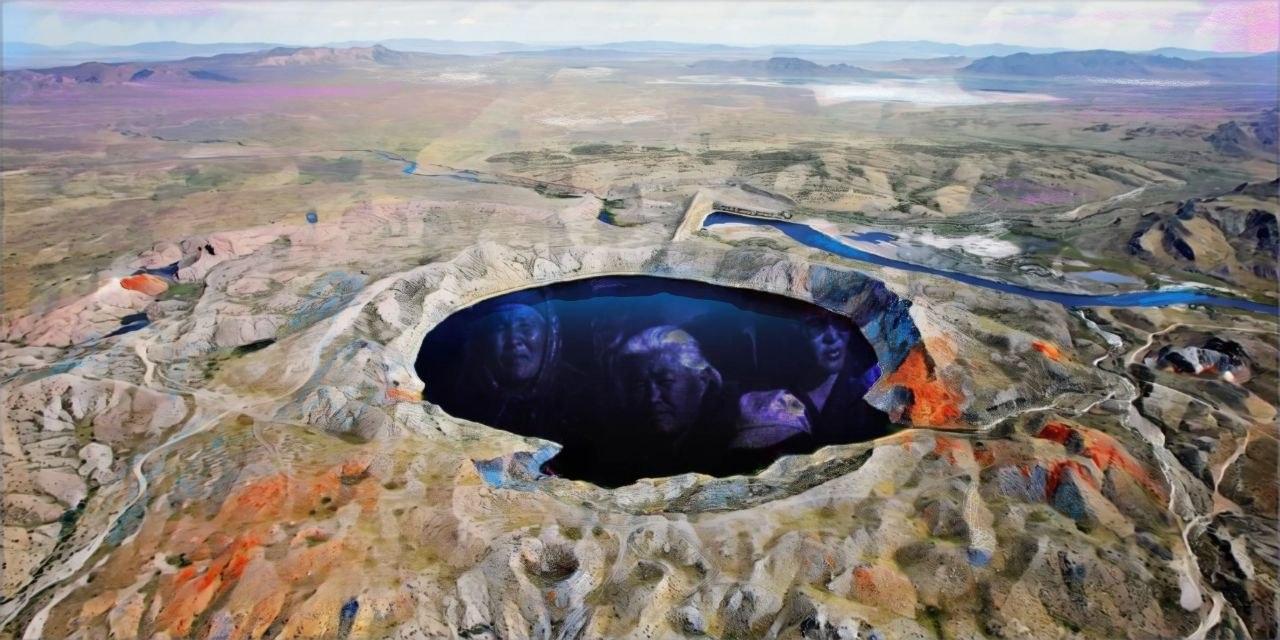
Atomic Lake gives that history a single, physical form. In January 1965, the Soviet Union carried out the Chagan underground nuclear explosion at the Semipalatinsk Test Site. The blast, with a yield of 140 kilotons, was part of a Soviet program for using underground nuclear explosions in civil engineering, including reservoirs and channels in water-scarce regions. It created the crater later known as Atomic Lake. The site remains a physical residue of the Soviet claim that nuclear explosions could serve economic and social development. This is why nuclear technology in Kazakhstan cannot be politically neutral.
Independence gave Kazakhstan agency in that history. Kazakhstan transferred Soviet-era nuclear weapons to Russia by April 1995 and took part in cooperative threat reduction, including the sealing of test-site boreholes and tunnels. More recently, it became host to the International Atomic Energy Agency’s Low Enriched Uranium Bank at Ulba, in Oskemen. The bank is an IAEA-owned fuel-assurance reserve for peaceful nuclear power, designed to support access to nuclear fuel without encouraging additional enrichment programs. Kazakhstan’s civilian nuclear claim, therefore, rests on practice: disarmament, threat reduction, and non-proliferation infrastructure.
The policy now turns on a practical paradox. Kazakhstan has been the world’s leading uranium producer since 2009 and produced about 40% of the world’s uranium in 2025. Yet it has no operating nuclear power plant. Its Soviet-era BN-350 reactor, near Aktau on the Caspian Sea, was decommissioned in 1999 after decades of electricity generation and desalination. Kazakhstan is central to the global nuclear fuel cycle but has not used nuclear power for domestic electricity generation for more than two decades. The planned reactor program would carry Kazakhstan from uranium production into nuclear electricity generation.
The energy case is not abstract. Coal and gas accounted for 85% of Kazakhstan’s electricity output in 2024, while renewables, including hydro, wind, and solar, accounted for the remainder. The power system also has a geographic imbalance: northern Kazakhstan produces most electricity, while southern regions rely on imports and long-distance transmission. Nuclear power is being advanced as one answer to this problem of supply, distance, and development. It is presented as part of a broader energy mix, linked to energy security, sustainable growth, high-technology industry, and peaceful use rather than any weapons-adjacent purpose.
The October 2024 referendum gave the policy its domestic authorization. Official results showed 71.12% support for the construction of a nuclear power plant, with 7.82 million voters participating and a turnout of 63.66%. The referendum did not remove every concern. Its significance was narrower but more consequential: nuclear power was placed before the public in a country where nuclear memory remains politically serious. Public authorization became part of the policy itself, alongside continuing attention to cost, environmental questions, and waste storage.
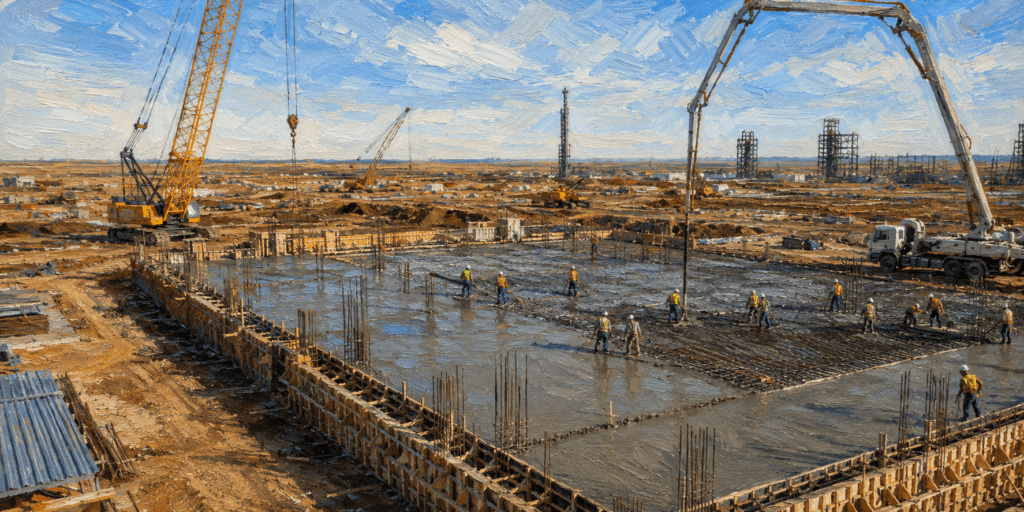
The referendum mandate has now entered implementation. Kazakhstan selected Russia’s Rosatom and China’s CNNC to lead separate consortiums for its first nuclear power plants. Rosatom is linked to the planned two-reactor project at Ulken, about 400 kilometers northwest of Almaty, using VVER-1200 Generation 3+ reactors. CNNC is connected to a second project. Engineering and survey work at Ulken began in 2025 and is expected to last at least 18 months. The broader strategy foresees at least three nuclear power plants operating by 2050, with a possible fourth.
The strategy treats safety as part of the policy itself. It includes radioactive waste and used fuel management, specialist training, nuclear, radiation, and physical safety, and peaceful-use priorities. The referendum recorded public concerns about cost, environment, and waste. In Ulken, some residents looked to jobs and development, while others expressed concern about Lake Balkhash’s water quality. Those concerns help explain the policy’s form: regulation, staged implementation, and public consent. The Soviet testing legacy makes caution necessary. It also gives Kazakhstan reason to define civilian nuclear power through institutions, not verbal assurances.
Kazakhstan’s civilian nuclear policy contrasts with recent international nuclear-testing rhetoric. The country is not discarding its nuclear past. It is using that past to support a different nuclear claim: nuclear technology can serve electricity, development, sovereignty, and non-proliferation. Semipalatinsk and Atomic Lake remain part of Kazakhstan’s history. The reactor program now gives that history a civilian policy form.