The government of Kazakhstan plans to increase real household income by 2–3% by 2029, according to the Ministry of National Economy.
The program includes measures to stimulate employment, raise wages, support entrepreneurship, and create sustainable jobs.
Key priorities include increasing wages for public utility workers, civil servants, and agricultural workers; expanding the share of wages in GDP; creating jobs in the manufacturing sector; supporting export-oriented enterprises; and reducing the financial burden on households.
The ministry said 2026 will be a pivotal year for establishing sustainable income growth. A joint plan by the government, the National Bank, and the Agency for Regulation and Development of the Financial Market aims to reduce inflation to 9-11% in 2026, 5.5-7.5% in 2027, and 5-7% in 2028.
Authorities expect that slowing inflation will increase the purchasing power of incomes. Inflation has already declined from 12.9% in September 2025 to 11% in March 2026.
From April 1, tariff policy will be implemented more cautiously. The ministry estimates that tariff increases will add no more than 0.35 percentage points to inflation. At the same time, electricity and transportation tariffs for producers of socially significant goods are set to be reduced by up to 70%.
The government also plans to limit the growth of budget expenditures, with their share of GDP expected to decline to 15.1% in 2026. Reductions in transfers from the National Fund will continue, and for the first time in five years, the budget is expected to be executed without targeted transfers.
In 2025, targeted transfers from the fund amounted to approximately $6.9 billion, while the guaranteed transfer for 2026 has been set at $5.8 billion.
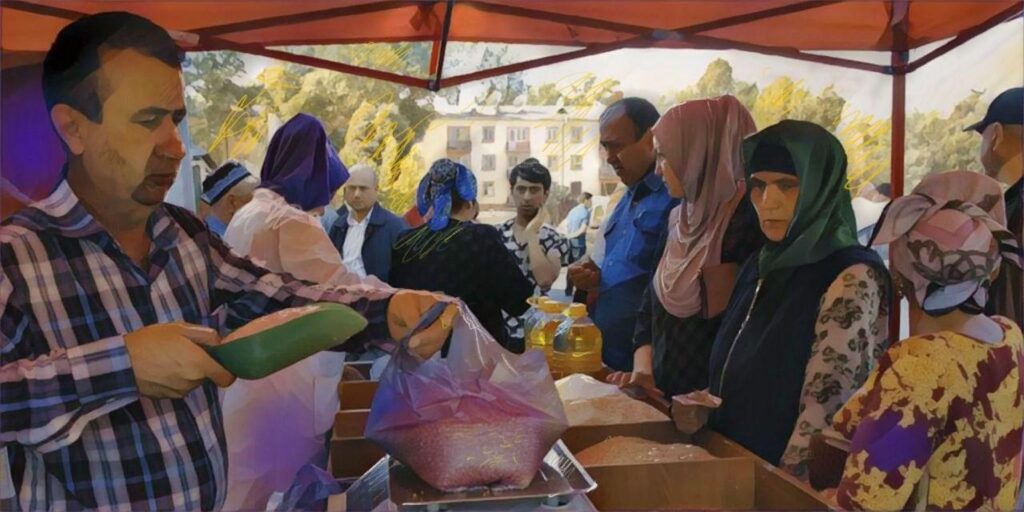
According to the National Statistics Bureau, nominal household income grew by 10.2% in 2025, while real income declined by 1.1%. Average per capita income stood at approximately $506.
The ministry noted that the decline in real incomes indicates that economic growth is not sufficiently translating into improved living standards, underscoring the need for additional measures to create jobs and raise wages.
The Times of Central Asia previously reported that Prime Minister Olzhas Bektenov called for increasing the share of wages in GDP to 40%.