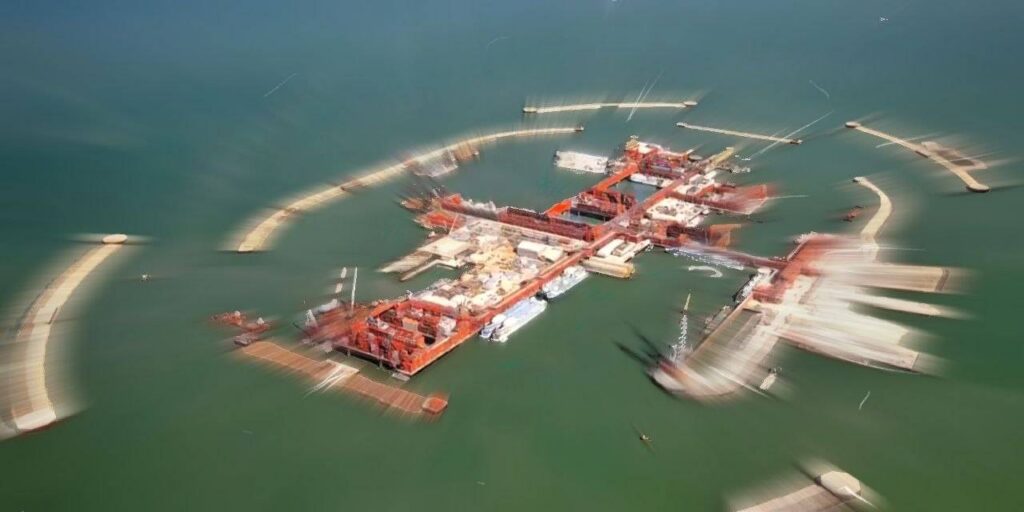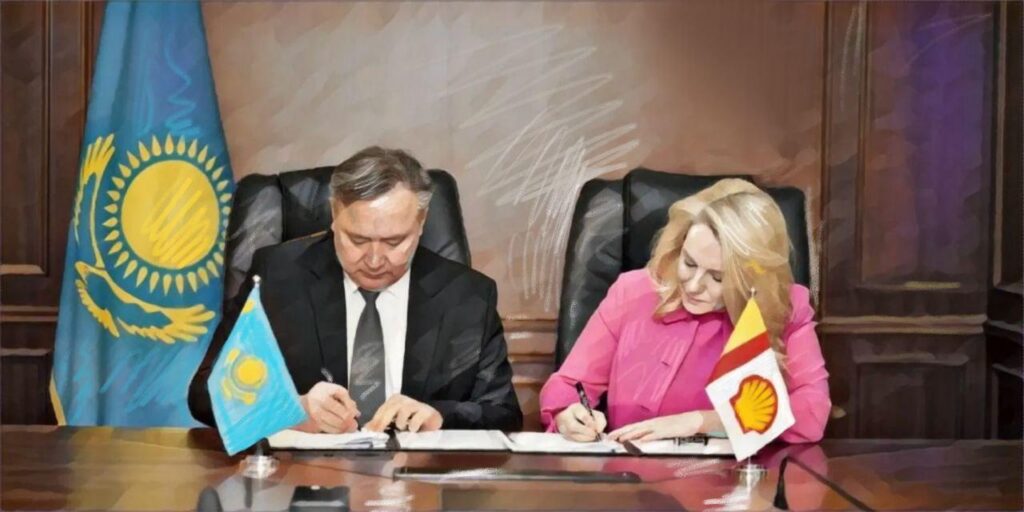
Kazakhstan says it will begin compulsory collection proceedings against the North Caspian Operating Company (NCOC), operator of the giant Kashagan oil field, if it does not pay a 2.3 trillion tenge ($4.9 billion) environmental fine by July 20. The deadline follows a domestic court ruling that has entered into legal force, even as the project’s foreign shareholders pursue international arbitration over the penalty.
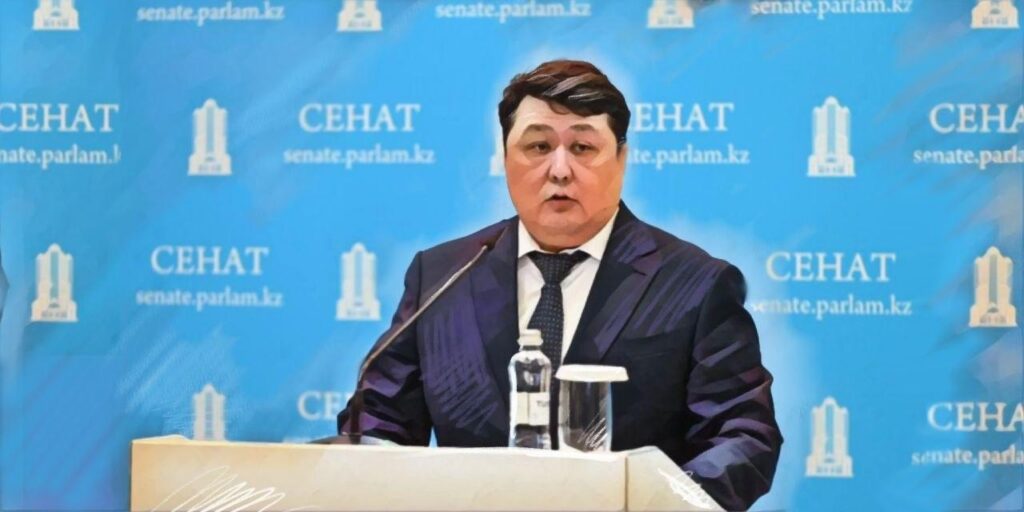
Deputy Minister of Justice Daniyel Vaisov announced the deadline on July 14.
“Foreign companies currently have an obligation to pay 2.3 trillion tenge. If they fail to pay the fine by July 20, the Republic of Kazakhstan will proceed in accordance with the law, including enforcement proceedings and compulsory collection measures,” Vaisov said.
However, in a statement to The Times of Central Asia, NCOC said a tribunal in parallel UNCITRAL arbitration proceedings had issued a restraining order prohibiting Kazakhstan from taking any measures to enforce the fine while the arbitration is pending. The company said the UNCITRAL proceedings had been initiated by Kazakhstan itself.
NCOC and the contracting companies said they reject both the fine and the allegations underlying it and are contesting them through the UNCITRAL proceedings as well as the ICSID arbitration. They called on Kazakhstan to comply with the restraining order.
The dispute stems from a 2022 inspection of Kashagan’s onshore processing facilities in the Atyrau Region. Environmental authorities said the operator had exceeded its permitted sulfur-storage limits, and the Ministry of Ecology and Natural Resources imposed the 2.3 trillion-tenge penalty in 2023. NCOC said it had obtained and maintained all required permits and had always conducted its sulfur management in full compliance with the law.
The case has passed through several rounds of domestic litigation. On August 1, 2025, the Administrative Chamber of Astana City Court annulled the original penalty order because of procedural violations, without ruling on the substance of the environmental allegations. The ministry subsequently corrected the procedural defects and reissued the penalty later that month. An Astana court left the reissued fine in force on April 8, 2026. Vaisov said on July 14 that the ruling had entered into legal force.
NCOC brings together Kazakhstan’s state-owned KazMunayGas and six foreign partners: Shell, TotalEnergies, Eni, ExxonMobil, CNPC, and Inpex. NCOC and the project’s six foreign shareholders have initiated treaty arbitration through the Washington-based International Centre for Settlement of Investment Disputes (ICSID), arguing that Kazakhstan’s conduct breaches protections owed to investors. Vaisov said the parties were finalizing the composition of the ICSID tribunal, which is expected to be completed by the end of July.
“We believe the Republic’s actions regarding the alleged sulfur-storage permit violations are inconsistent with its obligations under international investment treaties, including its obligation to provide fair and equitable treatment to investors,” NCOC said. The Kazakh authorities maintain that the sulfur was stored in breach of environmental rules.
The mechanics of compulsory collection may prove difficult. Nurlan Zhumagulov, executive director of the Energy Monitor Foundation, said that NCOC acts as the project’s operator while each shareholder markets its own share of production.
“The money belongs to the shareholders. NCOC itself does not sell oil, sulfur, or other products. Each shareholder markets its share of production and receives the proceeds,” Zhumagulov said. He warned that measures such as freezing assets could complicate operations.
The sulfur case is separate from Kazakhstan’s much larger claims against the Kashagan partners under the production-sharing agreement. Reports in 2024 put those claims at more than $150 billion, including demands linked to disputed project costs and oil production that the government says was promised but not delivered. The Ministry of Energy has described the proceedings as a confidential commercial dispute concerning Kazakhstan’s contractual rights under the agreement.
Kazakhstan has also pursued the international shareholders of the Karachaganak oil and gas project. In January 2026, an arbitration tribunal sided with Kazakhstan on the central question of whether certain project costs were reimbursable under that field’s production-sharing agreement. The tribunal has not yet determined the final compensation amount. Kazakhstan’s external legal advisers have estimated that the eventual award could range from $2 billion to $4 billion, while the consortium retains the right to appeal.
How Kazakhstan responds to the restraining order cited by NCOC will now shape what happens after the July 20 deadline. The domestic judgment has entered into legal force, but NCOC says Kazakhstan is prohibited from enforcing the fine while the UNCITRAL arbitration is pending. The dispute is also continuing through the separate ICSID case, which is being closely watched by investors and other companies operating under long-standing production-sharing agreements in Kazakhstan.