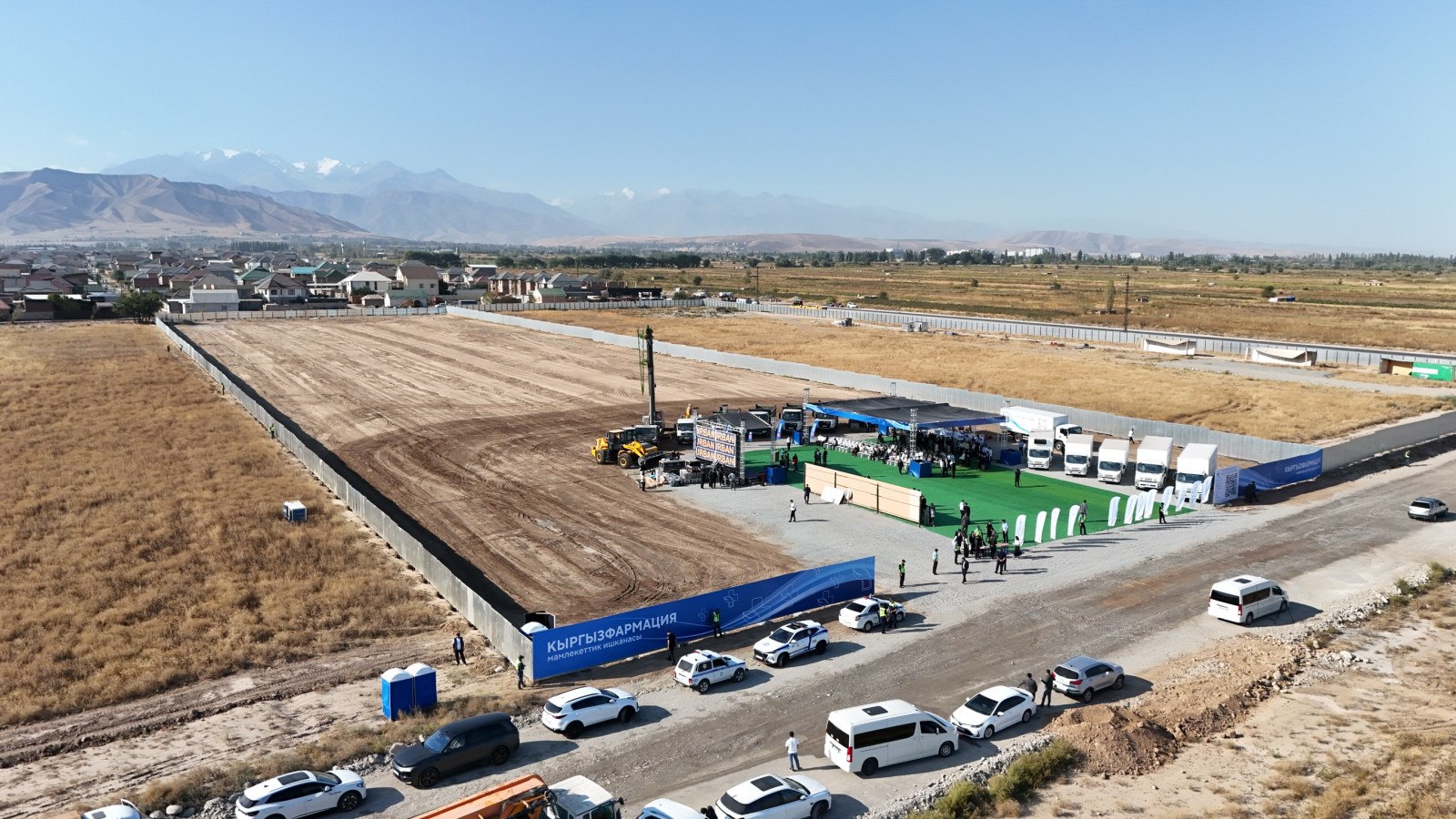
Construction has begun in Bishkek on what officials describe as Kyrgyzstan’s first state pharmaceutical logistics complex of its level. The new warehouse is intended to improve the storage and distribution of medicines in a country where imports account for 97% of the market.
The complex is being built for Kyrgyzpharmatsiya, a state-owned enterprise under the Ministry of Health that centrally procures and supplies medicines and medical products to public healthcare facilities. It will occupy a 7.1-hectare site. The project will cost 650 million som, or about $7.4 million.
The facility will operate in accordance with international Good Distribution Practice, or GDP, standards, which set requirements for the storage, handling, and transportation of medicines to preserve their quality throughout the supply chain.
The warehouse will form part of a broader overhaul of Kyrgyzstan’s national pharmaceutical supply system. Established in 2023, Kyrgyzpharmatsiya centralizes orders from public healthcare institutions and enters into direct contracts with manufacturers. Buying in larger volumes is intended to reduce the number of intermediaries and lower procurement costs.
A unified state digital platform is also being developed to connect healthcare facilities’ requests with procurement, deliveries, and inventory data. Together with the warehouse, it is intended to provide traceability of medicines from the supplier to the healthcare facility.
Funding for medicines and medical products in 2026 is budgeted at 6.8 billion som, or about $77.8 million, compared with 100 million som, or $1.1 million, in 2021.
Kyrgyzstan, however, obtains nearly all of its medicines from abroad. Domestic producers account for only about 3% of the market, while medicine imports were projected to reach 34 billion som, or about $389 million, in 2025.
This dependence leaves the market vulnerable to exchange-rate fluctuations, border delays, and disruptions affecting foreign suppliers. A domestic logistics center will not reduce the share of imports, but it could reduce storage losses, make it easier to maintain stocks of high-demand medicines, and speed up deliveries to hospitals.
Illegal imports remain a separate problem. In November 2025, a Health Ministry official said that 2022 data put the share of smuggled medicines at around 30-40%, an estimate he said remained relevant. The figure is based on older data and should not be treated as a current measure of the market.
The new complex addresses an important infrastructure gap, but by itself it does not guarantee lower prices or end shortages. The outcome will depend on procurement planning, contract transparency, and the distribution of medicines from the central warehouse to the regions.