• KGS/USD = 0.01144 0%
  • KZT/USD = 0.00211 0%
  • TJS/USD = 0.10460 0.19%
  • UZS/USD = 0.00008 0%
  • TMT/USD = 0.28490 0%
  • KGS/USD = 0.01144 0%
  • KZT/USD = 0.00211 0%
  • TJS/USD = 0.10460 0.19%
  • UZS/USD = 0.00008 0%
  • TMT/USD = 0.28490 0%
  • KGS/USD = 0.01144 0%
  • KZT/USD = 0.00211 0%
  • TJS/USD = 0.10460 0.19%
  • UZS/USD = 0.00008 0%
  • TMT/USD = 0.28490 0%
  • KGS/USD = 0.01144 0%
  • KZT/USD = 0.00211 0%
  • TJS/USD = 0.10460 0.19%
  • UZS/USD = 0.00008 0%
  • TMT/USD = 0.28490 0%
  • KGS/USD = 0.01144 0%
  • KZT/USD = 0.00211 0%
  • TJS/USD = 0.10460 0.19%
  • UZS/USD = 0.00008 0%
  • TMT/USD = 0.28490 0%
  • KGS/USD = 0.01144 0%
  • KZT/USD = 0.00211 0%
  • TJS/USD = 0.10460 0.19%
  • UZS/USD = 0.00008 0%
  • TMT/USD = 0.28490 0%
  • KGS/USD = 0.01144 0%
  • KZT/USD = 0.00211 0%
  • TJS/USD = 0.10460 0.19%
  • UZS/USD = 0.00008 0%
  • TMT/USD = 0.28490 0%
  • KGS/USD = 0.01144 0%
  • KZT/USD = 0.00211 0%
  • TJS/USD = 0.10460 0.19%
  • UZS/USD = 0.00008 0%
  • TMT/USD = 0.28490 0%

Turkmen Pensioners Endure Long Queues to Prove They Are Alive

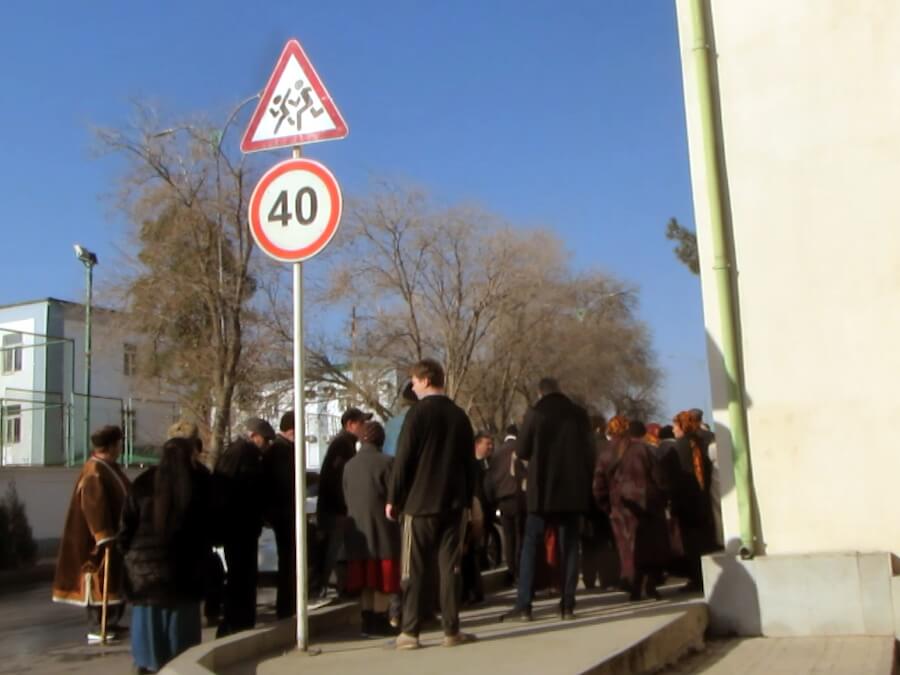
At the start of each year, elderly citizens and benefit recipients across Turkmenistan are forced to endure long hours in line at social security offices, as part of a biannual process requiring them to prove they are still alive. This routine formality has become a grueling ordeal, especially amid growing discontent over the government’s refusal to adjust payments as it had in previous years.

Twice annually, in January and July, pensioners and beneficiaries must appear in person at local offices to receive a stamp in their pension books, confirming eligibility and the amount of payment for the next six months. Failure to do so results in an immediate suspension of payments. While retroactive disbursements are promised upon eventual reappearance, surviving without income for six months is an impossible burden for many.

Reports of queues have emerged from across the country. Beneficiaries point out that the process could be easily streamlined with scheduled appointments or structured lists. However, no such measures are being implemented. Instead, in freezing cold or scorching heat, elderly people, women with young children, and individuals with disabilities must wait for hours.

In the city of Turkmenbashi, residents expressed particular frustration. Many pensioners reportedly held out hope until the last moment for the traditional 10% increase in payments and were shocked to find it canceled this year. For those in rural areas, even an extra $2.50 to $3 per month can make a significant difference.

The Times of Central Asia previously reported that the cancellation of the 2026 pension and benefit indexation triggered sharp discontent among older residents. Many only learned of the decision during their January visits and openly expressed their anger.

The move stems from a position voiced in the fall of 2025 at a parliamentary session. Honorary elder Yazmyrat Atamyradov proposed a complete freeze on wage, pension, benefit, and scholarship growth, claiming the standard of living for Turkmenistan’s “happy people” was rising sufficiently. 

Kazakhstan Weighs Opening Casinos Exclusively for Foreign Citizens

Kazakhstan is considering establishing new gambling zones that would be accessible only to foreign tourists. The Ministry of Tourism and Sports recently conducted a socio-economic study in potential host regions and reported that a significant portion of local residents support the initiative.

According to the ministry, international experience suggests that gambling zones restricted to foreign citizens can serve as an additional tool for attracting tourists and developing resort infrastructure, without directly impacting the domestic social environment.

The proposed sites for these exclusive casinos include the Mangistau region on the Caspian Sea, the Zhetysu region in southeastern Kazakhstan, and the Almaty region.

In Mangistau, 46% of respondents surveyed supported opening casinos for foreign tourists. The ministry estimates that by 2029, the region could receive up to 148,000 foreign visitors, creating approximately 7,000 permanent jobs and generating $2.3 million in annual tax revenue.

In the Zhetysu region, 67% of respondents expressed no objection to the development of such casinos. Projections suggest the region could host 36,000 foreign tourists annually by 2029, with around 700 jobs created and $4.7 million in annual tax revenue expected.

In the Almaty region, 54.5% of respondents supported the idea. By 2030, the region could attract up to 23,000 foreign tourists per year. According to forecasts, two gambling zones in the region may generate $12.8 million in tax revenue by 2028 and create around 2,000 permanent jobs.

The ministry stressed that the establishment and operation of gambling zones will comply with national legislation. Local authorities will determine the exact boundaries, and entry will be restricted to foreign citizens only.

Officials also highlighted ongoing national efforts to combat gambling addiction and mitigate social risks. The condition known as “pathological attraction to gambling” is internationally recognized and classified under the ICD code F63.0. In October 2023, Kazakhstan approved a clinical protocol for diagnosing and treating the disorder.

Previously, The Times of Central Asia reported that Kazakh authorities are intensifying their crackdown on bloggers promoting online casinos. Measures under consideration include licensing requirements for bloggers and the introduction of criminal penalties, replacing current administrative sanctions.

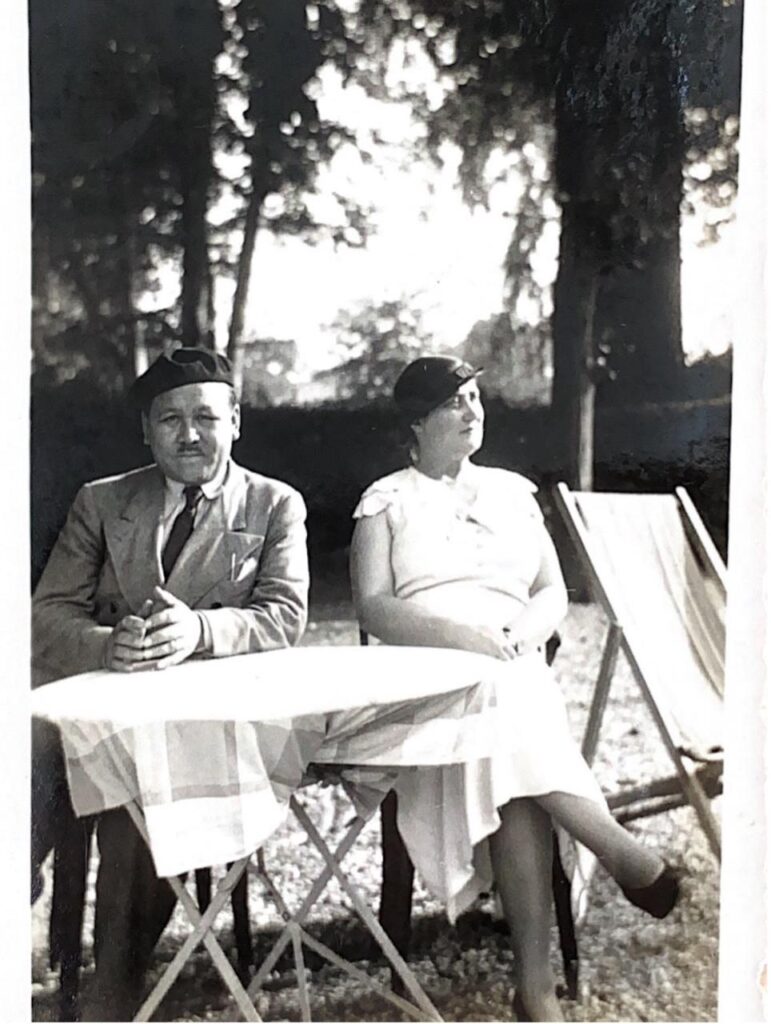
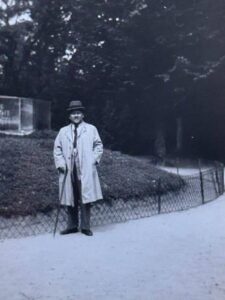
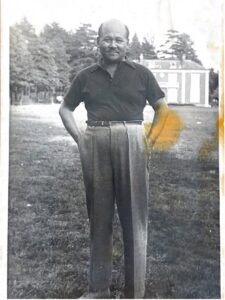
Family Album of 20th Century Kazakh Leader Mustafa Shokay Added to National Museum

The National Museum in Astana has acquired a rare and historically significant family photo album belonging to Mustafa Shokay, a leader of the Alash Orda political movement of the 1920s that strove for Kazakh autonomy, and his wife, Maria Shokay. The original album was formally donated to the museum by Shokay’s relative, Gulbarshyn Zairova.

For decades, the album was safeguarded by the distinguished violinist Alim Almat (born Galymzhan Absalyamov), who survived wartime imprisonment with the help of Mustafa Shokay and later became a spiritual son to Maria Shokay. Almat eventually entrusted this valuable heirloom to Shokay scholar Bakyt Sadykova, who in turn passed it on to Zairova in 2022.

From the Shokay family archive

Reflecting on the importance of the donation, Zairova said: “This artifact was preserved for many years by Alim Almat, the first violinist who survived captivity during the war thanks to Mustafa Shokay and who was taken under the care of Maria Shokay after the war. Following Kazakhstan’s independence, Alim Almat returned to the country and entrusted Mustafa Shokay’s typewriter, three seals used during the publication of the Yash Turkistan newspaper, the couple’s wedding portrait, and this album to Shokay scholar Bakyt Sadykova. In 2022, the album was entrusted to me, and on December 25, 2025, marking the 135th anniversary of Mustafa Shokay’s birth, it found its permanent home at the National Museum in Astana. Honoring history means safeguarding the future.”

From the Shokay family archive

Mustafa Shokay was a statesman who dedicated his life to the struggle for the freedom and equality of the Kazakh people. Born in 1890 in the Syr Darya region, he showed remarkable intellectual ability and a passion for learning from an early age.

From the Shokay family archive

He studied law in St. Petersburg and was fluent in Kazakh, Russian, Turkish, and French. Equipped with deep knowledge and a strong sense of justice, Shokay devoted himself to defending the rights of his people.

From the Shokay family archive

Amid the political transformations of 1917, Shokay emerged as a leading advocate for the future of Turkestan. He played a central role in the establishment of the Turkestan Autonomy, envisioning a homeland where Kazakhs and other Turkic peoples could live freely and with equal rights.

From the Shokay family archive

Although this vision was never fully realized, Shokay continued his mission in exile following the rise of Soviet power. Living in Europe, he remained deeply connected to his homeland, publishing newspapers and journals, writing influential works, and drawing international attention to the struggles of the Turkic world. Mustafa Shokay passed away in 1941, yet his ideals of freedom, dignity, and national self-determination continue to resonate today.

Kyrgyz Official Concerned Over “High Barriers” in U.S. Visa Bond Policy

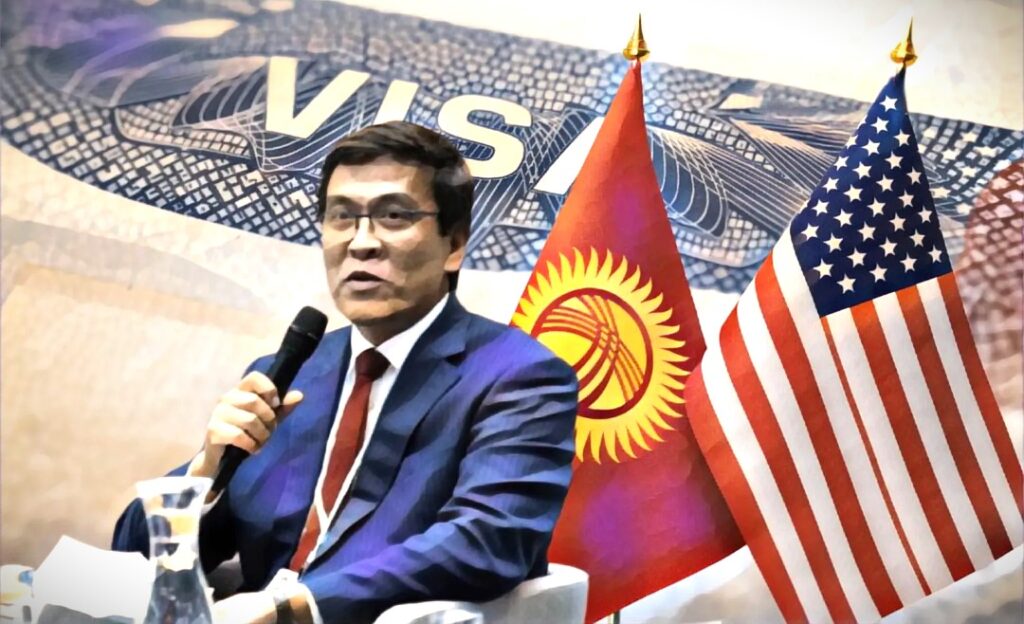
Kyrgyzstan should review its visa-free system for American citizens after the United States expanded its visa bond policy to include the Central Asian country, according to a senior Kyrgyz official who said there should be “mutual respect.”

The suggestion that there should be some reciprocity following the U.S. measure came from Edil Baisalov, deputy chairman of Kyrgyzstan´s Cabinet of Ministers and a prominent ally of President Sadyr Japarov. Currently, U.S. travelers to Kyrgyzstan can stay for up to 30 days without obtaining a visa.

“I believe that we should initiate a review of our visa-free regime for U.S. citizens following the new visa requirements announced yesterday by the State Department, under which Kyrgyz citizens are required to pay a visa deposit of up to $15,000 when submitting visa applications,” Baisalov said on X on Thursday. “Visa policy is a matter of parity and mutual respect. If such high barriers are introduced for our citizens, we cannot pretend that nothing has happened.”

However, he did not offer any analysis about what, if any, changes should be made to the visa-free system for U.S. visitors. Any visa dispute with the far more powerful United States could be risky for Kyrgyzstan, which has meanwhile joined with other Central Asian countries in trying to develop closer ties to the administration of U.S. President Donald Trump.

Nationals from 38 countries, including Kyrgyzstan, Tajikistan and Turkmenistan, are subject to visa bonds under the U.S. State Department policy, which is part of a wider crackdown on immigration. The policy took effect for citizens from Turkmenistan on January 1 and will be implemented for nationals from Kyrgyzstan and Tajikistan starting on January 21.

“Any citizen or national traveling on a passport issued by one of these countries, who is found otherwise eligible for a B1/B2 visa, must post a bond for $5,000, $10,000, or $15,000.  The amount is determined at the time of the visa interview,” the State Department said.

B-1 (business) and B-2 (tourism) refer to non-immigrant visas for people who want to stay temporarily in the U.S.

Visa holders who have posted bond are also required to enter the United States via designated international airports, including seven in the U.S. and two in Canada.

The U.S. visa bond policy is a setback for Kyrgyzstan, which had previously appealed to the United States to relax its visa requirements. Kyrgyz Foreign Minister Zheenbek Kulubaev raised the issue during a meeting with U.S. Deputy Secretary of State Christopher Landau on the sidelines of the U.N. General Assembly in New York in September.

Turkmenistan Opens Door to Crypto Mining, Keeps Firm Grip on Exchanges

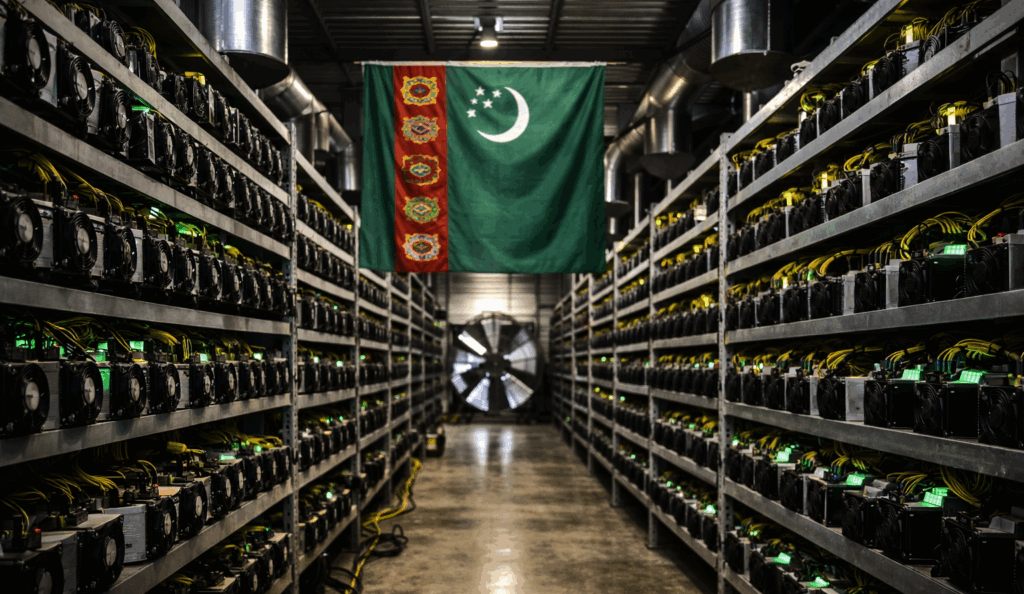
Turkmenistan has taken a rare step toward opening a tightly controlled economy by legalizing cryptocurrency mining and the operation of crypto exchanges under a new “Law on Virtual Assets”. First reported by The Times of Central Asia in early December 2025, the law came into effect on January 1, 2026, creating a state-run licensing system overseen by the Central Bank of Turkmenistan, while keeping strict limits on how crypto can be used inside the country.

The legal change, signed by President Serdar Berdimuhamedov, brings “virtual assets” under civil law, meaning that crypto is treated as property, rather than money. Under the framework, cryptocurrencies are not recognized as legal tender and cannot be treated as a currency or security for domestic payments.

As previously reported by The Times of Central Asia, the law covers the creation, storage, issuance, and circulation of virtual assets. It also states that the government is not responsible for losses incurred through crypto platforms or for drops in asset value. Mining rights are available to individual entrepreneurs and legal entities that register electronically with the central bank, and the law explicitly bans “hidden mining” that uses someone else’s computing resources without permission.

For exchanges and related service providers, the licensing requirements are central. Licensed firms can offer exchange, transfer, storage, and management services, and conduct initial offerings, but they must follow customer identification rules aligned with anti-money-laundering controls. The law also places strict limits on who can operate crypto exchanges inside Turkmenistan. Individuals and legal entities registered in offshore jurisdictions are barred from establishing exchanges, and founders with offshore bank accounts are disqualified from obtaining licenses, reinforcing a framework designed to keep ownership and control within a tightly regulated domestic system.

Advertising restrictions further underscore the government’s cautious approach. Crypto service providers are prohibited from making promises of profitability or offering inducements to attract customers. Promotional materials must include explicit warnings that virtual assets are not state-backed and may lose value, reflecting official concerns over speculation and consumer risk.

The shift is widely seen as significant for one of the world’s most closed economies, though structural constraints remain. Turkmenistan’s heavily regulated internet environment poses a challenge for both trading platforms and large-scale exchange operations, particularly those requiring uninterrupted access to global networks. The move also fits within a broader effort to reduce reliance on gas exports by cautiously diversifying the economy.

The commercial question now is whether legal clarity and access to low-cost electricity can outweigh these limitations. The model combines ultra-cheap energy with a license-driven regulatory system, a structure that may attract some miners while deterring firms that depend on flexible compliance regimes or unrestricted connectivity.

Across Central Asia, governments have taken divergent approaches to regulating digital assets. Kazakhstan has experimented with special regulatory zones and later expanded oversight nationwide. Turkmenistan’s approach is more centralized, creating a narrow legal pathway that keeps regulatory authority concentrated with the state and the central bank.

The government has signaled incremental openness in other areas, including the introduction of electronic visas, yet Turkmenistan remains among the most restrictive environments in the world for media and internet access. That combination makes the new crypto law both notable and uncertain in its likely impact: mining and exchange businesses now have a legal route into the country, but the same state controls that shape daily life will determine whether the sector becomes a meaningful hub or remains a tightly managed niche.

Turkmenistan’s Arkadag to Face Cristiano Ronaldo’s Al-Nassr in AFC Champions League

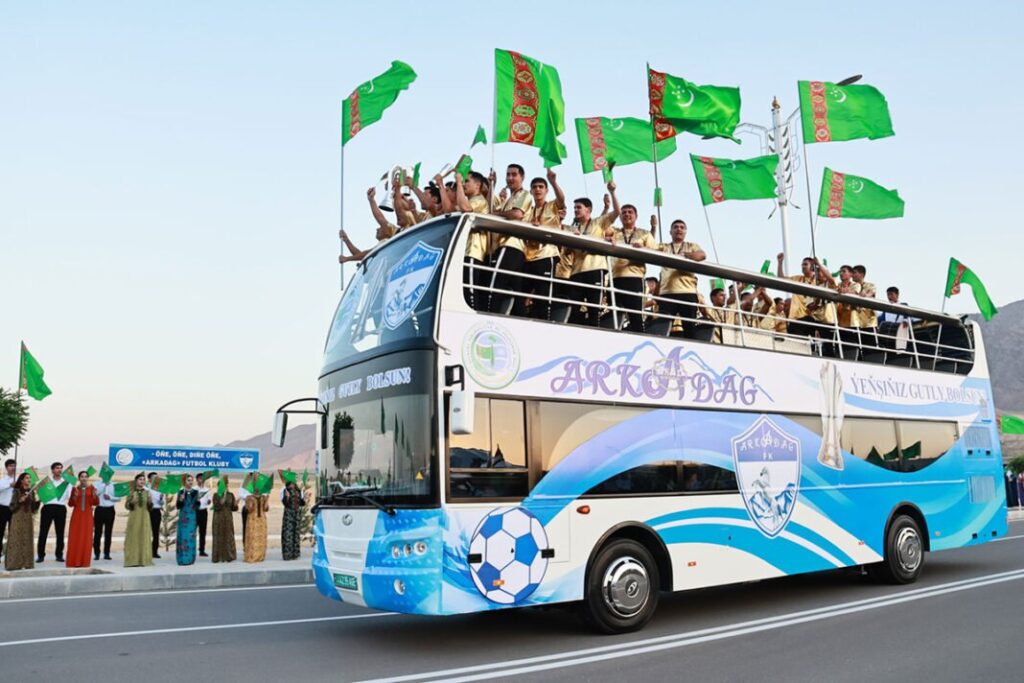
Turkmenistan’s Arkadag football team has drawn Saudi Arabia’s Al-Nassr, one of the favorites to win the AFC Champions League, in the round of 32. The Riyadh-based club features global football icon Cristiano Ronaldo.

The play-off stage draw was held on December 30 in Kuala Lumpur. Arkadag could have faced Jordan’s Al-Hussein or the UAE’s Al-Wasl, but the outcome proved more challenging. Al-Nassr, widely considered a top contender for the title, will now travel to Ashgabat for a critical away match.

Cristiano Ronaldo has been with the Saudi club for three seasons but has yet to play a match in Central Asia. In both 2023 and 2025, Al-Nassr shared a group with Tajikistan’s Istiklol. However, in each case, the matches in Dushanbe occurred late in the group stage, with Al-Nassr having already secured qualification, prompting the club to rest its key players.

The upcoming encounter may break that pattern. As the first match of a two-legged tie, Al-Nassr is unlikely to underestimate its opponent.

Arkadag, the reigning AFC Challenge League champion, has established itself as a formidable home team, maintaining an unbeaten record since its founding. In last season’s Challenge League playoffs, Arkadag defeated India’s East Bengal 2-1 and Kuwait’s Al-Arabi 3-0 on home turf.

In this season’s AFC Champions League, the team has continued its strong form, securing a 1-0 win over Bahrain’s Al-Khalidiya and drawing 1-1 with both Uzbekistan’s Andijan and Qatar’s Al-Ahli.

For Al-Nassr, the match represents an away challenge against a little-known but dangerous opponent. Arkadag’s home advantage, unwavering support from local fans, and spotless home record make the team a serious threat, even for a club boasting global superstars.

The first-leg match is scheduled for February 10 or 11 in Turkmenistan, with the return leg set for February 17 or 18 in Saudi Arabia.

Arkadag is Central Asia’s sole representative in the AFC Champions League round of 32. However, the region will also be represented in the AFC Challenge League playoffs, with Kyrgyzstan’s Muras United advancing to the next stage.

The Ashgabat fixture may become not only the highlight of Turkmenistan’s football winter, but also a rare opportunity for Central Asian fans to witness one of the world’s greatest players compete on regional soil.