• KGS/USD = 0.01144 0%
  • KZT/USD = 0.00192 -0%
  • TJS/USD = 0.10849 0.37%
  • UZS/USD = 0.00008 0%
  • TMT/USD = 0.28571 0.28%
  • KGS/USD = 0.01144 0%
  • KZT/USD = 0.00192 -0%
  • TJS/USD = 0.10849 0.37%
  • UZS/USD = 0.00008 0%
  • TMT/USD = 0.28571 0.28%
  • KGS/USD = 0.01144 0%
  • KZT/USD = 0.00192 -0%
  • TJS/USD = 0.10849 0.37%
  • UZS/USD = 0.00008 0%
  • TMT/USD = 0.28571 0.28%
  • KGS/USD = 0.01144 0%
  • KZT/USD = 0.00192 -0%
  • TJS/USD = 0.10849 0.37%
  • UZS/USD = 0.00008 0%
  • TMT/USD = 0.28571 0.28%
  • KGS/USD = 0.01144 0%
  • KZT/USD = 0.00192 -0%
  • TJS/USD = 0.10849 0.37%
  • UZS/USD = 0.00008 0%
  • TMT/USD = 0.28571 0.28%
  • KGS/USD = 0.01144 0%
  • KZT/USD = 0.00192 -0%
  • TJS/USD = 0.10849 0.37%
  • UZS/USD = 0.00008 0%
  • TMT/USD = 0.28571 0.28%
  • KGS/USD = 0.01144 0%
  • KZT/USD = 0.00192 -0%
  • TJS/USD = 0.10849 0.37%
  • UZS/USD = 0.00008 0%
  • TMT/USD = 0.28571 0.28%
  • KGS/USD = 0.01144 0%
  • KZT/USD = 0.00192 -0%
  • TJS/USD = 0.10849 0.37%
  • UZS/USD = 0.00008 0%
  • TMT/USD = 0.28571 0.28%
11 December 2025

Kazakhstan to Invest $24 Billion in Energy Modernization

Kazakhstan has launched a National Project to modernize its energy and utility sectors for the period 2025-2029, with planned investments of 13 trillion tenge (over $24 billion). The initiative aims to upgrade existing infrastructure and construct new power generation, transmission, and water supply systems.

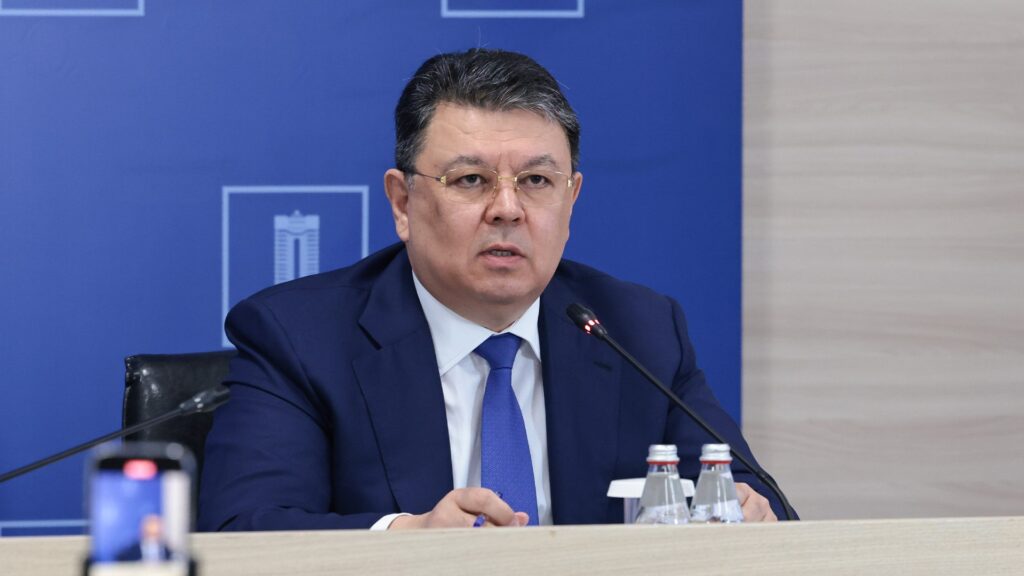
Deputy Prime Minister Kanat Bozumbayev announced the preliminary cost estimate during the “National Project for the Modernization of the Energy and Utility Sectors: Opportunities for Kazakh Business” conference. According to Bozumbayev, the funds will support the repair and construction of 86,000 kilometers of utility networks and add 7.3 GW in new generation capacity.

“Today, we have established the necessary regulatory framework to ensure long-term and affordable financing from financial institutions. We have now moved to the practical stage of the National Project. This year, pilot investments of around 144 billion tenge ($266 million) have been raised for 48 natural monopoly entities,” Bozumbayev stated.

Financing will be sourced both domestically and internationally. The Kazakhstan Housing Company has already purchased bonds worth 22.5 billion tenge ($41 million) from local administrations in the Karaganda, Pavlodar, West Kazakhstan, and North Kazakhstan regions. The Development Bank of Kazakhstan is also finalizing assessments for selected projects.

International partners are also involved. The European Bank for Reconstruction and Development is financing the construction of wastewater treatment facilities in the Aktobe region. Chinese companies are under consideration as potential partners for upgrading and building new coal-fired power plants. “There are certain restrictions on state-backed export financing from this country, but private companies have financial capabilities and experience operating in multiple countries,” Bozumbayev noted.

Authorities expect to finalize financing sources for 2026 by year-end, while procurement and design procedures are scheduled to begin. “Funding will be provided through the state budget and market instruments. The National Project will also apply new procurement mechanisms aligned with international practices, including EPC contracts and consortium-based construction,” Bozumbayev added.

Vice Minister of National Economy Assan Darbayev emphasized that reducing the wear and tear on heating, electricity, water supply, and wastewater networks to below 50% will require investments of 6.8 trillion tenge ($12.5 billion). The program includes 15 new generation projects worth 4.4 trillion tenge ($8 billion), along with 14 modernization projects for existing facilities valued at 1.8 trillion tenge ($3.3 billion). These measures are expected to reduce overall depreciation by 15%.

As previously reported by The Times of Central Asia, Kazakhstan has faced worsening electricity shortages in recent years. In 2024, the shortfall between supply and demand reached 2.4 billion kWh, up from 2.2 billion kWh in 2023.

Opinion: Bridging Histories, Building Futures – Central Asia, Pakistan, and the Dream of a Railway

On 5 September 2025, the Times of Central Asia published an article titled “Trans-Afghan Railway: Can Uzbekistan Build a Railway Through Afghanistan to Reach the Sea?” Reading it stirred something deep within me. The piece was not just about steel tracks or trade corridors – it was about dreams, history, and the future of a region I have long been passionate about: Central Asia.

I am not a political analyst; I am an engineer by training and a student of history by passion. Having worked in Afghanistan and witnessed the landscape of its geography and politics up close, I feel a personal connection to the idea of connectivity between Pakistan and Central Asia by rail. This is not just a policy debate for me – it is a lifelong vision tied to my family history, my professional journey, and my fascination with the region’s rich past.

When the Soviet Union withdrew its last troops from Afghanistan on 15 February 1989, ending its long and bloody war, the region entered a new and uncertain chapter. That very moment coincided with the beginning of my own career. Just two months earlier, I had started my first job as a Junior Engineer. For me, the Soviet withdrawal was not only a historical milestone; it was also a symbolic reminder of how deeply Afghanistan and its neighbors were tied to global currents of power, conflict, and change. Standing at the threshold of my professional life, I wondered how this region – so often defined by wars – might instead be remembered for bridges, trade, and railways.

My fascination with Central Asia is also deeply personal. From my mother’s side, my family traces its lineage back to Bukhara. This explains why many families in Pakistan carry the name Bukhari, as their ancestors once migrated southward from that historic Central Asian city. History was not abstract for me – it lived in the stories of my elders and in the books I devoured as a student. In my school years, I read the Baburnama twice. These memoirs of Zahīr ud-Dīn Muhammad Bābur, the founder of the Mughal Empire, fascinated me. Born in Andijan in the Ferghana Valley (modern-day Uzbekistan), Babur’s life was a reminder of how Central Asia and South Asia have always been linked – through migration, culture, politics, and ambition.

In 1992, I made my first trip to Tashkent. The journey was more than a visit; it was a pilgrimage to the heart of a region I had admired from afar. That first encounter left an indelible mark on me, and more than three decades later, my passion for Central Asia remains unending.

Long before modern projects and international agreements, history itself carved the routes of connectivity. The Khyber Pass, lying between present-day Pakistan and Afghanistan, has for centuries served as a gateway between Central and South Asia. Caravans laden with silk, spices, and stories once passed through its rugged cliffs. Empires – from the Mughals to the British – understood its importance. And in the 20th century, the British undertook one of their most ambitious engineering feats in the region: the Khyber Railway.

The Khyber Railway, opened in 1925, was not just a track; it was a statement. Built to connect Peshawar with Landi Kotal near the Afghan border, the railway required 34 tunnels, numerous bridges, and ingenious engineering to cut through the treacherous landscape. The line rose from 1,500 feet at Jamrud to 3,500 feet at Landi Kotal, using zigzag “W”-shaped turns where locomotives had to push and pull simultaneously. Among its tunnels, the Kafir Tangi tunnel was the longest, a marvel of its time. The project cost millions of rupees, but its true price lay in the politics of the Afridi tribes, whose cooperation was essential.

British officials like Colonel Gordon R. Hearn and Victor Bailey worked on the design, but equally important were the negotiations with local tribes. Initially resistant, fearing the railway would curtail their freedom, the Afridis eventually agreed after incentives such as tribal allowances, contracts, and employment opportunities were offered. The lesson was clear: railways could not be built by force alone; they required trust, incentives, and shared prosperity.

The Khyber Railway was inaugurated on 21 November 1925, with great ceremony. It was later extended to Landi Khana, just two miles short of the Afghan border, but closed in 1932 at the insistence of the Afghan government. Though trains no longer run through the Khyber Pass, the railway remains a symbol of what is possible when vision, engineering, and political will converge.

Fast forward to modern times. In 1997, the Asian Development Bank (ADB) launched the Central Asia Regional Economic Cooperation (CAREC) Program, aimed at encouraging economic cooperation and connectivity among Central and South Asian countries. The dream was ambitious: to revive the ancient Silk Road through modern transport corridors, linking landlocked Central Asian states to markets and ports. Among the envisioned routes were Corridor 5 and Corridor 6, which pass through Pakistan and Afghanistan, connecting Central Asia to the Arabian Sea.

Yet, more than two decades later, much of this vision remains on paper. Few recall that on 7 July 2010, a Memorandum of Understanding (MOU) was signed in Islamabad between the governments of Pakistan and Afghanistan to explore railway cooperation. The MOU was never fully implemented, a victim of shifting politics, conflict, and bureaucracy.

Despite geographical proximity and strong demand, trade between Pakistan and Central Asia remains minimal. Pakistan’s exports to the Central Asian Republics (CARs) accounted for less than 1% of their imports in 2016. Afghanistan, with which Pakistan’s trade had nearly doubled by 2015, saw a 30% drop in flows in just two years. While these figures are not current, they highlight the long-standing underperformance of regional trade despite repeated policy initiatives.

Pakistani products such as surgical instruments, textiles, fruits, rice, sugar, and cement are in demand, yet face barriers of logistics and connectivity. The road between Peshawar and Kabul, passing through the Khyber Pass, still serves as a crucial artery – part of CAREC Corridors 5 and 6 – but without rail integration, its potential remains underutilized.

Among the boldest modern projects is the Trans-Afghan Railway, designed to connect Mazar-i-Sharif in northern Afghanistan to Peshawar in Pakistan via Kabul. The project was first discussed during the visit of Uzbekistan’s Deputy Prime Minister Sardor Umurzakov to Pakistan in September 2020. On 27 December 2020, the heads of state of Uzbekistan, Afghanistan, and Pakistan signed a joint appeal to the World Bank for financing. In February 2021, Tashkent hosted the first trilateral joint working group, which produced a roadmap for cooperation. By 2022, Pakistan and Uzbekistan had agreed to expedite the project through the creation of a special purpose vehicle (SPV).

If completed, the Trans-Afghan Railway would provide the shortest route from Central Asia to Pakistan’s deep-water ports at Karachi and Gwadar, reduce transport costs for landlocked economies like Uzbekistan, Tajikistan, and Kyrgyzstan, and revitalize Afghanistan’s role as a bridge rather than a barrier.

Pakistan itself inherited a rich but underutilized railway network. The first line was built in 1861, connecting Karachi to Kotri. By 1947, Pakistan inherited 5,048 miles from the colonial North Western State Railway. Extensions were made in the 1950s and 70s, but since then, progress has stagnated. Today, road transport dominates, while the freight share of rail has steadily declined. Problems include deteriorated infrastructure, outdated rolling stock, inefficient pricing, and poor customer orientation.

The China–Pakistan Economic Corridor (CPEC) offers some hope. Plans to upgrade Main Line 1 (ML-1) and eventually Main Line 3 (ML-3) could modernize the backbone of Pakistan Railways. If linked with the Trans-Afghan Railway, these upgrades could position Pakistan as the natural gateway for Central Asian trade.

The story of the Khyber Railway offers timeless lessons. The British learned that infrastructure projects in tribal and contested regions succeed only when local communities are offered economic incentives, employment, and inclusion. Today, regional governments must heed the same lesson. Connectivity cannot be imposed; it must be built on trust and shared prosperity. For Afghanistan, that means involving local communities in construction and ensuring they benefit economically. For Pakistan and Central Asia, it means prioritizing mutual trade and people-to-people contact over short-term politics.

In a world increasingly defined by regional blocs and trade corridors, the fate of Central and South Asia depends on whether they choose connectivity or isolation. For Central Asia, access to Pakistan’s ports could dramatically reduce transport costs and boost competitiveness. For Pakistan, greater trade with Central Asia could diversify markets and reduce dependence on limited partners. For Afghanistan, railways could turn geography from a curse into a blessing, making it a crossroads of commerce rather than a battleground.

As I reflect on my own journey – from reading the Baburnama as a student, to working as a young engineer during the Soviet withdrawal, to traveling to Tashkent in 1992 – I see how deeply my life has been intertwined with the history and destiny of Central Asia. Almost 35 years after the independence of Central Asian states, much of the railway connectivity remains unrealized. Yet my dream endures: to one day see a train departing from Tashkent or Mazar-i-Sharif, crossing Kabul, passing through the Khyber, and arriving in Pakistan. That train would not just carry goods; it would carry hope, peace, and the promise of prosperity for millions.

The vision of railway connectivity between Central Asia and Pakistan is not a new dream. It is rooted in centuries of history, from Babur’s migrations to the Khyber caravans, from the British-built railways to the CAREC corridors of today. What makes this dream urgent now is that the region can no longer afford missed opportunities. Landlocked economies need access; Pakistan needs new markets; Afghanistan needs stability. Railways offer all three.

For me, this is not an abstract policy idea. It is a personal passion, a professional interest, and a historical calling. The Times of Central Asia article reminded me that the dream is alive. And as someone who has lived, worked, and dreamed in the shadow of this region’s history, I still believe: the future of Central Asia and Pakistan lies on the tracks of a railway yet to be built.


The views expressed in this article are those of the authors and do not necessarily reflect the official policy or position of the publication, its affiliates, or any other organizations mentioned.

Uzbekistan Halves Child Poverty in Four Years

Uzbekistan has achieved a significant reduction in child poverty over the past four years. According to UNICEF Representative Regina Maria Castillo, the child poverty rate dropped from 21.5% in 2021 to just 11.4% in 2024, effectively cutting the figure in half. Speaking at an international forum in Namangan, Castillo credited deliberate government policy for the 10-percentage-point decline.

She emphasized that government-funded social benefits, including child allowances and pensions, played a critical role in lifting families out of poverty. Without these support mechanisms, she noted, child poverty could have sharply increased during the same period. Castillo also highlighted the importance of universal state-provided services, such as education, healthcare, and child protection, as essential pillars for developing human capital. She stressed that prioritizing child poverty reduction within broader socio-economic policy is vital, adding that UNICEF stands ready to support the Uzbek government through a multi-sectoral approach.

Reducing poverty has become a central national priority in Uzbekistan. President Shavkat Mirziyoyev has set an ambitious target: to lower the national poverty rate to 6% by the end of 2025 and to eradicate absolute poverty entirely by 2030. These goals build on substantial progress already achieved. According to official figures, approximately 7.5 million people have been lifted out of poverty in recent years. The national poverty rate declined to 8.9% in 2024, down from around 23% a few years prior. The World Bank estimates that poverty in Uzbekistan has halved since 2015, a rate of decline faster than the regional average.

At the Namangan forum, Mirziyoyev announced that as of mid-2025, the poverty level had dropped further to 6.8%, placing the country on track to meet its 6% year-end target. “Thanks to consistent reforms, 7.5 million people have been lifted out of poverty… The objective is to reduce this to 6% by year-end,” he said. “By 2030, Uzbekistan has every opportunity to completely eradicate absolute poverty and we will definitely achieve this.”

Several key drivers underpin the country’s progress. Rising household incomes account for roughly 60% of the recent poverty reduction, according to the World Bank. With the economy nearly doubling in size over the past eight years, economic growth has translated into higher wages and job creation, lifting many families above the poverty line.

Another major contributor has been the expansion and modernization of social benefit programs. Increased spending on pensions and direct aid has protected millions from falling into extreme hardship. Notably, during the COVID-19 pandemic, Uzbekistan mobilized $8 billion for free medical supplies and direct payments, which prevented an estimated 5.2 million people from falling into the “poverty trap.”

Looking ahead, sustaining these gains will hinge on job creation and human-capital improvements, sharper targeting in social protection, and stronger climate resilience – especially in rural regions. UNICEF’s 2024 situation analysis likewise flags regional disparities in child poverty and stresses better services for large, low-income households. The World Bank’s climate assessments, meanwhile, warn that rising temperatures and mounting water stress could push vulnerable rural families back into poverty without quicker adaptation in agriculture and water management. Together, these risks define the to-do list for keeping child-poverty declines on track.

Chinese Man Jailed in Tashkent for Pouring Boiling Water on Cat

A Chinese citizen in Tashkent has been sentenced to five days in detention after being found guilty of torturing a cat by repeatedly pouring boiling water on it, according to the animal protection organization “Mehr va Oqibat” (Kindness and Compassion).

The incident occurred during the night of September 16-17, when a local resident contacted the group’s hotline after hearing the sound of a cat crying. Looking outside, the witness saw her neighbor, identified as Y.Z., a Chinese national, pouring boiling water onto the animal, which he had confined in a container to prevent it from escaping.

Mehr va Oqibat promptly reported the case to the Ministry of Internal Affairs, the Ministry of Foreign Affairs, and the Chinese Embassy in Uzbekistan, urging legal action under Uzbek law and calling for the offender’s deportation.

On September 18, the Yakkasaroy District Criminal Court sentenced Y.Z. to five days of administrative detention. His legal team appealed the decision, requesting a reduced penalty in the form of a fine. However, on September 20, the Tashkent City Criminal Court rejected the appeal and upheld the original sentence.

In a statement, Mehr va Oqibat thanked its attorney, Dilshodbek Asadullayev, for representing the case in court, and expressed appreciation for the witness who reported the abuse. The organization reiterated its intention to pursue Y.Z.’s deportation.

Founded in 2010, Mehr va Oqibat has been at the forefront of promoting humane treatment of animals in Uzbekistan. In 2019, the group launched the “Mushukkent” initiative, which established cat shelters in Tashkent police stations. In 2023, with the support of local residents, it built a three-story cat shelter in the Uchtepa district to provide refuge for stray animals during the winter. The project, supported by the Tashkent city administration and the National Guard, also serves as an educational tool to encourage compassion among children.

The organization emphasized that preventing animal cruelty and fostering kindness are essential not only for animal welfare, but also for nurturing a more humane and just society.

Kazakhstan Recognizes Course Certificates as Equivalent to University Diplomas

Kazakhstan’s National Council for Professional Qualifications, in collaboration with industry experts, has approved a new National Qualifications Framework (NQF) that officially recognizes certificates from professional and advanced training courses as valid proof of education for employment purposes.

Previously, only diplomas from universities, colleges, and technical schools were accepted. According to the Ministry of Labor and Social Protection of the Population, the revised system now also includes non-formal and informal learning, skills and knowledge acquired outside traditional educational institutions over a person’s lifetime. The reform is based on the European Qualifications Framework and tailored to meet the evolving demands of Kazakhstan’s labor market.

“The updated NQF was developed in line with Kazakhstan’s labor and education legislation and incorporates international practices. It is based on transparency and comparability, which ensures recognition of competencies acquired in different sectors and facilitates labor mobility. The framework supports lifelong learning and is tailored to the real needs of the economy,” said First Vice Minister of Labor and Social Protection Askarbek Yertayev.

The framework consists of eight levels, ranked by increasing complexity of tasks, responsibility, and knowledge intensity. Under the new system, not only are diplomas and work experience recognized, but certificates from short-term courses and qualifications verified via the Career Enbek portal are now considered official evidence of skills.

The Ministry also clarified labor code provisions regarding multiple employment. Citizens are permitted to work for more than one employer, provided the total working time does not exceed 12 hours per day, up to eight hours at the primary job and four hours in secondary employment. However, minors under 18 and employees in hazardous occupations, excluding healthcare workers, are prohibited from holding multiple jobs. Civil servants may not take on secondary employment, except in teaching, research, or creative roles.

As previously reported by The Times of Central Asia, authorities have recently increased pressure on employers who pay “gray wages”, salaries paid off the books without tax or social contributions.

Insider’s View: Uzbekistan–U.S. – A New Era of Environmentally Friendly and Energy-Efficient Investment

Today, environmentally friendly and energy-efficient projects are no longer just a fashionable trend but a factor of global competitiveness. Uzbekistan, once regarded as a country with a resource-based energy system and limited opportunities for the adoption of modern technologies, is now becoming a hub for “green” investment and innovation. A strategic partnership with the United States plays a special role in this process, encompassing key areas ranging from energy and ecology to finance, education, and culture. Clean and innovative projects are becoming the hallmark of Uzbek-American relations, shaping a new model of cooperation in the 21st century.

Green Energy and Strategic Partnership

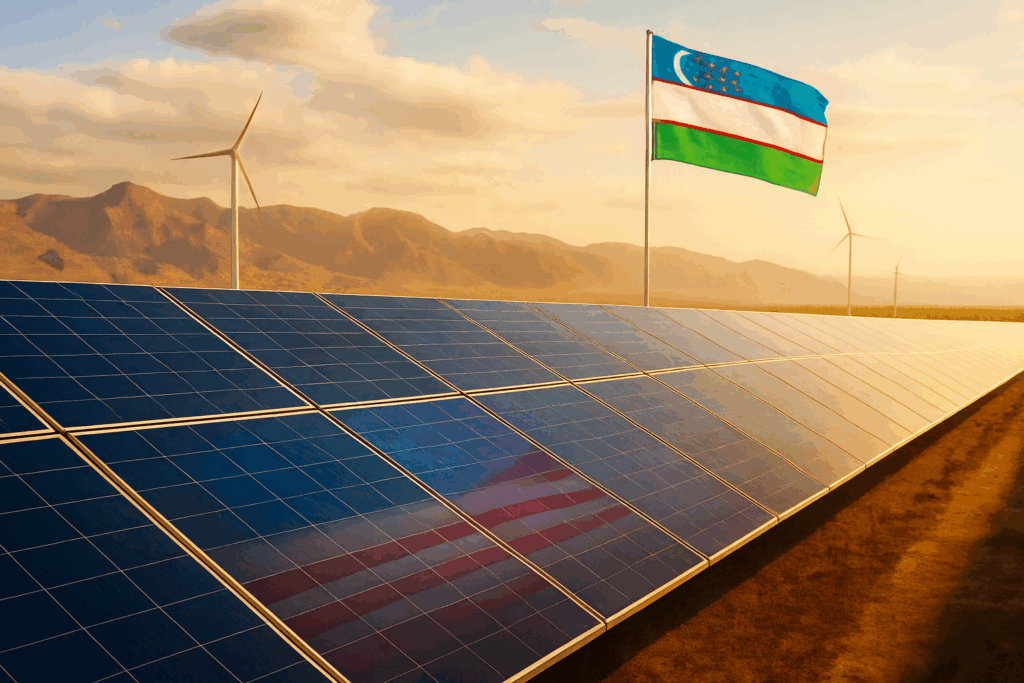
Uzbekistan is moving confidently toward a “green” future. While in 2018 renewable energy sources accounted for less than one percent of electricity generation, from January to July 2025, renewables already provided 20.3% of the country’s total electricity. More than 11 billion kWh of “green” energy were produced, including 6.4 billion kWh from solar power plants and 3.6 billion kWh from wind farms. This volume saved 3.6 billion cubic meters of natural gas and prevented over 2.2 million tons of harmful emissions. Every day, renewables now generate about 26.7 million kWh – enough to cover the needs of 7.28 million households for half a year, or 3.64 million homes for an entire year. Currently, 10 solar and 4 wind plants with a combined capacity of more than 4.5 GW operate across 10 regions of the country.

A key focus of Uzbek-American cooperation has become “green” energy. In 2025, Allied Green Ammonia (AGA), together with the U.S. company Plug Power, announced a major project for the production of sustainable aviation fuel, green diesel, and urea. The plan includes the supply of electrolyzers with a capacity of up to 2 GW for the future complex. A final investment decision is expected by the end of 2025, and the project has already been recognized as one of the flagship initiatives for Central Asia.

Air Products – A Flagship of American Presence

Air Products, a global leader in industrial gases and hydrogen energy, occupies a special place in Uzbek-American cooperation. In the Kashkadarya region, the company participates in a large-scale gas-to-liquids (GTL) project worth around $1 billion. The complex is designed to produce about 1.5 million tons of synthetic fuels per year, including diesel, jet kerosene, and naphtha. Its structure includes air separation units, autothermal reformers, and hydrogen production facilities. This project has become a landmark example of how U.S. technologies are transforming Uzbekistan’s energy sector.

In addition to GTL, Air Products is actively developing industrial gas production in Uzbekistan. The company participates in oxygen, nitrogen, and hydrogen production projects, introduces the latest PSA units, as well as freezing and storage technologies that reduce food losses and enhance economic resilience. Furthermore, the company has implemented a “green financing” system that links investments to sustainability principles. These projects not only strengthen the country’s industrial potential but also pave the way for positioning Uzbekistan as a regional hub for “green” energy.

The company’s future plans are equally ambitious: production of aviation fuel, CO₂ capture and storage, and coal gasification. Investment volumes exceed several billion dollars, including the construction of a methanol plant with an annual capacity of 1.34 million tons in Bukhara. This transforms Uzbekistan into a future center of high-tech energy in Central Asia, while Air Products becomes a symbol of Uzbek-American partnership.

Investments and Finance

The environmental agenda is closely linked to finance. The Uzbekistan National Investment Fund (UzNIF), with assets worth $1.7 billion, has been entrusted to the management of the U.S. company Franklin Templeton. For the first time in the country’s history, the fund is preparing for an international listing – a symbol of trust in American financial institutions and a new resource for investment in “green” projects.

Agriculture and Ecology: New Horizons of Partnership

Agriculture is one of the key areas of the Uzbek-American partnership, and a striking example is the Silverleafe Agrocluster in the Jizzakh region. This project has become a symbol of the modernization of the country’s agro-industrial complex. U.S. investments have enabled the introduction of precision farming technologies, modern irrigation systems, and innovative John Deere equipment, taking cotton and related crop production to a qualitatively new level.

The cluster has become a model for the transition from outdated practices to a modern agribusiness management system. It applies a track & trace system, allowing products to be monitored from the field to the consumer, significantly increasing transparency and trust in international markets. The adoption of international quality standards and certification has opened access to new export markets and reduced dependence on outdated farming methods.

The project is closely connected with the Agribusiness Development Activity (ADA) and Agricultural Value Chains (AVC) programs. These help farmers expand fruit and vegetable exports, implement quality standards and certifications, and develop greenhouse complexes and intensive orchards. A major result has been a reduction in post-harvest losses and an increase in farm profitability. Thus, the Silverleafe Agrocluster has not only become a catalyst for technological transformation in agriculture but also demonstrated that U.S. investments can deliver tangible effects in sustainable development and the “green” economy.

An equally important area of Uzbek-American cooperation is ecology and waste recycling. A vivid example is the activity of the U.S. company Sayar LLC, which is implementing a large-scale project for medical waste utilization with subsequent thermal energy generation.

Launched in 2024, the project already covers Tashkent, Samarkand, and Bukhara in its first stage, processing up to 6,000 tons of medical waste annually. The generated energy is used to supply hospitals with heating, hot water, and equipment operation. This increases the energy efficiency of social infrastructure while ensuring safe disposal of hazardous waste.

Future plans are even more ambitious: by 2030, recycling capacity will be expanded to 90,000 tons per year, with thermal energy generation reaching 300 GWh annually. The company’s total investment in the project is estimated at around $115 million.

The initiative is unique in that it combines environmental and social dimensions: waste recycling reduces the environmental burden and prevents the spread of infections, while the generated energy provides medical institutions with affordable and eco-friendly resources. Thus, Sayar LLC has become one of the first U.S. companies to demonstrate that waste recycling in Uzbekistan can be not only environmentally justified but also economically viable.

Social Initiatives

The All Children Succeeding (ACS) project, worth $25 million, is aimed at developing inclusive primary education. Healthcare programs include tuberculosis prevention and the One Health initiative, which integrates human, animal, and environmental health. These projects are directly linked to sustainable development, as education and public health form the foundation for introducing innovative “green” initiatives.

Education and Entrepreneurship

The Fulbright and FLEX programs, research initiatives, as well as Ambassador’s Fund for Cultural Preservation (AFCP) projects, help prepare a new generation of specialists capable of meeting the challenges of the “green” economy.

January 2025 marked an important milestone for fintech development: the U.S. Embassy in Tashkent and OSON Holding (Brio Group) signed a memorandum to launch the Academy for Women Entrepreneurs (AWE). Funding has been allocated to train 25 women entrepreneurs at the Thunderbird School of Global Management at Arizona State University. The program covers regions across the country, supporting small and medium-sized businesses in energy, science, and technology. This is already the embassy’s second public-private partnership initiative: in 2024, a memorandum with Air Products was signed to establish a Makerspace in Karshi.

Political and Economic Dialogue

In September 2025, the leaders of Uzbekistan and the United States reaffirmed their commitment to expand the strategic partnership in critical areas – from energy and infrastructure to digitalization and education. Clean investments and innovative projects remain at the heart of this agenda, underscoring that the future of relations is built on the principles of sustainable development.

Conclusion: A Green Future as the Foundation of Strategic Partnership

Uzbekistan and the United States demonstrate that cooperation can cover diverse fields – from “green” energy and industry to education, healthcare, culture, and fintech. Companies such as Air Products, Plug Power, Franklin Templeton, and OSON play a central role in raising bilateral relations to a global level. Together, they are laying the foundation for a new stage of the Uzbek-American partnership – one based on clean energy, the digital economy, and the technologies of the future.


The views expressed in this article are those of the author and do not necessarily reflect the official policy or position of the publication, its affiliates, or any other organizations mentioned.