• KGS/USD = 0.01144 0%
  • KZT/USD = 0.00213 0%
  • TJS/USD = 0.10456 0.19%
  • UZS/USD = 0.00008 0%
  • TMT/USD = 0.28490 0%
  • KGS/USD = 0.01144 0%
  • KZT/USD = 0.00213 0%
  • TJS/USD = 0.10456 0.19%
  • UZS/USD = 0.00008 0%
  • TMT/USD = 0.28490 0%
  • KGS/USD = 0.01144 0%
  • KZT/USD = 0.00213 0%
  • TJS/USD = 0.10456 0.19%
  • UZS/USD = 0.00008 0%
  • TMT/USD = 0.28490 0%
  • KGS/USD = 0.01144 0%
  • KZT/USD = 0.00213 0%
  • TJS/USD = 0.10456 0.19%
  • UZS/USD = 0.00008 0%
  • TMT/USD = 0.28490 0%
  • KGS/USD = 0.01144 0%
  • KZT/USD = 0.00213 0%
  • TJS/USD = 0.10456 0.19%
  • UZS/USD = 0.00008 0%
  • TMT/USD = 0.28490 0%
  • KGS/USD = 0.01144 0%
  • KZT/USD = 0.00213 0%
  • TJS/USD = 0.10456 0.19%
  • UZS/USD = 0.00008 0%
  • TMT/USD = 0.28490 0%
  • KGS/USD = 0.01144 0%
  • KZT/USD = 0.00213 0%
  • TJS/USD = 0.10456 0.19%
  • UZS/USD = 0.00008 0%
  • TMT/USD = 0.28490 0%
  • KGS/USD = 0.01144 0%
  • KZT/USD = 0.00213 0%
  • TJS/USD = 0.10456 0.19%
  • UZS/USD = 0.00008 0%
  • TMT/USD = 0.28490 0%

Tajikistan Expands Asset Disclosure Requirements for Officials

Tajikistan has broadened the scope of officials required to submit income and asset declarations, as part of amendments to its Anti-Corruption Law. The updated legislation now includes employees of the National Bank, other state-run credit and financial institutions, and officials working in Tajikistan’s foreign missions and representative offices abroad.

The revised law updates parts 4 and 5 of Article 21 and introduces six new provisions detailing the conditions and procedures for filing declarations. Officials who fail to submit required information or who submit “knowingly false” declarations, face dismissal or removal from office.

Under the new rules, declarations must be filed by individuals performing organizational, managerial, administrative, or financial functions at state enterprises and institutions, as well as entities in which the state holds a stake of at least 50%. Technical and maintenance personnel are exempt.

A specific clause obligates civil servants in diplomatic missions and other foreign-based institutions to file a property certificate.

The range of assets subject to disclosure has been significantly expanded. Officials must now declare:

  • residential properties, dachas, and other real estate;
  • garden and agricultural plots, with size specified;
  • vehicles and equipment;
  • livestock and poultry;
  • shares in commercial enterprises;
  • securities and bank deposits;
  • precious metals and gemstones, both in Tajikistan and abroad.

The income declaration must include earnings from primary and secondary employment, as well as income from academic, creative, and teaching activities; property rentals; agricultural production; bank deposits; and other sources, with specific identification of income type.

Newly appointed officials must file a declaration upon taking office. All officials are required to submit annual declarations by April 1 for the preceding year.

High-ranking officials appointed by the president or the government must file with the tax authority at their place of residence and submit a certified paper copy to the Executive Office of the President. Members of parliament report via the Majlisi Namoyandagon, while village and settlement leaders submit declarations to district or city administrations.

Failure to comply, or the discovery of false information, may result in denial of appointment or dismissal from a current post.

Tajikistan introduced asset declaration requirements in 2004, initially covering only real estate, land, and securities. In 2020, the rules were broadened to include other forms of property, including livestock.

However, declarations have never been made public. In 2019, then-head of the Civil Service Agency, Juma Davlat, explained that “Tajik society is not ready for this.” He added that the issue of transparency would be reconsidered “once the level of thinking and understanding in society rises to the level of Western countries.”

Doctors in Kyrgyzstan to Receive Double Salaries and Subsidized Housing

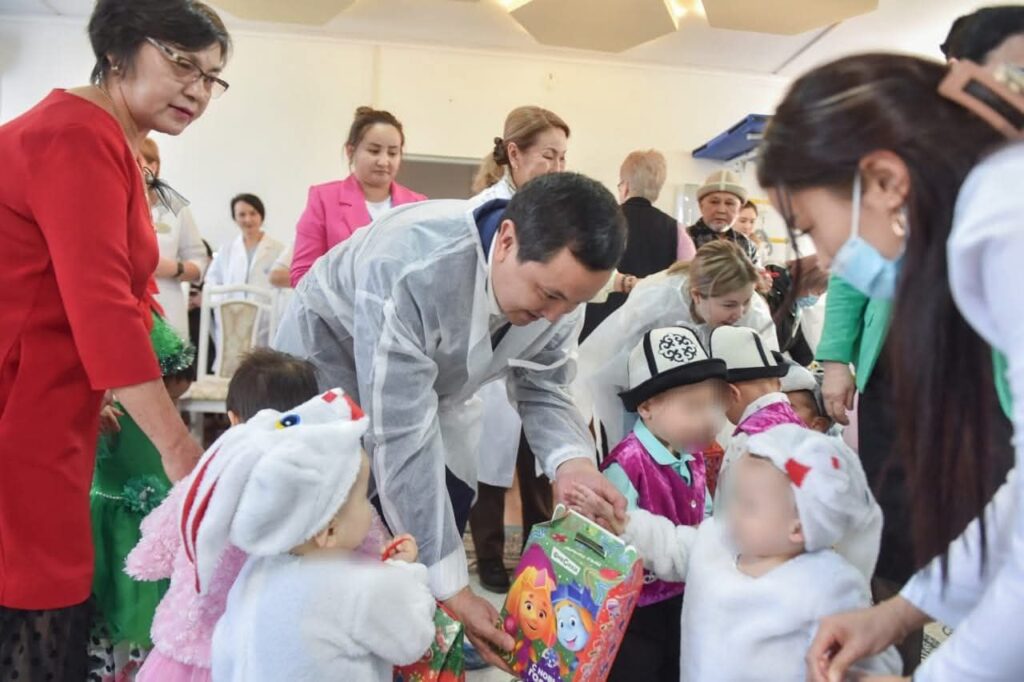
The Kyrgyz government plans to significantly expand social support for medical workers. According to Health Minister Kanybek Dosmambetov, beginning in April 2026, all doctors across the country will receive a 100% salary increase. In addition, 5,000 mortgage apartments will be provided to medical personnel on a priority basis, bypassing the general housing queue.

Dosmambetov announced these measures during visits to the oncology and oncohematology departments of the National Center for Maternal and Child Health and the Center for Child Rehabilitation and Family Support in Bishkek, where he extended New Year greetings to patients and medical staff.

Beyond the upcoming salary hike, medical professionals can already benefit from the state mortgage program, which offers access to housing at subsidized interest rates without the standard waiting period. These initiatives, according to the minister, aim to retain skilled personnel in the healthcare sector and enhance the overall appeal of the medical profession.

“The ministry has been tasked with effectively reforming the healthcare system, establishing sustainable and transparent mechanisms for its operation, upgrading medical infrastructure, developing maternal and child healthcare, and strengthening public health and disease prevention services,” Dosmambetov said.

He added that the coming period will be pivotal for Kyrgyzstan’s healthcare system. Government priorities include establishing a seamless supply chain for affordable, high-quality medicines, ensuring equitable operating conditions for private medical institutions, and reinforcing management discipline and accountability at all administrative levels.

Particular attention will also be paid to the adoption of digital technologies aimed at increasing the transparency and accessibility of healthcare services and laying the groundwork for further structural reforms.

Central Asia, Vanadium, and the U.S. National Security Strategy

Dated November 2025 and released publicly in early December, the U.S. National Security Strategy links overseas trade and investment, but overlooks Central Asia as a target region for critical minerals. This oversight merits reconsideration in the NSS’s next iteration, given the region’s known natural resource base, openness to foreign investment, proficiency in mining operations, low processing costs, and manageable geopolitical risks.

As governments and businesses review supply-chain resilience for critical minerals, vanadium – not one of the 17 rare earth metals – has increasingly become a strategically relevant rather than optional or cyclical commodity. It is widely used in high-strength steel, grid-scale energy storage functions such as redox flow batteries, and infrastructure with defense and industrial applications.

A recent letter from the U.S. Congress highlights a critical shortfall of vanadium in the United States: with 14,000 metric tons consumed in 2024, only 3,800 tons were produced domestically. Imports, mainly from Brazil and South Africa, are at risk due to shifting market conditions, meaning the U.S. needs a more structured and focused industrial-like approach to counter unnecessary import dependencies and geopolitical stresses.

U.S. supply is secured solely through imports and recycling, given that the mining of vanadium-bearing mineral precursors is minimal to non-existent in the United States. With mining dominated by China and Russia, and with South African production in decline, today’s need to secure primary materials and supply chains means the U.S. must invest overseas until domestic mining is viable. What is needed is vertical integration from mine to final product – vanadium pentoxide (V205), vanadium trioxide (V2O3), and vanadium sulfate (VOSO₄ / V₂(SO₄)₃) for batteries.

In an October Development Finance Corporation media release, DFC CEO Ben Black said that “Securing critical minerals is a paramount matter of U.S. strategic interest and economic prosperity.” That’s clearly beyond dispute.

Central Asia and Vanadium

Central Asia as a region fits within the U.S.’s broader geostrategic goals and geographic diversification plans aimed at building solid asset-based partnerships that go beyond raw material extraction and precarious trading arrangements. Last November’s gathering of Central Asia’s five presidents at the White House finally placed the region firmly on the global map.

U.S. Assistant Secretary of State for South and Central Asian Affairs Paul Kapur has also been clear: “Under President Trump’s and Secretary Rubio’s leadership, we’re elevating the C5+1 partnership as a priority — a strategic priority and an economic priority.” Here, amongst critical minerals, vanadium surely emerges as a priority commodity, given the near absence of U.S. domestic mining.

Kazakhstan leads Central Asia in vanadium mining and production, hosting the region’s most productive deposits. Established operations, strong infrastructure, cost advantages, supportive laws, tax incentives, and a free FX regime make the country highly attractive to investors. Kazakhstan has three vanadium assets—Balasausqandiq in advanced production and Lisakovsk and Kurumsak in exploration—making them attractive targets for miners or funds with long horizons and low-cost capital.

Kyrgyzstan has scattered, under-explored vanadium deposits, including in the Jetim Mountain Range. Uzbekistan is expanding exploration, but the value is yet to be proven. Tajikistan reported new vanadium occurrences in 2024, with the results still unclear. Turkmenistan and Mongolia, meanwhile, have limited, early-stage vanadium indications.

Kazakhstan

With decades of operations by major mining companies such as Chevron-ExxonMobil, Glencore, and Eurasian Resources Group, Kazakhstan has an established record of foreign investment. One notable company operating in Kazakhstan for over two decades is British Ferro-Alloy Resources Limited (FAR), which is listed on the London and Astana exchanges. It controls the exploration and development rights to the Balasausqandiq vanadium deposit, which is in production and, according to the company, ready for scale-up.

Under Kazakhstan’s reserve estimation system, the most recent mineral resource estimate at Balasausqandiq is 32.9 million tons at a mean grade of 0.62% vanadium pentoxide (“V2O5“) – consistent with the global average for vanadium deposits. But, according to FAR CEO Nick Bridgen, “What makes Balasausqandiq specially interesting is that it is different from most other deposits in not being vanadiferous titano-magnetite, which requires roasting. Ours is a shale deposit amenable to whole-ore acid leaching – far cheaper – so our costs are the lowest of all current and planned deposits in the world,” he told The Times of Central Asia. “When yet-to-be confirmed deposits are explored, minimum estimated reserves alone exceed 70 million tons over open terrain with a 20-year life.”

Bridgen affirmed that “Kazakhstan offers a supportive and stable operating environment – I should know, having operated for over 20 years in-country. The Balasausqandiq project is valued at a US$748m NPV with a 22% IRR, based on conservative assumptions, leading to our recent equity raise. In fact, on December 5, FAR issued ordinary shares, raising gross proceeds of £1,549,886 for further operations.”

Bridgen dismissed transport concerns, stating vanadium export is feasible via proven overland routes, similar to Kazakhstan’s uranium and base metal exports.

The Strategic Long-Game

Reliable access to critical resources enhances U.S. economic competitiveness and national security. It enables geopolitical influence while mitigating supply disruptions and price volatility. By acquiring a stake in foreign assets, U.S. companies gain a strategic advantage, enhance global economic influence, strengthen ties with partners, check China’s influence in the region, and generate profits that contribute to U.S. domestic economic growth.

Solid deals offer a strategic path to unlock economic synergies, advance friend-shoring, engage Congress, and align with President Trump’s Critical Minerals Executive Order 14272 (April 2025).

If dependency on foreign sourced critical minerals truly constitutes a “national security emergency” requiring “all hands on deck,” as Secretary Bessent recently argued, then it’s further good news that, on December 23, President Trump held calls with the leaders of Kazakhstan and Uzbekistan, spotlighting critical minerals, and U.S. Secretary of State Marco Rubio plans to visit all five Central Asian countries in 2026.

In light of all this, can anyone still question whether the region matters to Washington?

Uzbek Defender Abdukodir Khusanov Named Asia’s Best Young Footballer of 2025

Abdukodir Khusanov, central defender for the Uzbekistan national team and Manchester City, has been named Asia’s Best Young Footballer of 2025 by football outlet Goalpost, marking a major milestone in the meteoric rise of the 21-year-old.

The past year has been a breakthrough period for Khusanov. In January, he made history as the first footballer from Uzbekistan to debut in the English Premier League, following his transfer to Manchester City. Since then, he has steadily earned playing time at one of Europe’s top clubs, making nine appearances for the Manchester side this season.

Khusanov’s impact has extended beyond club football. In June, he played a pivotal role in securing Uzbekistan’s qualification for the FIFA World Cup, a landmark achievement for the national team. His performances at both domestic and international levels propelled him to the top of Goalpost’s rankings, ahead of emerging talents from Australia, Indonesia, South Korea, Iraq, and other Asian nations.

His international recognition continues to grow. Khusanov was recently ranked 86th in The Athletic’s list of the world’s top 100 footballers, underscoring his expanding global profile.

Interest from Europe’s elite clubs is also mounting. In December, reports emerged that Real Madrid is considering Khusanov for a mid-season loan, viewing him as a potential short-term solution to its defensive injury crisis. The Spanish club is said to value his physical presence and versatility, particularly his ability to play in several defensive positions.

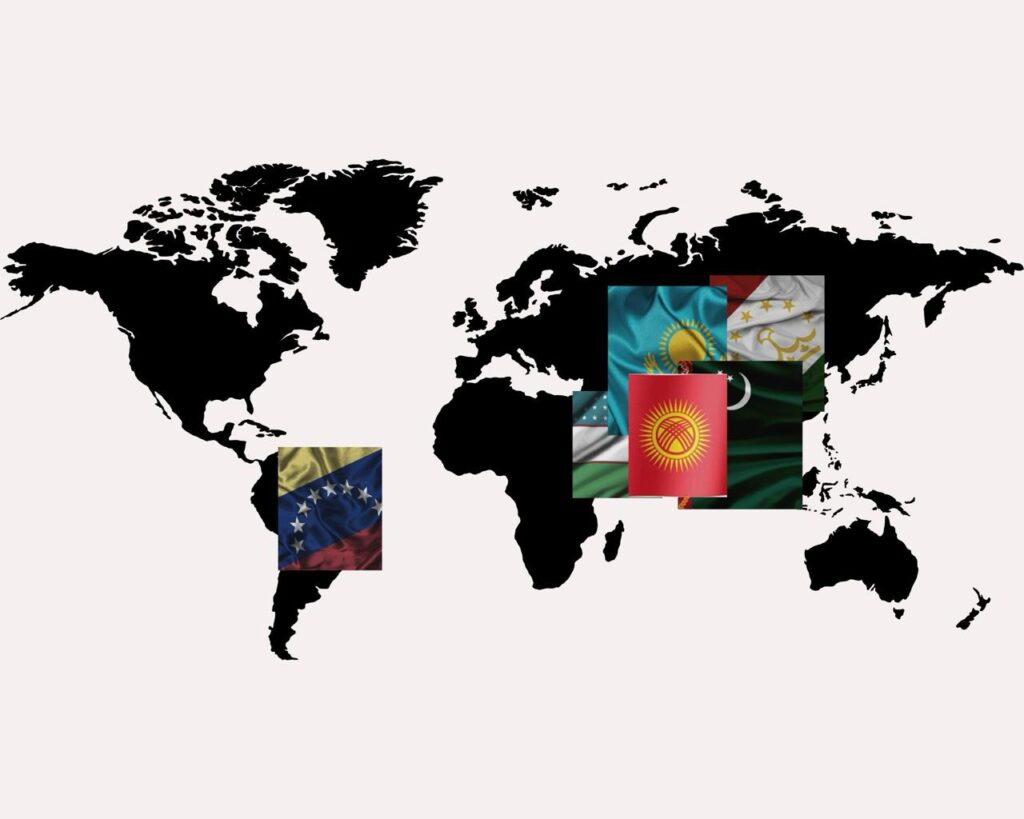
Opinion: Central Asia and the Venezuelan Crisis

For Central Asian countries, the central challenge in international politics is no longer choosing alliances, but coping with external shocks and global turbulence that originate far beyond the region. 

The unfolding crisis in Venezuela is a case in point. At first glance, the situation concerns Latin America and the global oil market, but its implications extend well beyond, directly affecting Central Asia’s strategic interests.

The core issue is not oil per se, but the reemergence of force as a legitimate instrument for altering political and economic conditions. For a region positioned at the crossroads of major power interests and reliant on external stability, this shift is profoundly consequential.

The Venezuelan crisis should be understood as a precedent, one that signals how global power centers may act as established norms erode. For Central Asia, this heralds a more unpredictable international environment in which regional states must navigate competing interests without the benefit of stable rules.

While Venezuela is often reduced to an oil story, the broader economic stakes involve control over the architecture of strategic resource flows. This resonates with the situation in the C5, Kazakhstan, Kyrgyzstan, Uzbekistan, Tajikistan, and Turkmenistan, where resources such as oil, gas, uranium, and rare earth metals are also of significant external interest. The logistics and transit of these resources are increasingly entangled in geopolitical bargaining.

The Venezuelan example reinforces a growing trend: the nexus of economics and security is tightening, and access to resources is increasingly secured through political leverage.

In this context, Iran holds particular relevance. For Central Asia, Iran is not an abstraction; it represents transit routes, energy corridors, access to southern seas, and a component of regional balance. Heightened pressure on Tehran directly affects both the opportunities and risks facing the region.

When viewed through the lens of Iran, developments in Venezuela serve as a psychological and political precedent, broadening what appears acceptable within Washington’s strategic calculus. While a direct replication of the Venezuelan scenario in Iran is unlikely, given the vastly different military, political, and regional risks, the mere lowering of the threshold for force-based solutions is significant. The cost of direct confrontation with Iran would be far higher, with potential repercussions for the entire Middle East security architecture.

Operation Absolute Resolve has objectively increased the confidence of those who favor the use of force against Iran. This confidence is likely to grow if United States actions in Venezuela carry minimal international consequences, avoid triggering uncontrollable regional escalation, and are perceived as domestically successful.

In either case, Venezuela’s “success” has already lowered psychological barriers to coercion, strengthening arguments for hardline scenarios and re-legitimizing force as a policy tool, rather than a measure of last resort.

Broadly speaking, the Venezuelan crisis highlights a global shift from rules to precedents. For the five, and increasingly for the emerging six that includes Azerbaijan, the fragmentation of international norms raises costs and leaves each country more vulnerable to external pressure. In this environment, coordination and consistency on issues such as transit, security, and sanctions are not luxuries but necessities. They can help Central Asia mitigate the secondary effects of external crises, expand strategic autonomy, and preserve its agency in an international order increasingly shaped by uncertainty and coercion.

Uzbekistan Has “Only Just Begun” Reforms, Says Saida Mirziyoyeva

Saida Mirziyoyeva has said that the country’s reform agenda remains at an early stage, arguing that the scale of change should be measured in years rather than months. In her first major interview since becoming Head of the Presidential Administration, Mirziyoyeva said Uzbekistan had “only just begun” large-scale reforms. Expectations of rapid results, she warned, often overlook structural limits, including weak infrastructure, uneven regional development, and tight public finances.

Mirziyoyeva spoke about decision-making inside the presidential system and outlined what she described as the administration’s main policy priorities, including water management, education, healthcare, the business climate, and reform of the judicial and legal system. “Our goal is to improve people’s lives,” she stated, emphasizing that improvements in courts and law enforcement were essential for other reforms to succeed. Without legal guarantees, she argued, investment and social policy changes would fail to deliver lasting results.

She said the reforms now underway are intended to address long-standing systemic problems rather than produce quick political gains, and rejected the idea that reform momentum has slowed, arguing that many of the most complex changes require time and careful implementation to succeed.

Water management featured prominently in her remarks. Mirziyoyeva described it as one of Uzbekistan’s most urgent challenges, pointing to climate pressures, ageing infrastructure, and rising demand. Education and healthcare were also presented as priorities, with reforms focused on improving quality and access rather than simply expanding state programs.

The judicial system, however, emerged as the central theme. Mirziyoyeva said that without independent and predictable courts, reforms in other areas would not deliver lasting results. Legal uncertainty, she said, discourages investment and undermines public trust, making the rule of law essential for both economic reform and the protection of citizens’ rights.

Mirziyoyeva also addressed the business environment, arguing that excessive regulation and administrative pressure continue to constrain private enterprise. The state, she said, should act as a partner to entrepreneurs rather than an obstacle, and reforms should create conditions in which businesses can operate transparently and competitively.

Mirziyoyeva described her role as focused on coordination and execution rather than public visibility. The task of the Presidential Administration, she said, is to ensure that decisions taken at the top translate into practical change on the ground. Public service, she added, should be judged by outcomes, not rhetoric.

The interview comes more than nine years after President Shavkat Mirziyoyev took office in December 2016 and launched a reform agenda that marked a break with the isolationist policies of his predecessor. Early measures included the liberalisation of the foreign exchange market in September 2017, easing trade restrictions, and reducing state control over prices. International financial institutions have described Uzbekistan’s economic transition as ambitious, while noting that progress has been uneven.

Political reform has proceeded more cautiously. In its 2024 Nations in Transit assessment, Freedom House classified Uzbekistan as a consolidated authoritarian system, citing restrictions on opposition activity and independent media.

Against that backdrop, Mirziyoyeva said reforms should be judged by tangible outcomes rather than timelines. Reliable access to clean water, better schools and hospitals, and fair treatment in courts, she argued, matter more to citizens than official assurances. Only when those changes become visible, she said, can Uzbekistan’s reform process be said to have moved beyond its initial stage.