• KGS/USD = 0.01144 0%
  • KZT/USD = 0.00211 0%
  • TJS/USD = 0.10460 0.19%
  • UZS/USD = 0.00008 0%
  • TMT/USD = 0.28490 0%
  • KGS/USD = 0.01144 0%
  • KZT/USD = 0.00211 0%
  • TJS/USD = 0.10460 0.19%
  • UZS/USD = 0.00008 0%
  • TMT/USD = 0.28490 0%
  • KGS/USD = 0.01144 0%
  • KZT/USD = 0.00211 0%
  • TJS/USD = 0.10460 0.19%
  • UZS/USD = 0.00008 0%
  • TMT/USD = 0.28490 0%
  • KGS/USD = 0.01144 0%
  • KZT/USD = 0.00211 0%
  • TJS/USD = 0.10460 0.19%
  • UZS/USD = 0.00008 0%
  • TMT/USD = 0.28490 0%
  • KGS/USD = 0.01144 0%
  • KZT/USD = 0.00211 0%
  • TJS/USD = 0.10460 0.19%
  • UZS/USD = 0.00008 0%
  • TMT/USD = 0.28490 0%
  • KGS/USD = 0.01144 0%
  • KZT/USD = 0.00211 0%
  • TJS/USD = 0.10460 0.19%
  • UZS/USD = 0.00008 0%
  • TMT/USD = 0.28490 0%
  • KGS/USD = 0.01144 0%
  • KZT/USD = 0.00211 0%
  • TJS/USD = 0.10460 0.19%
  • UZS/USD = 0.00008 0%
  • TMT/USD = 0.28490 0%
  • KGS/USD = 0.01144 0%
  • KZT/USD = 0.00211 0%
  • TJS/USD = 0.10460 0.19%
  • UZS/USD = 0.00008 0%
  • TMT/USD = 0.28490 0%

Over 100,000 Uzbek Workers Recruited to Work in Russia in 2025

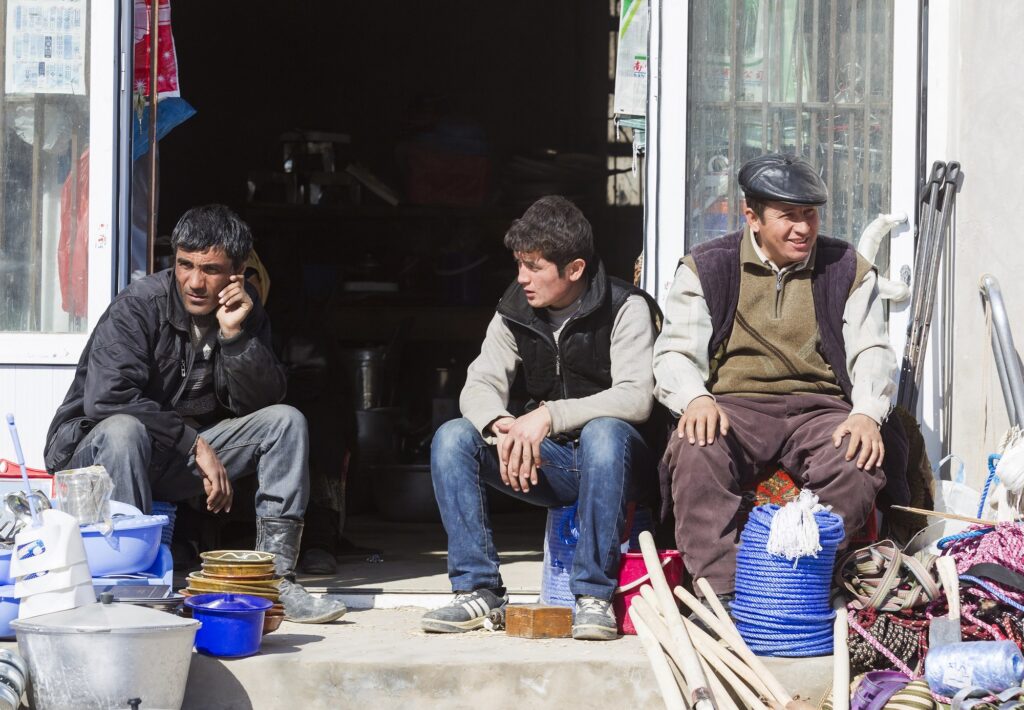
Around 106,000 citizens of Uzbekistan went to work in Russia in 2025 through organised recruitment programs, according to a report prepared by Rahim Khakimov, Deputy Adviser to the President of Uzbekistan, and cited by the Russian state news agency TASS.

The report states that about 50,000 of these workers were employed by major companies, including Gazprom, Lukoil, Kamaz, AvtoVAZ, Ozon, and SPAR. Overall, an estimated 1.3 million Uzbek citizens are currently working in Russia on a temporary basis.

The document also highlights ongoing efforts to simplify labor migration procedures. Agreements reached in 2025 provide for the partial transfer of work patent processing stages to Uzbekistan, allowing migrants to complete key formalities before departure. Authorities also plan to expand Russian-language testing by opening new centres in the cities of Jizzakh and Andijan to better serve the densely populated Fergana Valley, where nearly one-third of the country’s population lives.

At the same time, migration trends are gradually shifting. According to Uzbekistan’s Central Bank, Uzbek labor migrants are no longer concentrated solely in traditional destinations such as Russia, Kazakhstan, South Korea, and Turkey. Increasing numbers are seeking employment opportunities in Europe and other parts of Asia.

This diversification is reflected in remittance flows. Data show that transfers to Uzbekistan from the United Kingdom have increased by 39% in recent years, while remittances from European Union countries have risen by 37%. Significant growth has also been recorded from countries such as Ireland, Croatia, Slovakia, Lithuania, and the Netherlands, as well as from the United States and South Korea. Analysts attribute this trend to stable demand for labor abroad, relatively steady wage levels, and favorable currency exchange rates.

According to the International Fund for Agricultural Development (IFAD), Uzbek labor migrants typically send home between $200 and $300 per month. Separate estimates from the Migration Observatory at the University of Oxford suggest that migrants in the United Kingdom remit between £1,000 and £3,300 annually per person. Overall, the average yearly remittance per recipient in Uzbekistan is estimated at between $2,000 and $4,000.

Alongside these broader trends, consular support for Uzbek citizens abroad continues. On March 22, the Dunyo news agency reported that representatives of Uzbekistan’s embassy visited a Temporary Detention Center for Foreign Citizens in Russia’s Tula region. During the visit, Consul General Mehriddin Khairiddinov reviewed living conditions and held talks with Russian officials on accelerating document processing and facilitating the return of detained Uzbek nationals.

“Supporting fellow citizens and providing them with the necessary assistance remain among the priority tasks of the diplomatic mission,” Khairiddinov said, emphasizing that the protection of citizens’ rights is a key principle of Uzbekistan’s state policy.

Kazakhstan to Invest Over $15.5 Billion in Coal-Fired Power Generation

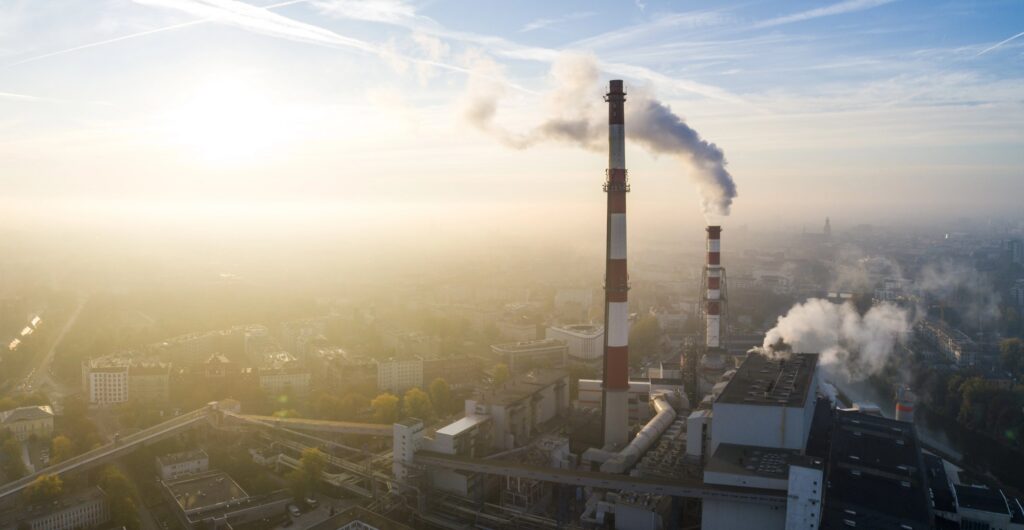
Kazakhstan is launching a large-scale investment programme in the energy sector. By 2030, the country plans to attract at least $15.5 billion for the development of coal-fired power generation. The corresponding national project has been approved by the government.

According to government estimates, electricity demand in Kazakhstan will grow at an accelerated pace, partly due to the expansion of the IT sector, data centers, and AI. Under these conditions, the authorities are prioritising baseload generation, which renewable energy sources are not yet able to fully provide.

The national project provides for the commissioning and modernisation of 7.8 GW of capacity. Key facilities include an energy cluster in Ekibastuz (2,640 MW), power plants in Kurchatov (700 MW) and Zhezkazgan (500 MW), as well as new combined heat and power plants in Kokshetau, Semey, and Ust-Kamenogorsk.

Financing will come primarily from extra-budgetary sources through the attraction of private capital. The government expects the investments to generate a multiplier effect in the economy, including growth in mechanical engineering, energy equipment manufacturing, and automated systems.

At the same time, 11 existing power plants are to be modernised. This is expected to reduce equipment wear by 12.6% and increase generation efficiency. Implementation of the project will also lead to an increase in thermal coal consumption of around 20 million tons per year.

To ensure supply, additional investment is planned in transport infrastructure, including expanding the railcar fleet and modernising railway lines.

Coal-fired generation is therefore set to become a driver not only for the energy sector but also for related industries. Despite the emphasis on coal, the authorities are counting on the introduction of “clean” generation technologies. New power plants will be equipped with modern emission-control systems, including electrostatic precipitators and desulphurization units. These measures are expected to reduce environmental impact and bring the industry closer to international standards.

The project is expected to create about 4,500 permanent jobs, along with employee support measures such as subsidised mortgages.

The launch of the project comes amid the global energy transition, creating a strategic dilemma. On the one hand, Kazakhstan aims to ensure energy security and sustain economic growth. On the other, pressure linked to the international climate agenda remains.

As previously reported by The Times of Central Asia, the country plans to fully meet domestic electricity demand by 2027 and achieve a sustainable surplus by 2029, allowing it to begin exports.

At the same time, new energy-intensive projects are under consideration, including the creation of a “data centre valley” in the Pavlodar region, which is also expected to rely on coal-fired generation.

Kyrgyz Citizens Are Spending More and Saving Less

The financial habits of Kyrgyz citizens has changed significantly in recent years: people are spending more and saving less. This conclusion was reached by the country’s National Statistical Committee.

According to the agency, the share of household savings has more than halved, from 24.3% of income in 2020 to 10.8% in 2024.

Until 2021, however, Kyrgyz citizens had shown a tendency to save. This contributed to the growth of banks’ deposit bases, and the authorities noted increasing confidence in the financial sector. Formally, this confidence remains, but household behavior has changed.

In 2024, the country’s gross disposable income amounted to approximately $20.5 billion, of which roughly $18.2 billion was directed towards consumption. A significant share of economic activity is therefore effectively geared towards meeting current domestic demand. This trend coincides with a period of strong economic growth that the authorities have described as a “leopard’s leap.” In recent years, GDP growth has reached about 10% annually.

Economists say domestic demand remains the key driver of growth. The construction sector is expanding, mortgage lending is increasing, and infrastructure projects and gold mining continue to develop.

Another indicator of changing behavior is the rise in household consumer spending. Its share increased from 75.4% of GDP in 2020 to 86.9% in 2024. At the same time, statistics show so-called negative savings, meaning that the population is spending more than it officially earns.

In practice, this reflects the active use of loans and other external sources of financing. The banking sector and the State Mortgage Company (SMC) play a key role in this process, supporting consumption and thereby stimulating economic growth.

Despite continued economic expansion, according to official data, GDP increased by 8% in January-February 2026, analysts warn of potential risks. The decline in savings means households have fewer resources to build a financial “safety cushion.” With incomes largely directed towards current consumption, their resilience to economic shocks is weakening.

Alatau: Inside Kazakhstan’s $20 Billion “City of the Future”

Details about the ambitious plans for Alatau city were presented to a joint session of Kazakhstan’s parliament on March 20. Authorities are moving ahead full-speed on the project to build the new city that one day could be home to some two million people.

According to the plans, Alatau will be a unique city, not only in Kazakhstan, but in the world.

Image: Skidmore, Owings & Merrill (SOM)

From Village to Metropolis

Alatau city is being built on the site of what was the village of Zhetygen, some 50 kilometers north of Almaty. It will occupy an area of some 88,000 hectares, “larger than both Singapore and Seoul.”

Relieving the congestion of Kazakhstan’s commercial capital was one of the major concerns when selecting a site for the new city. Another consideration was Alatau’s location along the Middle Corridor, the developing East-West trade route linking Europe and China. Alatau city will have an airport and railway junctions.

Alatau city will have four districts – Green, Growing, Golden, and Gate.

Image: Skidmore, Owings & Merrill (SOM)

The Gate district will be the business and financial area and is where the airport and railways will be located. It will also be the southern-most area of the city and therefore closest to Almaty.

The Golden district will be the “hub of knowledge, healthcare, and innovation,” the location of hospitals and other medical facilities, tech centers, and educational institutions able to take 40,000 students are planned for the district.

The Growing district will be the industrial and logistics center for export-oriented trade. It will include clusters for food, chemicals, building materials, and light industry.

The Green district, on the shore of Kapchagay Lake and with the Kaskelen River running through it, will be the recreational and tourist area of the city.

Image: Skidmore, Owings & Merrill (SOM)

Alatau city lies along the main road between the cities of Almaty and Konayev (the “gambling capital of Kazakhstan“).

Deputy Prime Minister Kanat Boumbayev told parliament on March 20 that testing of air taxis to ferry people between Almaty and Alatau would start this year, and within two to three years, operations would open to the public. Bozumbayev said the flight time would be 10-15 minutes.

Additionally, expansion of the Almaty metro system is progressing with plans for the Green Line to eventually reach Alatau.

Alatau will be a smart city and will be developed under the principle “digital by default,” meaning people will be encouraged to go online as much as possible for goods and services, but will still offer support for those who prefer to use traditional means.

Financing

The Kazakh authorities are expecting construction of Alatau city to require some 10 trillion tenge (about $20.836 billion) of investment by 2050. Kazakhstan is seeking foreign investment and offering advantageous conditions to foreign companies.

Deputy Prime Minister Bozumbayev said, “The tax model is described separately: incentives are proposed to be granted only to new projects in priority sectors—those with requirements for efficiency, environmental friendliness, and innovation.”

He added that only companies operating directly within the city will receive these preferential incentives.

Bozumbayev denied that Alatau will be treated as an offshore zone. He said there will be “preferences” but also “obligations for investors,” such as creating an agreed number of jobs, paying taxes, and meeting construction deadlines.

The Kazakh authorities say up to a million jobs will be created, and they expect the new city to attract four million tourists annually, more than half of them foreigners.

A City of the Future

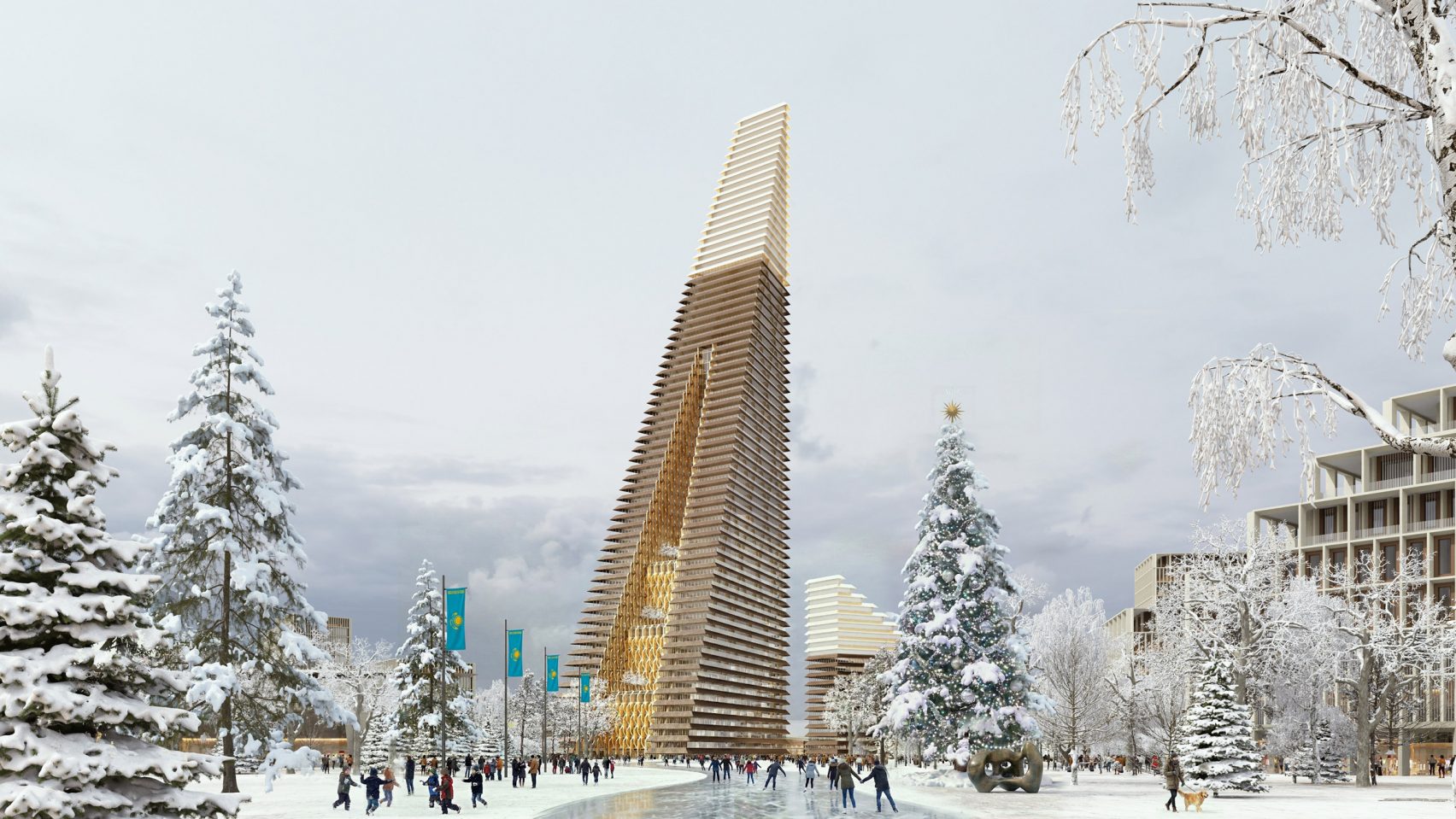
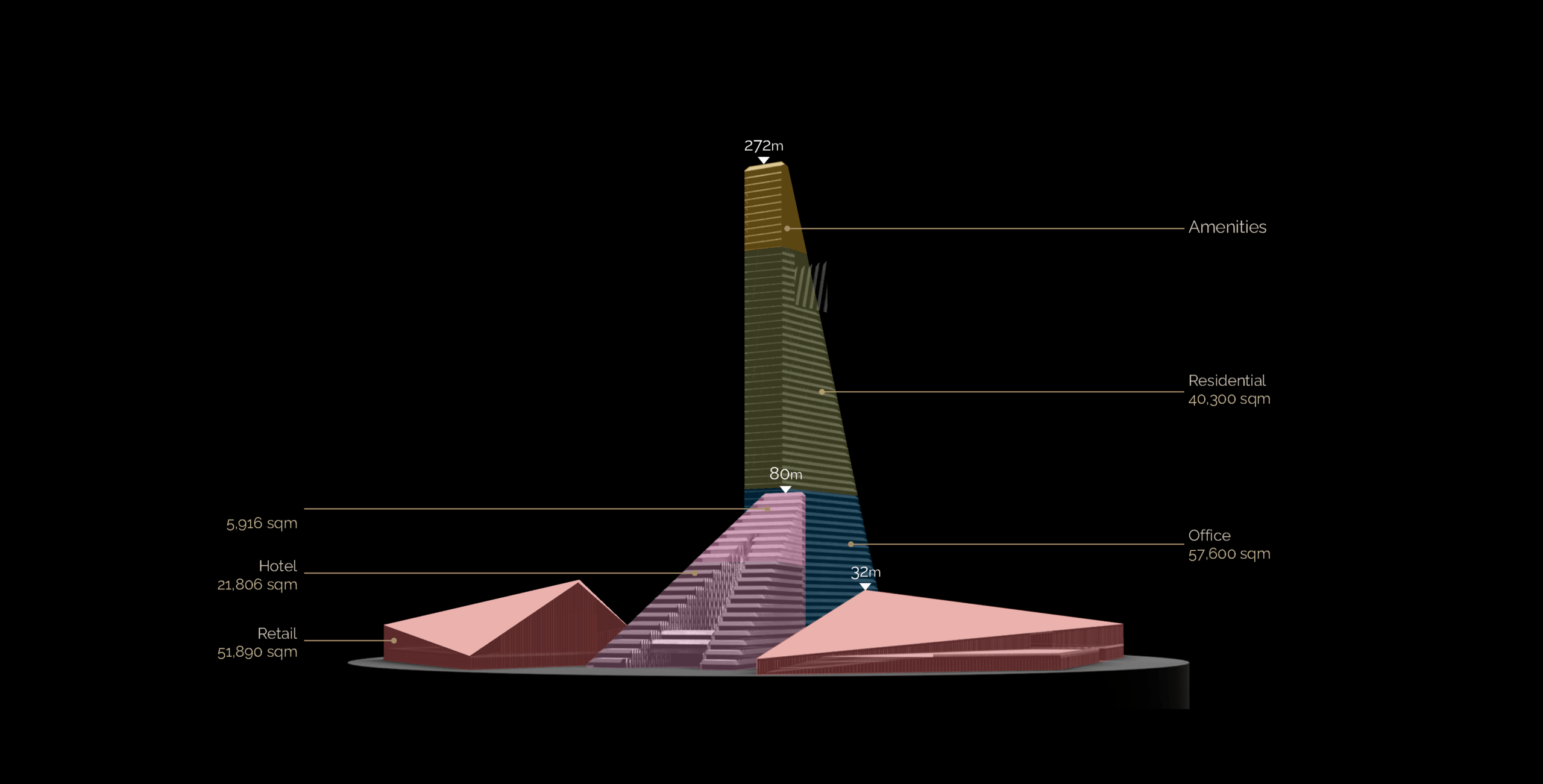
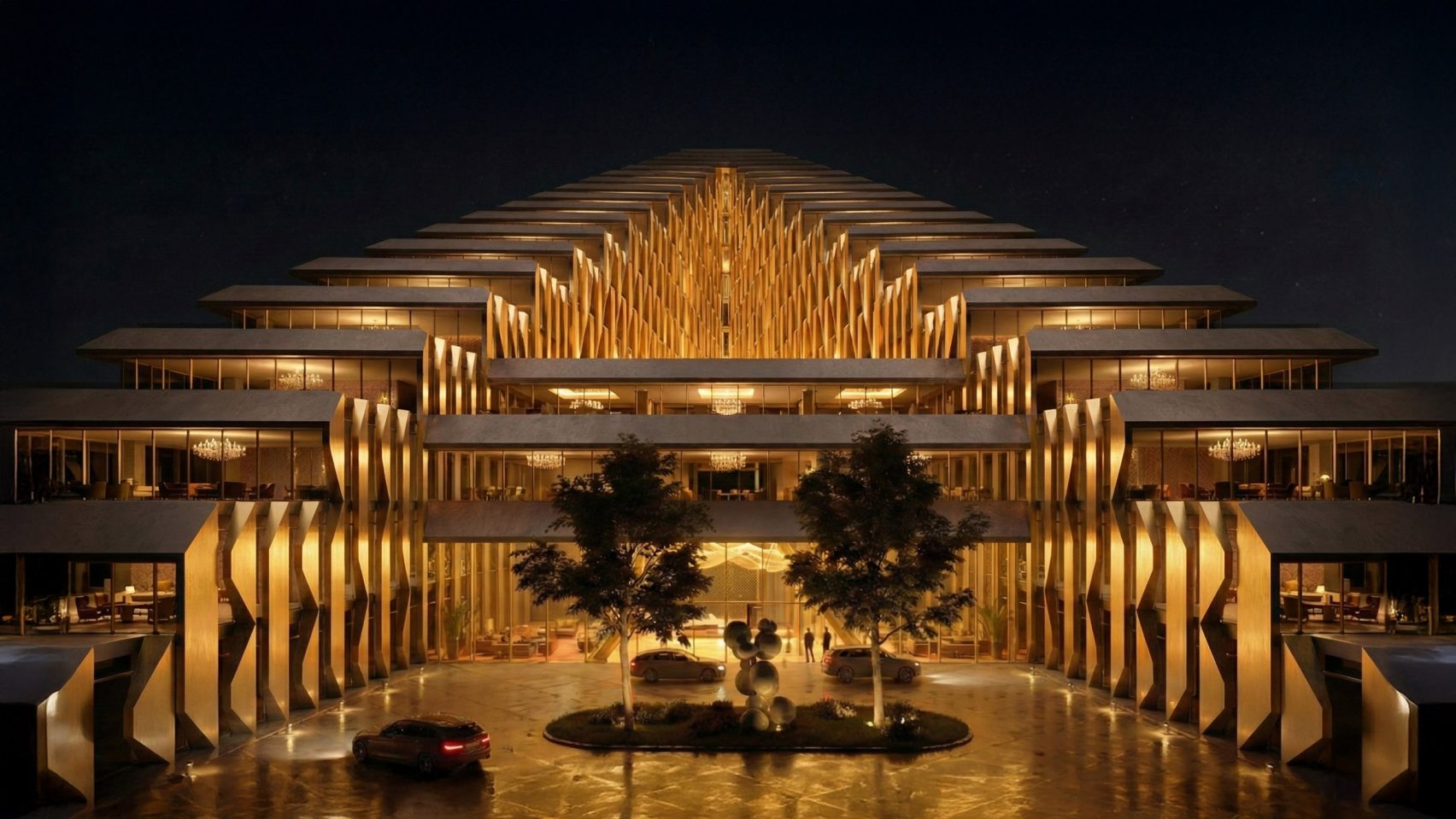
The “Iconic Towers” with one tower rising to 272 meters (56 floors) will be the centerpiece of Alatau city, but by no means the only intriguing building.

Image: alatau.city

Artists’ renditions of the business area look like something from a science fiction movie, while the tourist area and marina in the Green district recall parts of Dubai or Tampa Bay.

Other shining steel and glass buildings will be spread across Alatau city.

Snezhanna Imasheva, a deputy in the Mazhilis, the lower house of parliament, said Alatau city will be like Dubai or Shenzhen in China.

Image: Skidmore, Owings & Merrill (SOM)

Kazakhstan already has experience with turning a small town into a large city. Thirty years ago, then-President Nursultan Nazarbayev decided to move the capital from Almaty to a town in the north that was called Tselinograd in Soviet times, and renamed Akmola shortly after 1991 independence. It took several years before Astana began to take shape, but it is now a modern city in the once largely empty steppe.

Construction of Alatau city is expected to continue until 2050. Companies from Asia and Europe are involved in architectural and infrastructure projects.

Kazakh President Kassym-Jomart Tokayev signed an order giving special status to Alatau city in September 2025, saying at the time, “Alatau is destined to become our new center of business activity and innovation.”

Central Asia’s Airspace Is Growing in Value as the Iran Conflict Reshapes Routes

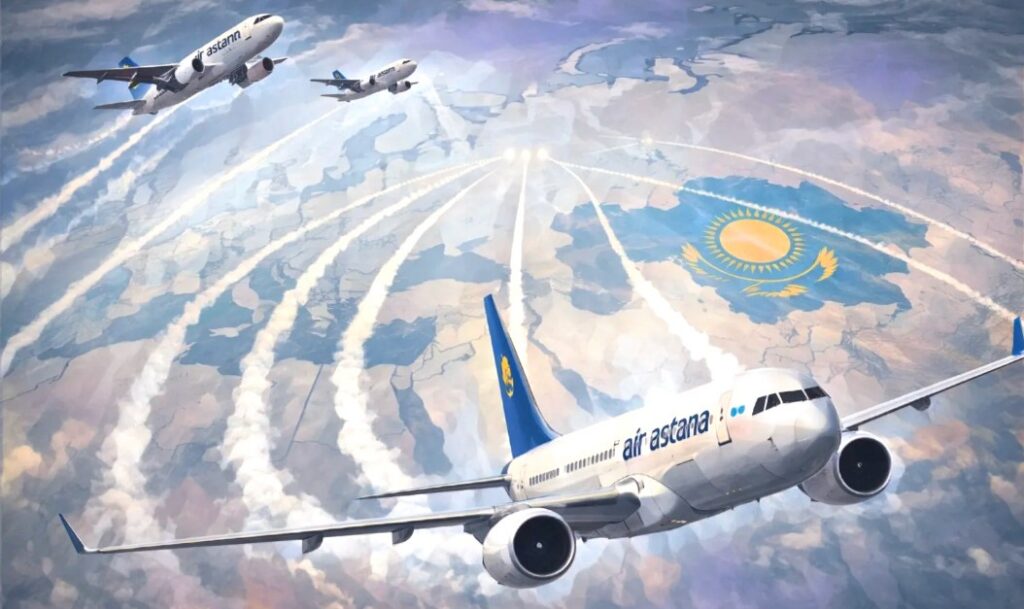
The war involving Iran has made Central Asia’s skies more important, but it has not made them a replacement for the Gulf. The change is narrower and more practical.

As previously reported by The Times of Central Asia, the conflict has already reshaped Europe–Asia flight routes, with airlines forced to reroute around high-risk airspace. As EASA’s conflict-zone bulletin for Iran remains in force through March 31, and its broader Middle East and Persian Gulf bulletin advises operators to avoid a wide band of regional airspace, airlines flying between Europe and Asia now have fewer safe and efficient options than they did even a month ago.

That matters for Central Asia because the region sits just north of the disrupted corridor. Iran’s airspace is considered high risk and is being widely avoided by airlines, while large parts of the central Middle East corridor are closed or heavily restricted.

Safe Airspace’s March 21 summary states that the normal central route has been effectively shut for many operators, while Oman has become a heavily used southern bypass. That leaves a northern arc running through the Caucasus and Central Asia as one of the few workable alternatives for many carriers.

The roots of this go back further than this month’s escalation. Since Russia’s full-scale invasion of Ukraine in 2022, many Western and Europe-bound operators have had to rethink routes that once crossed Russian airspace. In January 2025, Uzbekistan Airways began rerouting its Europe flights around Russia and Belarus. The airline said the Tashkent–Munich route grew from 4,849 kilometers to 5,156 kilometers, adding 30 to 40 minutes to each flight. The conflict has now squeezed traffic again, this time from the south.

That double squeeze raises a harder question. Can Central Asia handle more strategic weight in the air, not just on a map but in daily operations?

Kazakhstan is the strongest candidate. Kazaeronavigatsiya says Kazakhstan’s airspace handled 216,616 flights in the first half of 2025. Of those, 161,029 were flown by foreign airlines in transit or landing operations, while 55,587 were operated by Kazakh carriers. The same state operator lists 124 air traffic service routes with a combined length of 113,530 kilometers. These are substantial figures for a landlocked state positioning itself as a Eurasian transit hub.

The country’s broader aviation system has also been expanding. The Civil Aviation Administration of Kazakhstan says airports served 31.8 million passengers in 2025, up from 29.7 million in 2024. Airlines carried 20.7 million passengers, and Kazakhstan’s compliance with international aviation safety standards reached 95.7%. The same report points to a three-year development plan, a new accident investigation center, and continued work on digital systems and urban air mobility rules.

Still, higher value does not mean unlimited capacity. Central Asia is not one integrated aviation market. It is a set of separate national systems with uneven infrastructure, uneven investment, and different regulatory speeds. Kazakhstan has scale, but it is also expanding passenger traffic, cargo capacity, and international routes at the same time. More overflights can bring revenue, but they also increase pressure on controllers, diversion planning, and airport resilience when disruptions spill over from neighboring regions.

The northern bypass is also not Central Asia’s alone. The Caucasus is carrying part of the same burden as traffic shifts away from more direct routes. Many Europe–Asia re-routings now pass through Azerbaijan and Turkey before reaching or skirting Central Asian airspace. Any assessment of Central Asia’s role has to include that wider chain.

There is another limit. Airlines still have a southern option. EASA’s latest guidance leaves parts of southern airspace usable at certain altitudes. Central Asia is becoming more important, but it is not becoming the only path between Europe and Asia.

That distinction matters for policymakers in Astana, Tashkent, and elsewhere. The opportunity is real. More overflights can mean higher revenues, stronger arguments for investment in radar and runways, and a larger role in Europe–Asia connectivity. But expectations need to remain grounded. Central Asia is not about to become a global aviation hub. It is becoming something more measured but still significant: a more important link in a fragmented system.

That is enough to matter. When two of the main corridors are constrained, the skies over Central Asia begin to look less peripheral. They begin to look like infrastructure. And infrastructure only becomes strategic if it continues to function under pressure.

Kazakhstani Cinema at a Turning Point: Screenwriter Sergey Litovchenko Discusses the Industry

Kazakhstani cinema may be entering a “golden age.” Kazakh films are increasingly appearing at international festivals, while television series are reaching major global streaming platforms and attracting millions of viewers. Yet the country has not broken through at the Oscars, and the reasons go beyond funding.

Screenwriter and creative producer Sergey Litovchenko discusses the changes and challenges shaping the industry, why the pandemic unexpectedly benefited Kazakhstani cinema, and which projects he considers the most significant milestones to date.

TCA: Sergey, the Oscars have just taken place. Will Kazakhstan ever win an Oscar? And when might that happen?

Sergey: Our industry is developing rapidly, with the pace increasing every year. I believe we are close to that moment. However, it will probably come sooner in the short-film category. Although it may seem like an unattainable goal, that is not the case. Look at Brazil, for example, which has been prominent in the Oscar race for the second year in a row. Last year, the film I’m Still Here received three nominations and won an Oscar for Best International Feature Film. This year, Brazilian entries have already secured four nominations, including Best Picture. So anything is possible. At present, the main factor holding us back is technical capacity.

TCA: The relatively low-budget film Sentimental Value won Best International Feature Film this year. Is technical prowess really the most important factor?

Sergey: It is technically very well made. We should also remember that it participated in a major festival and featured Hollywood star Elle Fanning. The reason I mentioned the Brazilian example is that Brazilian cinema is not widely known to mass audiences, yet the technical quality and acting impressed me. It is clear they have the time and resources to prepare thoroughly for filming.

For Kazakhstan, the situation is more complex. We often operate in a “we should have filmed this yesterday” mode. The only film to reach not just the shortlist but the nominations was Sergei Bodrov’s Mongol. It is a masterpiece of technical craftsmanship. Its $17 million budget is evident on screen. It is not only technically accomplished, but also a strong film artistically.

There have been other worthy candidates: Sergei Dvortsevoy’s Aika and Tulpan, Yermek Tursunov’s Kelin, and Askhat Kuchinchirekov’s Bauryna Salu. All are high-level works. But for a major breakthrough, we need stronger production capacity.

TCA: Is this primarily a question of money?

Sergey: Not always. I often hear filmmakers say, “Give us a budget and we will make it happen.” I ask them how much they need, a billion? Two?

Asghar Farhadi shot A Separation for $400,000. Andrey Zvyagintsev filmed The Return for about $300,000. So it is not only about money. Nor is it about casting, we have many talented people.

To create a breakthrough film, you need not only a profound story but also extensive preparation and a certain uncompromising attitude, in a positive sense.

In Kazakhstan, however, we often adapt films to circumstances. If the weather is unsuitable, we proceed anyway. If the actor is not ideal, we work with whoever is available. If we cannot find a location, we rewrite the scene, moving it from the street to a hallway, or from a hallway to an apartment.

We have people who can make films on extremely tight budgets. For example, I enjoyed Sweetie, You Won’t Believe It, which was later sold to HBO.

It is unfortunate that this genre is not being developed further. Black comedy about friendship or partnership suits us very well. When the action takes place outside the city, it allows you to create a distinct cinematic world.

TCA: Not everyone realizes that Kazakhstani films are now watched abroad as well.

Sergey: Yes, we have learned to make films not only for domestic audiences. The shift to digital formats has truly liberated us. This happened largely because of the pandemic, strange as it may sound, we should in some ways be grateful for that. At the same time, there is a sense that we are still finding our footing.

Kazakh cinema reminds me of a small child whose growth is being restricted. It has only just begun to develop, yet we immediately hear accusations of promoting violence, crime, or other negative influences.

We are still a young industry, but we are already being treated as though we are fully mature. There is constant pressure and restraint.

Nevertheless, there are areas where we are strong: comedies, crime dramas, and family films. Horror may be the next direction. But because the industry is small, it is difficult to develop the genre. Hundreds of horror films are released annually in the U.S., while only a handful appear here.

TCA: Critics argue that without scrutiny, stereotypes can take hold. Festival programmers often joke that Kazakhstani cinema is recognizable for its steppe landscapes and social themes.

Sergey: Once, a man with great life experience told me, “We settled down too soon.” There is some truth in that.

Material concerns entered our lives very quickly, and we began focusing primarily on them. Life has become expensive, loans, mortgages, constant competition. Naturally, this is reflected in cinema. There are films in which the spiritual triumphs over the material, as in Tarkovsky’s work. We have very few such examples. That is why thematic diversity is often limited.

TCA: Does focusing on box-office success and contemporary audience tastes harm cinema?

Sergey: You cannot focus exclusively on that.

I recently thought about the Yakut film Our Winter by Stepan Burnashev. In one scene, an elderly woman tells a divorcing couple, “You don’t know how to love.” It is a powerful moment. It suggests that relationships are increasingly built on material foundations. That reflects a broader shift in values.

TCA: Yet you are currently writing a story about a courier. Does that also address social inequality?

Sergey: Yes. Urbanization and time pressure have created new professions. It is a story about a young man who comes to the city to survive but ends up being “consumed” by it, somewhat in the spirit of Scorsese’s Taxi Driver.

I want to show this against the backdrop of dense urban architecture, concrete buildings that feel as though they are physically crushing you. It is a story about how a metropolis can break a person.

TCA: Why are characters in local films so often portrayed as struggling, particularly financially?

Sergey: Because audiences need to relate and empathize.

It is difficult to create dramatic tension around a successful person with no problems, although there are exceptions, such as Succession.

TCA: But audiences love Succession. They are not concerned that the characters are oligarchs, it is simply a dramatic story about a dysfunctional family.

Sergey: That is also true. But it is important to understand the narrative foundation. At its core, Succession follows the structure of King Lear: a ruler steps down, the children divide the empire, and he observes how they treat him. It is a timeless plot. What makes the series compelling is the intense clash of personalities. The Roy family members are eccentric, deeply flawed individuals. Their characterization and the actors’ performances offer a masterclass in drama.

TCA: You are currently working as both a screenwriter and a creative producer for the Kazakhstani streaming platform Freedom Media. What are your most notable projects?

Sergey: We have many. One is the QJ League, a project about young football players competing in the Qazaqstan Junior League. Major clubs scout talent there. For instance, Dastan Satpayev, who received an invitation from Chelsea, plays in this league.

A young director, Aitore Zholdaskali, has filmed the series Toxic for us. It is a superhero story, unusual in tone, with a rock-and-roll spirit, aimed at comic-book fans and referencing Zack Snyder’s Justice League.

TCA: What is the plot?

Sergey: In the story, bloggers complete tasks in exchange for donations. One day they find themselves at an abandoned Soviet factory, fall into a basement, and discover a gas chamber. Exposure to the gas gives them new abilities each day, linked to childhood traumas. The result is an intriguing, youth-oriented project. We will see how it develops. I am also supervising a project titled Biba Hurrem.

TCA: Is it set in an Eastern cultural context?

Sergey: Yes. It follows a Kazakh woman who is a fan of Turkish television dramas and suddenly finds herself inside one of them. In real life, she lacks romance and feels disillusioned with men and life in general. Within the fictional world, she searches for her ideal partner.

These projects are written by junior screenwriters working as a team. I assign tasks, develop ideas, and lead the writers’ room. It is continuous work, listening, editing, refining, and guiding.

TCA: So a creative producer is essentially responsible for quality control in creative content?

Sergey: You could say that. I monitor quality, schedules, and deadlines, as well as the atmosphere in the writers’ room, to ensure the team functions cohesively.

It is important to be a genuine mentor to junior writers, creatively and personally, so they remain motivated and continue developing. The quality of writing depends directly on that.

My task is to stimulate their creative process so they generate ideas, write loglines, and eventually handle their own projects.

TCA: Are there talented newcomers?

Sergey: Certainly, and they are very ambitious.

One junior writer suggested applying the dramatic structure of the animated series Arcane to our projects. He analyzed it in detail, the hero’s journey, subplots, conflict, and world-building.

That is impressive. But building such a complex world takes time. That is why we often lean toward realism, it is easier to produce.

TCA: Is being a creative producer difficult?

Sergey: Yes. You must prove your competence every day.

If you are merely pretending to be creative, people will quickly see through it. The industry is small, so maintaining a facade is impossible.

TCA: How do you recruit junior writers?

Sergey: Our creative producer, Asya Omar, manages the process. It begins with an application, followed by an interview and test assignments.

One candidate, Nurbolat, sent us his work, loglines and synopses, over three years. Eventually, we offered him a three-month internship and then a contract.

Many of our juniors come from Astana. There is less industry there and limited employment opportunities, so they relocate, rent apartments, and try to establish themselves.

TCA: How many juniors are on your team?

Sergey: Six, all between 20 and 30 years old. I warned them from the start that the work would be demanding. They said they were ready.

TCA: Is teaching structure the main priority?

Sergey: No. Structure is secondary. Writers must understand fundamentals, beginning, middle, end, theme, and idea. But a perfectly structured story can still be dull, while an unconventional one can be gripping.

Many great filmmakers, Kubrick, Orson Welles, Tarantino, broke conventional rules. Try analyzing Django Unchained using the formula from Save the Cat! it does not fit. Tarantino follows his own narrative logic.

TCA: How original are the ideas you receive? Sometimes it seems that everything has already been done.

Sergey: We live in a postmodern era, so borrowing is inevitable. But sometimes people try to copy Hollywood by pitching stories in which, hypothetically, Almaty is taken over by artificial intelligence systems. I usually suggest staying closer to reality, after all, some villages still experience power outages.

TCA: But Kazakhstan has produced its first technology unicorn. Why not explore such themes?

Sergey: Perhaps. But in my view, it is still too early.

TCA: What prospects do these screenwriters have? Can they work in foreign markets?

Sergey: Absolutely. I have had that experience myself.

Once, director Askar Uzabaev told me that a Russian producer was seeking a story. I had a draft titled Americano. A Glass of Water. It tells the story of a depressed young woman who enters a café about to close, orders coffee, and reveals she plans to terminate a pregnancy. At that moment, a man bursts in with a gun, he has his own crisis.

It is an intimate, single-location story with strong tension, elements of chance and risk, and police involvement. In short, it holds the audience’s attention. I sold the script for $3,000 and was happy, because I had written it without expectations. Screenwriting requires patience and hard work.

TCA: Do you also oversee projects centered on female perspectives?

Sergey: Yes. One example is Forever 29, a series created largely by women from producers and director to actresses and designers. There are also women on our junior team.

TCA: Women’s stories remain relatively rare in Kazakhstani cinema, though the potential is considerable.

Sergey: I once attended a horror screening where about 95% of the audience were women. That surprised me. Women are a very engaged audience. They do not just watch; they discuss and share impressions. If you ask a man how a film was, he might say, “It was fine.” Women, however, often analyze and articulate their emotional responses.

TCA: Today, creative professionals are often expected to act as marketers and bloggers. How do you view this trend?

Sergey: I am somewhat old-school and not very fond of it. Social media can distract from creative focus, undermine inner calm, and encourage constant self-promotion.

Christopher Nolan does not have an Instagram account. Nor does David Fincher. I believe truly talented individuals will be recognized without continuous self-marketing.