• KGS/USD = 0.01144 0%
  • KZT/USD = 0.00214 0%
  • TJS/USD = 0.10508 0.48%
  • UZS/USD = 0.00008 0%
  • TMT/USD = 0.28571 0%
  • KGS/USD = 0.01144 0%
  • KZT/USD = 0.00214 0%
  • TJS/USD = 0.10508 0.48%
  • UZS/USD = 0.00008 0%
  • TMT/USD = 0.28571 0%
  • KGS/USD = 0.01144 0%
  • KZT/USD = 0.00214 0%
  • TJS/USD = 0.10508 0.48%
  • UZS/USD = 0.00008 0%
  • TMT/USD = 0.28571 0%
  • KGS/USD = 0.01144 0%
  • KZT/USD = 0.00214 0%
  • TJS/USD = 0.10508 0.48%
  • UZS/USD = 0.00008 0%
  • TMT/USD = 0.28571 0%
  • KGS/USD = 0.01144 0%
  • KZT/USD = 0.00214 0%
  • TJS/USD = 0.10508 0.48%
  • UZS/USD = 0.00008 0%
  • TMT/USD = 0.28571 0%
  • KGS/USD = 0.01144 0%
  • KZT/USD = 0.00214 0%
  • TJS/USD = 0.10508 0.48%
  • UZS/USD = 0.00008 0%
  • TMT/USD = 0.28571 0%
  • KGS/USD = 0.01144 0%
  • KZT/USD = 0.00214 0%
  • TJS/USD = 0.10508 0.48%
  • UZS/USD = 0.00008 0%
  • TMT/USD = 0.28571 0%
  • KGS/USD = 0.01144 0%
  • KZT/USD = 0.00214 0%
  • TJS/USD = 0.10508 0.48%
  • UZS/USD = 0.00008 0%
  • TMT/USD = 0.28571 0%

Kazakhstan’s Tazy: The Ancient Hunting Dog of the Steppe

For centuries, nomadic tribes across the steppe that now forms modern Kazakhstan absorbed outside influences and adapted them to local conditions, creating something uniquely Kazakh.

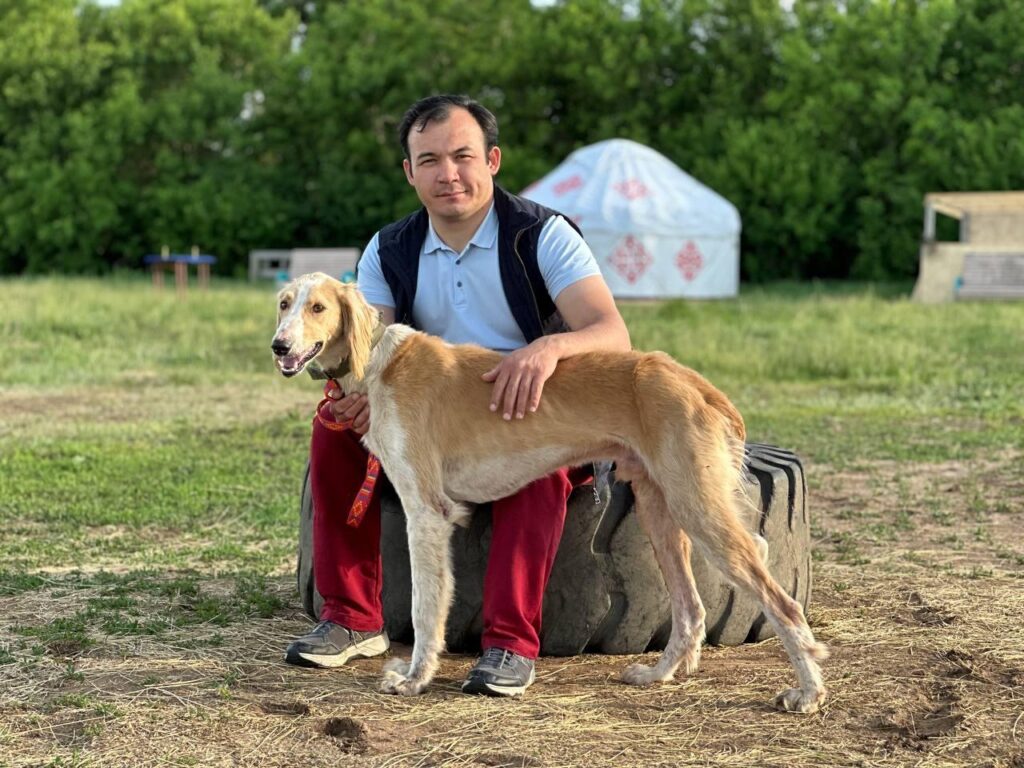
This adaptability is evident in many aspects of steppe life, including the development of the Tazy, the Kazakh greyhound. Bred over generations to protect what nomads valued most, their livestock, the Tazy is now considered one of the seven national treasures of Kazakhstan.

“If we look at history, we can say that the progenitor of the Kazakh breed, the Tazy, was the Arabian greyhound saluki,” said breeder Abzal Dosyman in an interview with The Times of Central Asia. “Arab missionaries brought it to our lands. The Tazy and the saluki are similar, but over time, given the needs of the nomads and the harsh climate of the steppe, the breed adapted and transformed. Here, their descendants were trained to guard livestock and protect people from wolves.”

Dosyman described the unique methods traditionally used to raise Tazys for such a role. As soon as puppies were born, wolf skin was placed nearby so they would learn the predator’s scent. At four or five months, the young dogs were taken on hunts, but only after a brief starvation period. They were then fed wolf meat, which, after the fast, was considered a delicacy.

“Some may see this as cruel,” he acknowledged. “But this is how hunters were raised who dared to face wolves on the steppe. For centuries, Tazys helped Kazakhs protect their herds, which were their livelihood.”

Though known for their gentle nature, Tazys transform during a hunt, becoming fast, fearless, and relentless. “They are friendly toward people and non-aggressive with other animals, but they are implacable toward the grey predator,” Dosyman said.

He noted that many countries have their own hunting greyhounds. Russia has the Borzoi, Kyrgyzstan the Taigan, meaning “graceful,” and Spain the Galgo. All descend, like the Tazy, from the ancient Arabian saluki. But it was in Kazakhstan that the Tazy acquired its distinct characteristics, shaped by the local way of life. In 2024, the General Committee of the Fédération Cynologique Internationale granted provisional recognition to the Kazakh Tazy as an official breed, confirming Kazakhstan as the holder of its breed standard. The FCI currently recognizes 350 breeds worldwide.

Tazy Diplomacy

Following independence, Kazakh enthusiasts began reviving the Tazy and promoting national traditions. In 2019, Dosyman presented a Tazy puppy to President Kassym-Jomart Tokayev, who named it Ronnie. He later received Nancy, and another dog named Nauryz was gifted by breeder Anna Zakharova.

These steps helped draw state-level support for efforts to preserve and expand the Tazy population. A photograph of the grown Tazys at a reception hosted by the French president for the King of Denmark even appeared in international media, symbolizing what Dosyman calls “Tazy diplomacy.”

“This is the moment the Kazakh greyhound becomes a national brand,” he said. “The French have the rooster, the Chinese the panda. Remember when China gifted a panda to another country and it later died due to improper care? The Chinese Foreign Ministry protested. Kazakhstan must also protect its national treasures.”

Created for Hunting, Not for Entertainment

Despite its revered status, the Tazy faces a modern threat: the loss of its inherent hunting instinct, Dosyman warned.

“A new trend unknown to earlier generations is emerging in Kazakhstan: dog racing and coursing. These are spectacular events where dogs chase mechanical or live lures, and spectators admire their speed and agility. There’s nothing wrong with that per se. In Europe, coursing built joyful communities of dog lovers. But in countries where this became an industry, problems followed.”

European-style entertainment is spreading in Kazakhstan, where dogs have traditionally been valued not only as companions but also as protectors. However, Dosyman cautioned that, as in Europe, some now treat dogs as sports equipment.

“A puppy that performs gets training, vet care, and competition entries. But if injured or slowed, the dog is cast off. Some go to shelters, others are simply abandoned. That’s how hundreds of ‘former athletes’ appear, now cared for not by trainers, but by animal rights activists.”

As a result, some countries have imposed regulations or even banned dog racing altogether. “The focus has shifted from ‘how beautifully a greyhound runs’ to ‘what happens to it after the applause ends,’” he said.

Do We Need Coursing?

There is also a lesser-known downside to coursing, Dosyman warned. Unlike real hunts, dogs do not chase live game but artificial lures. “For a true hunting dog, the goal is to catch the prey, to complete the hunt and receive its reward. Without that, the dog performs a series of unfulfilled tasks.”

He continued: “If we raise hunting breeds exclusively for this format, within 10 to 20 years, we could produce lines of dogs whose instinct has faded. Motivation fades when there is no satisfaction in the outcome. Outwardly, they may still run fast, but the internal hunting ‘program’ is being erased.”

If Kazakhstan focuses only on speed and spectacle, he warned, the country could soon face the same controversies seen elsewhere, including protests, scandals, and the abandonment of injured or retired animals.

“We still have time to do things differently,” Dosyman said. “As we develop the sport, we must also talk about rules, about owner responsibility, veterinary oversight, what happens after a dog’s career ends, and who helps rehome former ‘athletes.’ We need not just regulations, but a culture of respect for the Tazy, our national treasure.”
Tokayev, Mirziyoyev Have Telephone Conversations with Trump

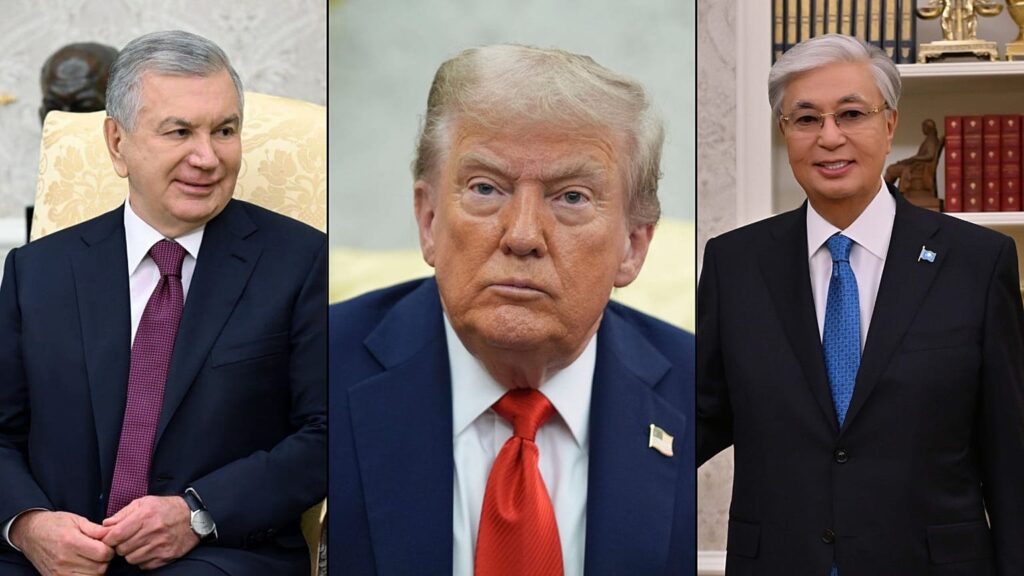
According to Akorda, a phone conversation took place today between Kazakhstan’s President Kassym-Jomart Tokayev and U.S. President Donald Trump.

The leaders spoke about their bilateral agenda and the current international situation, including in Ukraine.

Tokayev confirmed his commitment to implementing the agreements reached during his visit to Washington in November of this year. He emphasized the complexity of resolving the war in Ukraine. Tokayev also invited Trump to visit Kazakhstan.

Almost at the same time, Trump wrote on his social media site, Truth Social: “This morning, I had two wonderful phone conversations with Kassym-Jomart Tokayev, President of the Republic of Kazakhstan, and Shavkat Mirziyoyev, President of the Republic of Uzbekistan. We discussed the importance of establishing peace in ongoing conflicts, as well as expanding trade and cooperation between our countries. Relations with both countries are impressive. The United States will host the G20 summit next year, and we will invite both of these leaders to join us as guests at this very important event, which will take place in Miami!”

Central Asia Considers Single Gas Ring to Link Regional Energy Systems

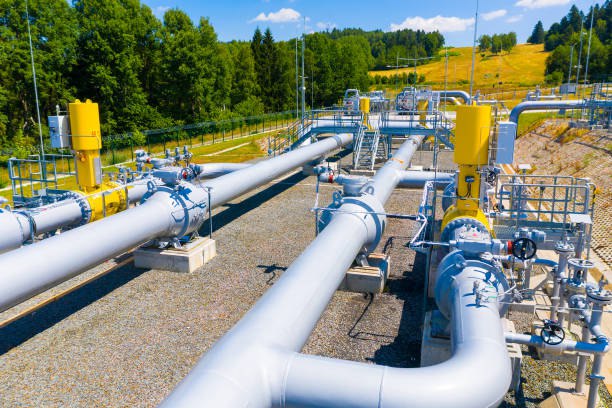
A proposal to connect the five Central Asian capitals into a unified, synchronized gas network has generated widespread debate among regional energy experts following a major industry forum in Tashkent. The idea, referred to as the “Central Asia Gas Ring,” was introduced by Kazakh oil and gas analyst Askar Ismailov during the Central Asia Oil & Gas Forum in early November. An analysis of the proposal was later published by the Uzbek outlet Upl.uz, citing assessments from regional and international experts.

The concept envisions physically linking the gas transportation systems of Uzbekistan, Kazakhstan, Turkmenistan, Kyrgyzstan, and Tajikistan into an integrated regional ring, modeled on the existing Central Asian Unified Power System, which already enables cross-border electricity coordination. According to Ismailov, natural gas should be seen not only as a tradable resource but as a strategic instrument for regional integration and energy security, especially in the context of growing geopolitical volatility.

Experts cited by Upl.uz argue that a gas ring could help countries better manage seasonal fluctuations in demand and reduce the risk of widespread energy shortages. Recent winter blackouts, particularly in Uzbekistan, have heightened concerns about supply resilience. The proposed system could also ensure more stable gas flows to Kyrgyzstan and Tajikistan, which lack significant domestic hydrocarbon resources and frequently experience shortages.

The initiative has attracted interest beyond Central Asia. Valérie Ducrot, head of the Global Gas Center, described the plan as a new model of energy cooperation that could attract international investment if the five participating states align their energy policies. Research groups such as SPIK and SpecialEurasia, also cited in the analysis, view the project as a potential cornerstone of regional infrastructure, aligning national interests around shared goals for stability and integration.

Economic incentives vary across the region. For Turkmenistan, Uzbekistan, and Kazakhstan, the ring could provide enhanced flexibility in export routes and pricing mechanisms. For gas-dependent Kyrgyzstan and Tajikistan, the proposal promises greater energy security, seen as essential for long-term economic and social development. External stakeholders, including China and the European Union, are expected to show interest in financing the project, while Russia is likely to seek continued influence over pricing structures and logistics.

Ismailov estimates the total cost at between $4 billion and $5 billion, with most of the funding needed for modernization of aging Soviet-era pipelines and construction of select new infrastructure segments. While Upl.uz notes that technical and political hurdles remain, the proposal highlights growing momentum toward collective energy solutions in Central Asia.

ADB Provides Tajik Bank with First Direct Loan of $10 Million

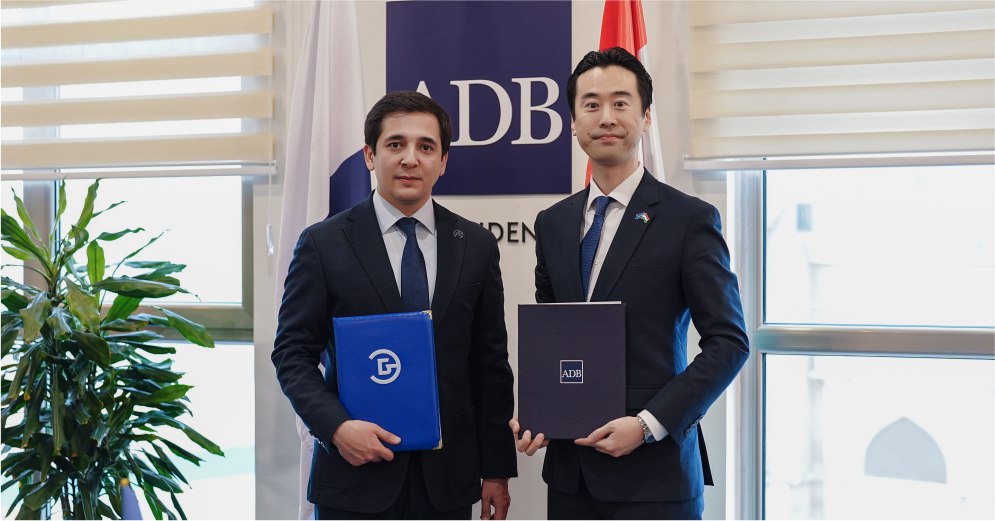
Bank Eskhata OJSC (Open Joint-Stock Company) and the Asian Development Bank (ADB) have signed a direct lending agreement, marking a new stage in financing for small and medium-sized enterprises (SMEs) in Tajikistan. This is the first time the ADB has issued a direct loan to a Tajik bank, bypassing intermediary financial institutions.

The ADB stated that the format reflects a high level of trust in the partner bank and confidence in its stability within the national financial market. Tajikistan has been a member of the ADB since 1998.

Under the terms of the agreement, the ADB is providing a loan in local currency equivalent to $10 million. The funds are intended to support entrepreneurs implementing environmentally friendly and energy-efficient technologies, as well as projects that reduce environmental impact and contribute to building a sustainable economy.

Akmaljon Saifidinov, CEO of Bank Eskhata, described the agreement as strategically important.

“We are honored to be the first financial institution in Tajikistan to receive direct lending from the ADB. This landmark event opens new horizons for supporting MSMEs and advancing green finance,” he said, referring to micro, small, and medium-sized enterprises.

He added that the partnership with the ADB further strengthens the bank’s role as a leader in innovative financial solutions.

The ADB expects the direct lending mechanism to significantly improve access to financing for businesses.

“Direct lending will significantly expand enterprises’ access to financing and serve as a key stimulus for the development of green initiatives in Tajikistan,” said Ko Sakamoto, head of the ADB office in Dushanbe.

The loan is expected to support projects in energy efficiency, green technologies, and sustainable business models, areas that have traditionally lacked access to long-term financing.

In a separate initiative, the ADB recently approved a $3 million grant to enhance Tajikistan’s capacity for glacier monitoring and natural disaster forecasting. 

The project includes the creation of a unified digital system for analyzing risks related to snow and ice melt and aims to improve public safety in mountainous regions.

Uzbekistan and Kazakhstan Emerge as Top Investment Destinations in Eurasian Region

A new report from the Eurasian Development Bank (EDB) highlights a significant shift in investment flows within the Eurasian region, with Central Asia, particularly Uzbekistan and Kazakhstan, emerging as the primary recipients of foreign direct investment (FDI).

Titled Investment Cooperation in the Eurasian Region Based on EDB Monitoring of Mutual Investments, the report provides a detailed analysis of mutual FDI trends across former Soviet republics (excluding the Baltic states) and Mongolia.

Despite a global downturn in FDI, investment activity across the Eurasian region continues to grow. As of the first half of 2025, mutual FDI between member countries reached a record $48.4 billion, with private businesses driving the majority of the growth.

Kazakhstan and Uzbekistan Take the Lead

Kazakhstan has become a central player in regional investment. The country’s outbound investments total $3.25 billion, while inbound investments stand at $9.4 billion, accounting for 19.5% of all mutual FDI in the region. Notably, Kazakhstan’s investment in neighboring Uzbekistan rose by 60% over the past 18 months, driven primarily by construction projects.

Uzbekistan is now the largest recipient of FDI in the Eurasian region, attracting over $10.7 billion in inbound investment, 22.3% of the regional total. The country also doubled its outbound investment in 2025 compared with the previous year, reaching $396 million. Uzbek companies invested heavily in manufacturing, which made up 85% of their foreign investment activity. Russia remains Uzbekistan’s largest investor, accounting for 90% of the total.

Intra-Regional Investment on the Rise

Intra-regional investment in Central Asia reached $1.3 billion in the first half of 2025, a 42% increase compared to 2023 and nearly triple the volume recorded in 2016. Kazakhstan remains the largest regional capital exporter, while Uzbekistan continues to lead as the main recipient. Roughly 80% of these intra-regional investments are concentrated in the construction, manufacturing, and financial sectors.

Other Central Asian Economies Also Attract Investment

Kyrgyzstan recorded $2.4 billion in incoming FDI, up 21% from 2023. The increase was largely driven by investments in manufacturing and energy.

Tajikistan also saw modest growth, with mutual FDI from Eurasian countries reaching $530 million by mid-2025, up 3% compared to 2023. Russian investment continues to dominate, comprising 93% of the total and focusing on energy, telecommunications, and financial services.

Kazakhstan’s Rust Belt: Why Modernized Power Plants Aren’t Stopping Urban Decline

The onset of winter in 2025 served as a stress test for Kazakhstan’s industrial north, and by most measures, the country passed. After high-profile heating system failures in cities such as Ekibastuz and Ridder in previous years, when entire neighborhoods were left without heat in temperatures as low as minus 30 degrees Celsius, the authorities were forced to move beyond piecemeal repairs toward large-scale emergency interventions.

The state invested unprecedented resources into overhauling heating networks and modernizing thermal power plants in single-industry cities and smaller industrial settlements across the region. Significant budget allocations helped stabilize the most vulnerable infrastructure. Emergency repair calls gave way to routine updates from local authorities, and utility breakdowns shifted from the realm of crisis to that of manageable risk.

By this winter, the basic issue of urban survival had been resolved. For regions with aging infrastructure and high industrial dependency, this marked a crucial transition from systemic failure to fragile stability.

The Future Votes with Its Feet

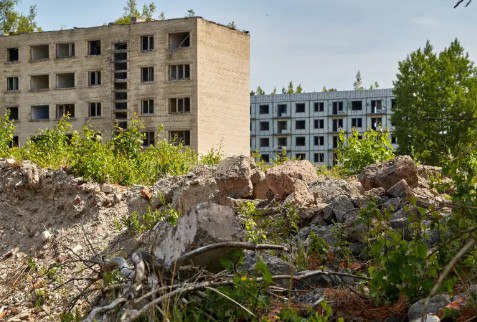
Yet behind the upgraded pipes and boilers lies a deeper structural issue. Cities such as Ekibastuz, Rudny, Temirtau, Balkhash, and many others were pillars of Soviet-era industrialization. In today’s market-driven Kazakhstan, many are rapidly losing both economic relevance and population. The term “rust belt,” borrowed from post-industrial regions of the United States, has increasingly entered national discourse.

While the state focuses on fixing infrastructure, residents are asking a more fundamental question: do these industrial cities have a future? The answer, many argue, lies not in kilometers of new piping but in people, and the data is clear. Single-industry cities are aging and shrinking. Even where wages exceed 1,200 dollars per month, well above the national average, young people are still leaving.

The issue is less about income than about quality of life. A stable job is no longer enough for younger generations. They also want livable cities, modern schools, safety, leisure opportunities, and green spaces, amenities these places often lack. As a result, migration from northern and eastern regions to Astana and Almaty continues, fueling an imbalance. The megacities are overstretched, while industrial cities face growing labor shortages.

Exceptions to the Rule

Amid the general decline, the city of Saran in the Karaganda Region stands out as a rare success story. Just a decade ago, it was a struggling mining city facing significant population outflow. Today, it is a flagship of Kazakhstan’s single-industry city revitalization program.

Saran’s turnaround hinged on radical economic diversification. The establishment of an industrial zone and the arrival of new anchor investors not tied to coal mining fundamentally changed the employment landscape. The launch of the KamaTyresKZ plant, along with household appliance manufacturers and the QazTehna bus assembly plant, has stimulated both economic and social development.

Authorities now point to Saran as proof that a single-industry city can transition into a manufacturing hub under the right conditions. However, its success is also attributed to unique logistical advantages, notably proximity to Karaganda and substantial state support.

Replicating the Saran effect in more remote cities such as Arkalyk or Zhezkazgan will be far more difficult.

Ecology Versus Wages

Cities such as Temirtau, Rudny, and Ekibastuz face a different challenge: economic dependence on a single, often polluting, employer, typically a national or quasi-state industrial giant. In these places, a growing tension exists between relatively high wages and poor environmental conditions.

Temirtau is emblematic. Despite changes in ownership of its metallurgical plant and promises of cleaner operations, the city continues to suffer from chronic air pollution. While modernization of the local power plant has improved heating reliability, it has done little to improve environmental conditions. According to Kazhydromet, air quality remains hazardous year-round, making these cities increasingly unattractive, particularly for families with children.

At the same time, many residents fear the closure of these polluting industries, as they remain the only significant sources of employment.

Controlled Contraction

The reality is that not all of Kazakhstan’s 27 single-industry cities can be revived. This view, while rarely stated directly, increasingly appears to inform government policy. A once-universal strategy of revival is gradually giving way to a more differentiated approach.

Some settlements, including the city of Saran and the towns of Kulsary and Aksay, are being positioned as future growth centers, with the potential to integrate into the broader national economy. Others may face a model of managed contraction, in which the state maintains basic infrastructure and social services while quietly encouraging gradual population resettlement to more viable regions.

The modernization of power plants has granted Kazakhstan’s rust belt a temporary reprieve. The central question is how this time will be used: to redefine the economic future of these industrial cities, or simply to delay the inevitable for a few more warm winters.