• KGS/USD = 0.01144 0%
  • KZT/USD = 0.00196 -0%
  • TJS/USD = 0.10899 -0%
  • UZS/USD = 0.00008 -0%
  • TMT/USD = 0.28490 0%
  • KGS/USD = 0.01144 0%
  • KZT/USD = 0.00196 -0%
  • TJS/USD = 0.10899 -0%
  • UZS/USD = 0.00008 -0%
  • TMT/USD = 0.28490 0%
  • KGS/USD = 0.01144 0%
  • KZT/USD = 0.00196 -0%
  • TJS/USD = 0.10899 -0%
  • UZS/USD = 0.00008 -0%
  • TMT/USD = 0.28490 0%
  • KGS/USD = 0.01144 0%
  • KZT/USD = 0.00196 -0%
  • TJS/USD = 0.10899 -0%
  • UZS/USD = 0.00008 -0%
  • TMT/USD = 0.28490 0%
  • KGS/USD = 0.01144 0%
  • KZT/USD = 0.00196 -0%
  • TJS/USD = 0.10899 -0%
  • UZS/USD = 0.00008 -0%
  • TMT/USD = 0.28490 0%
  • KGS/USD = 0.01144 0%
  • KZT/USD = 0.00196 -0%
  • TJS/USD = 0.10899 -0%
  • UZS/USD = 0.00008 -0%
  • TMT/USD = 0.28490 0%
  • KGS/USD = 0.01144 0%
  • KZT/USD = 0.00196 -0%
  • TJS/USD = 0.10899 -0%
  • UZS/USD = 0.00008 -0%
  • TMT/USD = 0.28490 0%
  • KGS/USD = 0.01144 0%
  • KZT/USD = 0.00196 -0%
  • TJS/USD = 0.10899 -0%
  • UZS/USD = 0.00008 -0%
  • TMT/USD = 0.28490 0%
08 December 2025

Kazakhstan to Host Filming of International Music Show Led by Dimash Kudaibergen

Kazakhstan will serve as the backdrop for a new international music project produced in collaboration with Chinese media giant Hunan TV. Dimash Kudaibergen, Kazakhstan’s most internationally recognized vocalist, will take on the role of executive producer for the first time in his career.

According to Dimashnews.com, filming is scheduled from September 8 to 29 in several cities across Kazakhstan, including Turkestan, Almaty, Aktau, and Astana. The project will bring together vocalists from various countries to showcase their talents while exploring the country’s landscapes and cultural heritage.

“Almost ten years ago, my journey on Hunan TV began with the show Singer. Today, I am returning in a new role, as the creator of an international show. This opens a new chapter in the history of cultural cooperation and music, bringing people together around the world,” Kudaibergen said.

Partnership with Hunan TV

The show marks a renewed partnership between Kudaibergen and Hunan TV, one of China’s leading entertainment networks. Earlier this year, the artist announced that he had signed an agreement with Cai Huaiyun, head of the Hunan TV media holding company. The agreement paves the way for the launch of a new music reality show, with Kudaibergen at the helm as executive producer.

Fans responded enthusiastically on social media. “How proud I am of you! You always try to put Kazakhstan on the map. We will be here to support you,” one follower wrote. Another added, “A new chapter, a new role, interesting work, and great responsibility. This is a wonderful reason to be proud and recognize your talent.”

Career Highlights and Achievements

Dinmukhammed (Dimash) Kanatovich Kudaibergen was born on May 24, 1994, in Aktobe. He was named a People’s Artist of Kazakhstan in 2023 and received the same honor from Kyrgyzstan in 2025. Known for his extraordinary vocal range, spanning seven octaves and seven semitones, Kudaibergen’s style blends pop, opera, and traditional Kazakh motifs.

In 2015 he won the Grand Prix at the Slavonic Bazaar in Belarus, and in 2017, he became the youngest-ever participant on Singer, Hunan TV’s prestigious vocal competition, ultimately placing second. His debut performance in China amassed over 600 million views on Sina Weibo within a single day.

Throughout his career, Kudaibergen has gained a substantial following in Central Asia, Eastern Europe, and beyond. He has performed at international events including Song of the Year and New Wave and was awarded the Soundtrack Award.

Upcoming Madison Square Garden Concert

The music project coincides with another major milestone for the artist. On October 5, Kudaibergen will headline a solo concert at Madison Square Garden in New York.

Kazakh Entrepreneur in Paris Launches Perfume Inspired by the “Kiz-Jibek” Epic

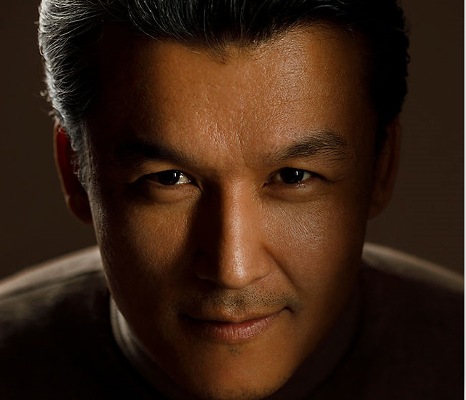
An ethnic Kazakh living in Paris has launched a perfume called Kiz-Jibek on the French market.

Its founder, Nurzhan Tolegen, was born in China’s Ili Kazakh region and grew up in Kulja before eventually settling in the French capital.
“I am the grandson of a nomadic people. My grandparents left their homeland during the civil war, carrying with them the soul of Kazakhstan etched into their stories, their songs, and their memories. Yet I had never set foot on those vast steppes whose grandeur my mother, a professor of literature, so often evoked,” he shares on his personal website.

Nurzhan Tolegen; image: www.tolegenparis.com

In 2021, Nurzhan traveled to Kazakhstan for the first time, spending a month reconnecting with his ancestral homeland. Those four weeks felt like a rebirth for him and marked a turning point in his life. Returning to France, he established a luxury perfume house, Tolegen Paris: a tribute to both his surname and to a heroic figure celebrated in a 16th-century Kazakh epic.

In May 2025 he introduced Kiz-Jibek, describing it as “a fragrance honoring eternal love” and “a scent laced with wormwood.”

The Kiz-Jibek epic, a cornerstone of Kazakh cultural heritage, reflects the values of traditional society. It emphasizes unity and loyalty to the homeland while exploring universal themes of love, virtue, honesty, and beauty. Through the character of Kiz-Jibek, one encounters the timeless image of the Kazakh woman—gentle yet resilient, modest yet dignified.

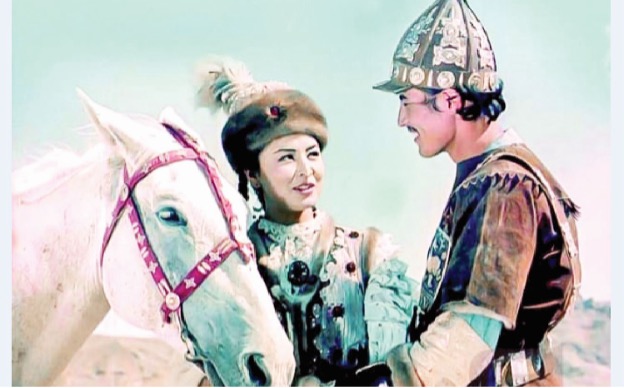
The epic characters Kiz-Jibek and Tolegen

For over five centuries, Kazakhs have sung the tale of Kiz-Jibek. Its central figures—Bazarbai, Tolegen, Kiz-Jibek, and Sansyzbai—are believed to have lived in history, with the story unfolding along the Ural River among the Jagalbaily tribe. In both the epic and the famous film, Tolegen is treacherously slain by Bekezhan, after which Kiz-Jibek, devastated by grief, throws herself into the river.

Thousands of Kazakhstanis Added to Financial Watchlists Over Suspected Fraud

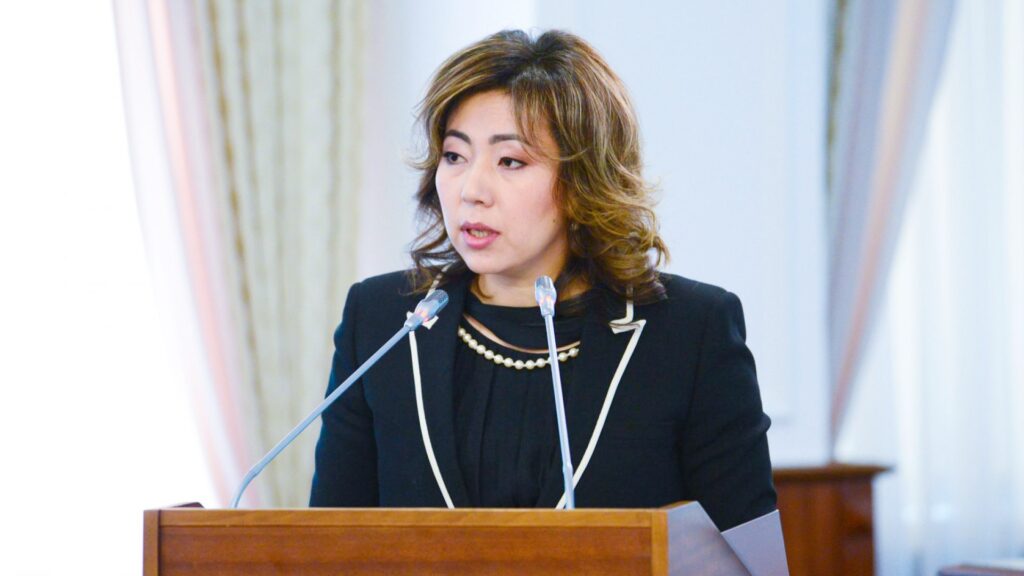
Several thousand citizens in Kazakhstan have been placed on so-called “dropper” lists, individuals suspected of using their bank accounts to facilitate the withdrawal of illicit funds. The announcement was made by Madina Abylkasymova, Chair of the Agency for Regulation and Development of the Financial Market (ARDFM).

According to Abylkasymova, suspected individuals are initially placed on a “gray” list, where all financial transactions are temporarily blocked. If the allegations are confirmed, individuals are then transferred to a blacklist. “Currently, we already have several thousand people on these lists,” she said.

The Prosecutor General’s Office recently reported identifying more than 6,000 individuals believed to be involved in embezzlement schemes using personal banking infrastructure.

Beginning this fall, legislative amendments will introduce criminal liability for the unauthorized transfer of payment instruments. Abylkasymova emphasized that citizens will be prohibited from handing over bank cards even to relatives. “This reduces the risk of unauthorized access to funds and protects customers from disputed debits,” she explained.

Since the start of the year, individuals have also been limited to a maximum of five bank cards per financial institution. The restriction was introduced in response to criminal cases where hundreds of cards were issued to a single person and later used in drug trafficking operations.

Despite these tightening regulations, Abylkasymova reassured the public that cash will remain in circulation. “Paper tenge will always be used in Kazakhstan, alongside non-cash transactions and the digital tenge,” she said.

As previously reported by The Times of Central Asia, banks and mobile operators will now be held jointly liable for internet fraud committed via their platforms, as part of broader efforts to curb financial cybercrime.

97% of Uzbeks Express Pride in Independence, Survey Finds

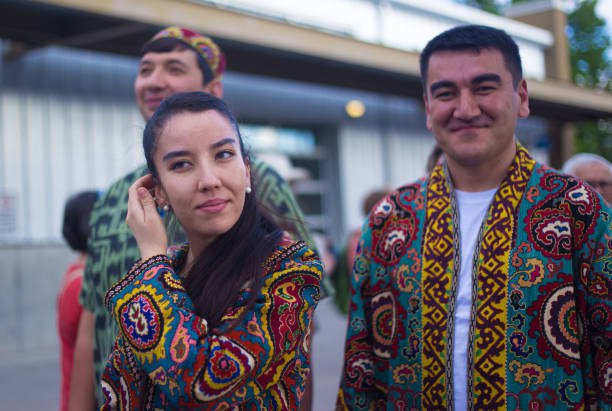
Ahead of Uzbekistan’s 34th Independence Day, a national survey conducted by the “Ijtimoiy Fikr” Public Opinion Research Center revealed widespread pride and optimism among citizens. According to the findings, 97% of respondents said they feel proud of their country on Independence Day, while 87.6% described the occasion as joyful and festive. Another 84.7% associated the holiday with national unity, and 95.5% expressed pride in being citizens of Uzbekistan.

The survey also reflected how deeply independence is viewed as both a historic milestone and a catalyst for personal growth. Some 79.1% of respondents reported that, in recent years, they have had more opportunities to realize their potential and achieve personal goals.

Nearly all participants shared a positive outlook for the country’s future. When asked about their vision for Uzbekistan, 97.8% imagined it as strong and prosperous, 88.9% as peaceful and stable, 85.3% as spiritually rich and cultured, and 81.9% as modern and innovative. Researchers concluded that Independence Day has become not just a commemorative date but a potent symbol of national pride and collective confidence in the country’s direction.

The findings echo Uzbekistan’s rising profile in international well-being indices. According to the World Happiness Report, published by the World Population Review and based on Gallup poll data, Uzbekistan ranked 47th globally in 2024, making it the happiest country in Central Asia. The ranking considers six categories: income, social support, life expectancy, freedom of choice, generosity, and perceptions of corruption. Kazakhstan followed at 49th, down from 44th the previous year.

Rescue Operations Formally End on Kyrgyz Mountain; Russian Climber Natalya Nagovitsyna Presumed Dead

The head of Kyrgyzstan’s mountaineering federation says another high-altitude drone inspection of a mountain ridge where injured Russian climber Natalya Nagovitsyna was stranded failed to show any “signs of life.”

The announcement by Eduard Kubatov was expected because few people had held out hope that Nagovitsyna was still alive on Pobeda Peak, Kyrgyzstan’s highest mountain at 7,439 meters above sea level. She broke a leg high on the mountain on August 12 and subsequent efforts to rescue her failed in extremely difficult conditions, placing other climbers and officials at risk.  

The drone fly-by on Tuesday and the involvement in the operation of Kubatov, who had recently returned from an ascent of K2 mountain in Pakistan without supplementary oxygen, appeared to be a last attempt to address any lingering doubts about Nagovitsyna’s fate. Accompanied by a rescue mountaineer and a drone operator, Kubatov flew by helicopter to South Inylchek base camp at Pobeda Peak to participate in the search. Further rescue efforts were “inappropriate,” they said in a signed letter.

“All rescue operations have been stopped, and we must acknowledge this sad fact for all of us. All video materials from the inspection (over 10 minutes) will be handed personally to Natalya’s son,” Kubatov said on Instagram. 

Saying that “we must state that there are no signs of life” from Nagovitsyna, Kubatov also posted drone footage that showed an orange tent on snow at the foot of a rock face, high on Pobeda. The surface of the tent rippled lightly in the wind, but it was impossible to see inside.  

On August 19, a drone filmed movement at the same tent, where Nagovitsyna had stayed as other climbers tried to get help. One of those climbers, Italian Luca Sinigaglia, fell ill and died. Kyrgyz security officials said another drone flight on August 27 did not show any movement at the site. 

“The Kyrgyz side did everything possible to organize the rescue of the mountaineer, but the extreme altitude, the harsh weather conditions, the hard helicopter landing, and the physical state of the rescuers did not allow us to achieve the hoped-for results,” Kubatov said. “In the history of Pobeda, there has not been a single successful rescue operation at an altitude of 7,200 meters, and we had no right to further risk the lives of the mountaineer rescuers.”

Victoria Bonya, a Russian model, entertainer and mountaineering enthusiast, helped to organize the drone mission on Tuesday. 

Bonya said Nagovitsyna “has passed away in peace.”

Mirziyoyev Bets on the SCO to Boost Uzbekistan’s Security and Economy

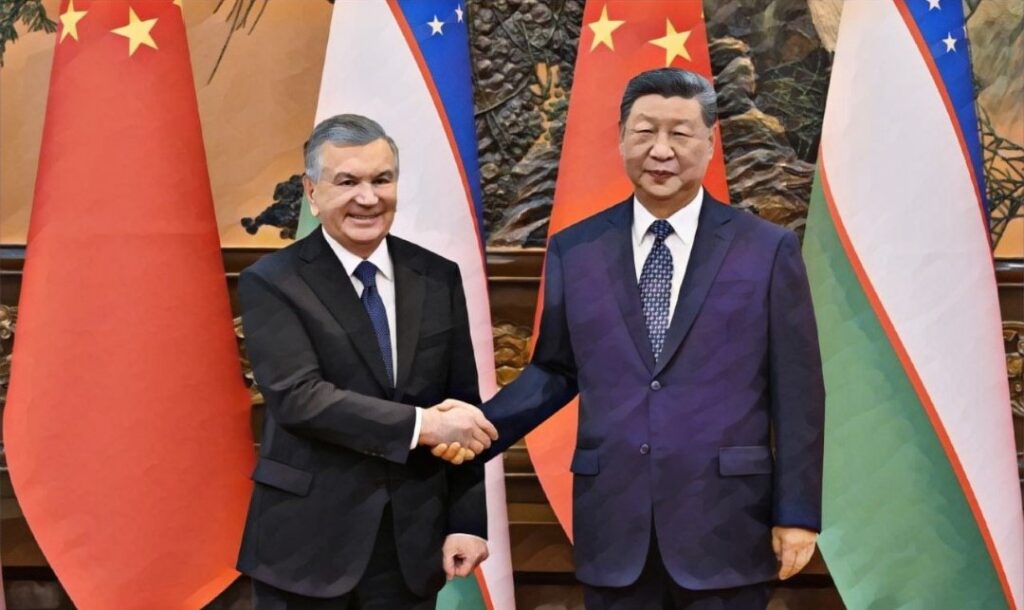
Tianjin, China – The recent Shanghai Cooperation Organization (SCO) summit drew wide attention as leaders from across Eurasia convened to emphasize the Organization’s growing importance. For smaller members, the meeting was a chance to show commitment to regional cooperation and alignment with the bloc’s major powers. Uzbekistan, under President Shavkat Mirziyoyev, stood out by using the platform to outline his intention to strengthen engagement within the SCO to advance both economic development and security.

Mirziyoyev’s speech stressed solidarity in the face of global uncertainty, institutional renewal to improve effectiveness, and deeper cooperation in areas such as security and nuclear policy. He also endorsed expanding membership, particularly from the Global South, while presenting proposals to boost trade, logistics, and investment. These priorities are consistent with Uzbekistan’s ongoing strategy of aligning its national agenda with the SCO’s broader evolution into a forum with Eurasian and global relevance.

Reinforcing Multilateral Solidarity

Uzbekistan’s solidarity with the SCO has been in the making for years, as Tashkent aligns parts of its security and economic strategy with the Organization’s framework. In his latest address, Mirziyoyev emphasized the role of solidarity amid rising instability: “A systemic crisis of trust, the escalation of conflicts, the weakening of multilateral institutions, and the fragmentation of the global trading system are undermining the foundations of the international architecture of security and stability. In these circumstances, mutual understanding and solidarity among the SCO member-states are not only a valuable asset, but also the key to preserving peace in our vast region.”

While Russia emphasizes the SCO’s role in fostering multipolarity and China focuses on resilient supply chains, Uzbekistan is leveraging the principle of solidarity to safeguard its national interests – reducing dependence on any single power. Uzbekistan is positioning itself within the SCO to align its domestic priorities with broader SCO agendas shaped by Russia’s focus on security and China’s emphasis on economic initiatives.

Expanding Membership and External Engagement

Mirziyoyev underscored the SCO’s “openness,” identifying expansion as central to its continued development. He welcomed greater engagement with new members and partners, though he did not specify particular regions.

Uzbekistan’s growing cooperation with countries such as Iran and Saudi Arabia demonstrates how this vision of openness is taking shape in practice. Tashkent has actively supported Iran’s accession to the SCO and recently signed agreements on transport corridors that connect Central Asia to Iranian ports on the Persian Gulf, facilitating greater trade with Iran. In parallel, deepening ties with Saudi Arabia – particularly through ACWA Power’s renewable energy projects, now among Uzbekistan’s largest foreign-funded ventures – illustrate Uzbekistan’s broader engagement with the Global South in the areas of connectivity and investment.

These moves parallel Russia’s and China’s efforts to expand the SCO’s influence beyond its founding region. For Uzbekistan, expansion offers new avenues for trade, energy cooperation, and investment partnerships, while reinforcing its image as a bridge-builder. By publicly supporting this process, Mirziyoyev signaled that Uzbekistan expects wider membership to enhance both the Organization’s and its own standing.

Institutional Alignment with the SCO

A recurring theme in Mirziyoyev’s address was the importance of ensuring that Uzbekistan’s domestic institutions evolve in step with the SCO’s priorities. Tashkent has sought to embed its national reforms within the Organization’s security and economic frameworks, demonstrating a deliberate effort to align domestic development with multilateral commitments.

On the security front, Uzbekistan continues to engage with the SCO’s Regional Anti-Terrorist Structure (RATS), reflecting its emphasis on countering extremism and terrorism through regional mechanisms. This cooperation ensures that internal strategies on law enforcement and public security correspond with collective approaches at the SCO level.

In the economic sphere, the Chamber of Commerce and Industry of Uzbekistan has used the SCO Business Council as a platform to promote national priorities, putting forward initiatives like SCO TradeNet, innovation clusters, and an SCO business school for SMEs to strengthen regional trade and investment. By aligning its institutional networks with regional mechanisms, Tashkent ensures that local businesses can benefit directly from the SCO’s expanding economic agenda.

Taken together, these measures illustrate Uzbekistan’s efforts to adapt its own institutional structures to operate in concert with the SCO’s evolving agenda. This approach positions Tashkent as both a contributor to the SCO’s multilateral initiatives and a beneficiary of the Organization’s institutional renewal.

Security and Nuclear Cooperation

Security cooperation was one of the most prominent elements of President Mirziyoyev’s proposals at the SCO summit. He called for adopting an SCO Declaration on Strengthening Multilateral Partnership for Nuclear Security, stressing peaceful nuclear energy, coordinated emergency response, and what he described as a “worthy contribution to the global non-proliferation regime under the auspices of the United Nations.” This initiative would position the SCO to contribute to areas traditionally led by institutions such as the IAEA.

Beyond nuclear security, Mirziyoyev urged practical steps to deepen law enforcement cooperation: reviving the Meeting of Ministers of Internal Affairs and Public Security, revising the Agreement on Cooperation in Combating Crime, and adopting a Comprehensive Anti-Drug Program through 2030. He also called for reactivating the SCO-Afghanistan Contact Group, echoing the Organization’s previous role as a dialogue facilitator on security and development in Afghanistan.

Taken together, these initiatives indicate Uzbekistan’s view of the SCO as more than a political forum – instead as a platform for structured security collaboration across Eurasia. Much like the CSTO provides collective defense and the OSCE emphasizes confidence-building, Uzbekistan envisions the SCO as a uniquely Eurasian mechanism for cooperative responses to terrorism, organized crime, narcotics, and nuclear risks.

Trade and Economic Integration

Economic cooperation was another central theme of Mirziyoyev’s address. He called for the adoption of a Trade Facilitation Agreement, the expansion of production and logistics chains, and stronger mutual investment among SCO states – proposals aimed at building parallel trade and financial mechanisms under the Organization’s umbrella.

These multilateral priorities align with Uzbekistan’s ongoing bilateral initiatives. Agreements with Iran on the Uzbekistan–Turkmenistan–Iran–Oman corridor and logistics hubs at Bandar Abbas and Chabahar give Tashkent direct access to Gulf ports. With Saudi Arabia, cooperation has focused on clean energy and infrastructure, where ACWA Power alone has committed up to $15 billion in renewable energy projects.

By coupling these bilateral efforts with its multilateral proposals inside the SCO, Uzbekistan is positioning itself as both a driver of its own initiatives within the SCO and a participant in the broader regional integration process led by the Organization. Through this dual-track approach, Tashkent is positioning the SCO as the central multilateral framework through which it seeks to advance regional connectivity and investment, as Mirziyoyev emphasized in Tianjin when he called for a ‘Common SCO Transport Space’ and the development of North–South and East–West corridors.

Channeling Ambitions

President Mirziyoyev’s speech in Tianjin underscored Uzbekistan’s decision to channel its security and economic ambitions through the SCO. By aligning domestic institutions with SCO mechanisms, endorsing the Organization’s expansion, and pairing bilateral initiatives with multilateral proposals, Tashkent is deepening its integration with the bloc. This strategy reflects a calculated bet: that the SCO’s evolution – shaped by Russia’s security agenda and China’s economic initiatives – will deliver Uzbekistan new opportunities to pursue stability and development in a period of global uncertainty. The wager, however, is not without risks: its success depends on whether the Organization can reconcile major-power interests, turn commitments into practical outcomes, and avoid leaving Tashkent exposed to unresolved security threats, fragile trade links, or external skepticism of SCO-led coalitions.