• KGS/USD = 0.01144 0%
  • KZT/USD = 0.00193 -0%
  • TJS/USD = 0.10811 -0.28%
  • UZS/USD = 0.00008 0%
  • TMT/USD = 0.28490 0%
  • KGS/USD = 0.01144 0%
  • KZT/USD = 0.00193 -0%
  • TJS/USD = 0.10811 -0.28%
  • UZS/USD = 0.00008 0%
  • TMT/USD = 0.28490 0%
  • KGS/USD = 0.01144 0%
  • KZT/USD = 0.00193 -0%
  • TJS/USD = 0.10811 -0.28%
  • UZS/USD = 0.00008 0%
  • TMT/USD = 0.28490 0%
  • KGS/USD = 0.01144 0%
  • KZT/USD = 0.00193 -0%
  • TJS/USD = 0.10811 -0.28%
  • UZS/USD = 0.00008 0%
  • TMT/USD = 0.28490 0%
  • KGS/USD = 0.01144 0%
  • KZT/USD = 0.00193 -0%
  • TJS/USD = 0.10811 -0.28%
  • UZS/USD = 0.00008 0%
  • TMT/USD = 0.28490 0%
  • KGS/USD = 0.01144 0%
  • KZT/USD = 0.00193 -0%
  • TJS/USD = 0.10811 -0.28%
  • UZS/USD = 0.00008 0%
  • TMT/USD = 0.28490 0%
  • KGS/USD = 0.01144 0%
  • KZT/USD = 0.00193 -0%
  • TJS/USD = 0.10811 -0.28%
  • UZS/USD = 0.00008 0%
  • TMT/USD = 0.28490 0%
  • KGS/USD = 0.01144 0%
  • KZT/USD = 0.00193 -0%
  • TJS/USD = 0.10811 -0.28%
  • UZS/USD = 0.00008 0%
  • TMT/USD = 0.28490 0%
10 December 2025

QazTrade Opens Office in Tianjin to Strengthen Kazakhstan-China Trade Ties

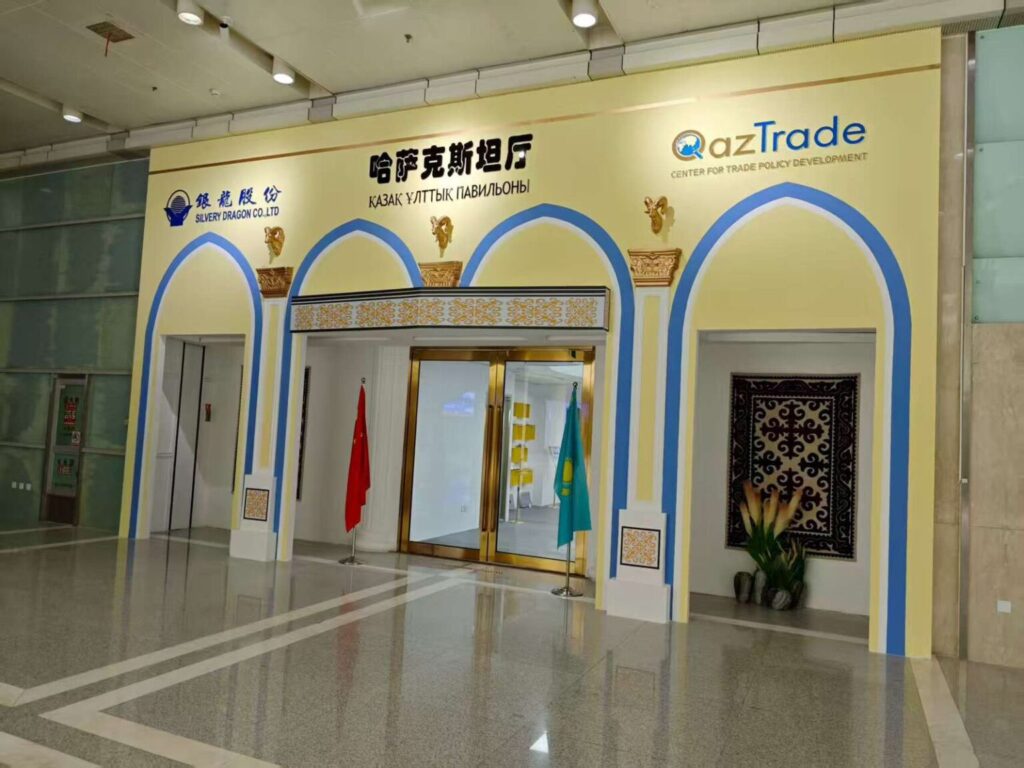
Kazakhstan’s QazTrade Center for Trade Policy Development has opened a new office, Kazakhstan Hall, at the International Trade and Shipping Service Center in Tianjin, one of northern China’s leading industrial and port cities.

Spanning 100 square meters, the office is designed primarily to showcase Kazakhstani food products and facilitate trade promotion in the Chinese market. It is currently operating in pilot mode, with an expanding exhibition area and ongoing preparations to formally register QazTrade’s representative office. The official opening ceremony is expected later this autumn.

According to QazTrade, trade turnover between Kazakhstan and Tianjin reached $347.9 million in 2023 and rose to $474 million in 2024, a sign of steady growth in bilateral commerce.

Tianjin serves as a key logistics and trade hub for Shanghai Cooperation Organization (SCO) member states. It offers Kazakhstan access to a “green-light corridor” for SCO countries, multimodal transport links between Asia and Europe, and a variety of investment and financial services.

“The opening of the QazTrade office in Tianjin is an important step for us,” said QazTrade Director General Aitmukhammed Aldazharov. “Through the Tianjin port, we will be able to deliver Kazakhstani goods to any country in the world faster and more efficiently.”

Growing Bilateral Trade

Kazakhstan-China trade continues to gain momentum. During a meeting with Kazakh Minister of Trade and Integration Arman Shakkaliyev on August 20 in Beijing, Chinese Minister of Commerce Wang Wentao stated that bilateral trade reached $43.8 billion in 2024, a 9.2% increase compared to the previous year. In the first half of 2025 alone, trade turnover totaled $21.8 billion.

Kazakhstan and China have set a joint target to double bilateral trade by 2030, with expanded cooperation in logistics, agriculture, energy, and manufacturing forming the core of future initiatives.

Gasoline Prices Rise in Kyrgyzstan Amid Heavy Dependence on Russian Imports

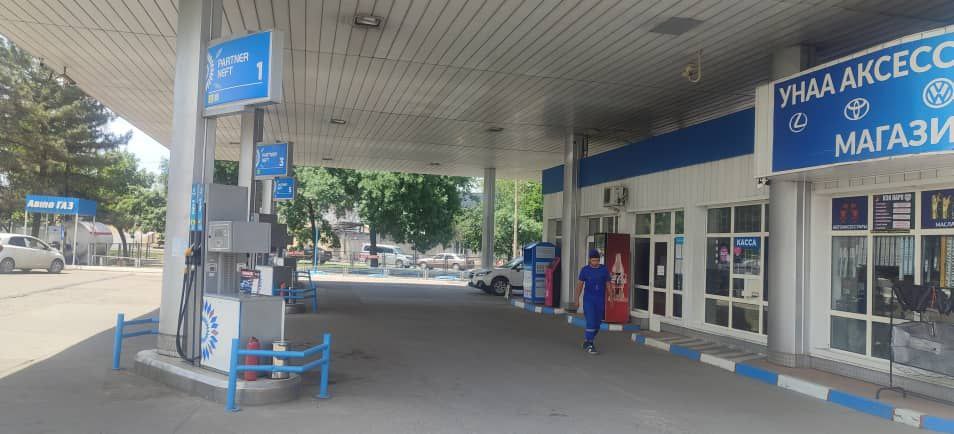
Gasoline prices in Kyrgyzstan have continued to rise in recent months, despite official assurances that fuel reserves remain sufficient. The Kyrgyz Ministry of Energy reports that domestic supplies and ongoing fuel imports from Russia are currently adequate to meet national demand.

According to the ministry, Kyrgyzstan consumes approximately 1.6 million tons of fuel annually, with over 90 percent of its gasoline imported from Russia. Each year, export volumes are negotiated between Moscow and Kyrgyz oil traders. When those volumes are exhausted, prices typically begin to increase.

“The agreed volumes for 2025 have not yet been fully met, but oil products are being supplied as usual and without interruption. At the same time, work is underway to agree on new volumes for 2026,” the ministry stated.

Officials attribute the recent price hikes to global market trends and disruptions in Russian refinery operations. Several refineries have undergone scheduled maintenance, while others were forced to halt operations following drone attacks linked to the conflict in Ukraine.

Despite a recently announced gasoline export ban by Russian authorities, the restriction does not apply to countries within the Eurasian Economic Union (EAEU), including Kyrgyzstan.

Industry Concerns About Future Supply

Kanat Eshatov, head of the Kyrgyz Oil Traders Association, told The Times of Central Asia that local traders remain cautious, anticipating further price increases by the end of September.

“The first half of the year was fairly calm on the fuel market, with only a slight increase in prices. But in June and July, prices rose sharply due to scheduled repairs at refineries in Russia. A total of 20 plants were shut down for repairs. Five of them underwent unscheduled repairs due to attacks by Ukrainian drones. Some Russian regions are experiencing a shortage of fuel. The Russian government is now redistributing its reserves,” Eshatov said.

The association is concerned about Kyrgyzstan’s limited fuel buffer. Major oil companies in the country reportedly hold only two months’ worth of gasoline reserves. Any significant supply interruption from Russia could quickly lead to a national shortage.

Comparative Prices in the Region

Eshatov noted that, due to Kyrgyzstan’s exemption from export duties on Russian gasoline, fuel prices remain lower than in neighboring countries. For example, in Tajikistan, gasoline prices have increased by $0.27 per liter this year, and diesel by $0.22. In Uzbekistan, gasoline is up by $0.26 per liter and diesel by $0.11.

To ensure continued supply stability, Kyrgyz oil traders are also exploring alternative import routes and are currently in negotiations with Kazakhstan and Azerbaijan.

Kazakhstan Proposes Licensing Bloggers to Curb Online Casino Advertising

Kazakh Senator Gennady Shipovskikh has proposed introducing a blogger licensing system in response to growing violations of the country’s ban on advertising online casinos via social media and messaging platforms.

Since 2024, Kazakhstan has prohibited outdoor advertising of bookmakers, online casinos, and betting pools, as well as their promotion in media content, films, and videos. However, the Financial Monitoring Agency (FMA) has identified 34 bloggers involved in promoting illegal online gambling platforms. Eleven of them have already received administrative penalties. The agency now argues that fines are insufficient and is pushing for the introduction of criminal liability for such offenses.

Licensing as a Regulatory Tool

Speaking at a plenary session of the Senate, Shipovskikh said licensing would provide the legal basis to suspend a blogger’s activity in the event of violations.

“We propose, along with the administrative fines currently applied for advertising illegal online casinos and dubious giveaways, to introduce licensing or create a special register of bloggers. This will allow us to regulate their advertising activities and strengthen their accountability before the law,” he stated.

Shipovskikh also called for tighter oversight of payment service providers and advertising agencies that may facilitate illegal gambling activities. He further proposed a monitoring mechanism to verify the legality of sweepstakes and giveaways commonly run on social platforms.

“We also propose to fully utilize the mechanism of criminal liability for such violations,” he added.

Scope of Illegal Gambling and Enforcement Measures

According to FMA data, 205 illegal casinos have been shut down in Kazakhstan over the past two and a half years, with 224 individuals facing criminal charges for their involvement.

Shipovskikh argued that existing penalties fail to deter offenders:

“Ordinary fines do not have the desired deterrent effect. Illegal advertising brings bloggers millions in profits, which significantly exceed the amount of penalties imposed.”

Legal Framework Already in Place

Speaking to reporters after the Senate session, FMA Deputy Chairman Zhenis Yelemesov confirmed the agency’s intention to pursue criminal liability for advertising illegal casinos, including the confiscation of related income. He also clarified that current law already allows for prosecution in certain cases.

“If it is proven that a blogger participated in the organization of a casino, the distribution of profits, or was otherwise involved in a crime, he will be prosecuted as an accomplice,” Yelemesov said.

Paulo Bento Declines Offer to Coach Uzbekistan National Football Team

Portuguese football coach Paulo Bento has reportedly declined an offer to lead Uzbekistan’s national team, despite the country’s historic qualification for the 2026 FIFA World Cup. According to the Portuguese sports daily A BOLA, the 56-year-old coach turned down the proposal from the Uzbekistan Football Association, stating that the terms did not align with his current career plans.

Bento, who was dismissed as head coach of the United Arab Emirates in March 2024, is still available on the international coaching market. His departure from the UAE team came as a surprise, particularly since the squad remained in contention for what could have been its first-ever World Cup appearance.

Bento previously managed the Portuguese national team from 2010 to 2014, leading them through UEFA Euro 2012 and the 2014 FIFA World Cup. More recently, he coached South Korea at the 2022 World Cup in Qatar.

Uzbekistan’s reported interest in Bento reflects the country’s broader ambitions to elevate its football program ahead of its World Cup debut in 2026. The national team secured qualification earlier this year, marking a landmark achievement.

Officials have emphasized ongoing reforms within the country’s football infrastructure, with goals to professionalize the domestic league and enhance international competitiveness.

Kazakhstan’s Rollout of Aitu Messenger Sparks Fears Over Internet Freedom

Kazakhstan is mandating the use of the national messenger Aitu among officials and state-owned enterprises, raising concerns that this move could signal future restrictions on internet freedom.

The rollout of Aitu coincides with Russia’s introduction of its own national messaging app, Max, which has been accompanied by efforts to block international platforms like WhatsApp and Telegram. The parallels are fueling fears that Kazakhstan may follow a similar path.

Why Is Aitu Being Introduced?

By September 15, employees of all government agencies and quasi-public sector organizations in Kazakhstan are required to switch to Aitu. The directive comes from the Digital Headquarters under the leadership of Prime Minister Olzhas Bektenov.

On August 11, President Kassym-Jomart Tokayev instructed the government to strengthen protections around citizens’ personal data. “A significant part of business and official communication, including the transfer of citizens’ personal data, now takes place through international messengers,” he noted.

Tokayev cited examples of sensitive data, such as individual identification numbers and medical information, being transmitted via foreign platforms. He linked this to repeated data breaches, stating that Kazakhstan experienced over 40 major leaks in 2025 alone, including a major incident in June that exposed data on millions of citizens. He argued that Aitu is a necessary step to prevent further leaks.

Security Concerns Remain Unanswered

Originally launched in 2018, Aitu was used on a limited scale during the COVID-19 pandemic and in educational initiatives. Despite its recent promotion, serious questions about its security remain unanswered.

On August 29, Deputy Minister of Digital Development Dmitry Mun confirmed that Aitu is owned by Kazakhtelecom JSC, a national monopoly, and BTS. The app’s infrastructure is reportedly hosted entirely within Kazakhstan.

However, Yevgeny Pitolin, co-chair of the QazTech Alliance’s Information Security Committee, criticized the lack of transparency: “There is almost no information about security. In official responses, the administration avoids these questions, claiming it is a matter of national security.”

So far, six million people have registered with Aitu, according to the Ministry of Digital Development. Although this represents nearly one-third of Kazakhstan’s population of 20 million, the ministry has not disclosed how frequently the app is used.

A Step Toward a Sovereign Internet?

A major point of concern among Kazakhstanis is whether Aitu could pave the way for a sovereign internet model similar to those in Russia or China both of which tightly control domestic digital ecosystems.

Russia’s Max messenger, modeled after China’s WeChat, integrates payments, government services, banking, and social networking. Though introduced by VK Corporation, the Russian government has embedded itself in its development. In July, the State Duma passed legislation mandating all official communication between citizens and government agencies to occur via Max. It now comes pre-installed on smartphones, and schools and hospitals are transitioning to it.

Crucially, Max works only with SIM cards registered in Russia or Belarus, making cross-border communication difficult. Users have reported frequent disruptions in WhatsApp and Telegram access. Critics argue that the Russian state may be moving toward outright bans on foreign messengers.

Kazakhstan Denies Similar Plans For Now

Amid rising speculation, Kazakhstan’s Ministry of Digital Development has denied any plans to ban international messengers like WhatsApp or Telegram.

“The initiative to introduce Aitu concerns exclusively official communication within central and local government bodies, as well as quasi-public organizations. It is designed to ensure that civil servants can securely exchange information for official use,” the ministry stated.

Despite these reassurances, the timing and context of Aitu’s rollout continue to stir public unease. With precedent set in neighboring Russia, many Kazakhstanis worry that further restrictions could follow.

Russia Says It Has Paid Compensation for Kazakhstan Plane Crash

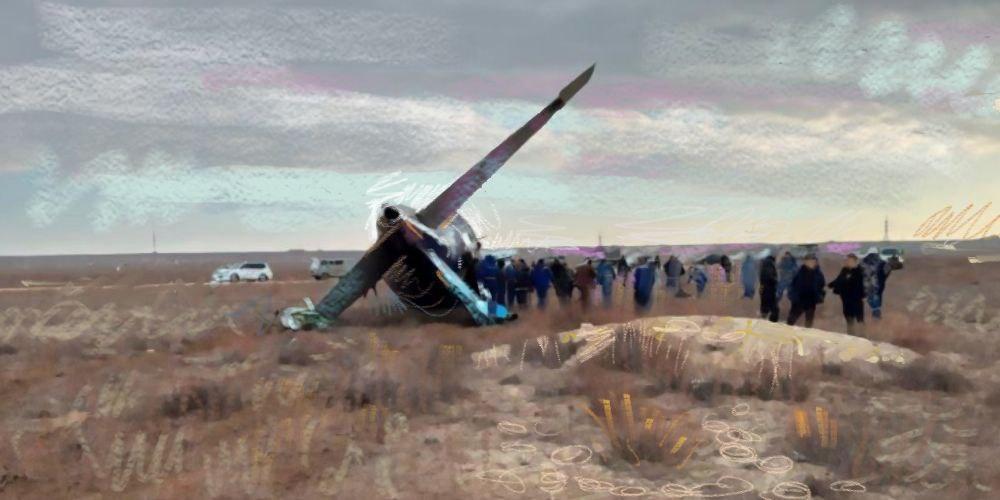
Russia says insurance payments have been made for the crash of an Azerbaijan Airlines plane near the Kazakhstani city of Aktau in December 2024, potentially meeting a demand of Azerbaijani officials who assert the plane was hit by Russian ground fire before diverting and crashing.

While Azerbaijan’s government had said Russia should pay compensation for the disaster that killed 38 of the 67 people on board, it has yet to secure other demands, including full acknowledgement of responsibility for the crash and punishment of those believed to have fired on the aircraft as it tried to land in Grozny, Russia.

The Russian Foreign Ministry said on Thursday that Russian insurance company AlfaStrakhovanie JSC has been making insurance payments since February in connection with the crash, which had taken off from Baku. AlfaStrakhovanie is one of the largest insurance companies in Russia and has been under Western sanctions because of the war in Ukraine. 

“The Azerbaijani airline was paid insurance compensation for the plane in the amount of the full insured value – 1.003 billion rubles,” the equivalent of $12.3 million, the Russian ministry said. 

“Claims in connection with the injuries and deaths of 46 of the 62 passengers on the flight have been fully settled, including full payments for 7 of the 15 Russian citizens, 35 of the 38 Azerbaijani citizens, all 3 Kyrgyz citizens, and 1 of the 6 Kazakh citizens,” the ministry said. “To date, insurance payments have been made to the injured passengers of the plane and relatives of the deceased for a total of 358.4 million rubles.”

The payment to injured passengers and relatives of the deceased is the equivalent of $4.4 million. The Russian ministry said work was continuing with those groups for the purposes of a “full settlement.”

There was no specific mention of the five Azerbaijani crew members in the Russian statement. Two pilots and one flight attendant died. 

Russian President Vladimir Putin has offered a general apology for the crash without providing details about what happened at a time when, according to Russia, the area around Grozny was under attack from Ukrainian drones. Azerbaijan has said it will seek redress in international courts, indicating it has doubts about the outcome of a crash investigation being led by Kazakhstan. 

Putin and Azerbaijani President Ilham Aliyev, who has sharply criticized Russia because of its alleged evasiveness over the crash, were seen shaking hands in a brief encounter at a summit of the Shanghai Cooperation Organization in Tianjin, China earlier in the week. But they didn’t hold a meeting on the sidelines of the event, possibly indicating that there is still significant tension in the relationship between the two countries.