• KGS/USD = 0.01144 0%
  • KZT/USD = 0.00192 -0%
  • TJS/USD = 0.10849 0.37%
  • UZS/USD = 0.00008 0%
  • TMT/USD = 0.28571 0.28%
  • KGS/USD = 0.01144 0%
  • KZT/USD = 0.00192 -0%
  • TJS/USD = 0.10849 0.37%
  • UZS/USD = 0.00008 0%
  • TMT/USD = 0.28571 0.28%
  • KGS/USD = 0.01144 0%
  • KZT/USD = 0.00192 -0%
  • TJS/USD = 0.10849 0.37%
  • UZS/USD = 0.00008 0%
  • TMT/USD = 0.28571 0.28%
  • KGS/USD = 0.01144 0%
  • KZT/USD = 0.00192 -0%
  • TJS/USD = 0.10849 0.37%
  • UZS/USD = 0.00008 0%
  • TMT/USD = 0.28571 0.28%
  • KGS/USD = 0.01144 0%
  • KZT/USD = 0.00192 -0%
  • TJS/USD = 0.10849 0.37%
  • UZS/USD = 0.00008 0%
  • TMT/USD = 0.28571 0.28%
  • KGS/USD = 0.01144 0%
  • KZT/USD = 0.00192 -0%
  • TJS/USD = 0.10849 0.37%
  • UZS/USD = 0.00008 0%
  • TMT/USD = 0.28571 0.28%
  • KGS/USD = 0.01144 0%
  • KZT/USD = 0.00192 -0%
  • TJS/USD = 0.10849 0.37%
  • UZS/USD = 0.00008 0%
  • TMT/USD = 0.28571 0.28%
  • KGS/USD = 0.01144 0%
  • KZT/USD = 0.00192 -0%
  • TJS/USD = 0.10849 0.37%
  • UZS/USD = 0.00008 0%
  • TMT/USD = 0.28571 0.28%
11 December 2025

Russian Gasoline Export Ban Will Not Impact Kyrgyzstan, Ministry Confirms

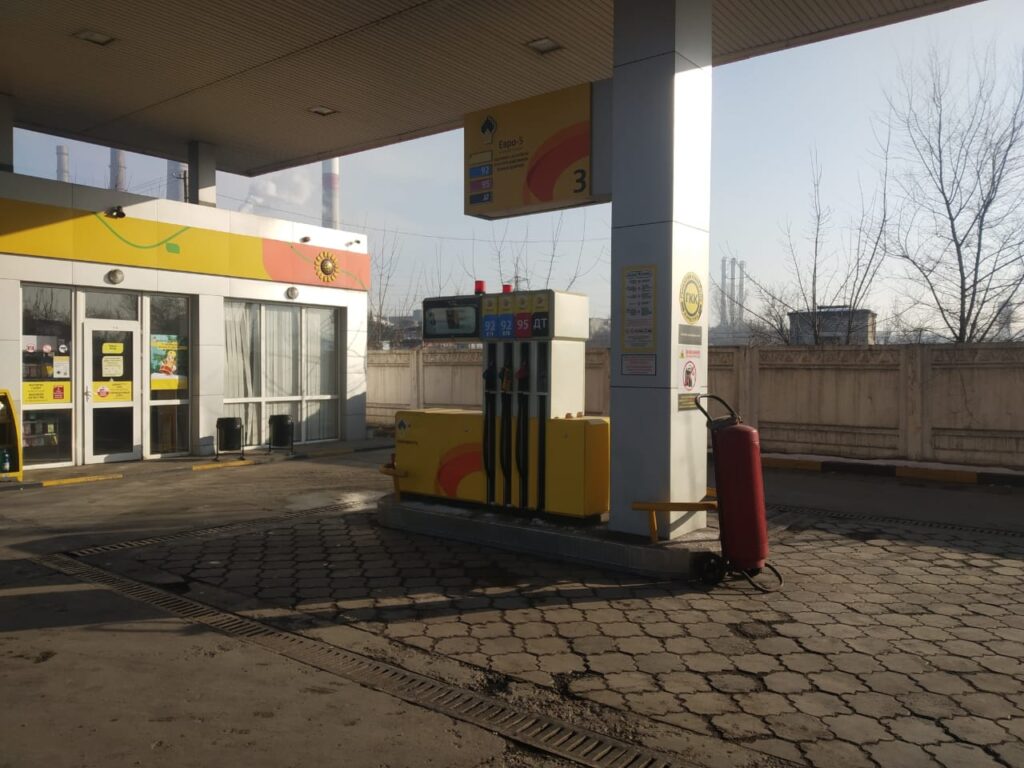
The temporary ban on gasoline exports introduced by the Russian government on August 27 will not affect Kyrgyzstan, the country’s Ministry of Energy has confirmed. As a member of the Eurasian Economic Union (EAEU), Kyrgyzstan is exempt from the restriction, which applies only to non-EAEU countries.

Kyrgyzstan consumes approximately 1.6 million tons of motor fuel annually, 93% of which is imported from Russia under a 2016 intergovernmental agreement on fuel trade. While the full quotas for 2025 have yet to be fulfilled, deliveries remain uninterrupted, and negotiations are ongoing regarding 2026 volumes.

Despite the exemption, domestic fuel prices in Kyrgyzstan have risen since mid-2025, reflecting wholesale price hikes in Russia. The Association of Oil Traders of Kyrgyzstan anticipates further increases in retail prices if the current upward trend at Russian refineries continues.

The surge in Russian wholesale prices is attributed to multiple factors, including reduced refining capacity due to both scheduled and emergency maintenance, infrastructure damage from Ukrainian drone attacks, and ongoing difficulties in procuring technological equipment amid Western sanctions.

In Kyrgyzstan, the price of AI-92 gasoline, a commonly used grade, has already reached 70 soms ($0.80) per liter. Nevertheless, retail fuel prices in Kyrgyzstan remain lower than in neighboring Tajikistan and Uzbekistan, which also depend on Russian imports but do not benefit from the EAEU exemption.

What Drives Kazakhstan’s Threefold Growth in High-Tech Exports

Kazakhstan has sharply increased its presence in the global market for high-tech goods in recent years. According to analysts at Finprom.kz, the country’s high-tech exports nearly tripled, rising from $2.5 billion in 2021 to $7.3 billion in 2024.

Geography and Growth Dynamics

This surge was driven less by a physical increase in exports, up 9.7%, and more by rising global prices and the growth of re-exports. Since 2022, amid shifting geopolitical dynamics, Kazakhstan has emerged as a key player in re-export chains for complex technical equipment.

The Bureau of National Statistics reports that nearly 77% of high-tech export value in 2024 ($5.6 billion) was attributed to companies registered in Astana and Almaty. However, this reflects business registration patterns rather than actual production. For example, a Kazakh-Chinese joint venture in Ust-Kamenogorsk manufactures fuel assemblies for nuclear reactors, yet its exports are registered as originating from Almaty.

Uranium: The Strategic Core

Uranium and its compounds remain Kazakhstan’s dominant high-tech export, comprising 62.7% of the total in 2024, or $4.6 billion. Over the past three years, the value of uranium exports rose 2.6 times, while the physical volume increased by just 16.7%. The key driver was a sharp spike in global uranium prices: in the first half of 2024 alone, the spot price rose by 73%, while long-term contract prices also trended upward.

Aviation and Leasing Structures

Aircraft ranked second in terms of profitability. In 2024, exports of airplanes and helicopters exceeded $940 million, 30 times higher than in 2021. Ireland was the largest reported buyer. However, this spike reflects aviation leasing arrangements rather than direct aircraft sales. As noted in a document submitted by Prime Minister Olzhas Bektenov to the Mazhilis, Kazakhstan’s parliament, Kazakhstan’s national carrier Air Astana operates aircraft registered in Ireland, leading to leasing-related flows being counted as exports.

Smartphones, Electronics, and Digital Equipment

Smartphones emerged as a fast-growing category, with exports increasing 54-fold to $433 million. Key markets included Central Asian neighbors, Mongolia, and the Czech Republic. Much of the growth occurred in 2022, driven by shifting supply chains amid international sanctions.

While the volume of exported computers and digital equipment rose, their total value declined. Notably, exports of digital data processing units fell from $136.6 million in 2021 to $11.6 million in 2024.

This discrepancy highlights the predominance of re-exports. In 2024, Kazakhstan produced just 33,000 computing units but exported 744,100. Similarly, it manufactured 7,500 electromechanical devices while exporting nearly 200,000.

Broader Export Structure

According to QazTrade, the share of high value-added products in Kazakhstan’s exports reached 13.5% or $11.1 billion in 2024, marking a 16.1% year-on-year increase. However, the country’s export structure remains resource-heavy: raw materials account for 63.3% of total exports, followed by low value-added goods at 15.5%, with high-tech processed goods in third place.

Kazakhstan Considers Criminal Penalties for Dual Citizenship

Kazakhstan may soon introduce criminal liability for holding dual citizenship, a significant escalation from the current administrative penalties. The proposal was raised by Mazhilis deputy Bolatbek Nazhmetdinuly during the opening plenary session of the lower house of parliament’s new legislative term.

Under Article 10, paragraph 3 of the Constitution and Article 3 of the Law “On Citizenship of the Republic of Kazakhstan,” Kazakh citizens are prohibited from holding citizenship of another country. Currently, violations are treated as administrative offenses and are punishable by fines of up to 300 Monthly Calculation Indexes (MRP), equivalent to nearly 1.2 million tenge (approximately $2,200) or administrative expulsion.

Deputy Nazhmetdinuly argued that these measures are inadequate.

“Those who hold second citizenship are no longer Kazakhstani. They do not feel a part of this country; they enjoy rights without fulfilling obligations. Often, they are beyond the reach of law enforcement due to extradition restrictions. We are aware of many such cases. That is why I will advocate for tougher penalties, up to and including criminal liability. I am confident my colleagues will support this initiative. Is the Ministry of Internal Affairs ready to back it?” he asked Interior Minister Yerzhan Sadenov.

Minister Sadenov responded that the ministry would act in accordance with any new legal norms adopted by parliament.

According to the Border Service of the National Security Committee (NSC), 1,190 cases of dual citizenship were identified at Kazakhstan’s borders in 2024, including 91 cases in January 2025 alone.

Domestically, the Ministry of Internal Affairs (MIA) held 675 individuals administratively accountable for dual citizenship in 2024. Of these, 565 had acquired Russian citizenship, while others held citizenship from Turkey (26 cases), the United States (22), and Germany (11).

Of those charged, 526 paid fines, while 149 were expelled from Kazakhstan. In January 2025, another 66 individuals were penalized, including 64 for acquiring Russian citizenship and one each for German and Kyrgyz citizenship.

As previously reported by The Times of Central Asia, the government continues to support the repatriation of ethnic Kazakhs. As of early 2025, 65 ethnic Kazakhs holding foreign citizenship had received “Ata Zholy” cards, which grant the right to live and work in Kazakhstan for up to ten years.

Pamir Loses Its “Ice Shield”: Scientists Confirm End of Glacier Stability Anomaly

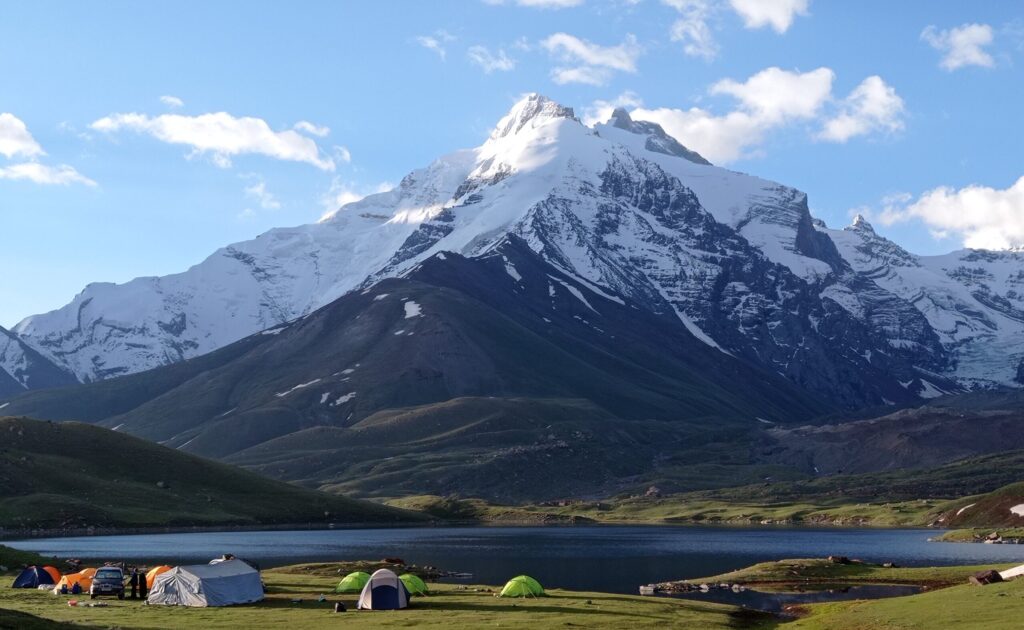
For years, the Pamir-Karakoram anomaly stood as a rare outlier in global climate trends: a region where glaciers remained relatively stable despite accelerating global warming. Now, new research from the Institute of Science and Technology Austria (ISTA) confirms that even these “last strongholds” have begun to lose mass at an alarming rate.

Snow Deficit and Rising Heat

Data collected from a climate monitoring station on the Kyzylsu glacier in the northwestern Pamirs, active from 1999 to 2023, reveals a sharp shift. According to an international research team led by Francesca Pelliccotti, the tipping point came in 2018, when a significant decline in snow cover and precipitation irreversibly altered the glaciers’ mass balance.

Once past this “point of no return,” glaciers began rapidly depleting their own reserves to compensate for the lack of new snowfall, a process accelerating their melt.

Since 2018, the region has experienced a persistent snow deficit. Snow depth has fallen by approximately 40 cm, and annual precipitation has declined by 328 mm, about one-third of the historical average. Seasonal snow melts earlier, is less stable in spring, and is no longer sufficient to replenish glacier mass.

July 2022 was the hottest month on record, and during this period, the Kyzylsu glacier recorded unprecedented mass loss, melting at a rate eight times faster than the 1999-2018 average. Scientists identify increasingly hot summers and a lack of precipitation as the primary causes.

Even the intensified ice melt has not made up for reduced snowfall: water inflow into rivers dropped by roughly 189 mm in water equivalent. The contribution of glacial runoff to total river flow rose from 19% to 31%, but this increase was still insufficient to offset the overall decline in water volume.

The situation is most severe at altitudes above 4,000 meters, where solid precipitation has declined sharply. Snow from avalanches, which previously helped sustain the glaciers, has dropped nearly threefold from 0.21 to 0.08 m per year.

Implications for Central Asia

Experts warn that this is not a localized issue. The Pamir and Karakoram glaciers feed the Amu Darya and Syr Darya rivers, lifelines for millions across Central Asia. Diminishing glacial mass threatens freshwater availability, agriculture, hydropower generation, and overall socio-economic stability.

“Due to the lack of accurate forecasts, we cannot yet say definitively whether the Pamir glaciers have passed the point of no return. However, since 2018, the processes have changed dramatically, and the reduction in precipitation has had a critical impact on their stability,” said ISTA researcher Achille Joubert.

Data Gaps and New Monitoring Efforts

Following the collapse of the Soviet Union, glacier monitoring in the region was largely suspended for nearly two decades. Systematic observations resumed only in 2021, when international researchers reinstalled instruments on the Kyzylsu glacier, one of the Vakhsh River’s primary sources.

These new measurements confirmed a drastic drop in precipitation and snow thickness starting in 2018, with consistently unfavorable conditions persisting since.

Compared to the late 1990s, spring and summer snow now melts much faster, and the “cold reserves” that once preserved glacier stability are disappearing rapidly.

The study’s findings were published in Communications Earth & Environment, reinforcing that even the most resilient glaciers in Central Asia are succumbing to climate change.

“The disappearance of glaciers means not only a shortage of water, but also a threat to climate stability,” the researchers warn.

The loss of these natural freshwater reserves could trigger cascading effects from reduced electricity generation to ecosystem degradation.

The end of the Pamir-Karakoram anomaly is not just a regional alarm bell. It signals the urgency of coordinated international climate action. Without it, scientists say, the process may already be beyond reversal.

For Central Asia, this carries profound geopolitical and economic implications. Water stress is already a driver of tension between upstream and downstream states, and shrinking glaciers will exacerbate disputes over allocation and dam construction. Governments are under pressure to accelerate adaptation strategies – modernizing irrigation, investing in alternative energy, and expanding regional cooperation on water-sharing agreements.

Researchers also stress the importance of filling data gaps with sustained monitoring. Long-term, high-resolution observations are critical for forecasting river flow and planning infrastructure. International support, they argue, could help countries like Tajikistan and Kyrgyzstan upgrade their hydrological networks, while linking local data into global climate models.

Ultimately, the fate of the Pamir and Karakoram glaciers will not be decided in the mountains alone. Their survival, or disappearance, depends on global emissions trajectories and the political will to implement serious mitigation measures. What happens here, at the heart of Asia’s water towers, will ripple far downstream into the lives of millions.

China’s Luban Workshops in Kazakhstan: Skills-Building or Strategic Leverage?

At the recent Shanghai Cooperation Organization summit in Tianjin, China inaugurated two new vocational centers in Kazakhstan under the Luban Workshop initiative. The move highlights the growing emphasis on technical education and skills development across the region. Kazakhstan’s first Luban Workshop was launched in 2023 at Serikbayev East Kazakhstan Technical University, creating a platform to advance engineering and technical training.

The program has since expanded with a second workshop at the Gumilyov Eurasian National University in Astana and a third at the Academy of Logistics and Transport in Almaty. This China-led program aims to share China’s educational expertise and technical resources with partner countries, with a particular focus on cultivating a new generation of skilled workers in developing economies.

The workshops are not only a vehicle for workforce training but also a symbol of the Belt and Road Initiative’s people-to-people exchange dimension. By encouraging social and educational connections, China is seeking to complement government-to-government cooperation with deeper societal ties.

The choice of Tianjin for the ceremony is not a coincidence. The Luban Workshop concept originated in this city and has been actively promoted by the Tianjin municipal government. Equally notable is Kazakhstan’s central role in the program’s expansion. The Kazakh government has expressed consistent support for Chinese-led educational partnerships, underlining the importance of vocational training to its national development agenda.

During his visit to a Luban Workshop in Kazakhstan in February 2024, President Kassym-Jomart Tokayev praised the initiative, saying, “I am deeply appreciative of the contributions made by Chinese universities. They have executed exemplary work. I hope to see more workshops like this in Kazakhstan.”

The expansion of China’s Luban Workshop initiative offers distinct benefits for both China and Kazakhstan. For China, the workshops help shift perceptions of its educational initiatives. Unlike the Confucius Institutes, which focus on cultural and language promotion, the Luban Workshops emphasize practical, in-demand skills in fields such as manufacturing and technology. This approach allows China to project a more pragmatic and development-oriented image, fostering goodwill in a way that is less vulnerable to geopolitical criticism.

A second key benefit lies in the realm of soft power. By delivering tangible skills and opportunities, Luban Workshops can positively influence public attitudes toward China in Central Asia. In Kazakhstan, such initiatives not only support technical education but also help frame Chinese investments as beneficial for local communities. Over time, this contributes to strengthening government-to-government ties and broader people-to-people connections, enhancing China’s long-term influence in the region.

For Kazakhstan, the Luban Workshops provide benefits by helping to build a pool of technically skilled human capital. This directly supports the country’s industrial goals and broader economic development agenda. A more qualified workforce also enables local citizens to participate more actively in Chinese-backed projects in Kazakhstan, thereby boosting local employment.

One of the recurring criticisms of China’s overseas investment projects has been the limited transfer of knowledge and skills. In many cases, local workers are confined to low-skilled, manual roles, while Chinese nationals occupy managerial and technical positions. The Luban Workshops aim to bridge this gap by offering specialized vocational training that equips Kazakh workers with the competencies to enter Chinese companies and progress into higher-skilled, potentially managerial roles over time.

The most distinctive advantage of the Luban Workshops is that they do not follow a one-size-fits-all curriculum. Instead, training programs are tailored to align with the host country’s national priorities. For example, Kazakhstan’s first Luban Workshop introduced courses in vehicle maintenance, electric vehicle technology, automotive engines, and advanced driver assistance systems

These fields align closely with Kazakhstan’s industrial development plan, which prioritizes investment in vehicle manufacturing and the localization of production. In this way, the workshops train skilled technicians while also building a broader pool of human capital that supports Kazakhstan’s long-term development strategies.

Despite the clear benefits, the expansion of the Luban Workshops also presents certain risks for Kazakhstan. The workshops are built around Chinese technologies, equipment, and technical standards. While this enables local trainees to gain hands-on experience with advanced tools, it simultaneously embeds Chinese technological frameworks within Kazakhstan’s educational and industrial systems.

Given the scale of Chinese investment across multiple sectors in Kazakhstan—ranging from renewable energy to critical minerals and waste management—this dynamic could, over time, lock the country into a Chinese-dominated technological ecosystem. Training a workforce to operate, maintain, and innovate specifically on Chinese platforms may further increase demand for Chinese products, spare parts, and critical technologies.

This can create a self-reinforcing cycle that, as more Kazakh industries adopt Chinese systems, reliance on Chinese suppliers and expertise deepens. While this dynamic strengthens China’s position as a key economic partner, it also risks fostering a form of technological dependency that could constrain Kazakhstan’s long-term autonomy in industrial and technological decision-making.

In the short to medium term, the expansion of the Luban Workshops offers Kazakhstan valuable opportunities to strengthen human capital, support economic development, and ease public concerns about Chinese investment by demonstrating tangible local benefits. 

The central challenge for Kazakhstan, therefore, is to harness the advantages of skills development and vocational training while carefully managing the strategic risks of overreliance on a single external partner.

Indian Gold Miners Enter Kyrgyz Market for the First Time

Indian mining firm Deccan Gold Mines has launched operations at the Altyn Tor gold deposit in Kyrgyzstan’s Naryn region, marking the first overseas venture by an Indian gold mining company, according to Indian media reports.

The project is being developed through Deccan’s local subsidiary, Avelum Partners LLC, which holds a 60% stake in the mine. Production of doré bars is scheduled to begin in October 2025.

Geological assessments estimate the Altyn Tor deposit contains approximately 4.6 million tons of gold-bearing ore with an average grade of 1.2 grams per ton, translating to roughly 60 tons of total gold reserves.

Hanuma Prasad Modali, CEO of Deccan Gold Mines, said preparations are progressing on schedule.

“Eleven conveyor systems have been installed at the site, and the crushing complex has been tested. In early September, the ball mill, one of the key components of the processing plant, will go online, enabling us to reach design capacity as planned,” Modali stated.

The company has positioned the project as a model of responsible mining, aiming to strengthen bilateral ties between India and Kyrgyzstan. Despite challenging climatic conditions at the site’s 3,300-meter elevation, year-round production is planned.

Altyn Tor forms part of the larger Solton-Sary gold deposit, originally discovered by Soviet geologists in the 1940s. Mining activity at the site was active through the 1990s and early 2000s but later ceased due to insufficient investment.

Deccan Gold Mines is also evaluating the potential for processing materials in the tailings pond, where residual gold remains.

The company remains the only publicly listed gold mining firm on the Indian stock exchange. News of its overseas expansion triggered a surge in share prices.

Earlier, Kyrgyzaltyn, the state-owned holding company, confirmed that production at the site was expected to commence in the second half of 2024.