• KGS/USD = 0.01144 0%
  • KZT/USD = 0.00209 0%
  • TJS/USD = 0.10617 1.05%
  • UZS/USD = 0.00008 0%
  • TMT/USD = 0.28490 0%
  • KGS/USD = 0.01144 0%
  • KZT/USD = 0.00209 0%
  • TJS/USD = 0.10617 1.05%
  • UZS/USD = 0.00008 0%
  • TMT/USD = 0.28490 0%
  • KGS/USD = 0.01144 0%
  • KZT/USD = 0.00209 0%
  • TJS/USD = 0.10617 1.05%
  • UZS/USD = 0.00008 0%
  • TMT/USD = 0.28490 0%
  • KGS/USD = 0.01144 0%
  • KZT/USD = 0.00209 0%
  • TJS/USD = 0.10617 1.05%
  • UZS/USD = 0.00008 0%
  • TMT/USD = 0.28490 0%
  • KGS/USD = 0.01144 0%
  • KZT/USD = 0.00209 0%
  • TJS/USD = 0.10617 1.05%
  • UZS/USD = 0.00008 0%
  • TMT/USD = 0.28490 0%
  • KGS/USD = 0.01144 0%
  • KZT/USD = 0.00209 0%
  • TJS/USD = 0.10617 1.05%
  • UZS/USD = 0.00008 0%
  • TMT/USD = 0.28490 0%
  • KGS/USD = 0.01144 0%
  • KZT/USD = 0.00209 0%
  • TJS/USD = 0.10617 1.05%
  • UZS/USD = 0.00008 0%
  • TMT/USD = 0.28490 0%
  • KGS/USD = 0.01144 0%
  • KZT/USD = 0.00209 0%
  • TJS/USD = 0.10617 1.05%
  • UZS/USD = 0.00008 0%
  • TMT/USD = 0.28490 0%

Tajik Schoolboy Killed in Moscow Area Sparks Central Asian Outrage

The fatal stabbing of a 10-year-old Tajik boy at a school in the Moscow area has sparked widespread condemnation across Central Asia.

Russia’s Foreign Ministry extended “deep condolences” to Tajikistan following the killing. Ministry spokesperson Maria Zakharova said Moscow offered immediate assistance to the Tajik Embassy in Russia after the incident was reported by the press on December 16. She confirmed that the embassy sent a diplomatic note requesting an objective investigation. Official requests were subsequently forwarded to Russia’s Investigative Committee and the Interior Ministry to clarify the circumstances and support the Tajik side.

The attack occurred at Uspensky School, where a 15-year-old ninth-grade student, identified as Timofey Kulyamov, allegedly stabbed and killed the victim, Qobiljon Aliyev. Witnesses reported that the suspect asked the child about his nationality before launching the fatal attack. On the day of the incident, he was reportedly wearing a shirt bearing the phrase “No lives matter.”

Qobiljon’s family moved to Russia from the Hisor region of Tajikistan four years ago. His father passed away three years prior, and his mother has been working as a cleaner at the same school to support her three children.

Journalists, civil society leaders, and public figures in Tajikistan and Uzbekistan condemned the killing, linking it to rising hostility toward Central Asian migrants in Russia.

Tajik political analyst Muhammad Shamsuddinov took to social media to denounce what he described as systemic discrimination. “Who killed Qobiljon? The system,” he wrote. Shamsuddinov accused Russian public discourse and policies of fueling an environment of xenophobia, referencing remarks by State Duma members, law enforcement actions, and state-run media coverage. “Qobiljon was killed by Mironov’s constant statements. By Bastrykin’s speeches. By the State Duma’s draft laws. By Russian state television. By nationalist Telegram channels. By the constant and very public raids against migrants. By hours-long detentions at airports,” he wrote.

He also criticized the Russian Embassy in Tajikistan for its silence, noting that while it continued to post routine updates and commemorative messages, it had not acknowledged the boy’s death. “As a society, where is the sympathy? The condolences? Nothing,” he wrote.

Sherzodkhon Kudratkhuja, Chairman of the Supervisory Board of the Uzbekistan National Media Association and Rector of the University of Journalism and Mass Communications, also voiced his outrage. “No mother should ever go through this. None,” he said, after reportedly watching a video of the incident. He called the murder of a child based on national identity “impossible to describe in words.”

Kudratkhuja urged Russia to introduce formal education on national tolerance in its schools and criticized the normalization of ethnic slurs among adults. “Children learn from adults, and this is the mirror of today’s society,” he said. He emphasized the need to foster values of tolerance, adding that all people “descended from Adam and Eve and are equal in dignity.”

Kazakhstan Claims Success in Asset Recovery, But Transparency Questions Linger

Kazakhstan’s authorities have presented the results of the campaign to recover illegally acquired or transferred assets as a major success. In September 2025, during his address to the nation, President Kassym-Jomart Tokayev signaled a transition from asset recovery to broader investor-protection priorities. According to Prosecutor General Berik Asylov, recoveries totaling hundreds of billions of tenge have been returned to the state since the launch of the asset-recovery campaign. This includes not only cash and securities, but also land plots, business assets, and luxury property. Overall, official estimates put the total value of assets clawed back under the campaign at around 1.2–1.3 trillion tenge (roughly $2.3 billion), though only part of this amount has been directly credited to the state budget.

A tax on indulgence

When the law “On the Return of Illegally Acquired Assets to the State” was adopted in 2023, it was presented not merely as a fiscal tool but as a means of restoring historical justice. As part of the concept of building a “Fair Kazakhstan,” the authorities promised that assets once hidden in offshore accounts or invested in luxury real estate abroad would be redirected toward social development.

Two years later, it is clear that the assets have indeed been returned. Yet instead of a transparent process in which citizens could clearly see how recovered funds were being used, the system has created a dense layer of bureaucracy. Money has been accumulated in the Special State Fund (SSF), the operating mechanisms of which continue to raise questions among experts.

Despite official reports highlighting the construction of social facilities financed with seized assets, public debate over the transparency of the fund has not subsided. The authorities have also declined to publish the names of former asset owners or detailed information on specific accounts, enterprises, or land plots transferred to the state.

A defining feature of the campaign was the rejection of a purely punitive approach. Instead, the government introduced a mechanism of “voluntary return,” effectively offering members of the elite a compromise: return swathes of your illegally acquired wealth, and the state will refrain from pursuing past offenses.

The law clearly defined the target group, focusing on individuals owning assets valued at more than 13 million MCI, or roughly $100 million. This ensured pressure on large capital holders while shielding medium-sized businesses. At the same time, the closed nature of the list created a powerful instrument of leverage over the business elite.

Experts have described this approach as a “tax on indulgence.” Rather than engaging in lengthy and uncertain international legal battles over offshore assets, Astana has opted for pretrial settlements. In legal terms, this takes the form of procedural agreements in which suspects acknowledge wrongdoing, return assets, and receive reduced sentences or exemption from liability.

The most prominent and controversial example is the case of Kairat Satybaldy, a nephew of former president Nursultan Nazarbayev. After returning assets reportedly worth approximately $1.4 billion, he received a reduced sentence and was released ahead of schedule. From a fiscal standpoint, this represented a clear gain for the state. For many citizens, however, the outcome symbolized a painful moral compromise, reinforcing the perception that economic expediency had prevailed over full accountability.

The Special State Fund

Recovered assets did not flow directly into the republican budget, however, and were placed in the Special State Fund, a separate financial structure overseen by a commission chaired by the prime minister. The official justification for creating the fund was targeted spending. To prevent recovered money from being absorbed by routine government expenses, the authorities decided to earmark it exclusively for social needs. One of the most visible beneficiaries has been the national ‘Comfortable School’ project.

This approach has drawn criticism, with independent economists repeatedly warning that the fund operates outside standard budgetary procedures. Unlike the republican budget, which is debated and approved by parliament, the SSF’s allocation mechanisms are less transparent. In effect, critics argue, the government has created a “second wallet” managed by a limited circle of officials.

The public typically sees only the final outcome, such as the opening of a new school or cultural center. Detailed information on how much money enters the fund, how much is spent on administration, or how contractors are selected remains largely inaccessible.

Redistribution or nationalization

Even more complex is the question of how non-monetary assets are handled. Office buildings, hotels, industrial facilities, and corporate shareholdings have all been transferred to state ownership.

Recognizing that the state is rarely an efficient manager, the authorities established a dedicated body to administer these assets, preserve their value, and prepare them for sale. This has only served to heighten investor concerns about what some describe as “Privatization 2.0.” If assets are sold through opaque or selective auctions, there is a risk they could simply move from the hands of “Old Kazakhstan” elites to beneficiaries of “New Kazakhstan,” potentially at discounted prices.

Market participants are closely watching how major assets are handled. The key question is whether sales will take place through open, competitive auctions, possibly involving strategic foreign investors, or through closed tenders. The auction framework is still being refined, and this phase will be the real test of the reform’s credibility. Without transparency, the asset recovery campaign risks becoming a tool for redistribution rather than structural economic change.

By the end of 2025, it is reasonable to conclude that the asset recovery law has fulfilled its primary political objective. It has become an effective instrument of de-oligarchization and has helped replenish the state budget during a period of fiscal strain. The authorities have sent a clear signal that there are no longer untouchable figures.

Yet restoring “historical justice” requires more than confiscation alone. Without full transparency in how the Special State Fund operates, without public audits of every tenge spent, and without open auctions for the sale of recovered assets, the process will remain incomplete.

Kazakhstan has succeeded in bringing capital back home. The more difficult challenge now is ensuring that this capital genuinely works for the country’s economy.

Kazakhstan Drafts New Migration Policy Concept Through 2030

Kazakhstan’s Ministry of Labor and Social Protection has developed a draft Concept of Migration Policy through 2030, aimed at fostering a more balanced approach to migration management while mitigating associated risks. The proposal is currently under government review.

A central element of the draft is the enhancement of migration monitoring via the digital platform migration.enbek.kz. This platform will integrate data from multiple ministries to create a unified system for tracking internal, inbound, and outbound migration. The goal is to strengthen forecasting, analysis, and decision-making through improved access to real-time migration data.

The policy also places significant emphasis on internal labor migration. Particular attention is given to internal relocants and, ethnic Kazakhs returning from abroad. The draft proposes annual regional quotas to incentivize resettlement in northern, eastern, and central regions of the country. These measures will be complemented by initiatives to boost rural incomes, support small businesses, and promote agricultural cooperatives. Officials believe this strategy will help redistribute labor resources and bolster regional demographic stability.

On the external migration front, the concept outlines measures to protect the rights of Kazakhstani citizens working abroad, attract skilled foreign professionals and international students, and enhance support for returning Kazakhs. Proposed tools include bilateral labor agreements, expanded digital monitoring, and the development of specialized universities to aid in the educational and cultural integration of returnees.

Internal migration remains one of the country’s most pressing challenges, as major urban centers such as Almaty and Astana continue to attract young people from less developed regions, exacerbating regional disparities. The new policy aims to address these imbalances by providing targeted support for underpopulated areas.

ADB Approves $3M for Glacier Monitoring in Tajikistan

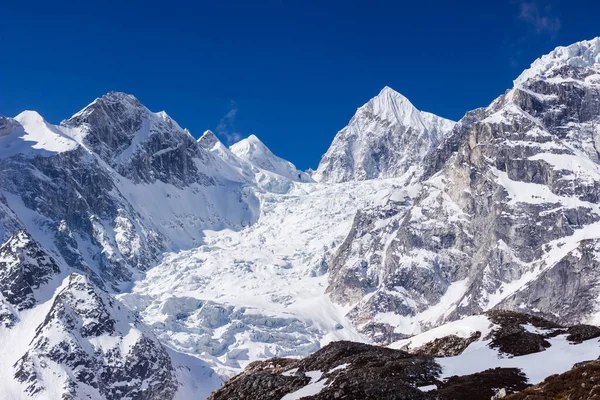
The Asian Development Bank (ADB) has approved a $3 million grant to enhance Tajikistan’s glacier monitoring and natural disaster warning capabilities. The initiative aims to reduce risks linked to accelerated snow and ice melt, particularly in the country’s mountainous regions, and improve public safety.

The grant is financed by the Japan Fund for Prosperous and Sustainable Asia and the Pacific (JFSB), which is supported by the Government of Japan through the ADB.

Ko Sakamoto, ADB’s Permanent Representative in Tajikistan, emphasized the project’s importance for the country. “Glaciers and snow are important for water supply, agriculture, and hydropower, but their rapid melting caused by extreme weather events can trigger devastating floods, avalanches, and other disasters,” he said.

Sakamoto noted that the initiative will provide Tajikistan with modern tools for forecasting and responding to climate-related threats. The project is scheduled to be completed by 2029, with most activities to be implemented in high-risk areas of the Gorno-Badakhshan Autonomous Region.

The Hydrometeorological Agency has been designated as the project’s executive body. Among the key components is the creation of a unified digital data system to improve the accuracy and timeliness of glacier and snow cover monitoring. The system will enhance the collection, storage, and analysis of data critical for disaster risk assessment.

To manage the new infrastructure, technical specialists from the Hydrometeorological Agency will receive training in modern monitoring and data management methods. The project also emphasizes the active inclusion of women in the training process, aligning with ADB’s commitment to inclusive development.

Improving early warning systems is another central element of the initiative. Plans include updating disaster risk management strategies, strengthening coordination between local authorities and communities, and enhancing the clarity and timeliness of public alerts related to glacial and snowmelt hazards.

Tajikistan joined the ADB in 1998. Since then, the partnership has supported a wide range of infrastructure and development projects, including the modernization of major highways, such as the Obigarm-Nurobod, Dushanbe-Bokhtar, Aini-Penjikent, Dushanbe-Tursunzade, and Vose-Khovaling corridors, as well as the restoration of irrigation systems, expansion of water supply networks, and construction of schools and hospitals.

Taliban Dismiss Thousands of Tajik and Uzbek Fighters

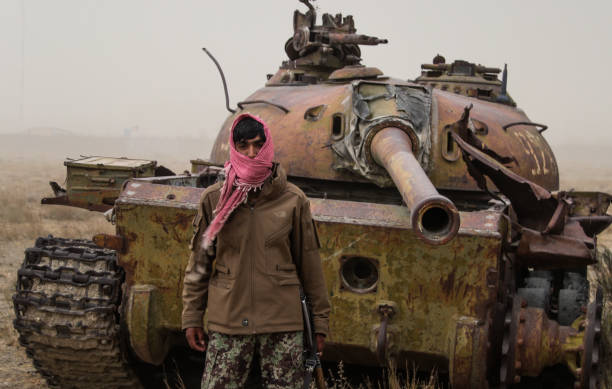
The United Nations Security Council has released a new assessment on Afghanistan, revealing that the Taliban have reduced their security forces by approximately 20%. According to Afghanistan International, which cited the UN document, thousands of ethnic Tajik and Uzbek fighters have been dismissed, particularly in provinces where these groups made up a significant portion of Taliban ranks.

The downsizing order reportedly came from Taliban leadership and was attributed to budgetary constraints. While the UN document does not explicitly state that the dismissals were ethnically motivated, it notes that the concentration of personnel cuts in Tajik and Uzbek-majority provinces, most notably Badakhshan, Kapisa, Parwan, and Takhar, has raised concerns about possible ethnic discrimination.

Taliban officials have previously justified the reduction by claiming their security apparatus had become excessively large. However, the UN warned that the force reduction is occurring amid rising security threats, especially from Islamic State Khorasan Province (ISKP).

According to the report, ISKP has ramped up operations by leveraging modern technologies, including artificial intelligence, to create training materials, some of which reportedly instruct on the assembly of improvised explosive devices. UN sanctions monitors cautioned that this technological advancement, combined with a diminished Taliban security presence, could heighten instability across the country.

Although the Taliban have conducted operations against ISKP since early 2025, the extremist group remains resilient. The UN also highlighted that the Taliban continue to publicly deny ISKP’s presence in Afghanistan while simultaneously accusing neighboring countries of supporting the group. Despite this, the Taliban have sought international counterterrorism assistance to confront ISKP.

The report estimates that more than 20 international and regional terrorist organizations remain active in Afghanistan. These include Al-Qaeda, Tehrik-i-Taliban Pakistan, the Turkistan Islamic Movement, the Islamic Movement of Uzbekistan, and Jamaat Ansarullah. According to the UN, the Taliban have incorporated some former members of these groups into local security units, prompting concerns about ideological alignment and infiltration.

The document further notes that advanced weaponry and military equipment are entering Afghanistan through cross-border smuggling and black market channels. Reports have also emerged of drone attacks targeting military sites in Pakistan. The Taliban are allegedly seeking technical support to expand their drone capabilities, with some countries reporting possible Al-Qaeda involvement in drone production sites in Logar and Kabul.

Tensions also flared along the Tajik-Afghan border in late October. Armed clashes were reported on October 25 between Tajik border guards and Taliban fighters in the Davanga district of Shahr-e Buzurg, located in Badakhshan province. The confrontation reportedly stemmed from a dispute over water diversion from the Amu Darya river. The presence of Chinese-operated gold mining facilities in the area has further complicated the region’s security dynamics.

Kazakhstan to Host International Genetic Resources Bank

Kazakhstan will host an international genetic resources bank following unanimous approval from the 57 member states of the Organization of Islamic Cooperation (OIC). The initiative, spearheaded by the Islamic Organization for Food Security (IOFS), aims to preserve the biological diversity of agricultural crops and foster scientific collaboration among OIC countries.

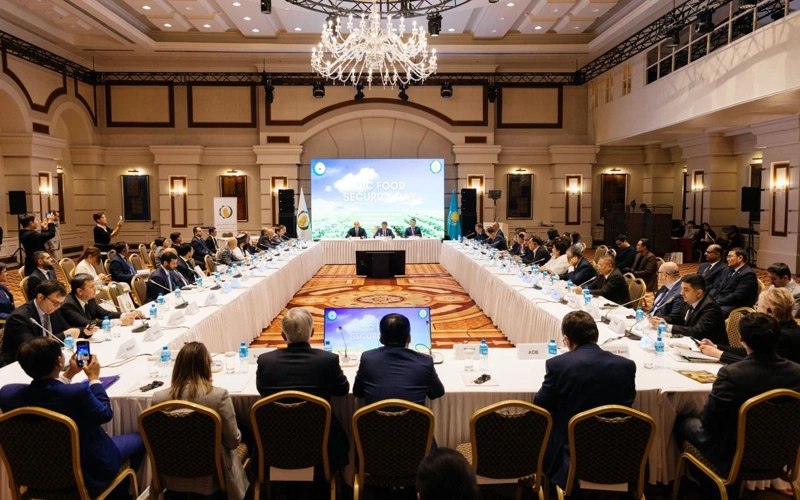
“One of the key initiatives we plan to implement in Kazakhstan is the creation of a Genetic Resources Bank, or an international genetic bank. Its goal is to preserve the biological diversity of agricultural crops,” said Berik Aryn, Director General of the IOFS, speaking at a roundtable in Astana marking OIC Food Security Day.

According to Aryn, the government of Kazakhstan has already expressed its readiness to host the facility, and a project roadmap has been completed. The Qatar Fund for Development (QFFD) has pledged approximately $2 million to finance the first phase.

“We expect to begin practical implementation of the project next year and complete the creation of the bank by 2029,” Aryn said.

He cited the Svalbard Global Seed Vault in Norway as a comparable model but noted that the Kazakh bank would offer broader functionality. The project will eventually include a research center focused on crop breeding and the development of varieties resistant to climate change, drought, and other environmental stresses.

“We want this gene bank to eventually become a full-fledged research center where scientists from OIC countries can work on creating new crop varieties that are resistant to climate change, drought, and other adverse factors, as well as on increasing yields,” Aryn added.

The specific location is still under consideration, though the Almaty region is currently the most likely candidate due to its favorable climatic conditions.

“Genetic material varies: some samples can be stored for decades, while others require regular updating and cultivation on site. In terms of climatic conditions, the Almaty region is the optimal region,” Aryn noted.

In parallel with the gene bank initiative, IOFS is also advancing projects across Central Asia that promote the use of biochar to rehabilitate degraded soils. Biochar, a carbon-rich substance produced via pyrolysis of biomass, enhances soil fertility, improves water retention, and acts as a sorbent by absorbing harmful substances.

“Biochar is a technology that is already widely used around the world, including in Arab and Asian countries. It is particularly relevant for Central Asia, as the region’s soils are often salinated. Biochar is capable of absorbing salt and significantly improving soil structure, creating favorable conditions for agriculture for decades,” said IOFS Project Manager Bakytzhan Arystanbek.

As previously reported by the Times of Central Asia, Kazakhstan launched its first agroclimatic testing site for carbon technologies, Kaz Agro Carbon, in early November.