
• KGS/USD = 0.01144 0%
  • KZT/USD = 0.00194 -0%
  • TJS/USD = 0.10861 0.18%
  • UZS/USD = 0.00008 0%
  • TMT/USD = 0.28571 0%
  • KGS/USD = 0.01144 0%
  • KZT/USD = 0.00194 -0%
  • TJS/USD = 0.10861 0.18%
  • UZS/USD = 0.00008 0%
  • TMT/USD = 0.28571 0%
  • KGS/USD = 0.01144 0%
  • KZT/USD = 0.00194 -0%
  • TJS/USD = 0.10861 0.18%
  • UZS/USD = 0.00008 0%
  • TMT/USD = 0.28571 0%
  • KGS/USD = 0.01144 0%
  • KZT/USD = 0.00194 -0%
  • TJS/USD = 0.10861 0.18%
  • UZS/USD = 0.00008 0%
  • TMT/USD = 0.28571 0%
  • KGS/USD = 0.01144 0%
  • KZT/USD = 0.00194 -0%
  • TJS/USD = 0.10861 0.18%
  • UZS/USD = 0.00008 0%
  • TMT/USD = 0.28571 0%
  • KGS/USD = 0.01144 0%
  • KZT/USD = 0.00194 -0%
  • TJS/USD = 0.10861 0.18%
  • UZS/USD = 0.00008 0%
  • TMT/USD = 0.28571 0%
  • KGS/USD = 0.01144 0%
  • KZT/USD = 0.00194 -0%
  • TJS/USD = 0.10861 0.18%
  • UZS/USD = 0.00008 0%
  • TMT/USD = 0.28571 0%
  • KGS/USD = 0.01144 0%
  • KZT/USD = 0.00194 -0%
  • TJS/USD = 0.10861 0.18%
  • UZS/USD = 0.00008 0%
  • TMT/USD = 0.28571 0%
18 December 2025

Kazakhstan Presses Oil Giants as Kashagan Revenues Face Scrutiny

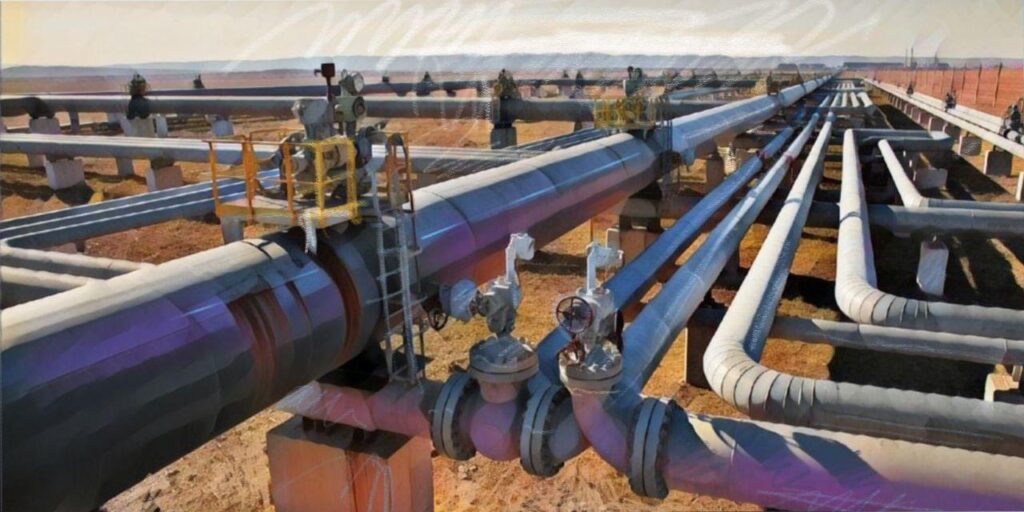
The media in Kazakhstan is once again debating the revision of production sharing agreements (PSAs) with foreign companies in the country’s major oil consortia. PSA LLP, the state-owned operator authorized by the Ministry of Energy to represent Kazakhstan’s interests in the North Caspian Production Sharing Agreement, has released new data on revenues from the Kashagan field, information expected to reignite calls to amend agreements with major Western oil producers in Kazakhstan’s favor.

President Kassym-Jomart Tokayev has publicly backed the discussion. In January, he instructed the government to intensify negotiations with foreign investors. “The implementation of production-sharing agreements for large fields has allowed Kazakhstan to become a reliable supplier of energy to the global market. These projects have made a great contribution to the country’s socio-economic development. However, large investments require a long-term planning horizon. Therefore, the government must intensify negotiations on extending PSA contracts, possibly on revised terms that are more favorable for Kazakhstan,” Tokayev said at an expanded government meeting.

The PSA company, headed by Tokayev’s nephew, Beket Izbastin, reported that in 2024, the Kashagan consortium’s total revenue from oil, gas, and sulfur sales exceeded $11 billion. Of this, 80% covered capital and operating costs (“Cost Oil”), while only 20% came from “Profit Oil,” amounting to $2.2 billion. Kazakhstan’s share was 10%, or $220 million. Including the $430 million in taxes paid by the operator, NCOC, the country’s total revenue was $650 million.

“With revenues of $11 billion, the republic’s share, including taxes, was only 6%, the lowest among oil companies not only in Kazakhstan but globally,” PSA said.

Under the current terms, Kazakhstan’s share of Profit Oil will not increase until three billion barrels have been extracted from Kashagan. Only the first billion has been produced over the past decade. Shareholders are expected to begin paying a 30% income tax soon; KazMunayGas has already transferred an initial $45 million payment from the Kashagan profits.

The fairness of this revenue distribution is now a central point of debate. Some observers believe the renewed focus ahead of the next parliamentary session could signal that Tokayev will again raise the issue in his annual address, alongside agreements for Karachaganak and Tengiz, the other pillars of Kazakhstan’s oil sector. Tengiz operates under a contract expiring in 2033, earlier than Karachaganak (2037) and Kashagan (2041).

At his press conference in Astana last month, Prime Minister Olzhas Bektenov confirmed that negotiations with major oil companies had only just begun. “Indeed, there is a view that the country’s interests are significantly infringed upon. We are starting negotiations with our consortium partners to conclude new PSAs for a new period. This will be done in a measured and balanced manner, without sudden moves, while defending the national interests of our country,” Bektenov stated.

The question of what exactly constitutes “national interests” remains open. In February, Mazhilis deputy Edil Zhanbirshin linked the issue to Kazakhstan’s dependence on imported fuel. Despite the $3.7 billion spent on modernizing the country’s three oil refineries, annual processing volumes remain below 18 million tons and are declining, causing recurring shortages of gasoline, aviation fuel, and diesel. Over the past seven years, Kazakhstan has imported more than six million tons of petroleum products, most from Russia.

“We cover this deficit with imports. This is nonsense for a country with such oil reserves. The time has come to solve this problem,” Zhanbirshin said.

How Kazakhstan Compares Internationally

Field / Country Contract Expiry Annual Revenue (latest available) State Take (incl. taxes) Notes
Kashagan (Kazakhstan) 2041 $11B (2024) 6% Operated under the North Caspian PSA. High cost-recovery ceiling (80%) delays profit share growth until 3B barrels extracted; only ~1B produced so far.
Tengiz (Kazakhstan) 2033 $20B (est. 2023) 18–20% One of the largest onshore oil fields. Operated under long-term concession; earlier expiry than Kashagan or Karachaganak may give Kazakhstan earlier leverage in renegotiations.
Karachaganak (Kazakhstan) 2037 $10B (est. 2023) 22% Gas-condensate field; PSA terms revised in 2012 to increase Kazakhstan’s share.
Norway (North Sea) N/A (licensing) Varies 75–78% A combination of a 78% marginal tax rate and state participation ensures a high state take.
UAE (Abu Dhabi) N/A (concession) Varies 65–70% ADNOC maintains a majority stake; a low-cost recovery share compared to Kazakhstan PSAs.
Nigeria (Deepwater PSAs) 2030s Varies 50–55% Earlier PSAs gave lower returns, but the 2019 amendments improved the state’s share of deepwater projects.

Globally, many major oil producers under PSAs secure far higher effective state takes. According to industry benchmarks, countries like Norway and the UAE often retain 60–80% of net oil revenues, while even more investor-friendly regimes such as Nigeria typically see 50–55%. In contrast, Kazakhstan’s current 6% take from Kashagan in 2024 — even when factoring in taxes — is exceptionally low. This gap reflects the heavy cost-recovery clauses and production thresholds built into the original contracts, signed in the 1990s and early 2000s, when the country sought to attract massive foreign investment to develop technically challenging offshore fields.

The debate over revising PSAs reflects both external and internal priorities: reducing dependence on Russian fuel imports for the Western audience, and ensuring fairer returns on natural resources for the domestic public. Whether this dual strategy will help Kazakhstan move beyond its role as a raw material supplier, however, remains to be seen.
A Tale of Two Mountain Climbers in Asia: One Prevails, Another Succumbs

 The line between triumph and disaster is sometimes thin in the world of mountain climbing.

On Aug. 11, Eduard Kubatov of Kyrgyzstan reached the summit of K2 in Pakistan without supplemental oxygen, part of his bid to climb the 14 mountains internationally recognized as “eight-thousanders,” or peaks that are more than 8,000 meters above sea level.

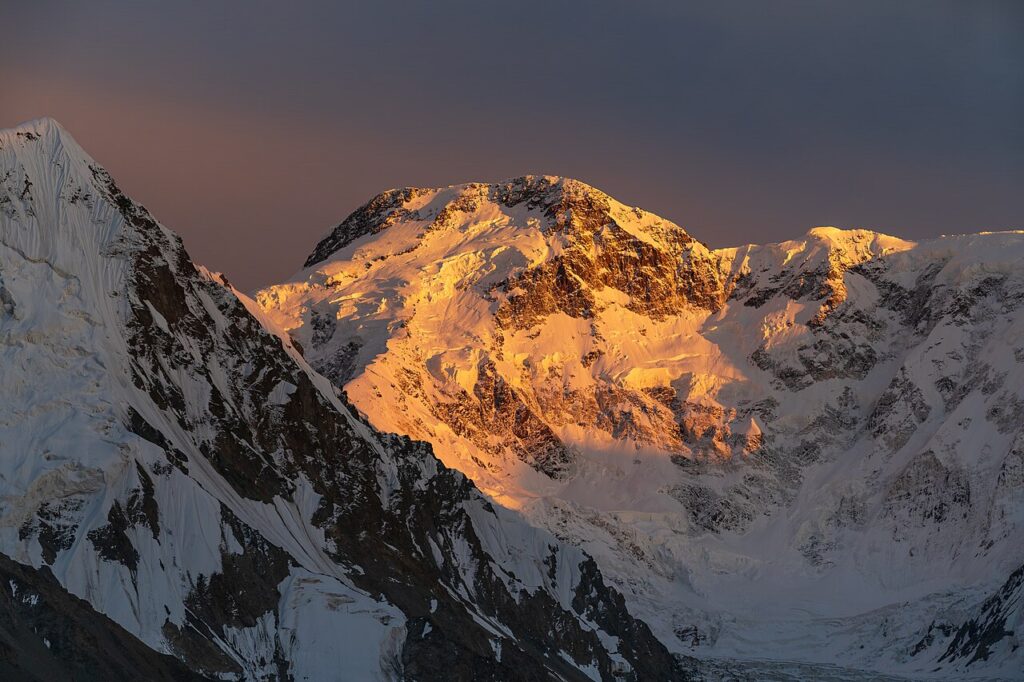
On the same day, hundreds of kilometers to the north, Russian Nikolay Totmyanin, 66, died after ascending another extremely challenging mountain – Pobeda Peak, which lies on the border between Kyrgyzstan and China and is 7,439 meters above sea level. It is also known by the Kyrgyz name Jengish Chokusu (Victory Peak).

Totmyanin made the summit but then fell ill on the way down.

“He came down on his own, pushing hard, knowing he had to get lower as quickly as possible. On the evening of August 10, 2025, he was admitted to intensive care in Bishkek. By morning, he was gone,” said Anna Piunova, editor of Mountain.RU, a Russian website that covers climbing news.

“His climbing resumé is staggering, hard to believe a single lifetime could hold so much,” Piunova said on Instagram. “More than 200 ascents in the Caucasus, Pamirs, Tien Shan, Alps, Himalayas, Karakoram, and North America, including 63 big-wall climbs.”

Piunova did not go into detail about Totmyanin’s illness, but the lack of oxygen at such heights can have lethal effects.

Both K2 and Pobeda Peak can be approached from the Chinese side of the borders, but the difficulty of access and logistical challenges deter most international climbers from a route via China.

While Totmyanin was a more recognized figure on the international climbing scene, Kubatov, the 53-year-old head of Kyrgyzstan’s Mountaineering Federation, has been building an impressive record and enjoys wide appreciation in Central Asia. Kubatov has scaled several of the eight-thousanders without supplemental oxygen. He celebrated the K2 achievement with a message on Facebook on Thursday that acknowledged the dangers of the mountain, where climbers faced an especially tough environment this season because of low snowfall and an increased threat of rockfalls.

“Friends, K2 is ours! On August 11 at 17:00, I was on this great summit without using oxygen!” the Kyrgyz climber said. “Friends, yesterday, August 13 at 5 a.m., I descended from the summit of K2 — 8,611 meters! Unfortunately, during the descent, many suffered severe injuries, and one female climber died.”

The climber, Guan Jing of China, died on Aug. 12 while descending from the K2 peak with an expedition led by Imagine Nepal, a company founded by Sherpas. The Tourism Times, a publication based in Kathmandu, reported on Wednesday that efforts were underway to recover her body.

Kubatov was with a joint team from Seven Summit Treks and 14 Peaks Expedition, which are also based in the Himalayan country. The climber, who will surely receive a big welcome on his return to Kyrgyzstan, said he was “slightly unwell” but looking forward to going home.

Totmyanin, the Russian climber known in some mountaineering circles as “Iron Uncle Kolya,” climbed K2 nearly two decades ago. Like Kubatov, he did it without bottled oxygen. His funeral is scheduled for Sunday in Smolensk, Russia.

World Bank: Central Asia’s Growth to Slow but Remain Resilient

Central Asia is set to remain one of the world’s fastest-growing regions, although its economic momentum is expected to moderate in the coming years, according to the World Bank’s Spring 2025 Europe & Central Asia Economic Update. The region posted a growth rate of 5.5% in 2024, with projections of 5.0% for 2025 and 4.4% for 2026 as oil output normalizes in Kazakhstan, re-exports fade, and remittance inflows settle. The World Bank also revised its 2024 forecast upward by 0.8 percentage points, citing stronger-than-anticipated domestic demand. The forecasts incorporate data available through April 10, 2025.

Country-Level Outlook

Uzbekistan is forecast to grow by 6.5% in 2024, followed by 5.9% in both 2025 and 2026. Kyrgyzstan is expected to expand by 9.0% in 2024 and 6.8% in 2025. Tajikistan will grow by 8.4% in 2024 and 6.5% in 2025. Kazakhstan’s growth is projected to be more moderate, at 4.8% in 2024 and 4.5% in 2025.

The World Bank attributes much of the region’s expansion to robust domestic demand, including household consumption, investment, and government spending, rather than export performance. Remittances continue to play a vital role in economic stability: they account for nearly 40% of GDP in Tajikistan, over 20% in Kyrgyzstan, and are critical in reducing poverty in Uzbekistan, where poverty rates would nearly double in their absence.

Investment and Long-Term Prospects

With investment comprising about 26% of GDP, Central Asia boasts one of the highest investment-to-GDP ratios among developing regions. This is largely driven by construction and large-scale infrastructure projects, particularly in the energy and transport sectors.

However, the road to high-income status remains long. According to the Bank, based on current trajectories, it would take Kazakhstan and Turkmenistan approximately 40 years, Kyrgyzstan 70 years, and Uzbekistan and Tajikistan over 100 years to reach the high-income threshold of $14,005 in per capita income, a benchmark set for 2023.

Risks and Policy Recommendations

These forecasts are based on data available through April 10, 2025, and reflect persistent challenges stemming from the COVID-19 pandemic, ongoing cost-of-living pressures, and regional trade disruptions since 2022.

To sustain momentum, the World Bank urges policymakers to pursue structural reforms and channel investment into productivity enhancements, technology adoption, and innovation. Without such efforts, growth could fall below potential in the years ahead.

ValueLBH Fund to Invest Up to $1.5 Billion in Kazakhstan’s Economy

Kazakhstan is exploring joint investment projects worth up to $1.5 billion with international investment firm ValueLBH Fund, targeting key sectors of the national economy.

Talks were held in Astana between Gabidulla Ospankulov, Chairman of the Investment Committee under the Ministry of Foreign Affairs of Kazakhstan, and Shimon Ben Hamo, Chairman of the Board of Directors of Dan Capital and Managing Director and Partner at ValueLBH Fund.

The discussions focused on expanding investment cooperation and launching projects in transport and logistics infrastructure, agriculture, raw materials processing, renewable energy, oil refining, and high-tech manufacturing.

According to Kazakhstan’s Ministry of Foreign Affairs, the two sides examined specific initiatives such as the construction and modernization of logistics hubs linked to international transport corridors, the deployment of advanced technologies in agriculture, the creation of joint ventures in solar and wind energy, and the development of domestic oil refining capacities.

Ospankulov stated that Kazakhstan is prepared to offer a comprehensive range of state support measures while ensuring access to global markets. “Partnerships with leading investment funds create valuable opportunities for Kazakhstan to diversify its economy and introduce cutting-edge technologies,” he said.

Ben Hamo underscored the country’s strategic location and stable macroeconomic fundamentals, highlighting its potential for integration into global supply chains. The parties agreed to continue consultations and explore the signing of framework agreements.

ValueLBH Fund operates across real estate, energy, infrastructure, and agribusiness, with a strong commitment to environmental sustainability and social responsibility.

As previously reported by The Times of Central Asia, the Eurasian Development Bank (EDB) recently launched the Eurasian Transport Network Observatory, a database tracking 325 infrastructure projects across 13 countries, representing a combined investment of $234 billion as of July 1, 2025.

Turkmenistan and Iran to Build Dual-Gauge Rail Lines at Sarakhs Border Crossing

Turkmenistan and Iran have agreed to construct two new railway lines at the Sarakhs border crossing to enhance freight transport between the two countries, Iranian Railways chief Jabbar Ali Zakeri announced following talks with Turkmenistan’s Minister of Railways, Mammet Akmammedov.

The agreement was reached during bilateral meetings in Turkmenbashi, held on the sidelines of the Third UN Conference on Landlocked Developing Countries, Iran’s Ministry of Roads and Urban Development reported on August 12, according to Biznes Turkmenistan.

Zakeri stated that the project will include the construction of one standard-gauge and one broad-gauge line connecting the Sarakhs stations on both sides of the border. He emphasized the significance of expanding rail infrastructure to improve regional connectivity and noted that technical discussions between the two countries’ rail administrations would follow shortly.

The Sarakhs crossing is a critical transit hub linking Iran to Central Asia and forms part of the International North-South Transport Corridor, aimed at facilitating trade between Asia and Europe.

This initiative aligns with Turkmenistan’s broader strategy to diversify its export routes. Despite possessing the world’s fourth-largest natural gas reserves, the country has long struggled to access stable foreign markets.

In October 2024, Ashgabat signed a landmark deal to supply 10 billion cubic meters of gas annually to Iraq, its first major export agreement in nearly two decades. While Turkmenistan maintains two gas pipelines to Iran with a combined capacity of 20 billion cubic meters, exports have been minimal since 2017 due to ongoing payment disputes.

Kyrgyzstan and Afghanistan Aim to Boost Trade and Economic Ties

Kyrgyzstan and Afghanistan have agreed to open trading houses in each other’s countries as part of a broader effort to deepen bilateral trade and economic cooperation.

The agreement was reached on August 13 during the visit of an Afghan delegation to Bishkek, led by Nooruddin Azizi, Acting Minister of Industry and Commerce of the Islamic Emirate of Afghanistan.

Azizi met with the Kyrgyz Minister of Economy and Commerce, Bakyt Sydykov. The two ministers signed a roadmap for future cooperation, along with a memorandum of understanding focused on enhancing trade and economic ties.

Sydykov described the visit as a significant step toward strengthening bilateral relations and highlighted Kyrgyzstan’s interest in exploring new, mutually beneficial areas of cooperation. He noted that the two countries hold considerable potential for expanding trade.

Discussions also touched on digitalization, with the Kyrgyz side offering to share its experience in the sector with Afghan partners.

According to Afghanistan’s Ministry of Industry and Commerce, the two countries recorded $66 million in bilateral trade during the last solar year (March 2024-March 2025), with Afghan exports accounting for $7 million of that figure. Key Afghan exports to Kyrgyzstan include aluminum and copper utensils, pressure cookers, carpets, fruits, and vegetables.

In January-February 2025 alone, Kyrgyzstan exported $11.5 million worth of petroleum products to Afghanistan, according to Kyrgyz media.

Trade between the two countries has seen an uptick following Kyrgyzstan’s September 2024 decision to remove the Taliban from its list of prohibited organizations. The Kyrgyz Ministry of Foreign Affairs said the move was aimed at promoting regional stability and fostering constructive dialogue.

On September 6, 2024, then-Chairman of the Cabinet of Ministers Akylbek Japarov met with Afghanistan’s Chargé d’Affaires in Kyrgyzstan, Nurullah Amin, to discuss ways to advance bilateral relations. The Kyrgyz side expressed interest in enhancing trade and transport links, jointly developing Afghan mineral resources, and cooperating in energy, industry, and agriculture.



